The Collaborative Circuit: Audio Sharing and the Modern Podcast Studio
Update on Jan. 11, 2026, 9:38 a.m.
Podcasting is often a conversation. Two or more people, sitting around a table, sharing ideas. But technically, monitoring this conversation can be a headache. You need a headphone amplifier with multiple outputs, or a splitter that degrades signal quality. The traditional studio setup is a tangle of wires and expensive distribution amps.
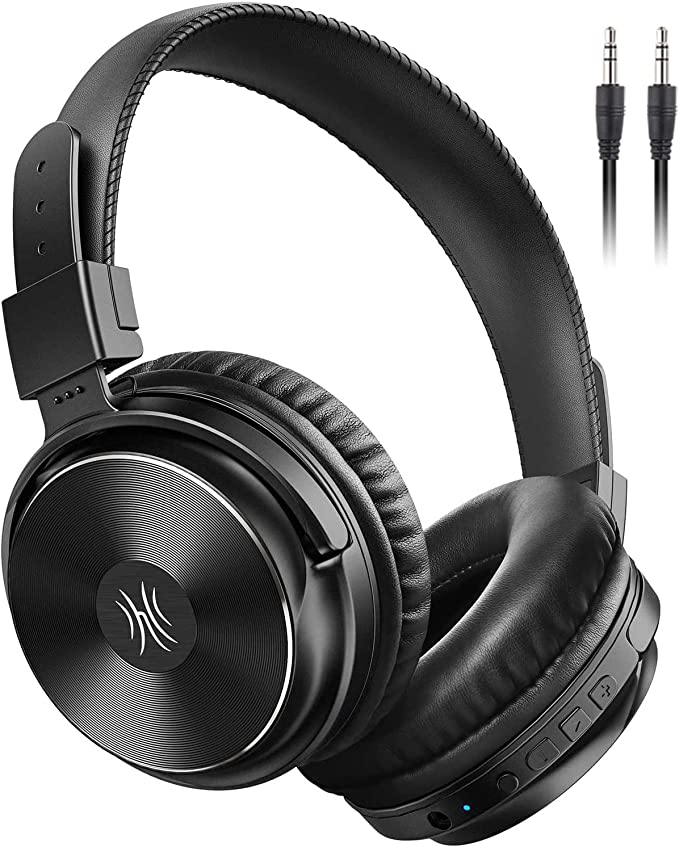
The MAONO AU-MH601 introduces a feature that cuts through this complexity: Audio Sharing. By including an extra headphone jack on the earcup, it allows users to daisy-chain multiple headphones together. This turns the headphone from a solitary receiver into a collaborative node.
This article explores the Electrical Engineering of daisy-chaining, the versatility of dual-jack designs, and how these features streamline the workflow of the modern creator.
The Physics of the Daisy Chain: Parallel Circuits
How does one headphone feed another? The answer lies in basic circuitry: Parallel Connections.
The MH601 features two jacks: one for input, one for output (which can be reversed). Inside the earcup, these jacks are wired in parallel. When you plug a second headphone into the empty jack, it taps directly into the audio signal coming from the source.
The Impedance Challenge
While convenient, daisy-chaining changes the electrical load seen by the amplifier. * Ohm’s Law: Adding headphones in parallel reduces the total impedance ($1/R_{total} = 1/R_1 + 1/R_2$). * Current Demand: Lower impedance draws more current from the source.
Fortunately, the MH601 is designed with a relatively standard impedance (32 Ohms). Most modern audio interfaces and even laptops have enough current headroom to drive two sets of headphones without significant volume drop or distortion. This simple electrical trick democratizes the studio. It allows a host and a guest to monitor the same mix with zero latency and zero extra gear.

The Dual-Jack Versatility: 3.5mm and 6.35mm
In professional audio, we live in a world of two standards: the consumer 3.5mm (1/8 inch) minijack and the professional 6.35mm (1/4 inch) jack. Adapters are the bane of every engineer’s existence—they are easily lost and often cause static.
The MAONO AU-MH601 solves this with a clever cable design. It often includes a coiled cable with a 3.5mm plug on one end and a 6.35mm plug on the other. But the genius is on the headphone itself: it has ports for BOTH. * No Adapter Needed: If you are plugging into a mixer (6.35mm), you plug the 3.5mm end into the headphones. If you are plugging into a phone (3.5mm), you flip the cable and plug the 6.35mm end into the headphones.
This reversibility is a triumph of User-Centric Design. It eliminates the “Where is my adapter?” panic that delays recording sessions. It acknowledges that the modern creator bridges the gap between pro gear and consumer tech daily.
The Ergonomics of the Session: Swivel and Fold
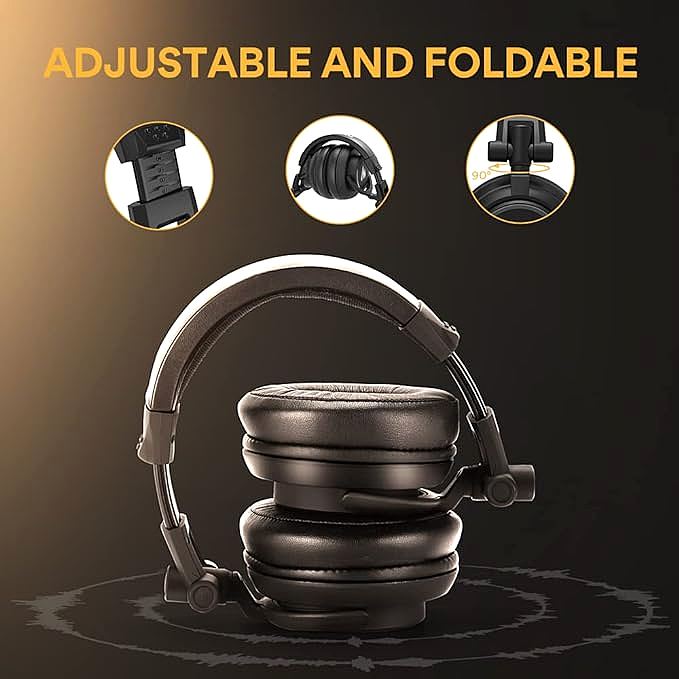
Recording sessions can last for hours. Comfort is not a luxury; it is an endurance requirement. The MH601 features 90-Degree Swiveling Earcups.
Single-Ear Monitoring
This feature is borrowed from the DJ world. It allows the user to rotate one cup off the ear while keeping the other on. * The DJ: Needs to hear the cue track in one ear and the room (crowd/PA system) in the other. * The Podcaster: Needs to hear their own natural voice or a producer’s instructions while keeping an ear on the guest.
This mechanical flexibility allows for Situational Awareness without removing the headset entirely. Combined with the Coiled Cable, which stretches to accommodate movement without tangling or pulling equipment off the table, the physical design of the MH601 is optimized for the dynamic environment of a working studio.
Conclusion: The Networked Headphone
The MAONO AU-MH601 is more than a listening device; it is a connectivity solution. By integrating audio sharing and dual-format jacks, it removes the friction of connecting people to sound.
In the collaborative world of podcasting and streaming, where content is king and setup time is money, the ability to simply “plug into a friend” is a feature as powerful as the sound quality itself. It transforms audio from a solitary experience into a shared one.