A Parent's Guide to Sound Machines: Decoding the Specs for Baby Sleep
Update on Nov. 14, 2025, 8:42 a.m.
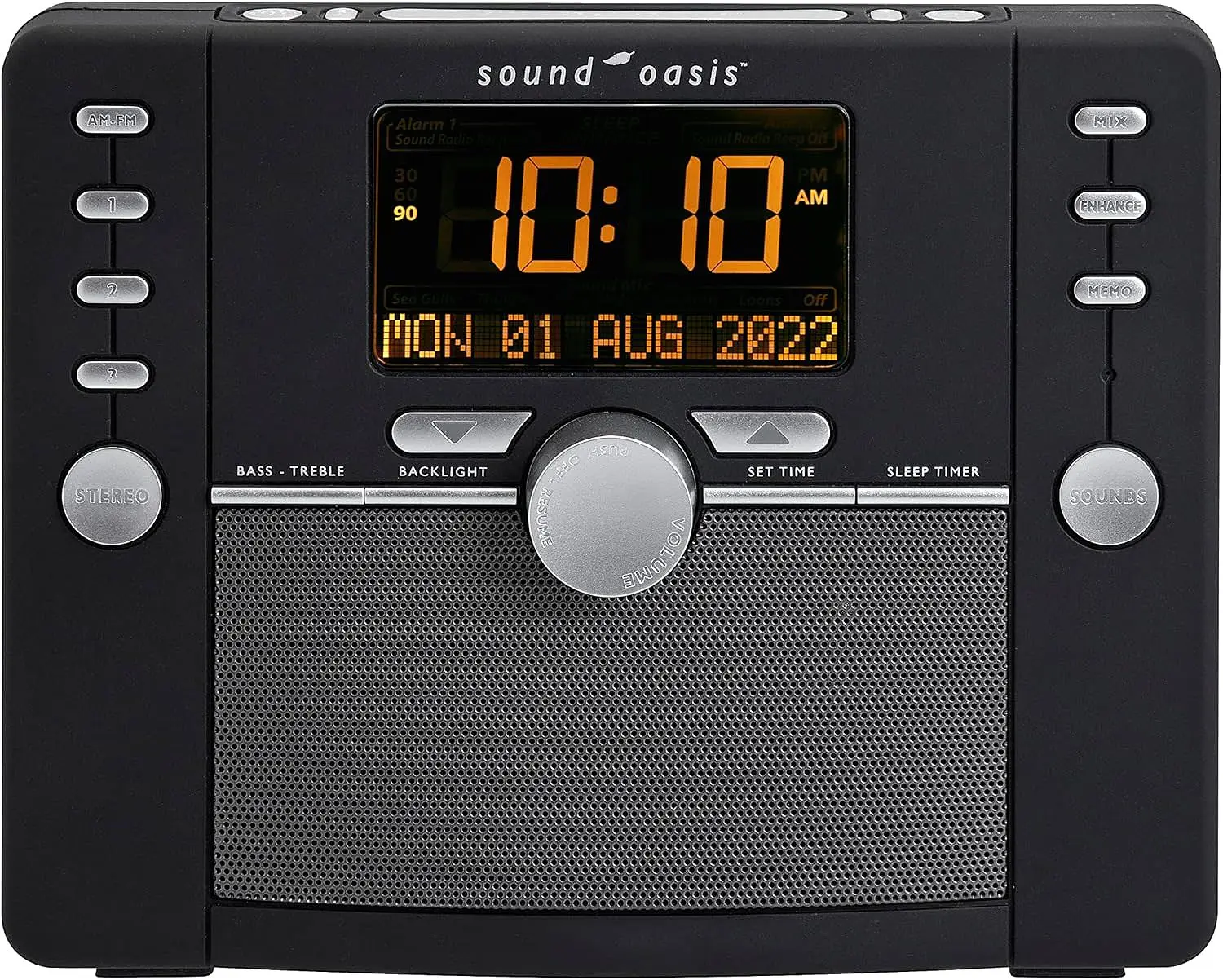
For a new parent, the modern world is a barrage of sudden, sharp noises: a doorbell, a barking dog, a dropped pan. For a newborn, these sounds are jarring jolts that can instantly trigger the startle (Moro) reflex, derailing a hard-won nap and resetting the clock on your own precious few minutes of peace. This has made the sound machine a ubiquitous item on baby registries.
But navigating the options is confusing. Why do some machines offer 36 sounds while others offer only three? Why is “battery-powered” a key feature?
When a product’s specifications are explicitly targeted—for instance, listing an “Age Range Description: Baby”—it implies its features are not arbitrary. They are engineering choices designed to solve a specific problem. By applying a first-principles analysis to these specs, we can decode what truly matters for a parent. Using a modern device like the Vanzon WN02 as a case study, we can see why certain features are critical for building a successful sleep routine.

The Core Principle: Sound Masking for the Startle Reflex
Before decoding specs, we must understand the “why.” A sound machine serves two primary functions for an infant.
First, it provides a low, consistent sound that mimics the environment of the womb, which is not silent but filled with the whoosh of blood flow and the rhythm of a heartbeat. This is inherently soothing.
Second, it performs sound masking. Imagine a quiet library. A single cough is disruptive. Now imagine a room with a loud air conditioner. That same cough is barely noticeable. The sound machine acts like the AC, raising the “auditory floor” of the room. It doesn’t eliminate the doorbell’s sound, but it makes it far less distinct and less likely to pierce through the baby’s sleep and trigger the startle reflex.

Decoding “Battery Powered”: The Engineering of Consistency
One of the most critical, yet often misunderstood, features for a parent is portability. When a machine is listed as “Battery Powered,” this is not a signal of convenience; it is a signal of consistency.
Sleep experts emphasize that a consistent routine is the foundation of healthy sleep habits. A key part of this routine is the sleep environment. If a baby learns to associate a specific sound with sleep, that sound needs to be present every time they sleep.
This is where a stationary, plug-only device fails. A battery-powered design is engineered for mobility, allowing a parent to maintain a consistent auditory environment across every location: * The Nursery: Placed in the crib (often via a DC Barrel Jack for permanent power). * The Stroller: Clipped on for a walk around the block. * The Car Seat: Brought along for a drive. * Travel: Easily packed for a visit to a grandparent’s house or a hotel, creating a familiar “bubble” of sound in an unfamiliar place.
A lightweight, compact design (e.g., around 0.18 kg and 4 inches wide) further supports this principle. The engineering value of “battery-powered” is not “you can use it in the park”; it’s “you can maintain your baby’s sleep cue, uninterrupted, anywhere.”
Decoding “36 Tracks”: The Engineering of Probability
The next specification is sound variety. Why “36 Number of Tracks”? It’s easy to dismiss this as a gimmick, but it represents another core engineering principle: probability.
Infants are not a monolith. What one baby finds soothing, another may find agitating. * One baby might respond best to classic, high-pitch “White Noise” for its superior masking of sharp sounds. * Another might only settle with deep, rumbly “brown noise” or “pink noise,” which more closely mimics the low-frequency sounds of the womb. * A third might respond to non-looping nature sounds, like rain or waves.
A machine with only one or two sounds is a gamble. It either works for your baby, or it doesn’t. A device offering 36 distinct tracks is an engineering solution that dramatically increases the probability that a parent will find the one specific sound that works for their child. It’s not about novelty; it’s about providing the necessary tools for experimentation.

Decoding the Design: Safety, Durability, and Usability
Finally, the physical design itself is a set of engineering choices. * Material: Plastic: This is a deliberate choice for a nursery product. It is lightweight, durable enough to survive a fall from a nightstand, and—most importantly—easy to wipe down and sanitize. * “Age Range: Baby”: This, along with included safety information, signals that the manufacturer has considered factors like battery safety, the absence of small, detachable parts, and safe materials. * Dual Power: The inclusion of both battery power and a DC jack is a smart, hybrid design. It allows the machine to function as a permanent, reliable fixture in the nursery but transforms into a portable tool on demand.
Coda: A Tool, Not a Magic Wand
A sound machine is a powerful tool in a parent’s arsenal, but it is not a magic wand. Its effectiveness is rooted in the consistent, thoughtful application of its core features.
When you see a spec sheet, look past the numbers and decode the purpose. For a new parent, the critical features are those that enable a consistent, safe, and customizable routine. Portability (Battery Powered) is for consistency. Sound variety (36 Tracks) is for efficacy. And a baby-centric design (Durable Plastic) is for safety.
Modern devices, such… as the Vanzon WN02, that are built around these specific engineering principles are not just “gadgets”; they are purpose-built tools designed to solve one of the most fundamental challenges of new parenthood.