The Unseen Forces Shaping Modern Micro-Acoustics
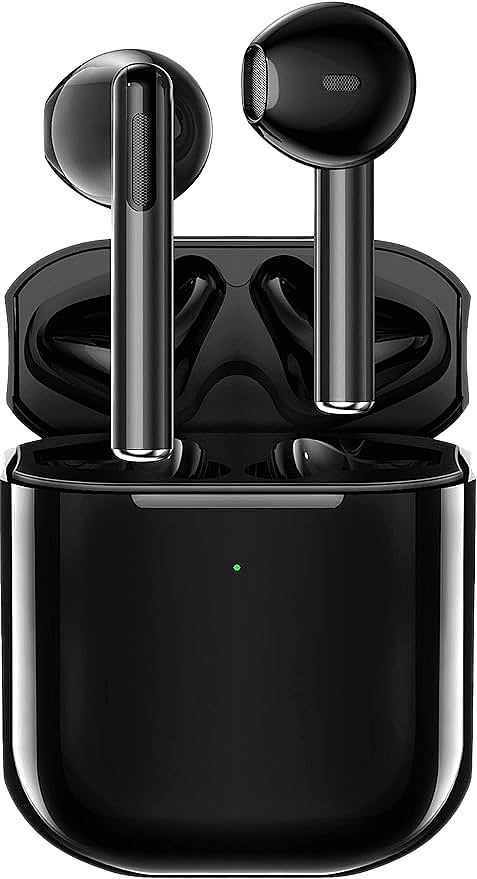
FEANS A2-BG True Wireless Earbuds
The miniaturization of audio equipment represents one of the most intense battlegrounds in modern consumer electronics. Decades ago, achieving high-fidelity sound required massive wooden cabinets, heavy magnetic coils, and dedicated amplifiers drawing significant power from the wall. Today, the expectation is that an equivalent, or at least highly convincing, auditory experience can be delivered by a device no larger than a kidney bean, operating entirely without physical tethers. This transition is not merely a matter of shrinking components; it requires a fundamental reimagining of acoustic physics, material science, digital signal processing, and human-computer interaction.
When analyzing modern portable audio hardware, it becomes evident that engineers are constantly negotiating a series of complex compromises. Every micro-millimeter of internal volume is contested territory. A larger battery provides longer playback but increases mass, potentially leading to user fatigue. A thicker acoustic diaphragm might prevent distortion at high volumes but requires a more powerful magnet, which again increases weight and power draw. Devices like the FEANS A2-BG true wireless earbuds serve as excellent case studies in how these compromises are balanced, utilizing specific materials and software algorithms to cheat the physical limitations of their size.
Why Do Capacitive Touch Sensors Misbehave in High-Moisture Environments?
One of the most persistent engineering challenges in wearable technology lies at the interface between human skin and digital controls. In an effort to maintain strict waterproofing standards and eliminate moving mechanical parts, the industry has largely abandoned physical tactile buttons in favor of capacitive touch sensors. While aesthetically pleasing and structurally sound, capacitive touch introduces distinct failure modes that frequently manifest in field usage.
To understand why a touch interface might fail or act erratically, we must examine the physics of capacitance. A capacitive sensor works by generating a localized electrostatic field across its surface. The human body is mostly composed of water and dissolved minerals, making it a conductive dielectric. When a finger approaches the sensor, it alters the local electric field, increasing the capacitance. The micro-controller inside the earbud measures this change in capacitance; if it crosses a predefined threshold, it registers a "touch."
The fundamental flaw in this system is that it struggles to differentiate between a human finger and other conductive elements, most notably water and sweat. Sweat contains sodium and chloride ions, making it a highly effective electrolyte. If an individual is engaged in intense physical activity, a layer of sweat can coat the outer shell of the earbud. This liquid layer can create a continuous conductive path, altering the baseline capacitance of the sensor.
Field data regarding devices utilizing these interfaces, such as the touch arrays found on the FEANS A2-BG, occasionally reveal instances where volume levels randomly increase to maximum, or controls fail to register deliberate taps. This phenomenon occurs because a trapped droplet of sweat or an accidental brush against moist hair can mimic the prolonged capacitive signature of a finger holding down the volume control. The micro-controller, lacking the physical context, simply executes the command dictated by the electrostatic field. Engineering a solution to this requires implementing complex heuristic algorithms that attempt to distinguish the rapid, sharp capacitance spike of a deliberate finger tap from the slow, broad capacitance drift caused by accumulating moisture. It is a constant tug-of-war between making the sensor sensitive enough to work reliably, but resistant enough to ignore environmental noise.
Building a Microscopic Concert Hall in the Ear Canal
The core function of any acoustic device is the movement of air. Sound is simply a mechanical wave—fluctuations in air pressure that travel to our eardrums. Moving a sufficient volume of air to create perceivable, rich audio requires an electromechanical transducer, commonly known as the driver. In the constrained environment of the human ear canal, maximizing the efficiency of this driver is paramount.
The physics of low-frequency sound (bass) dictates that a larger surface area is required to move enough air to create the necessary pressure waves. This poses a severe limitation for in-ear designs. To combat this, acoustic engineers attempt to maximize the driver diameter within the anatomical limits of the human ear. A 13mm driver, as implemented in the FEANS A2-BG architecture, represents the upper boundary of what can comfortably fit within the concha of the average human ear.
However, driver size is only one part of the equation. The material of the diaphragm—the thin membrane that actually pushes the air—is critical. When an electrical signal is sent through the voice coil (a wire attached to the diaphragm and suspended in a magnetic field), the coil rapidly moves back and forth. The diaphragm must move exactly in tandem with the coil.
If the diaphragm is made of a soft material, like cheap plastic or paper, it suffers from a phenomenon known as "breakup." As the frequency of the sound increases (meaning the diaphragm is vibrating thousands of times per second), a soft material will begin to flex and warp. Different parts of the diaphragm will move out of phase with each other, resulting in severe acoustic distortion.
To prevent breakup, engineers look for materials with a remarkably high Young's Modulus (a measure of stiffness) while maintaining a very low mass. A three-layer composite titanium-plated diaphragm is a direct engineering response to this requirement. Titanium is exceptionally rigid, meaning the diaphragm acts as a perfect piston even at high frequencies, pushing the breakup mode far beyond the upper limit of human hearing (20,000 Hz). The composite layering usually involves a softer polymer base to provide internal damping, preventing the titanium from ringing like a bell. This specific combination of high stiffness and internal damping, paired with a sensitivity rating of 117 dB and a 32-ohm impedance, allows a microscopic electrical signal to be converted into a highly accurate, undistorted acoustic pressure wave.
Filtering the Chaos of a Busy Street
Acoustic engineering must account not only for the sound produced by the device but also for the ambient acoustic environment in which the device operates. In modern urban environments, background noise is a constant disruptive variable, particularly during voice communication. Solving this problem requires shifting from acoustic hardware to Digital Signal Processing (DSP).
It is crucial to differentiate between Active Noise Cancellation (ANC) and Environmental Noise Cancellation (ENC). ANC is designed to protect the wearer's hearing experience by generating anti-noise to cancel out ambient sound before it reaches the eardrum. ENC, conversely, is focused entirely on the microphone array and is designed to clean the outgoing audio signal so that the person on the other end of a phone call can hear the wearer clearly.
The mechanism behind ENC relies on spatial audio processing and adaptive filtering. Devices like the FEANS A2-BG typically employ at least two microphones per earbud. One microphone is positioned as close to the mouth as possible, acting as the primary voice pickup. A second microphone is positioned further away, facing outward, to capture the ambient environmental noise.
The DSP chip receives both audio streams simultaneously. Because the microphones are in different physical locations, the sound waves arrive at slightly different times and at different amplitudes. The algorithm uses this phase and amplitude difference to construct a spatial map of the sound field. It makes a mathematical assumption: sound that is loud in the primary mic and slightly delayed/quieter in the secondary mic is likely the user's voice. Sound that hits both microphones simultaneously with similar amplitude is likely distant environmental noise (like a passing bus or crowd chatter).
Once the noise profile is isolated, the DSP applies an adaptive filter, often based on the Least Mean Squares (LMS) algorithm. The chip inverts the phase of the identified noise profile and mixes it with the primary audio stream. In physics, when two identical waves meet exactly 180 degrees out of phase, they undergo destructive interference and cancel each other out. By rapidly calculating and applying these phase inversions in real-time, ENC technology can suppress up to 90% of steady-state background noise, ensuring that the transmitted signal is dominated by human speech rather than urban chaos.
What Happens When a Rainstorm Hits Your Audio Gear?
Wearable electronics are subjected to environmental abuses that desktop hardware never encounters. Human sweat is highly corrosive, and sudden rain exposure can instantly short-circuit delicate micro-electronics. Protecting these internals requires a sophisticated approach to fluid dynamics and material science, often quantified by the Ingress Protection (IP) rating system.
An IPX6 rating indicates a specific, rigorous standard of fluid resistance. The "X" denotes that the device was not officially tested for solid particle ingress (dust), while the "6" signifies protection against powerful water jets. Specifically, the test requires the device to withstand 100 liters of water per minute sprayed from a 12.5mm nozzle at a distance of 3 meters for at least 3 minutes. Surviving this requires more than just tight plastic seams.
The primary line of defense in devices like the FEANS A2-BG is a hydrophobic nano-coating. This is a microscopic layer of polymer applied to the internal circuitry and sometimes the external casing using a vapor deposition process. To understand how it works, we must look at the concept of surface energy and the contact angle of fluids.
Water molecules are highly cohesive; they like to stick together. When water lands on a surface with high surface energy (like bare metal or standard plastic), the water spreads out, maximizing contact. The contact angle is low. A hydrophobic nano-coating drastically reduces the surface energy of the material. When water hits this coated surface, it minimizes its contact area, pulling itself into a spherical bead. The contact angle becomes very high (often exceeding 120 degrees).
Because the water remains beaded up, it cannot easily seep through microscopic gaps in the casing or bridge the gap between two electrical contacts to cause a short circuit. Even if a small amount of liquid penetrates the outer shell, the nano-coated circuit board actively repels the moisture, preventing the electrolytic corrosion that usually destroys wet electronics.

The Phantom Threat of Bluetooth Radiation
As the adoption of wearable transmitters becomes ubiquitous, a cross-disciplinary intersection between radio frequency (RF) engineering and human biology frequently arises in consumer discussions. It is not uncommon to find field reports or reviews where users claim to experience headaches, dizziness, or localized warming after wearing wireless headsets for extended periods. Analyzing these claims requires separating the physics of electromagnetic radiation from psychological phenomena.
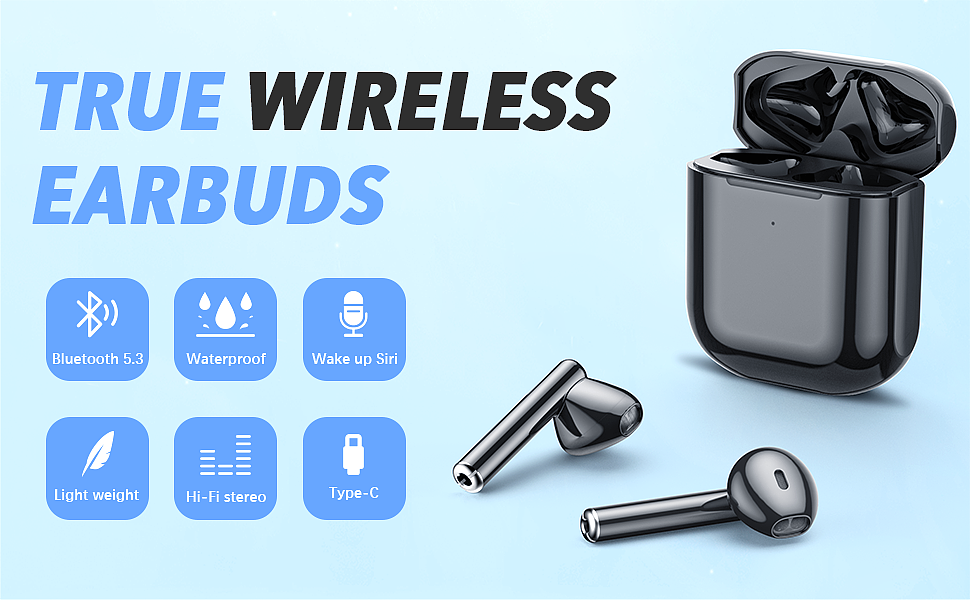
Bluetooth technology, including the Bluetooth 5.3 standard utilized in devices like the FEANS A2-BG, operates in the 2.4 GHz Industrial, Scientific, and Medical (ISM) radio band. This places it in the microwave section of the electromagnetic spectrum. The immediate concern for many laypeople is the association of the word "radiation" with biological damage.
However, from a physics standpoint, electromagnetic radiation is strictly divided into two categories: ionizing and non-ionizing. Ionizing radiation (like X-rays or Gamma rays) possesses enough energy to knock electrons out of their atomic orbits, directly damaging cellular DNA and causing mutations. Bluetooth relies on non-ionizing radiation. The photons in a 2.4 GHz wave carry millions of times less energy than what is required to break a chemical bond in the human body.
The only known biological effect of high-intensity non-ionizing radiation is dielectric heating (the principle behind a microwave oven). However, Bluetooth audio devices are Class 2 or Class 3 transmitters. A Class 2 device is legally capped at a maximum power output of 2.5 milliwatts (mW). To put this in perspective, a standard smartphone transmitting to a cell tower can peak at nearly 1000 mW. The thermal energy generated by a 2.5 mW transmitter placed against the skin is so infinitesimal that it cannot be accurately measured above the natural temperature fluctuations of the human body.
If the RF physics preclude tissue damage or meaningful heating, why do users report headaches? The answer almost always lies in biomechanics and psychology. The human ear canal is heavily innervated with sensitive nerve endings, including branches of the vagus and trigeminal nerves. Pushing a rigid plastic housing into this canal creates constant outward mechanical pressure. Over an hour or two, this sustained physical pressure can easily refer pain up into the temples, manifesting as a tension headache. Furthermore, the "Nocebo effect"—where the expectation of a negative symptom actually causes the brain to manifest physical discomfort—plays a significant role in how individuals interact with technologies they distrust.

Battery Life vs. Torque: The Trade-off
The ultimate limitation of untethered technology is the energy density of the electrochemical cell. The demand for lightweight, unnoticeable wearables directly conflicts with the demand for uninterrupted, all-day performance. This conflict defines the modern hardware engineering process.
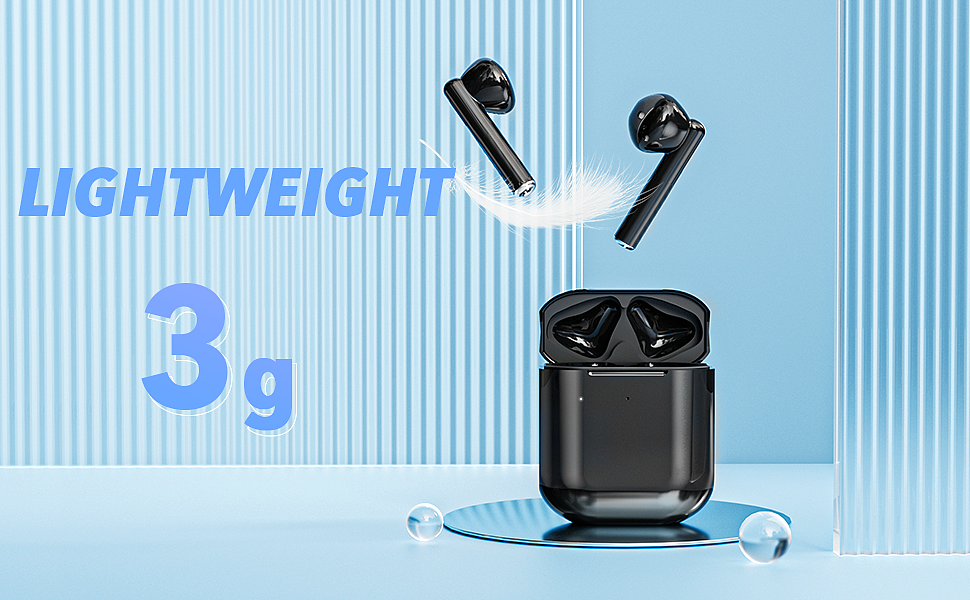
Consider the physical constraints: an earbud weighing roughly 0.11 ounces simply lacks the volumetric space to house a massive lithium-ion battery. The majority of the internal volume must be dedicated to the acoustic driver, the PCB holding the Bluetooth chipset, and the microphone array. Consequently, the internal battery is often a tiny "coin cell" or small pouch cell, typically holding between 30 to 50 milliamp-hours (mAh) of charge.
This tiny chemical reservoir is responsible for powering the constant radio communication, the digital signal processing for noise cancellation, and the physical excursion of the 13mm driver. The fact that devices like the FEANS A2-BG can extract 4 hours of continuous playback from such a microscopic power source is a testament to the extreme efficiency of the Bluetooth 5.3 protocol.
Bluetooth 5.3 relies heavily on a technique called Frequency Hopping Spread Spectrum (FHSS) and aggressive power-state management. The chip does not leave its radio receiver constantly powered on. Instead, it wakes up for mere microseconds to catch a packet of audio data, and then immediately drops into a deep sleep state until the next packet arrives. This rapid duty-cycling means the earbud is actually "asleep" for a significant portion of the time you are listening to music, drastically extending the life of the tiny battery.
However, 4 hours is insufficient for modern workflow demands. The engineering solution to the mass-to-power trade-off is the distributed energy model: the charging case. By housing a much larger, denser lithium-polymer battery in the carrying case, engineers offload the heavy weight from the sensitive human ear into the pocket.
The case acts as a localized, portable grid. When the earbuds are docked, power is transferred via physical pogo-pin contacts. This distributed system allows the total usable time to expand to 30 hours. The integration of Type-C charging further optimizes this lifecycle by supporting higher wattage input, allowing the case's larger reservoir to be fully replenished from the wall in roughly one hour.

Pushing the Boundaries of Micro-Integration
As we project the trajectory of wearable acoustics over the next decade, the engineering challenges will only compound. The physical limitations of moving air with a diaphragm and storing energy in liquid chemical cells dictate that future leaps will likely rely on software optimization and novel materials rather than simple scale.
The integration of advanced sensors—from capacitive interfaces that must learn to ignore sweat, to microscopic arrays that actively map and invert the chaos of urban noise—highlights a shift in hardware design. A device is no longer just an electromechanical tool; it is a continuously calculating engine.
The architecture observed in devices like the FEANS A2-BG, utilizing Bluetooth 5.3 for microsecond-level power efficiency, titanium plating to alter the Young's Modulus of the acoustic driver, and hydrophobic nano-coatings to manipulate fluid surface tension, represents the current baseline of portable audio engineering. Understanding these unseen physical forces and algorithms allows for a much deeper appreciation of the quiet revolution occurring inside our ears. The true triumph of these devices is not that they are small, but that the immense complexity of their operation remains entirely invisible to the user.
FEANS A2-BG True Wireless Earbuds
Related Essays
Siniffo X15 Bone Conduction Headphones

OMFG BB13 Wireless Earbuds - Advanced Features and Comfortable Design

Coolwin i12 Wireless Earbud – Immersive Sound and Convenient Features

Bubbacare Wireless Bluetooth Headset – Enjoy Music On the Go

MUDHEN in Ear Wireless Headphones - Powerful Sound and Waterproof Design

WATAHATIC 203 Wireless Headphones - Top-Notch Sound Quality and Long Battery Life

Keklle2 Wireless Earbuds – Crystal Clear Sound and Waterproof Design

HITY A4 Wireless Earbuds Bluetooth 5.3 Headphones Touch Control – Top Choice for Music Enthusiasts

CSL-Computer F8 Wireless Earbud – Recommended for Sports
