A Parent's Guide to Safe Listening: How to Choose Kids' Headphones
Update on Nov. 14, 2025, 5:47 p.m.
In a world rich with digital content, headphones have become an essential tool for children’s education and entertainment. They unlock a universe of audiobooks, virtual classes, and music. But for any parent, handing over a piece of audio technology comes with a nagging question: Is it safe?
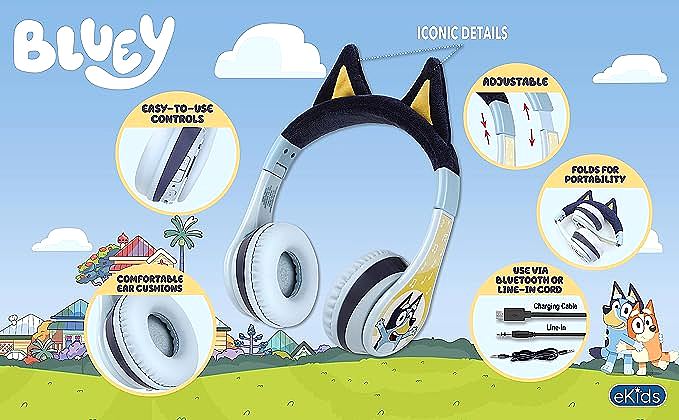
Choosing the right headphones for a child is not like buying them for an adult. It’s an important decision that balances a child’s desire for fun with a parent’s responsibility to protect their developing hearing. This guide is designed to empower you with the knowledge to make a confident choice. We’ll deconstruct the key features a good pair of kids’ headphones should have, using a product designed with these principles in mind—the eKids BU-B52 Bluey Bluetooth Headphones—as our working example.
Pillar 1: The Non-Negotiable – Auditory Safety and Volume Limiting
Before considering any other feature, safety must be the top priority. A child’s auditory system is more sensitive than an adult’s. Their ear canals are smaller, which can amplify sound pressure, and prolonged exposure to high volumes can cause permanent, noise-induced hearing loss (NIHL).
This is where the single most important feature of any kids’ headphone comes into play: volume-limiting technology.
This technology acts as a built-in safety governor. It ensures that no matter how high the volume is cranked on the connected tablet or smartphone, the sound output from the headphones will not exceed a predetermined, safe level. Most health organizations, including the World Health Organization, recommend a listening level of no more than 85 decibels (dB) for extended periods. A quality pair of children’s headphones, like the eKids BU-B52, is engineered to adhere to this limit. This isn’t a suggestion; it’s a fundamental design principle that provides parents with crucial peace of mind. When evaluating any headphones for your child, the presence of a built-in volume limiter is the first and most critical feature to verify.
Pillar 2: The Reality-Proof Build – Design for a Child’s World
A child’s world is one of motion, tumbles, and constant curiosity. Headphones designed for them must be engineered to survive it. This goes beyond simple aesthetics and involves thoughtful choices in materials, construction, and comfort.
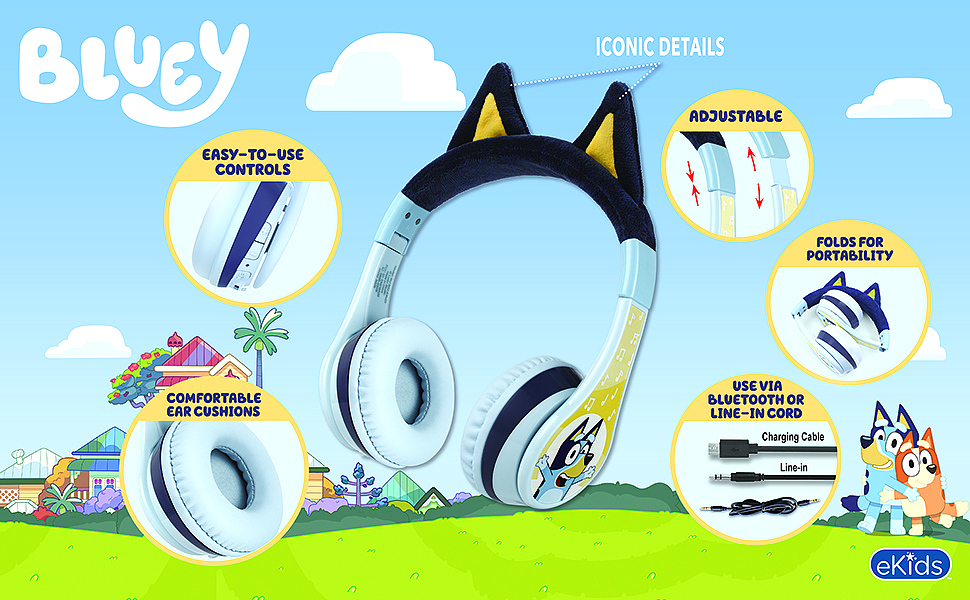
- Durability and Portability: Look for a robust build. The ability for headphones to be foldable, as the eKids BU-B52 are, is not just a travel convenience; it’s a durability feature. A folded headphone presents a more compact and less awkward shape, making it less prone to snapping or getting crushed in a backpack.
- Comfort and Fit: A child is unlikely to wear something that’s uncomfortable. The over-ear form factor is generally preferred for children, as the earcups surround the ear rather than pressing on it. Key features to look for are a lightweight design, a highly adjustable headband to accommodate growing heads, and soft, well-padded ear cushions. This ensures a secure, comfortable fit for long periods, whether during a long car ride or a remote learning session.
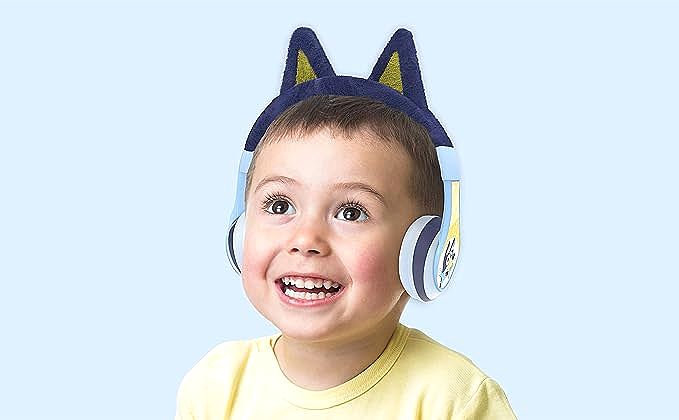
These ergonomic considerations are not just about comfort; they are also about promoting proper use and, by extension, hearing safety.
Pillar 3: The Versatile Connection – Embracing Both Wireless and Wired Worlds
While the freedom of wireless is undeniable for active kids, relying solely on Bluetooth can have its drawbacks. A truly practical pair of children’s headphones offers the best of both worlds.
- Wireless Freedom (Bluetooth): A wireless connection via Bluetooth eliminates the risk of tangled cords, which can be both a nuisance and a potential hazard for young children. It allows them the freedom to move, dance, and learn without being tethered to a device. A long battery life, such as the up to 37 hours offered by the eKids BU-B52, is a significant practical advantage, minimizing the frequency of charging and the frustration of a dead battery.
- Wired Reliability (Aux Cord): The inclusion of a 3.5mm audio cable provides a crucial backup. It solves several real-world problems: it’s the only way to connect to in-flight entertainment systems on airplanes, it works with older non-Bluetooth devices, and it ensures the listening can continue even if the battery runs out. This dual-mode functionality makes the headphones a far more versatile and reliable tool for all situations.
The presence of a built-in microphone further extends this versatility, transforming the headphones from a passive listening device into an interactive tool for video calls with family or participation in online classes.

Conclusion: An Informed Choice for Healthy Hearing
Choosing headphones for your child is an opportunity to provide them with a gateway to a world of sound while actively safeguarding their long-term hearing health. It’s a decision that extends beyond popular characters and bright colors.
By prioritizing the non-negotiable pillar of auditory safety through volume-limiting technology, you build a foundation of protection. By evaluating the practical design for durability and comfort, you ensure the device is fit for a child’s reality. And by opting for versatile connectivity, you equip them with a reliable tool for any situation. Making an informed choice based on these principles ensures your child’s every auditory adventure is a safe, comfortable, and enriching one.