The Physics of Fidelity: Anatomy of Dual-Driver Acoustic Architectures in Modern Audio


Holiper 025 3.5mm Jack Wired Headphones
In an era increasingly dominated by wireless protocols and compressed digital streams, the fundamental physics of audio reproduction remains an analog discipline. The journey of a sound wave from an electrical signal to a mechanical vibration within the human ear canal is a process governed by the laws of electromagnetism and fluid dynamics. While Bluetooth codecs have improved, the theoretical bandwidth of a physical copper connection remains effectively infinite compared to the sampling limits of current wireless standards. This reality has sustained a dedicated sector of audio engineering focused on maximizing the potential of the traditional wired interface through advanced transducer topologies.
The pursuit of high-fidelity audio is often a battle against the physical limitations of a single vibrating diaphragm. A single driver is typically tasked with reproducing the entire audible frequency spectrum, from the sub-bass rumble at 20Hz to the airy harmonics at 20kHz. This requires the diaphragm to be simultaneously rigid enough to push air for bass frequencies and light enough to vibrate rapidly for treble frequencies—a contradiction in material science. To circumvent this, engineers implement multi-driver architectures, a technique once reserved for professional stage monitors but now appearing in accessible consumer devices like the Holiper 025. By analyzing the engineering behind such devices, we can better understand the intricate science of acoustic separation and analog signal integrity.

The Analog Signal Chain: Conductivity and Integrity
The foundation of any wired audio system is the transmission medium. Unlike wireless earbuds, which contain their own digital-to-analog converters (DACs) and amplifiers, a wired headphone relies on the host device's processing power. The connection interface—typically a 3.5mm TRS (Tip-Ring-Sleeve) or TRRS (Tip-Ring-Ring-Sleeve) jack—serves as the critical bridge.
In the engineering design of the Holiper 025, the utilization of a gold-plated plug addresses the issue of contact resistance. Gold, while conductive, is primarily selected for its resistance to oxidation. Over time, base metals can develop oxide layers that act as insulators, introducing noise or intermittent signal loss (the "crackle" often heard in older equipment). Gold plating ensures that the contact surface remains chemically stable, maintaining a low-impedance path for the delicate voltage fluctuations that constitute the audio signal.
Furthermore, the transmission cable itself plays a vital role. The use of an oxygen-free copper core is intended to minimize signal attenuation. In audio transmission, the "skin effect"—where high-frequency alternating currents tend to travel along the surface of the conductor—means that the surface integrity of the wire is paramount. A braided cable geometry provides not only structural reinforcement against tensile stress but also helps in reducing electromagnetic interference (EMI) shielding, ensuring that the signal reaching the drivers is as close to the source as possible.
Transducer Topologies: The Mechanics of Dual Dynamic Drivers
The core innovation in maximizing acoustic performance within a compact form factor is the Dual Dynamic Driver configuration. A dynamic driver functions as a linear motor: a voice coil suspended in a magnetic field drives a diaphragm back and forth. The mass and surface area of this diaphragm determine its efficiency at different frequencies.
Large diaphragms move more air, which is essential for generating the long wavelengths of low-frequency sounds (bass). However, their mass gives them higher inertia, making them sluggish when trying to reproduce the rapid transients of high-frequency sounds. Conversely, small diaphragms have low mass and high responsiveness but struggle to move enough air to create impactful bass.
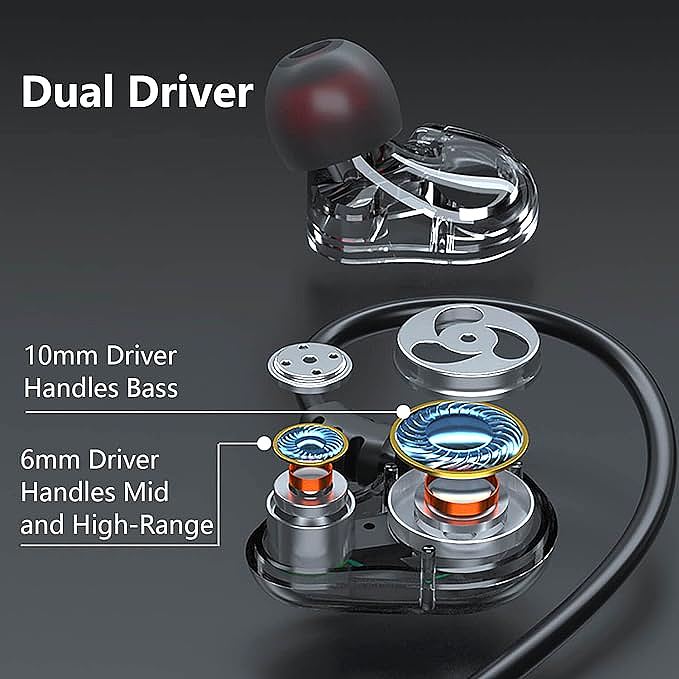
The Holiper 025 architecture addresses this by integrating two distinct drivers into each earpiece housing:
1. The 10mm Woofer: This larger driver is engineered with a diaphragm optimized for excursion. Its primary role is to handle the low-end spectrum. The larger surface area allows it to pressurize the acoustic chamber effectively, producing the visceral impact of bass frequencies without needing excessive power.
2. The 6mm Tweeter: Positioned often closer to the nozzle or coaxially, this smaller driver is tasked with the mid and high frequencies. Its lower moving mass allows it to accelerate and decelerate rapidly, tracing the fine details of vocals and cymbal harmonics with reduced distortion.
This arrangement functions similarly to a 2-way loudspeaker system found in home hi-fi setups, but miniaturized. The separation of duties reduces "Intermodulation Distortion" (IMD)—a phenomenon where the movement of the diaphragm producing bass frequencies distorts the reproduction of higher frequencies playing simultaneously. By physically separating the generation of these waves, the output remains cleaner and more articulate.
Acoustic Chamber Design and Passive Isolation
The driver is only half of the equation; the enclosure, or acoustic chamber, dictates how those sound waves interact before reaching the ear. In-ear monitors (IEMs) rely on a sealed acoustic system. The housing must be rigid to prevent unwanted resonances that could color the sound.
Moreover, the interaction between the earpiece and the ear canal creates a "pressure vessel" effect. This is where passive noise isolation becomes critical. Unlike Active Noise Cancellation (ANC), which uses phase-inverted sound waves to cancel noise (and requires power and processing), passive isolation relies on a physical seal.
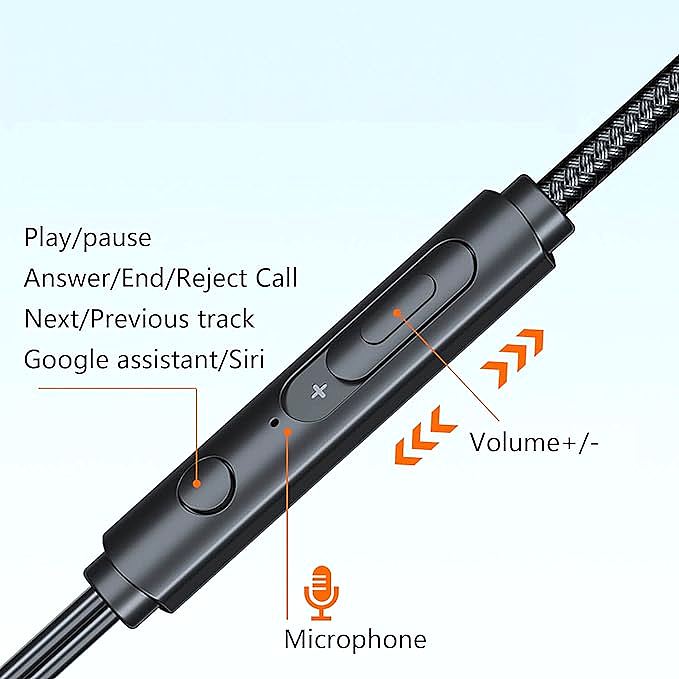
The design implemented in the Holiper 025 utilizes silicone ear tips to create an airtight seal within the ear canal. This seal serves two purposes:
1. Low-Frequency Retention: Without a proper seal, low-frequency waves, which are omnidirectional, leak out of the ear canal before they can register on the eardrum. A tight seal is essential for the 10mm driver's output to be perceived effectively.
2. External Noise Attenuation: The physical barrier blocks high-frequency environmental noise. The effectiveness of this isolation is geometric—dependent on the shape of the nozzle and the ergonomics of the housing.
The Future of Wired Acoustic Engineering
While the consumer market trends towards wireless convenience, the physics of wired audio ensures its place in the high-fidelity ecosystem. The limitations of battery life, bandwidth, and latency are non-existent in wired topologies. Future developments in this space are likely to focus on materials science—using stronger, lighter materials like Beryllium or Carbon Nanotubes for driver diaphragms to push the boundaries of efficiency and resolution even further.
Additionally, we may see the integration of more complex crossover networks directly into the cable or connector, allowing for digital signal processing (DSP) tuning even in analog-first devices. The dual-driver approach, as exemplified by the engineering of the Holiper 025, represents a maturation of budget audio, bringing sophisticated acoustic principles down from the realm of professional audiophile gear to everyday listening devices.
Holiper 025 3.5mm Jack Wired Headphones
Related Essays

The Anatomy of a Modern Miracle: Excavating the Technology Inside Budget Audio

The Physics of Minimalist Audio: Decoding Open-Back Dynamics and Impedance Efficiency

Anchored Audio: The Physics of Sound in Motion

The Physics of Air Conduction: Large Drivers and Open Soundscapes

The Resurgence of the Open Driver: The Physics of Flat-Head Acoustics

The Physics of Fidelity: Why the Wired Sennheiser CX 300S Still Matters

The Hybrid Engine: Physics of Dynamic and Balanced Armature Drivers

The Silent Symphony: Engineering the Modern Wireless Soundscape

MuveAcoustics Drive Wired Headphones: Decoding the Physics of the $10 Audio Miracle

