The Physics of "Good Enough": Bluetooth 5.3 and the Commoditization of Audio


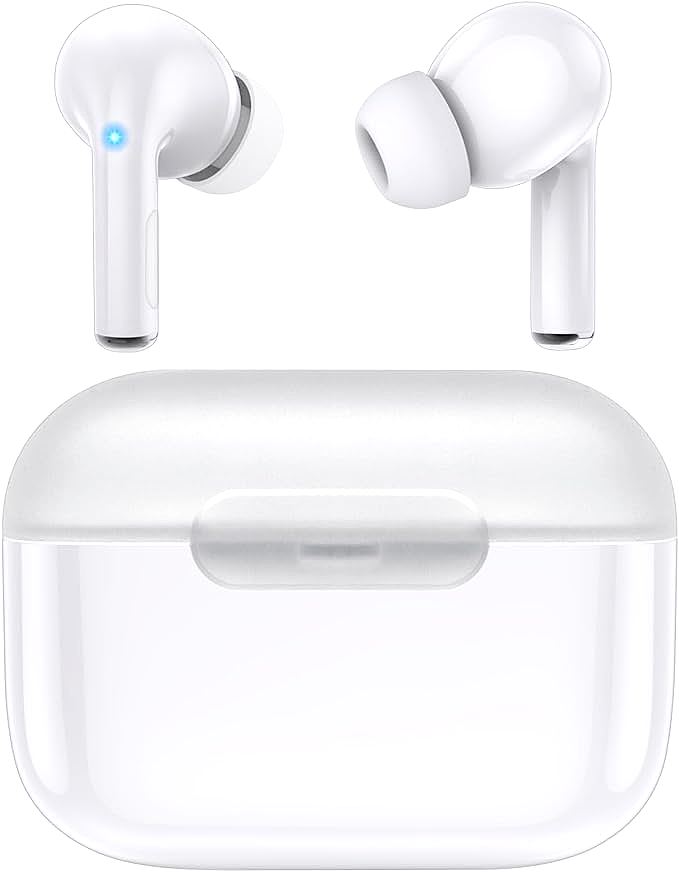
RICOO V77 Wireless Earbuds
There was a time when "budget wireless audio" was synonymous with frustration. Constant dropouts, hissing static, and battery life measured in minutes. Today, a pair of earbuds like the RICOO V77 costs less than a tank of gas but offers connection stability that rivals flagship models from just a few years ago.
This shift is not magic; it is the result of the Commoditization of Technology. Specifically, the democratization of Bluetooth 5.3. This article explores how advanced communication protocols have trickled down to the entry-level, the reality of "Noise Cancellation" in budget devices, and the physics of getting "good enough" sound for almost nothing.

The Backbone: Bluetooth 5.3
The V77 boasts Bluetooth 5.3. This is significant. * Efficiency: BT 5.3 optimizes the handshake process between devices (Connection Subrating). It allows the earbuds to switch between "heavy duty" (music streaming) and "low power" (standby) states much faster. This is the primary reason why a tiny battery in a cheap earbud can now last 5-6 hours. * Stability: Improved channel hopping algorithms make the connection more resistant to interference in crowded environments (like gyms or subways).
For the consumer, this means the "basic function"—wireless connection—is no longer a pain point, even at the lowest price bracket. The chipsets handling this are now mass-produced and ubiquitous.
Decoding "Noise Cancellation": ENC vs. ANC vs. Passive
Marketing often blurs the lines. The V77 claims "Noise Cancellation." In the budget tier, this almost always refers to one of two things, but rarely Active Noise Cancellation (ANC).
1. Passive Noise Isolation: The physical seal created by the silicone ear tip blocking the ear canal. This is effective against high-frequency noise (voices, clatter).
2. Environmental Noise Cancellation (ENC): This is for Calls, not music. It uses the microphone to filter out background noise so the person on the other end can hear you.
User reviews confirm this: "Does not noise cancel" (in the ANC sense). It is crucial to understand that at this price point, you are relying on the Physical Seal. If the tip fits well, the isolation is surprisingly effective. If not, outside noise floods in. This highlights the importance of trying different ear tip sizes (S/M/L) included in the box.
The Sound Signature: The "V-Shape" Default
How do manufacturers tune cheap drivers to sound "good"? They use the V-Shape Curve. * Boosted Bass: Masks the lack of sub-bass extension. * Boosted Treble: Creates an illusion of "detail" and "clarity." * Recessed Mids: Hides the imperfections in vocal reproduction.
The V77 likely follows this curve ("3D Stereo"). It's a psychoacoustic trick that makes music sound punchy and exciting immediately, even if it lacks the nuance of audiophile gear. For gym playlists and pop music, it is remarkably effective.
Conclusion: The New Baseline
The RICOO V77 represents the new baseline of consumer audio. It proves that the barrier to entry for reliable wireless sound has virtually vanished. While it lacks the refinement of premium models, the fundamental technology—stable wireless transmission—is now a solved problem, available to everyone.
RICOO V77 Wireless Earbuds
Related Essays

Defying Gravity: The Biomechanics of Earhooks and Large-Driver Acoustics
Breaking the Acoustic Barrier: Material Science and Electromagnetism in Miniature Audio

The Algorithm of Clarity: How Environmental Noise Cancellation (ENC) Redefined Personal Communication

Size Matters: The Acoustics of 10mm Drivers and the Efficiency of Bluetooth 5.3

The Interface of Anxiety: Why Digital Displays Matter in TWS
The Physics of "Un-Listening": Why Air Conduction Beats Bone Conduction at $30

