The Tactile Rebellion: Why the MOZC Q68 Pro Ditched Touch Controls for Survival
Update on Dec. 7, 2025, 9:45 p.m.
Touch controls are the darling of modern audio design. They are sleek, futuristic, and—let’s be honest—often infuriating. A drop of sweat, a stray hair, or a readjustment of your beanie can pause your marathon playlist instantly. This is the Capacitive Flaw (Thesis).
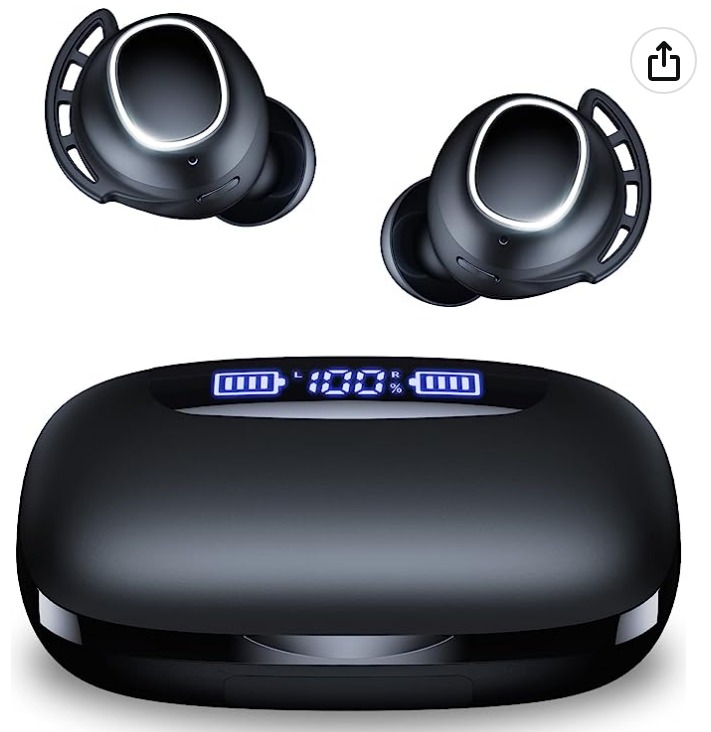
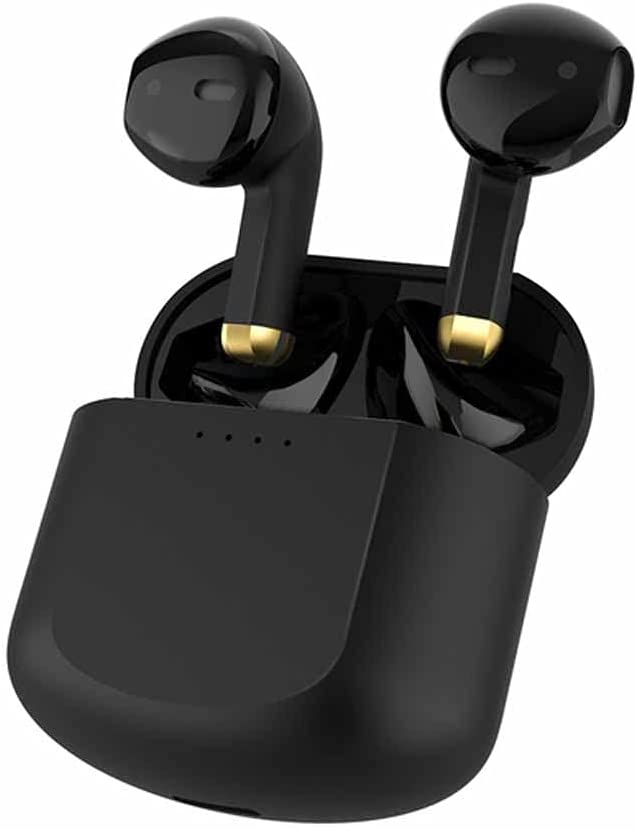
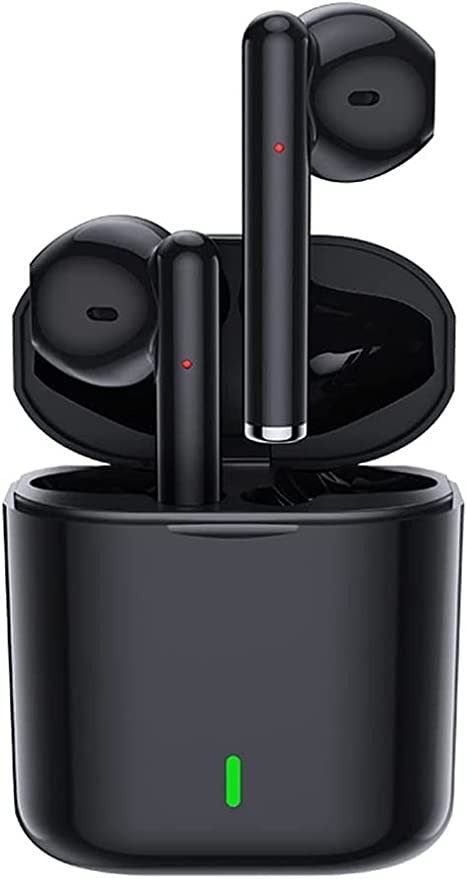
The MOZC Q68 Pro DE-JL Wireless Earbuds commit a deliberate act of technological rebellion: they use a Physical Button. At a budget price point where manufacturers usually slap generic touch sensors onto everything, this mechanical choice is not a regression; it is a feature of superior utility (Provocation). Let’s dissect the engineering logic behind why clicking is better than tapping, and how these tiny buds conquer the anatomy of the small ear.
H4 The Physics of “Positive Actuation”
Capacitive touch sensors work by detecting the electrical change when your finger (a conductor) approaches the sensor plate. The problem is, water (sweat, rain) is also conductive. When you are running in the rain, a touch sensor gets confused, leading to “ghost touches.”
The MOZC Q68 Pro utilizes a micro-switch mechanism located on the faceplate. This requires Mechanical Force to actuate (Physics). A raindrop cannot exert force. A hoodie rubbing against your ear cannot exert localized force. Only your finger can.
This provides Tactile Feedback—a physical “click” that confirms the command has been registered. You don’t need to wait for a beep or wonder if you tapped the right spot. As reviewer Vinnie noted, “Physical button for positive control actions… button control is the way to go.” It restores agency to the user in chaotic environments.
Field Note: To avoid pushing the earbud painfully deep into your ear canal when pressing the button, use the “Pinch Technique”. Stabilize the top and bottom of the earbud with your thumb and middle finger, then press the button with your index finger. This neutralizes the inward force.
H4 Solving the “Small Ear” Crisis
Ear canal anatomy follows a Bell Curve, yet most earbuds are designed for the median. This leaves the “tail end” of the curve—people with smaller conchas and narrower canals—in perpetual discomfort.
The MOZC Q68 Pro weighs a mere 0.1 oz (approx. 2.8g) per earbud. For context, an AirPod Pro weighs 5.4g. This 50% weight reduction dramatically lowers the Gravitational Pull acting on the ear canal (Data).
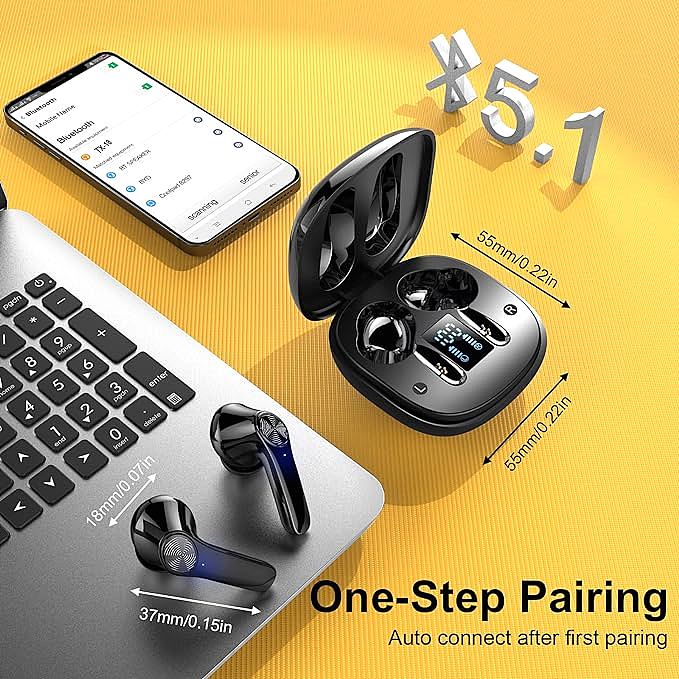
Furthermore, the chassis dimensions ($1.18 \times 0.78 \times 0.47$ inches) indicate a shallow insertion depth and a compact housing that sits flush within the concha. This design minimizes the lever arm effect that causes heavier buds to wiggle out during exercise.
User Lilli Mahony confirms this engineering success: “I have really small ears and every kind of ear bud ever has always fallen out… And not once did I have to adjust the ear bud, it stayed in.”
H4 The Bluetooth 5.1 Stability Proposition
Inside this tiny chassis beats a Bluetooth 5.1 heart. While not the newest 5.3 standard, version 5.1 introduced a crucial feature for budget devices: improved Caching and Reconnection.
The MOZC Q68 Pro supports the HSP, HFP, A2DP, and AVRCP profiles. This comprehensive stack ensures that despite the low price, the earbuds can handle high-bitrate audio streams (A2DP) while maintaining low-latency commands (AVRCP). The “One-Step Pairing” leverages a Hall Effect sensor in the case lid—opening the case wakes the chip before you even touch the buds.
However, the laws of physics still apply. 2.4GHz radio waves struggle to penetrate water (your body). If you experience dropouts, it is likely Cross-Body Interference—your phone is in your back left pocket, and the primary receiver bud is in your right ear.
So What?: For rock-solid connection, keep your phone on the same side of your body as the “Master” earbud (usually the first one you pull out of the case), or use an armband.
H4 The 8mm Driver Compromise
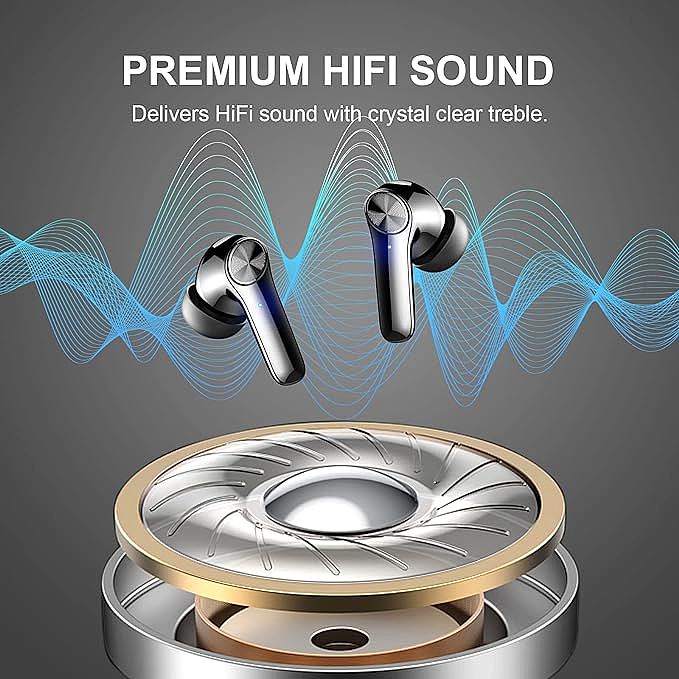
To fit inside such a small housing, MOZC employs an 8mm dynamic driver with a “triple-layer composite diaphragm.” In acoustic engineering, 8mm is a sweet spot for compact buds—large enough to move air for bass, but small enough to remain agile for treble transients (Physics).
Don’t expect audiophile neutrality. These are tuned with a V-Shape Signature—boosted bass and treble to cut through the noise of a commute or workout. It’s a pragmatic tuning choice that prioritizes energy and rhythm over critical listening detail.
TCO Analysis (Total Cost of Ownership) * Acquisition Cost: ~$19.90. * Cost Per Hour: Assuming a conservative 1-year lifespan (365 days * 2 hours), you are paying $0.02 per hour of usage. * Risk Factor: Low. If you lose one at the gym, the financial impact is negligible compared to losing a $200 flagship pair. This “peace of mind” is a hidden value feature.
The MOZC Q68 Pro isn’t trying to outsmart the tech giants with AI features. It wins by doing the simple things—staying in your ear and responding when you click—exceptionally well.