Osteophony and Acoustics: Engineering Open-Ear Transducers
Update on March 4, 2026, 7:26 p.m.
To understand the sheer biological anomaly of human hearing, one must perform a remarkably simple experiment: hum a low, resonant note, and then firmly plug both ears with your fingers. The sound of your voice does not disappear; in fact, it transforms. It becomes deeper, richer, and seemingly originates from the center of your own skull. You are no longer hearing your voice through the air. You are experiencing osteophony—the transmission of acoustic vibrations through the dense skeletal structure of your cranium directly into your inner ear.
For over a century, acoustic engineering was almost exclusively obsessed with air conduction. We built paper cones, neodymium magnets, and airtight enclosures to push atmospheric molecules into the ear canal. However, the modern necessity for environmental awareness during intense physical activity has forced a radical paradigm shift. Wearable audio devices are increasingly abandoning the air canal entirely, relying instead on the rigid highways of human bone.
By analyzing the convergence of acoustic physics, biomechanics, and metallurgy found in modern open-ear systems—such as the Gorilla Audio Ultra Ti2—we can uncover the profound complexities of transmitting high-fidelity audio without ever moving a single breath of air.
Echoes from the 18th Century: Bypassing the Tympanic Membrane
The realization that the human skeleton could act as an acoustic conductor is not a product of the digital age. It is a biological workaround discovered out of sheer desperation by one of history’s greatest musical minds.
By his late twenties, Ludwig van Beethoven began suffering from severe tinnitus, followed by a profound, progressive degradation of his hearing. His condition was likely a form of sensorineural hearing loss, meaning the delicate mechanisms of his inner ear or auditory nerve were failing, while the mechanical conductive pathways might have remained partially intact. Desperate to compose, Beethoven discovered that if he clamped a rigid brass rod between his teeth and pressed the other end firmly against the soundboard of his pianoforte, he could perceive the music.
Beethoven was unknowingly utilizing bone conduction. When he struck a key, the vibration of the piano string transferred to the soundboard, then traveled through the brass rod, into his teeth, through his jawbone (mandible), and directly into his temporal bone.
Traditional human hearing relies on an incredibly fragile, multi-stage mechanical relay. A sound wave travels through the air, enters the outer ear (pinna), and strikes the eardrum (tympanic membrane). This thin membrane vibrates, transferring kinetic energy to the ossicles—three microscopic bones named the malleus (hammer), incus (anvil), and stapes (stirrup). These bones act as a mechanical lever system, amplifying the force of the vibration and pushing against the oval window of the cochlea.
Beethoven’s brass rod bypassed the eardrum and the ossicles entirely. The vibrations bypassed the middle ear’s air-filled cavity, sending seismic waves directly through the skull to agitate the fluid inside the cochlea. This historical precedent established the fundamental physical principle: if you can apply sufficient kinetic vibration to the cranial structure, the brain will interpret it as sound, rendering the outer ear anatomically obsolete for the purpose of audio reception.
Your Skull as an Acoustic Highway
To engineer a device that replicates Beethoven’s brass rod without requiring the user to bite down on metal, engineers had to solve a massive problem regarding acoustic impedance.
Acoustic impedance is the resistance a medium offers to the propagation of a sound wave. Air has very low acoustic impedance; it is highly compressible and easy to move. Bone has extremely high acoustic impedance; it is dense, rigid, and requires a massive amount of mechanical force to vibrate. When a sound wave attempts to travel from a low-impedance medium (air) to a high-impedance medium (the skull), the vast majority of the energy is reflected away. This is why you cannot simply press a standard air-conduction headphone speaker against your cheek and expect it to sound good.
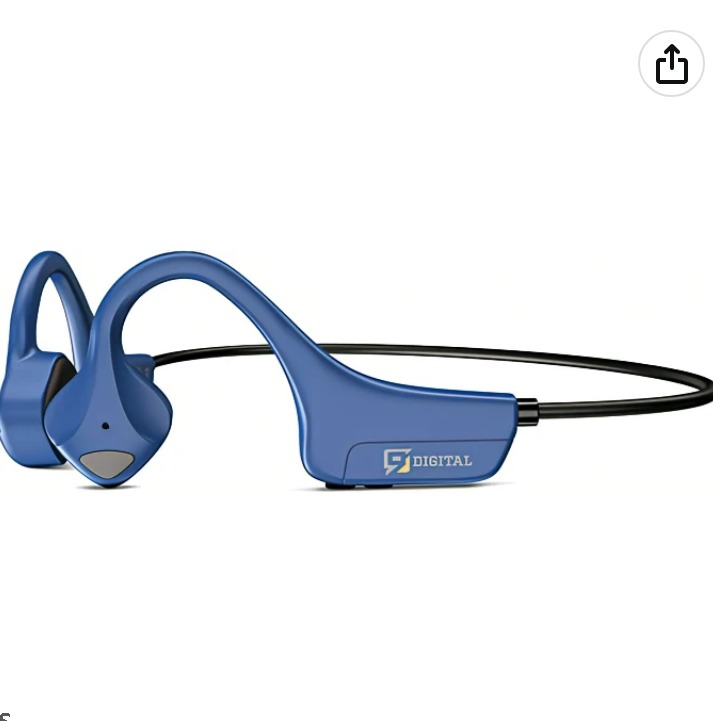
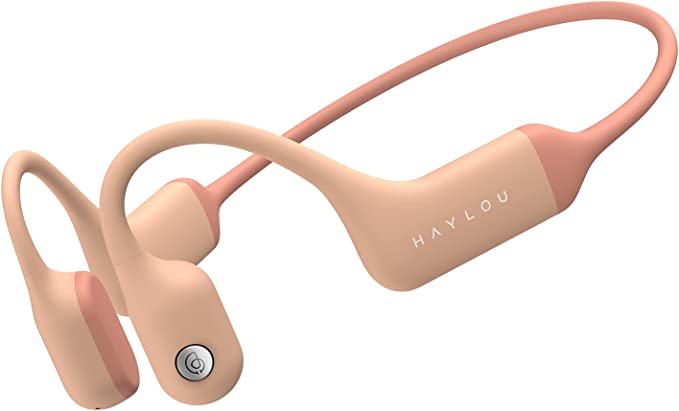
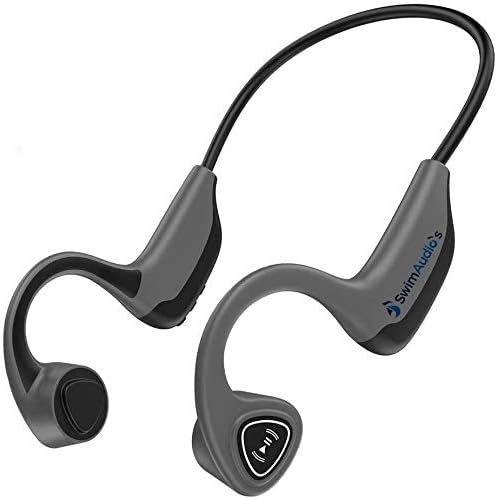
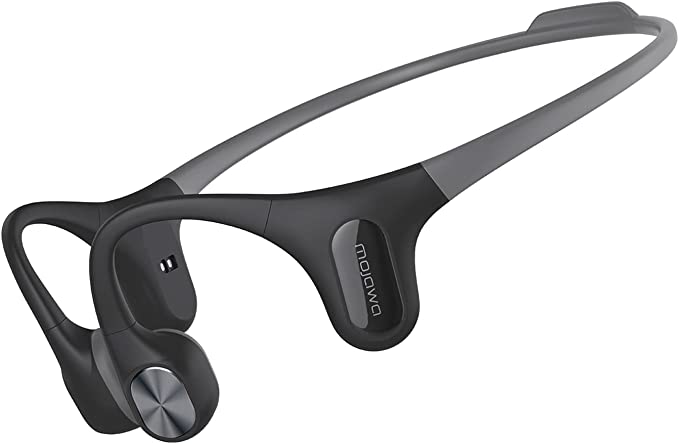
Modern bone conduction transducers, such as those embedded in the Gorilla Audio Ultra Ti2, do not use traditional speaker cones. Instead, they are essentially highly refined, miniaturized seismic engines. They utilize a heavy metal core wrapped in an electromagnetic voice coil, suspended by stiff springs. When an alternating electrical current representing an audio signal passes through the coil, it generates a fluctuating magnetic field. This field violently rapidly attracts and repels the heavy core.
Because the core is heavy and the springs are stiff, the entire housing of the transducer vibrates with immense kinetic energy. When this vibrating housing is held firmly against the zygomatic arch (the cheekbone) or the temporal bone just in front of the ear, the mechanical energy overcomes the impedance mismatch. The bone is forced to vibrate in sympathy with the transducer.
This cranial highway is not perfectly linear. The skull acts as a complex mechanical low-pass filter. High-frequency vibrations (treble) have very short wavelengths and low energy; they are easily absorbed and dissipated by the soft tissues of the skin and muscle resting over the bone. Low-frequency vibrations (bass) have long wavelengths and high energy, traveling through the bone with much greater efficiency. Consequently, the digital signal processors (DSPs) inside these devices must heavily pre-equalize the audio signal, aggressively boosting the high frequencies to compensate for the biological dampening effect of human flesh.
Why Do Open-Ear Transducers Struggle with Bass?
If you examine the acoustic profile of any open-ear mechanical transducer, you will notice a consistent engineering compromise: the reproduction of sub-bass frequencies is inherently flawed. This is not a failure of the specific manufacturer, but a harsh boundary dictated by Newtonian physics.
To perceive deep bass—frequencies below 60 Hertz—an audio system must move a massive amount of mass. In a traditional subwoofer, this is achieved by moving a large volume of air. In a bone conduction system, the transducer must physically displace the rigid mass of the user’s skull.
As the frequency drops, the physical excursion (the back-and-forth movement) of the electromagnetic core must increase dramatically to maintain the same perceived volume. When a bone conduction headphone attempts to play a heavy hip-hop beat or a cinematic explosion, the transducer begins to vibrate violently against the skin.
This results in two distinct failure modes. First, the extreme vibration causes a phenomenon known as “tickling” or “skin fatigue.” The user experiences an uncomfortable, localized buzzing sensation on their cheekbones that rapidly becomes irritating during prolonged listening sessions. Second, if the transducer bounces too violently, it physically breaks contact with the skin for a microsecond. When contact is broken, the impedance matching fails instantly, and the bass note distorts or vanishes entirely.
Engineers must walk a tightrope. They must supply enough kinetic energy to stimulate the cochlea, but restrict the mechanical excursion to prevent skin fatigue and loss of contact. This is why devices engineered for high-intensity sports deliberately roll off the extreme low frequencies, prioritizing secure contact and physical comfort over cinematic sub-bass reproduction.
Sealing the Electronics Against Human Sweat
When audio equipment is deployed into high-intensity kinetic environments, the primary threat to its survival is no longer acoustic distortion, but catastrophic electrochemical failure. The human body, when subjected to strenuous exercise, becomes a highly efficient engine for destroying microelectronics.
Sweat is not water; it is a complex, highly corrosive saline solution containing sodium chloride, potassium, urea, and lactic acid. When this electrolyte-rich fluid bridges the microscopic gaps between copper traces on a printed circuit board (PCB) or the charging pins of a wearable device, it initiates a devastating process called galvanic corrosion.
Because electricity is actively flowing through the device to power the Bluetooth radio and drive the transducers, the introduction of sweat creates a microscopic galvanic cell. The metal components act as anodes and cathodes, and the sweat acts as the electrolyte. Metal ions are rapidly stripped away from the positive terminals and deposited elsewhere. Within a matter of hours, critical conductive pathways dissolve, turning into non-conductive oxides, and the device suffers a hard failure.
To survive this, devices like the Gorilla Audio Ultra Ti2 must be engineered with an ingress protection rating of IP67. The “6” indicates total, absolute protection against the ingress of microscopic solid particulates (dust tight). The “7” is the critical liquid rating, indicating the device can survive complete immersion in one meter of static water for up to 30 minutes.
Achieving true IP67 status in an audio device is exceptionally difficult because audio, by definition, requires physical movement. A speaker cone must push air. A bone conduction transducer must vibrate. If you seal the housing with rigid epoxy to prevent water entry, you restrict the mechanical movement required to produce sound.
The solution lies in advanced material engineering and structural design. The internal PCB assemblies are subjected to conformal coating—a microscopic layer of specialized hydrophobic polymer applied via vapor deposition. This acts as a chemical shield, causing liquid to bead up and roll off rather than adhering to the silicon chips. Furthermore, the external housing utilizes precision-molded silicone gaskets and ultrasonic welding to bond the plastic seams at a molecular level, entirely eliminating the tiny voids where capillary action could otherwise draw sweat into the internal battery compartment.

When a Cyclist Navigates Urban Chaos
To understand the profound utility of open-ear acoustic architecture, we must remove the technology from the laboratory and place it into an environment of extreme cognitive load: a cyclist navigating a dense, urban traffic grid during rush hour.
In this scenario, human survival depends on split-second, multi-sensory processing. The visual cortex is overwhelmed tracking traffic lights, pedestrians, and vehicular trajectories. Consequently, the auditory system serves as an early-warning radar, detecting threats outside the immediate field of vision—the sudden acceleration of an engine in the blind spot, the screech of tires, or the warning bell of another cyclist.
If the cyclist is wearing traditional, air-sealing earbuds featuring Active Noise Cancellation (ANC), they have voluntarily initiated a state of sensory deprivation. The ANC algorithms aggressively sample the low-frequency rumble of the street and generate destructive anti-phase waves, effectively erasing the approaching bus from the cyclist’s auditory reality. Even without ANC, the physical silicone tips block the ear canal, causing passive attenuation and dampening critical high-frequency spatial cues.
Bone conduction architecture solves this by leveraging a biological mechanism known as divided auditory attention. Because the ear canal remains entirely open, the tympanic membrane is free to process the high-fidelity atmospheric soundscape precisely as evolution intended. The ambient sounds travel through the air, strike the eardrum, and are processed by the cochlea.
Simultaneously, the open-ear transducers send a secondary, independent data stream (a podcast or navigation instructions) through the cranial bone. The fluid inside the cochlea is therefore stimulated by two entirely different mechanical pathways at the exact same time. The brain is remarkably adept at processing these dual streams. The cyclist can clearly comprehend the GPS instruction originating from their temporal bone while instantaneously reacting to the blast of a car horn captured by their eardrum. It completely eliminates the lethal delay caused by the auditory masking inherent in traditional sealed headphones.
Titanium Memory Alloys vs. Rigid Plastics
The structural skeleton of a wearable audio device is subjected to immense physical stress. It must clamp firmly enough to the skull to maintain optimal acoustic impedance matching for the transducers, yet it must remain flexible enough to accommodate vast differences in human cranial geometry without causing pressure headaches.
Historically, headbands were manufactured using injection-molded thermoplastics like polycarbonate or ABS. While cheap to produce, rigid plastics suffer from a critical flaw: plastic deformation. When a plastic headband is stretched repeatedly over months of daily use, the polymer chains begin to permanently yield. The clamping force gradually diminishes. Once a rigid plastic band loses its tension, the transducers float away from the cheekbones, destroying the audio transmission.
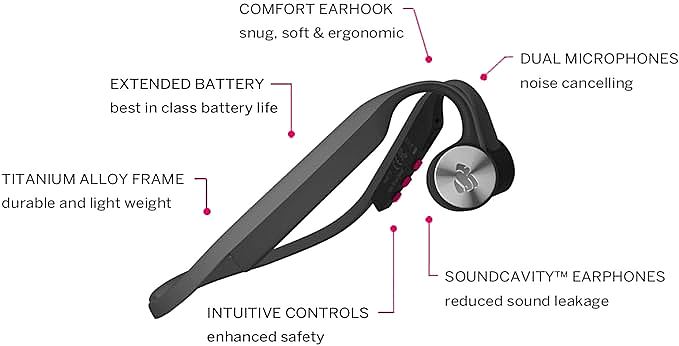
To combat this, premium acoustic architectures—such as the 30-gram frame of the Ultra Ti2—utilize a continuous core of titanium alloy. Titanium possesses a unique combination of high tensile strength, exceptional corrosion resistance (crucial for sweat exposure), and a very low modulus of elasticity compared to steel.
Specifically, many of these devices employ a class of materials known as Shape Memory Alloys (SMAs), such as Nitinol (a near-equiatomic alloy of nickel and titanium). At the atomic level, these alloys possess a highly unusual crystalline structure. When the headband is bent or twisted to extreme angles, the material does not undergo permanent plastic deformation. Instead, it undergoes a solid-state phase transformation, temporarily shifting its crystal lattice from an austenite phase to a martensite phase.
When the mechanical stress is removed, the alloy instantaneously snaps back to its original, mathematically defined austenite shape. This means a titanium-cored headband can be stretched over a bicycle helmet, shoved into a gym bag, and subjected to thousands of flex cycles, yet it will always return to deliver the exact, precisely calibrated clamping pressure required to maintain acoustic coupling with the skull. The exterior is then over-molded with a biocompatible silicone elastomer, ensuring that the relentless mechanical tension is distributed softly across the dermal layer, preventing pressure necrosis during marathon usage.

Leaking Sound to Create Privacy
One of the most persistent, counter-intuitive engineering challenges in the development of open-ear transducers is the management of acoustic leakage.
By definition, a device that rests outside the ear and vibrates violently will disturb the air around it. While the primary energy is directed inward into the bone, the outer casing of the transducer inevitably acts like a miniature, highly inefficient speaker cone, pushing air outward into the environment. Early iterations of this technology were notorious for turning the user into a walking radio; anyone sitting within a three-foot radius could clearly hear the user’s private phone conversation.
Solving this required a deep dive into the physics of wave cancellation, leading to architectural innovations often marketed under proprietary terms like “SoundCavity design.”
To prevent sound from leaking outward, engineers cannot simply wrap the transducer in thick, heavy rubber, as this would add unacceptable weight and restrict the primary vibration. Instead, they use the leaking sound waves to destroy themselves.
This is achieved through highly precise acoustic venting. Engineers drill microscopic holes or slits in the exterior casing of the transducer at precisely calculated locations. When the internal electromagnetic core vibrates, it generates an acoustic wave that travels outward. Simultaneously, a secondary wave is generated from the back of the moving core inside the casing.
By carefully tuning the internal geometry of the cavity and the placement of the exterior vents, engineers force that secondary, internal sound wave to exit the casing exactly 180 degrees out of phase with the primary leaking wave. When the two waves collide in the air immediately outside the user’s head, the high pressure of one wave perfectly aligns with the low pressure of the other. They destructively interfere, effectively neutralizing the acoustic energy before it can travel across the room. The user feels the vibration in their bones, but the colleague sitting at the next desk hears nothing but silence.
The Future of Cranial Audio Transmission
As we analyze the current state of osteophonic technology, looking past the 8-hour battery capacities and Bluetooth protocols, the future trajectory of the medium becomes clear. We are reaching the thermodynamic and kinetic limits of traditional electromagnetic transducers. Moving physical mass requires vast amounts of electrical current, placing a hard cap on the miniaturization of lithium-ion power cells.
The next evolutionary leap will likely involve the commercialization of piezoelectric transducers. Unlike electromagnetic coils that rely on heavy magnets and springs, piezoelectric materials are specialized crystals or ceramics that physically change shape when an electrical voltage is applied. They possess no moving parts in the traditional sense, relying instead on atomic-level deformation.
Piezoelectric arrays could be manufactured to be paper-thin, consuming a fraction of the current while offering infinitely faster transient response times. This would solve the historical bass-reproduction issues by allowing for massive, instantaneous force generation without the delayed physical excursion of heavy metal cores.
Until that material science revolution arrives, current systems rely on the brutal, elegant physics of kinetic force. By wrapping titanium memory alloys in hydrophobic silicon, sealing the circuits against the corrosive reality of human biology, and harnessing the rigid resonance of the human skull, acoustic engineers have successfully bypassed the eardrum entirely. They have transformed the dense bone of the cranium into a high-fidelity receiver, allowing the modern athlete to maintain an unbroken, vigilant connection with the physical world while simultaneously traversing an invisible, digital soundscape.