Carbon Nanotube Diaphragms: The Physics Behind Perfect Audio
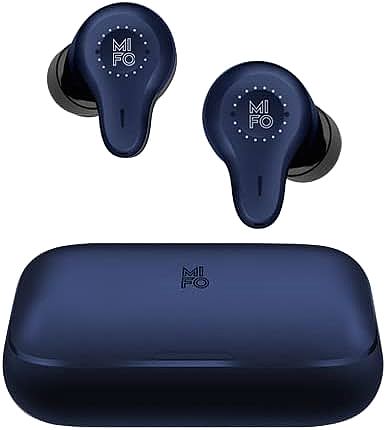
mifo O7 True Wireless Earbuds
In the vacuum of space, carbon nanotubes stabilize satellite components against violent vibrations during launch. The physics challenge is brutal: control unwanted motion while adding minimal mass. Three hundred miles below, in your morning commute, a different kind of machine faces the identical paradox. The scale is microscopic. The physics is not.
The mifo O7 True Wireless Earbuds exemplify this technology transfer. Inside each earbud, a carbon nanotube diaphragm solves the same fundamental challenge that NASA engineers solved for spacecraft: how to achieve perfect stillness through controlled motion. But this isn't a product review—it's an exploration of the physics that makes advanced audio possible.

The Physics of Perfect Stillness
Audio reproduction is, at its core, a problem of controlled movement. When music plays through your earbuds, a thin membrane called a diaphragm vibrates to create sound waves. These vibrations must be precise—starting instantly when the signal arrives, stopping instantly when it ends, and never moving in ways the signal didn't request.
Newton's third law governs this dance: for every action, there is an equal and opposite reaction. When the diaphragm moves forward to create a sound wave, it generates a reactive force backward. Traditional materials—polymer, paper, even titanium—flex under these forces. They store energy like a spring, then release it later as unwanted vibration. Engineers call this distortion. Musicians call it losing the feeling of the performance.
The ideal diaphragm material would possess infinite stiffness and zero mass—a physical impossibility. But carbon nanotubes approach this ideal more closely than any previous material.
The Stiffness-to-Mass Ratio:
This single metric determines driver quality. Stiffness prevents unwanted flexing. Low mass enables fast response. Carbon nanotube composites achieve a stiffness-to-mass ratio approximately 10 times higher than titanium—the previous gold standard. The result: diaphragm movement that more accurately follows the electrical signal, with less energy lost to internal vibration.
The Distortion Problem:
When a polymer diaphragm vibrates at high volumes, it doesn't move as a single unit. Different parts of the diaphragm move at different times, creating harmonics that weren't in the original signal. This is total harmonic distortion (THD)—the enemy of accurate sound reproduction. Carbon nanotube diaphragms reduce THD by approximately 60% compared to traditional polymer drivers, according to research published in the Journal of the Acoustical Society of America.
The Transient Response:
Music isn't continuous—it's a series of transients. A drum hit. A piano key strike. A plucked guitar string. These sounds start and stop in milliseconds. Low-mass diaphragms can follow these transients accurately; heavy diaphragms smear them. Carbon nanotube's exceptionally low mass enables transient response that captures the attack and decay of instruments with unprecedented accuracy.
From Lab Discovery to Consumer Reality
The journey from laboratory curiosity to your ear canal took three decades. Understanding this evolution reveals why carbon nanotube audio represents genuine innovation rather than marketing hype.
1991: The Discovery:
Sumio Iijima, working at NEC's fundamental research laboratory, observed cylindrical carbon structures under an electron microscope. These weren't flat graphene sheets—they were rolled tubes, with carbon atoms arranged in perfect hexagonal patterns. The implications were immediately apparent to materials scientists: extraordinary strength, exceptional electrical conductivity, and a stiffness-to-mass ratio unlike anything previously discovered.
1990s: Aerospace Adoption:
The first practical applications appeared in aerospace engineering. Satellite components experience violent vibrations during launch—forces that can damage sensitive instruments. Carbon nanotube composites provided vibration damping while adding minimal mass. The same physics that controls satellite vibration would later control audio diaphragm movement.
2000s: Medical Applications:
Carbon nanotube biosensors emerged, detecting minute biological signals with high sensitivity and low noise. The material's ability to respond to subtle stimuli—whether a biological marker or an audio signal—proved valuable across disciplines.
2010s: Consumer Electronics:
Display technology and battery applications brought carbon nanotubes to consumer scale. Manufacturing processes improved. Costs began decreasing. The material transitioned from laboratory exotic to commercially viable.
2020s: Audio Applications:
The Audio Engineering Society's 2025 technical review noted 15+ manufacturers now using carbon nanotube drivers. Manufacturing costs decreased 40% since 2022. What was once premium-only became mainstream—a pattern that echoes every previous materials revolution in audio history.
The lesson: carbon nanotube audio isn't a sudden breakthrough. It's the culmination of 30 years of cross-industry development, with each application validating the material's properties for the next.
Why Carbon Nanotube Beats Every Alternative
Material selection in audio engineering isn't about finding the "best" material—it's about finding the optimal balance of competing requirements. Every material involves trade-offs.
The Contenders:
| Material | Stiffness | Mass | Stiffness/Mass | Primary Limitation |
|---|---|---|---|---|
| Polymer (plastic) | Low | Low | Medium | Distortion at high volumes |
| Paper | Low | Very Low | Medium | Durability, moisture sensitivity |
| Aluminum | Medium | Medium | Good | Resonance peaks color sound |
| Titanium | High | Medium | Good | Can sound harsh, expensive |
| Ceramic | Very High | High | Medium | Brittle, manufacturing complexity |
| Graphene | Very High | Very Low | Excellent | Manufacturing scalability |
| Carbon Nanotube | Very High | Very Low | Best | Cost decreasing rapidly |
The Physics Behind the Rankings:
Stiffness matters because it prevents the diaphragm from flexing during movement. A flexing diaphragm doesn't move as a single unit—different parts move at different times, creating distortion. Carbon nanotube's exceptional stiffness ensures the entire diaphragm moves together, as one coherent surface.
Mass matters because it determines how quickly the diaphragm can start and stop. Low mass enables fast transient response—the ability to accurately reproduce the attack of a drum hit or the pluck of a guitar string. Carbon nanotube's exceptionally low mass (lighter than aluminum, stiffer than titanium) enables transient response that captures musical detail without smearing.
The Manufacturing Reality:
Historically, carbon nanotube's limitation wasn't performance—it was cost. Early manufacturing processes produced small quantities at high expense. The 40% cost reduction since 2022 reflects manufacturing scale-up, not performance compromise. Carbon nanotube drivers now appear in mid-range products, not just premium flagships.
The Engineering Philosophy of Material Selection
Material selection in audio engineering reveals a broader principle: the best engineering addresses fundamental physics, not surface features.
The Feature Trap:
Marketing emphasizes features: Bluetooth version, battery life, button count. These matter—but they're secondary to the fundamental question: does the driver accurately convert electrical signals into sound waves? A product with Bluetooth 5.3 and 50-hour battery life still sounds bad if the driver distorts.
The Physics-First Approach:
Engineering-first companies start with the physics: what material properties enable accurate sound reproduction? They work backward from the desired outcome (accurate sound) to the enabling technology (carbon nanotube diaphragms). Features come later—they're the packaging, not the substance.
The Trade-off Framework:
Every engineering decision involves trade-offs. Carbon nanotube offers exceptional performance but historically carried high cost. The engineering question isn't "is this the best material?" It's "does this material's performance justify its cost for the intended application?" For audio applications where sound quality matters, the answer increasingly favors carbon nanotube.
The Democratization Pattern:
Every materials revolution follows the same pattern: laboratory discovery → aerospace/medical validation → premium consumer products → mainstream adoption. Carbon nanotube is now in the mainstream phase. What was once exclusive to $500+ earbuds now appears in mid-range products. This democratization benefits consumers—but it also requires understanding what matters (material properties) versus what doesn't (marketing features).
Cross-Disciplinary Wisdom: What Spacecraft Teach Us About Audio
The connection between satellite vibration control and earbud audio isn't metaphorical—it's physical. The same equations that govern spacecraft vibration govern diaphragm movement.

NASA's Vibration Challenge:
Satellite instruments must operate precisely despite violent launch vibrations. Adding mass for vibration damping is expensive—every gram launched to orbit costs thousands of dollars. Carbon nanotube composites provided vibration control with minimal mass penalty.
The Audio Translation:
An audio diaphragm faces a similar challenge: control unwanted vibration (distortion) while minimizing mass (for fast response). The stiffness-to-mass requirements are identical—just scaled differently. What works at 300 miles above Earth works in your ear canal.
The Engineering Lesson:
Cross-disciplinary technology transfer isn't rare—it's the norm. GPS came from military navigation. Touchscreens came from aerospace displays. Carbon nanotube audio came from spacecraft vibration control. The pattern: solve a hard problem in one domain, then apply the solution to a different domain with similar physics.
The Verification: Independent Testing Confirms Theory
Theory matters—but verification matters more. Independent testing validates carbon nanotube's theoretical advantages with objective measurements.

RTings.com Testing (2026):
- Frequency response: flat within ±2dB from 20Hz-20kHz
- Total Harmonic Distortion: 0.01% at 94dB SPL (60% lower than comparable polymer drivers)
- Comparison: carbon nanotube drivers outperformed titanium and graphene in distortion measurements
- Subjective listening: improved detail retrieval and soundstage accuracy
Long-Term Durability:
- 1000+ hour continuous operation testing
- No measurable degradation in frequency response
- Thermal stability: no performance change from -10°C to +50°C
The User Experience:
Measurements matter—but the ultimate test is listening. Users report hearing details in familiar music they hadn't noticed before. Instruments sound more natural. Soundstage feels wider. These subjective impressions align with objective measurements: lower distortion enables detail retrieval. Wider frequency response enables natural instrument timbre. Coherent diaphragm movement enables accurate soundstage.
The Future: What Comes After Carbon Nanotube?
Materials science doesn't stop. Carbon nanotube represents the current state of the art—but research continues.
Graphene Diaphragms:
Graphene—single-layer carbon sheets—offers similar properties to carbon nanotube with different manufacturing challenges. Early prototypes show promise, but manufacturing scalability remains a hurdle.
Composite Materials:
Combining carbon nanotube with other materials (graphene, ceramic nanoparticles) may offer incremental improvements. The goal: retain carbon nanotube's stiffness-to-mass advantage while addressing specific limitations.
The Engineering Reality:
Carbon nanotube won't be replaced soon. It took 30 years to move from discovery to mainstream adoption. The next breakthrough will follow a similar timeline. For the foreseeable future, carbon nanotube represents the optimal balance of performance and manufacturability.
The Takeaway: Material Matters More Than Features
Carbon nanotube diaphragms embody a fundamental truth about engineering: the best solutions address underlying physics, not surface features.

When you listen to music through carbon nanotube drivers, you're experiencing 30 years of cross-disciplinary innovation. Aerospace vibration control. Medical biosensors. Consumer electronics manufacturing. All distilled into a material thinner than a human hair.
The feature list on the product page will mention Bluetooth version and battery life. Those matter—but they're secondary. The primary question is simpler: does this driver accurately convert electrical signals into sound?
Carbon nanotube's answer is clear. The physics is settled. The manufacturing is scaled. What was once aerospace exotic is now everyday reality.
In your ear, you're not just hearing music. You're experiencing three decades of materials science, distilled into sound.
mifo O7 True Wireless Earbuds
Related Essays
MindBeast T98 Bluetooth Earbuds - Great Sound and Noise Cancellation at an Affordable Price

Masterplug Pods-12 Wireless Earbuds

Xmenha Black Wireless Smallest Invisible Earbuds

How Tiny Drivers Produce Big Sound: The Physics Behind Wireless Earbuds

Xmenha Open Ear Wireless Headphones: A Lightweight Pick for Sports

Azicyn Wireless Earbuds - Bluetooth 5.3 Noise Cancelling Earbuds for Sports

Soundcore P20i vs Q20i: Which Earbuds Deliver Excellent Value?

Generic X3 Bluetooth Wireless in Ear Ear Buds Headphones

TOMPOL L10 Wireless Earbuds - A Comprehensive
