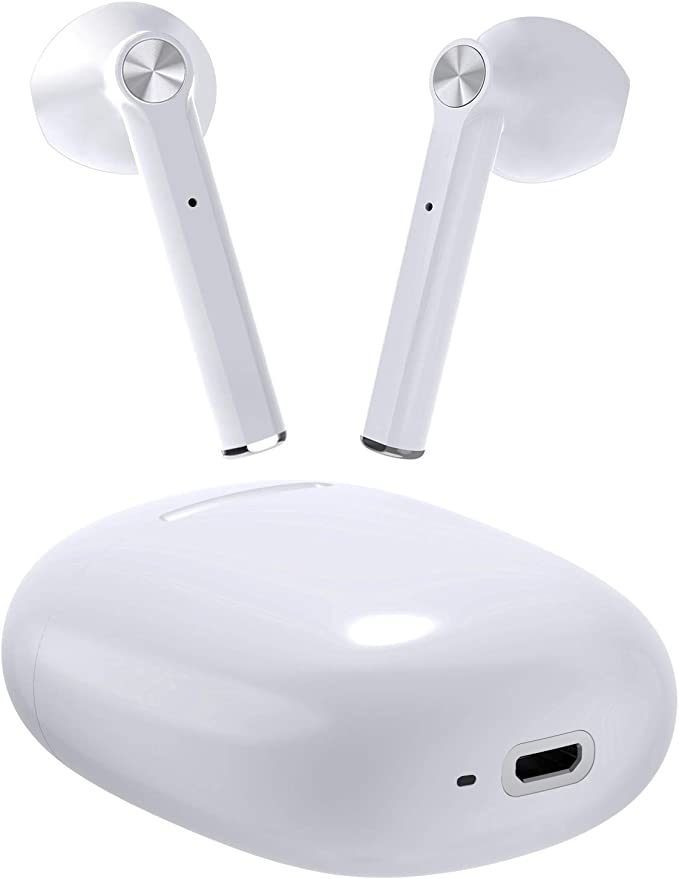
Beyond the Gym: Why IPX8 and Extreme Battery Life Matter for Endurance Audio
Update on Nov. 22, 2025, 3:11 p.m.
For the casual jogger, almost any pair of wireless earbuds will suffice. But for the endurance athlete—the ultra-marathoner, the long-distance cyclist, or the dedicated trail runner—audio gear is not just an accessory; it is a critical piece of equipment that must survive the same punishing conditions as the athlete.
The market is flooded with “sport” headphones, but a closer look at the specifications often reveals a gap between marketing claims and engineering reality. When you are twenty miles into a run, battling torrential rain or intense perspiration, standard consumer electronics often fail. This failure usually stems from two primary weaknesses: moisture ingress and battery exhaustion.
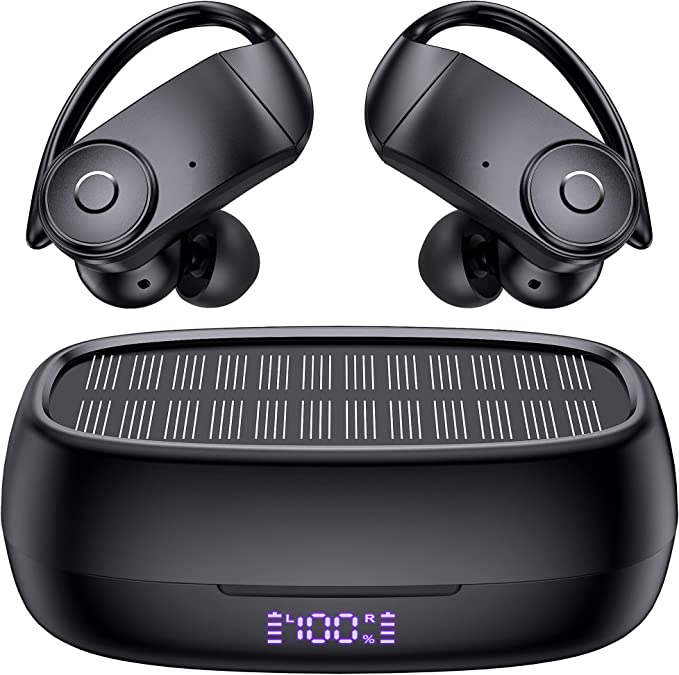
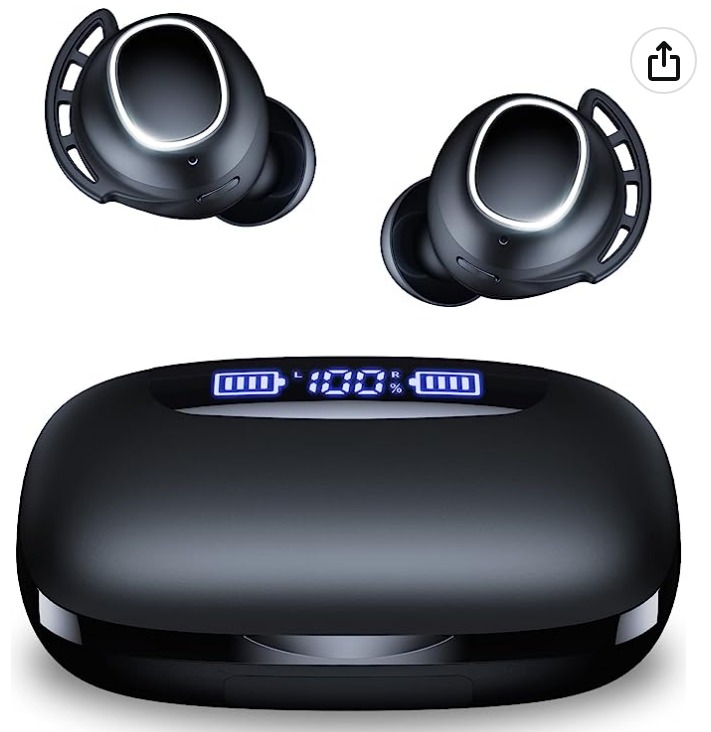
To understand what truly qualifies as “endurance-grade” gear, we need to look beyond the surface and decode the technical standards that define durability and longevity. By examining devices engineered for these extremes, such as the Tribit MoveBuds H1 Wireless Earbuds, we can better understand the science required to keep the music playing when the going gets tough.
Decoding the IP Rating: Why IPX8 is a Game Changer
You have likely seen the “IP” rating on electronics, but for athletes, the difference between IPX4 and IPX8 is the difference between a device surviving a light sprinkle and surviving a monsoon.
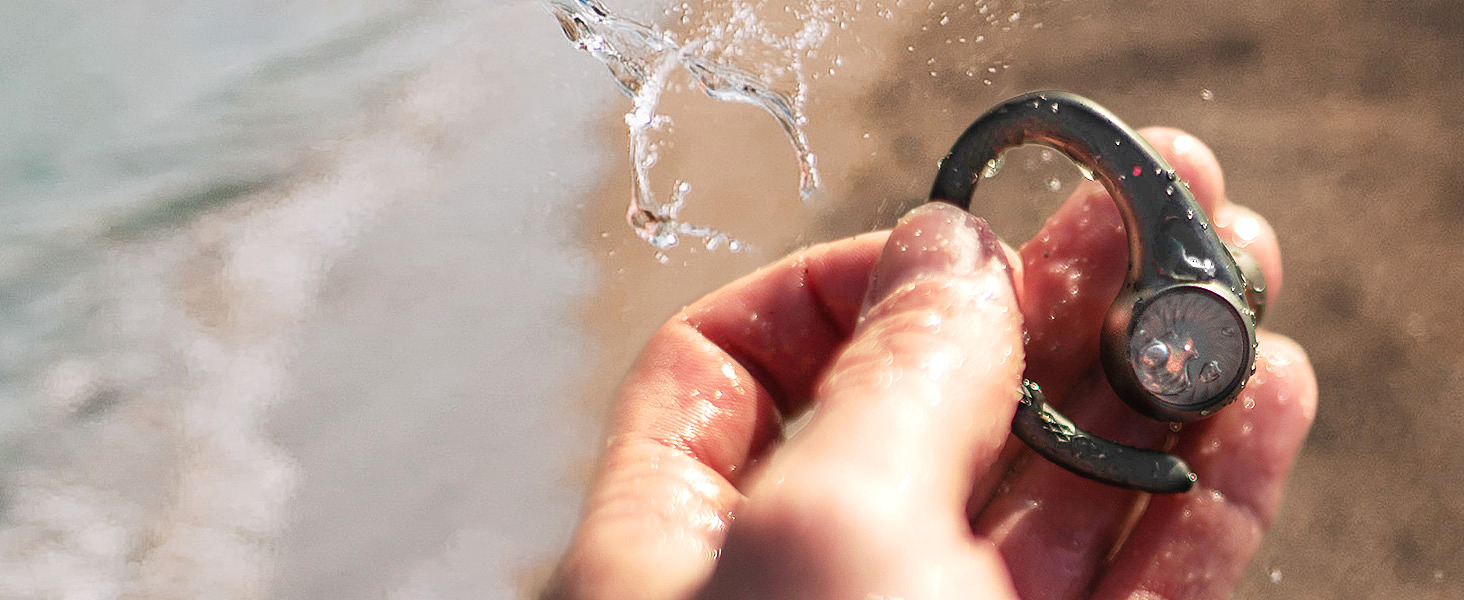
Most standard running earbuds carry an IPX4 rating, which protects against splashing water from any direction. This is adequate for a gym workout but often insufficient for prolonged exposure to heavy sweat or driving rain. Sweat is particularly destructive; it is not just water, but a saline solution that can corrode internal components and leave conductive residues once it dries.
The IPX8 certification—a standard rigorous enough to be certified by organizations like SGS—signifies that the device is hermetically sealed against continuous immersion in water. For a product like the Tribit MoveBuds H1, this rating isn’t just about the ability to drop them in a puddle; it indicates a level of structural integrity where polymers, seals, and adhesives create an impenetrable barrier. This design philosophy treats the earbud almost like a miniature submarine, ensuring that moisture cannot breach the shell to short-circuit the delicate drivers or battery cells inside. For the athlete who sweats heavily or trains in unpredictable weather, IPX8 acts as an essential insurance policy.
The Mathematics of Stamina: Solving Battery Anxiety
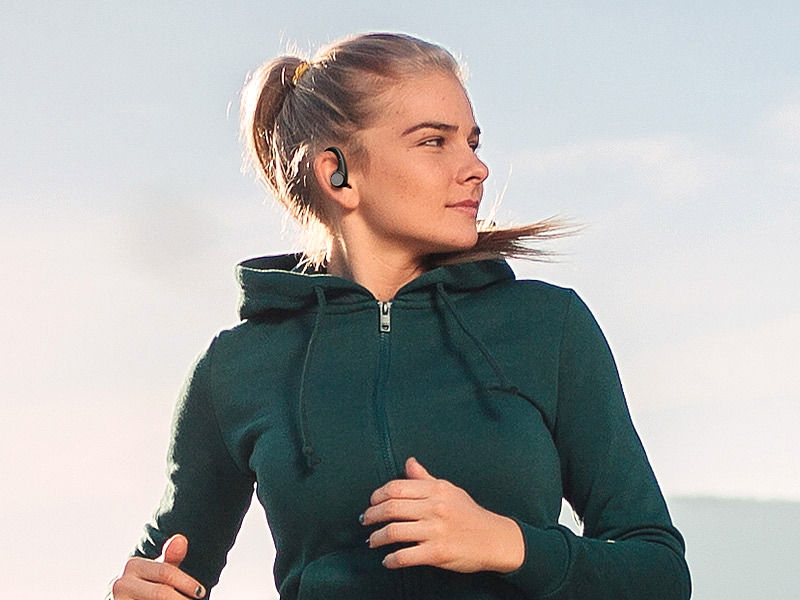
In the world of ultra-endurance sports, “battery anxiety” is real. Standard wireless earbuds typically offer 5 to 8 hours of playtime on a single charge. While sufficient for a 10K run, this falls woefully short for an Ironman triathlon, a century ride, or an ultra-marathon, which can easily exceed 12 hours.
Creating a device that lasts requires a delicate balance of lithium-ion energy density and power management efficiency. The Tribit MoveBuds H1 illustrates what is possible when efficiency is prioritized, delivering up to 15 hours of continuous listening time on a single charge. This extended runtime is achieved through the optimization of the Bluetooth 5.2 chipset, which reduces power consumption during signal transmission, and highly efficient audio processing algorithms.
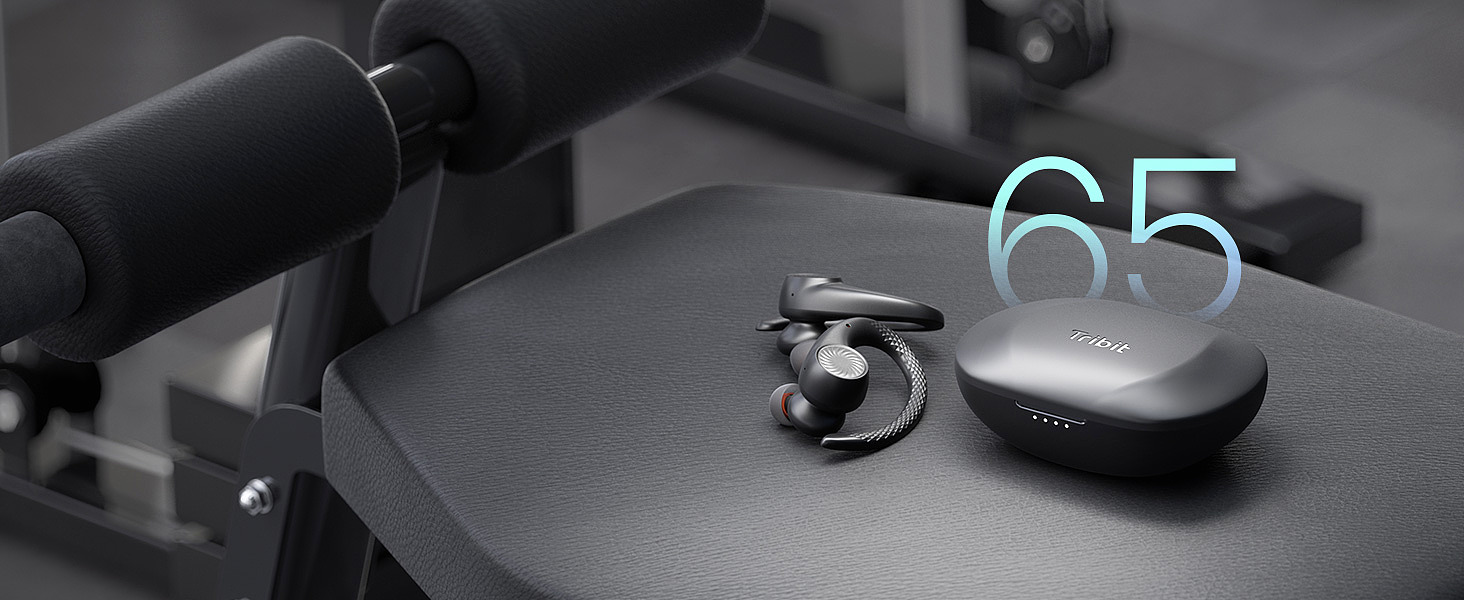
When combined with the charging case, the total capacity extends to a staggering 65 hours. For the user, this translates to weeks of training without needing to find a wall outlet, freeing mental bandwidth to focus on performance rather than power levels.
Biomechanics and Stability: The Ear Hook Advantage
Physics plays a distinct role in how we perceive audio while moving. The impact forces generated during running can dislodge standard in-ear buds, breaking the acoustic seal. Once that seal is broken, bass response evaporates, and the user is forced to constantly readjust the device—a major distraction.
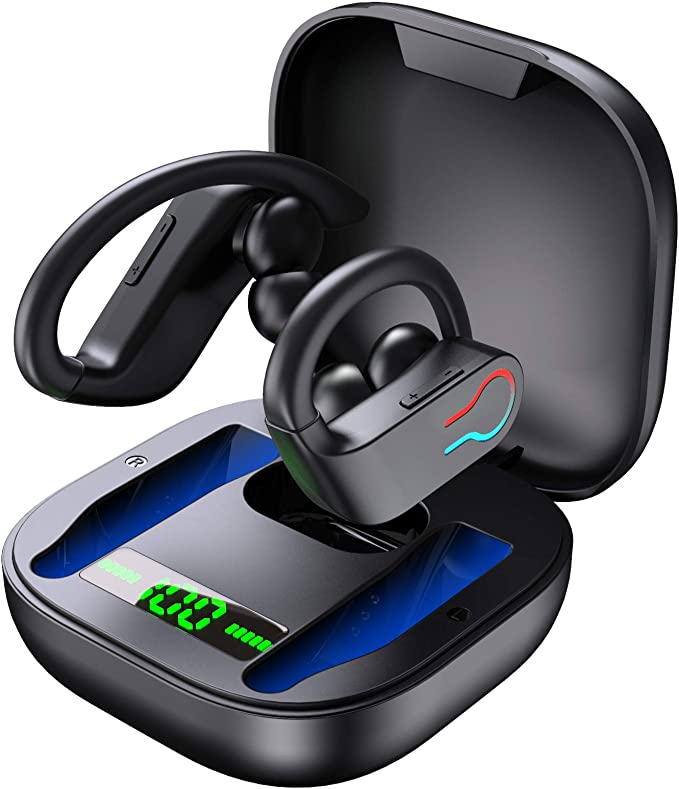
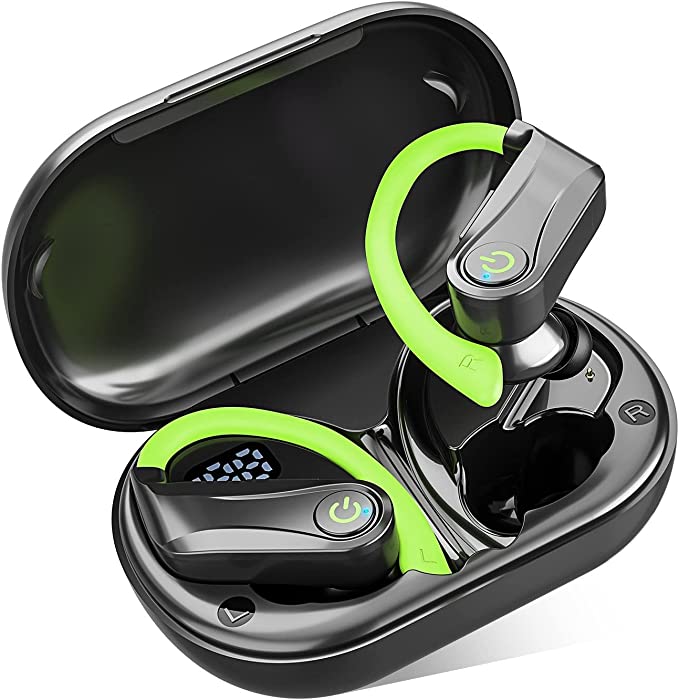
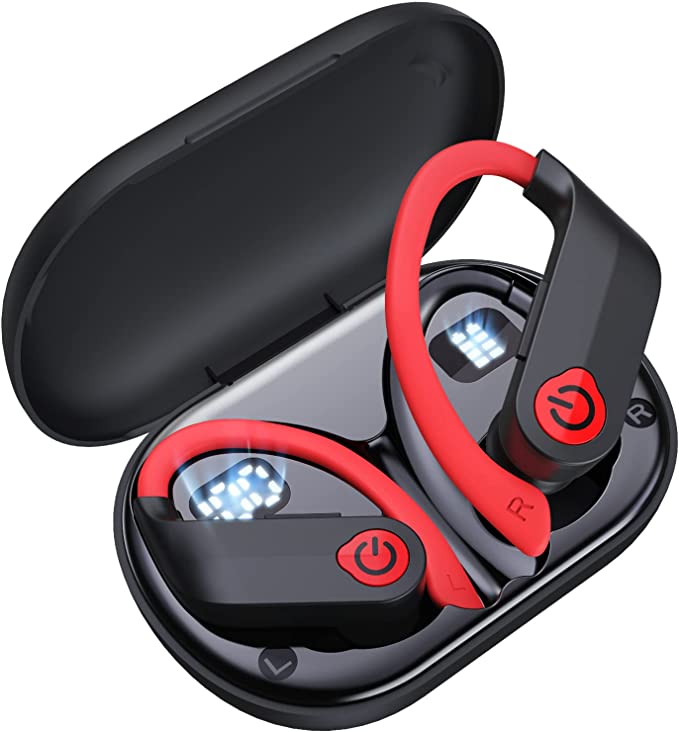
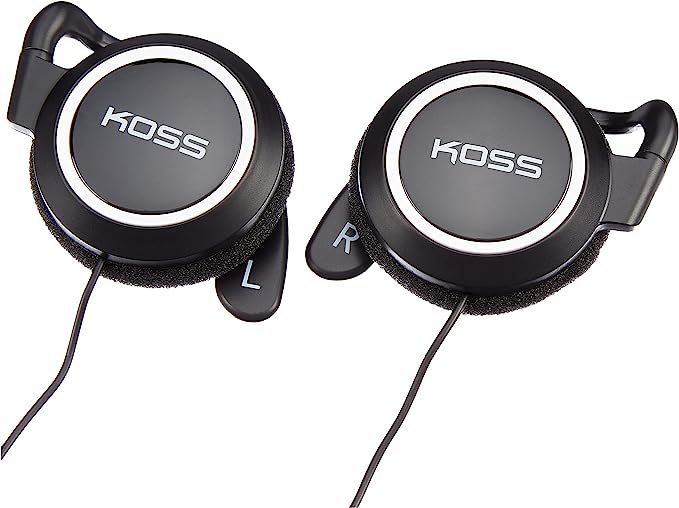
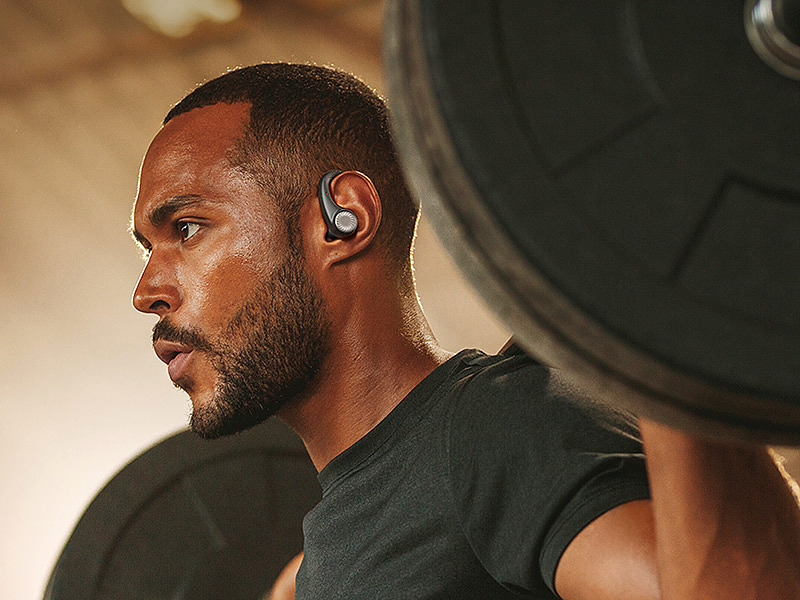
For high-impact activities, the over-ear hook design remains the gold standard for stability. Unlike friction-based fits (which rely solely on jamming the tip into the ear canal), ear hooks utilize the anatomy of the outer ear to anchor the device. The MoveBuds H1 employ this design to counteract gravitational and centrifugal forces. This stability is not just about comfort; it ensures consistent audio delivery. By maintaining a perfect seal with the help of angled nozzles and properly sized silicone tips, the device can passively block external noise and deliver the full spectrum of sound without interruption.

Situational Awareness: The Role of Transparency Mode
Isolation is great for focus, but complete sensory deprivation can be dangerous when sharing the road with vehicles. This creates a dilemma for cyclists and runners: sacrifice audio quality for safety, or risk not hearing an approaching car?
Modern audio engineering solves this with Transparency Mode. This feature uses the device’s outboard microphones—in the case of the MoveBuds H1, part of a four-mic array—to capture ambient environmental sounds. An internal processor then inverts and mixes this “outside” audio with your music stream in real-time.
The result is a mixed-reality audio experience where you can enjoy the high-fidelity nuances provided by codecs like Qualcomm aptX, while simultaneously retaining spatial awareness of traffic, sirens, or fellow athletes. This technology effectively removes the blinders (or rather, earmuffs) that traditional headphones impose, making it a critical safety feature for urban training environments.

A Critical Maintenance Note: Fighting the Invisible Enemy
Even the most robust, IPX8-rated gear has an Achilles’ heel: the charging contact points. While the earbuds themselves are sealed against moisture, the metal contact pins required for charging are exposed.
When sweat dries, it leaves behind salts and minerals. If an athlete places sweaty earbuds directly back into the charging case, these minerals can bridge the connection points or cause galvanic corrosion over time. This is a common reason why rugged earbuds eventually fail to charge, leading users to mistakenly believe the battery has died.
To maximize the lifespan of high-performance gear like the MoveBuds H1, a simple post-workout ritual is required: always wipe the contact points dry and clean them regularly to prevent oxidation. It is a small maintenance step that ensures the hardware continues to perform at the level its engineering intended.

Customization: The Software Side of Hardware
Finally, hardware is only half the equation. The ability to tailor the sound profile to the specific acoustics of the user’s ear and their preferred genre is what separates rigid tools from personalized instruments.
Through companion software, such as the Tribit App, users can access granular control over their audio experience. Whether it is selecting from 24 different EQ styles to boost the bass for a rhythmic running cadence or adjusting the intensity of the transparency mode, software integration allows the hardware to adapt to the changing needs of the athlete. This digital flexibility ensures that the earbuds are not just durable, but also enjoyable.

Conclusion
For the endurance athlete, gear selection is a process of elimination. You eliminate what breaks, what hurts, and what quits before you do. By prioritizing specifications like IPX8 waterproofing and extended battery life, and understanding the engineering behind them, athletes can find equipment that matches their own resilience. The Tribit MoveBuds H1 serve as a prime example of how focused engineering can solve the specific, rugged problems of the long-distance runner, proving that with the right technology, the music doesn’t have to stop until the finish line is crossed.