Engineering Acoustic Camouflage: The Mathematics of Auditory Masking
Update on March 6, 2026, 7:47 a.m.
We reside in an era characterized by unrelenting acoustic intrusion. The modern urban environment is a chaotic, overlapping matrix of sound pressure waves—diesel engines, HVAC systems, sirens, and human vocalizations. This environmental din frequently collides with the biological necessity of human sleep, creating a severe physiological conflict. When the brain is denied an uninterrupted descent through the necessary stages of the sleep cycle, cognitive function, metabolic regulation, and immune response degrade rapidly.
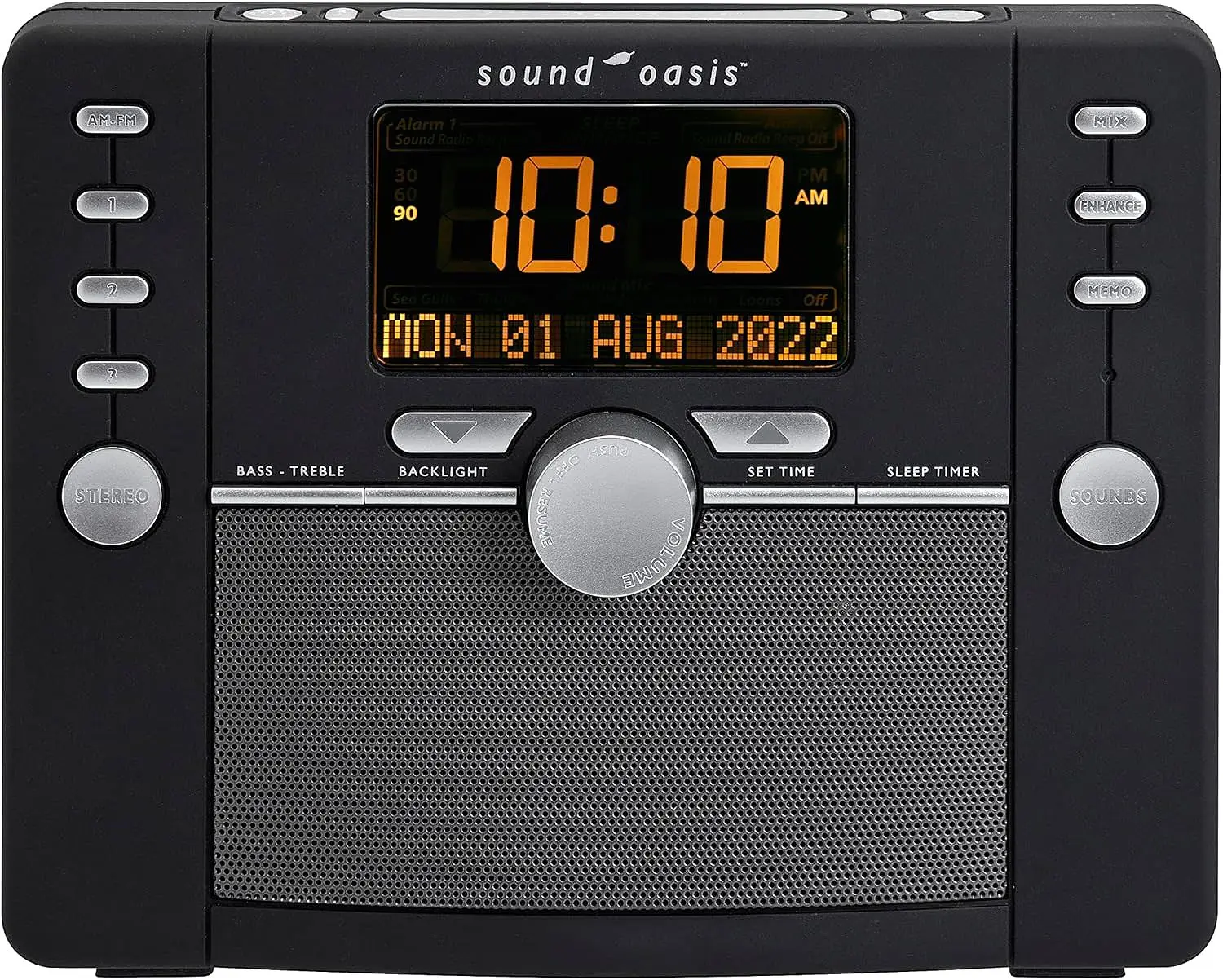
To combat this acoustic barrage, engineers have turned to the deliberate, calculated deployment of sound itself as a defense mechanism. By analyzing the architecture of a dedicated acoustic masking device—such as the SOFT DB DEEP, a hybrid unit integrating broadband noise generation, dual high-performance drivers, and wireless telecommunications—we can deconstruct the complex interplay between psychoacoustics, algorithmic sound design, and the thermodynamic realities of portable power. This is an exploration of how we mathematically engineer silence by generating noise.

Why Does a Loud Hiss Make a Dog Bark Disappear?
The efficacy of a sound machine does not rely on physical soundproofing; it cannot stop a sound wave from striking the tympanic membrane. Instead, it relies on a neurological phenomenon known as auditory masking. To understand this, one must first understand how the human ear processes frequency.
The basilar membrane within the human cochlea operates as a biological spectrum analyzer. It is tonotopically organized, meaning different physical sections of the membrane vibrate in response to different frequencies. When a sudden, intrusive sound (like a dog barking at 1,000 Hz) strikes the ear, a specific section of the basilar membrane fires a strong electrical signal to the auditory cortex. If the room is otherwise silent, the signal-to-noise ratio is massive, and the brain registers the bark as a startling, high-priority event, instantly triggering a cortisol spike and waking the sleeper.
Auditory masking subverts this mechanism by exploiting “critical bands.” A critical band is a specific frequency bandwidth within which a continuous background sound can effectively render a target sound imperceptible.
When a device emits “white noise”—a signal containing equal power across all linear frequencies within the human hearing range (20 Hz to 20,000 Hz)—it simultaneously stimulates the entire length of the basilar membrane. The auditory cortex is flooded with a continuous, unvarying baseline of data. When the dog barks, the energy of the bark is mathematically buried within the high-energy baseline of the white noise occupying that specific critical band. The signal-to-noise ratio drops to near zero. The ear still physically receives the sound wave of the bark, but the brain cannot computationally separate it from the background hiss, rendering the intrusion functionally invisible.
The Spectrum of Silence: White vs. Pink vs. Brown
While “white noise” is the colloquial term for all masking audio, the physics of spectral power distribution dictate highly specific applications.
- White Noise: Equal energy per linear frequency (e.g., the energy between 100 Hz and 200 Hz is identical to the energy between 10,000 Hz and 10,100 Hz). Because human hearing is logarithmic, white noise sounds extremely bright, harsh, and “hissy,” heavily biased toward the high end. It is excellent for masking sharp, high-frequency transients like sirens or shattering glass.
- Pink Noise: Equal energy per octave (e.g., the energy between 100 Hz and 200 Hz is identical to the energy between 1,000 Hz and 2,000 Hz). The power density decreases by 3 dB per octave. This mathematically mirrors the logarithmic nature of human hearing, resulting in a sound perceived as perfectly “flat” or balanced—similar to heavy rainfall.
- Brown (Red) Noise: Power density decreases by 6 dB per octave. This strongly biases the acoustic energy toward the low end of the spectrum, rolling off the harsh highs completely. It resembles the deep, guttural roar of a distant waterfall or an airplane cabin. It is highly effective at masking low-frequency intrusions like heavy footsteps or distant traffic rumble.
The Psychological Failure of the Audio Loop
Historically, early digital sound machines relied on short, compressed audio files that played on an infinite loop. This approach introduces a fatal flaw dictated by human evolutionary biology: pattern recognition.
The human brain is a hyper-efficient pattern-matching engine, evolved to detect subtle anomalies in the environment. If an audio loop is 30 seconds long, the brain will subconsciously memorize the specific cadence, minor pitch variations, and the exact millisecond the track splices back to the beginning. Once the brain recognizes the pattern, it ceases to treat the sound as a random, ignored baseline. The masking sound itself becomes a point of cognitive fixation, causing the listener to anticipate the “seam” in the audio track, destroying the very relaxation the device was meant to induce.
To circumvent this, advanced acoustic architecture, such as that utilized in the SOFT DB DEEP, relies on non-looping sound generation.
Generating true non-looping audio without consuming terabytes of local storage requires the implementation of stochastic (randomized) algorithms. Rather than playing a static MP3 file, the device’s onboard microprocessor acts as a synthesizer. It utilizes a pseudo-random number generator (PRNG) to synthesize raw noise in real-time. This raw noise is then routed through a complex matrix of digital filters (low-pass, high-pass, and band-pass) that dynamically shift their cutoff frequencies and resonance parameters based on continuous mathematical randomization.
The result is a soundscape that is statistically similar over a long duration (maintaining the desired color of noise) but microscopically unique at every passing millisecond. The brain is continuously fed novel acoustic data, preventing pattern recognition and allowing the auditory cortex to completely disengage.

Pumping Bass from a Five-Inch Chassis
Generating a deep, rich masking profile (such as brown noise) requires the displacement of a significant volume of atmospheric air. Low-frequency sound waves have massive wavelengths. In a traditional hi-fi system, generating these waves requires a large subwoofer cone capable of high linear excursion.
When attempting to produce an 85-decibel sound field from a chassis measuring only 5.24 inches across, engineers collide with a severe physical constraint: a small dynamic driver simply lacks the surface area to move enough air to generate low frequencies before it bottoms out and distorts.
The solution lies in the implementation of a passive radiator. The device utilizes “dual high-performance drivers”—these are the active, electromagnetically driven voice coils. However, instead of sealing the chassis completely, the enclosure features a secondary diaphragm (the passive radiator) that has no voice coil or magnet attached to it.
When the active drivers push backward into the sealed enclosure, they dramatically increase the internal air pressure. Because air is a highly elastic medium, this pressure spike acts as a pneumatic spring, pushing against the unpowered passive radiator. The mass of the passive radiator and the compliance of its suspension are precisely tuned so that it begins to resonate sympathetically at a specific low frequency.
The active drivers handle the midrange and treble, while the passive radiator acts as a mechanical amplifier, utilizing the wasted internal back-wave pressure to pump massive amounts of low-frequency air out into the room. This acoustic wizardry is the only physical method by which a micro-compact chassis can successfully render the deep, rumbling frequencies required to mask the sound of a passing garbage truck.
The Chemistry of 48-Hour Autonomy
The utility of a portable environmental control device is dictated entirely by its thermodynamic capacity. A sound machine tethered to a wall outlet is useless during a power outage, on a camping trip, or when placed in the center of a room away from receptacles.
To achieve the specified 48 hours of continuous ambient sound playback, the hardware relies on a massive 4400mAh lithium-ion (Li-ion) energy reservoir.
The physics of this endurance are a study in electrical efficiency. A Li-ion cell operates by shuttling lithium ions from a graphite anode, through a liquid electrolyte, to a metal-oxide cathode. The total energy stored is directly proportional to the physical volume of these active materials. A 4400mAh battery is exceptionally large for a portable speaker, essentially integrating the power capacity of a modern flagship smartphone purely for the purpose of audio transduction.
However, raw capacity is only half the equation. To stretch that capacity over two full days, the internal electronics must practice aggressive power rationing. When operating in “sound machine” mode (as opposed to Bluetooth streaming mode), the device disables its radio frequency transceiver entirely. The digital-to-analog converter (DAC) and the Class-D audio amplifier are optimized to draw fractional milliamps of current when synthesizing the steady-state noise profiles.
Furthermore, the implementation of a hardware memory function and a 3-minute auto-shutoff for the back-lit indicators demonstrates a ruthless eradication of parasitic drain. An LED burning continuously for 48 hours would consume a mathematically significant percentage of the chemical reserve. By plunging the visual interface into darkness, the system ensures that every available electron is dedicated exclusively to the mechanical oscillation of the speaker cones.

A Bluetooth Transceiver in the Nursery
The integration of a wireless Bluetooth receiver into a dedicated sound masking device represents a convergence of distinct engineering disciplines. While the primary function is the algorithmic generation of noise, the hardware doubles as a standard media playback node.
This requires the integration of a 2.4 GHz radio transceiver. When a user connects a smartphone to stream a podcast or external music, the device must switch from internal algorithmic synthesis to decoding a compressed digital audio stream (such as SBC or AAC codecs) transmitted over the air.
This dual-architecture significantly alters the power consumption matrix. Maintaining a continuous Bluetooth handshake, decoding the packets, and actively compensating for dropped frames requires significantly more processing horsepower than simply generating internal white noise. This thermodynamic reality is explicitly reflected in the specifications: while internal ambient playback yields 48 hours of autonomy, wireless music playback cuts that endurance to 20 hours.
This stark drop in battery life perfectly illustrates the computational and electrical cost of severing the physical wire and navigating the chaotic, interference-heavy environment of the 2.4 GHz ISM band.
The Acoustic Armor of the Modern Age
The deployment of a device like the SOFT DB DEEP is fundamentally an act of environmental defiance. It is the use of engineered acoustics to overwrite the chaotic, unmanaged soundscape of the physical world.
By deconstructing the hardware, we move past the simplistic concept of a “sound machine” and recognize a highly tuned scientific instrument. From the stochastic algorithms defeating human pattern recognition, to the pneumatic resonance of passive radiators generating impossible bass, to the dense lithium-ion chemistry providing multi-day autonomy, every component is optimized for a singular purpose: the mathematical elimination of acoustic distraction. In an increasingly noisy world, the ability to synthesize silence on demand is not merely a luxury; it is a vital application of applied physics.