Beyond "Waterproof": A Runner's Guide to How Earbuds *Actually* Survive Sweat, Rain, and Motion

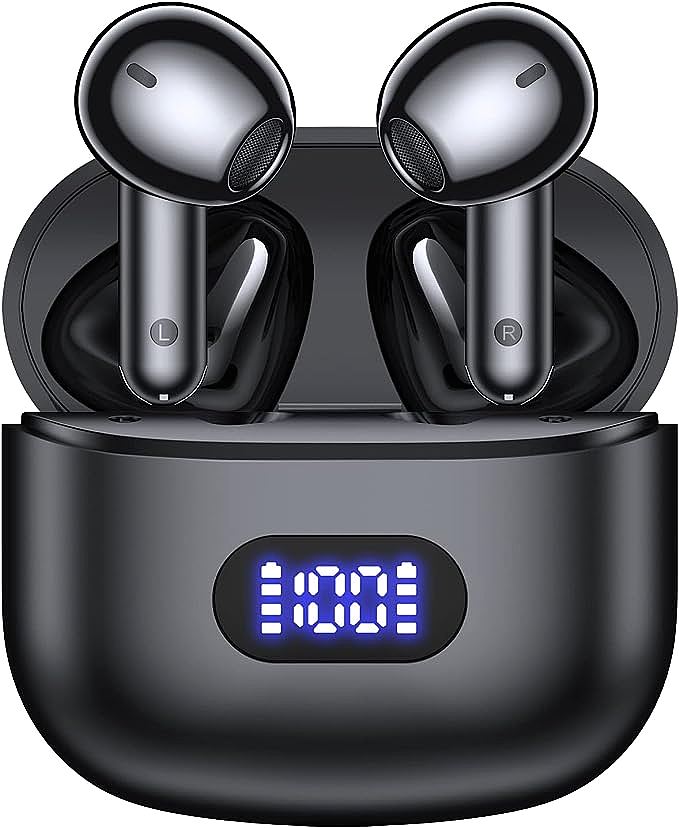
Qecnato T12 Wireless Earbuds
It’s a painfully common story. You invested in a new pair of “waterproof” earbuds, lured by the promise of workout-ready audio. You’re six months into a consistent training schedule. Then, one day, the left earbud crackles and dies. Or maybe it’s the right one that starts cutting out every time you turn your head.
You’re frustrated, and you have every right to be. This scenario highlights a massive gap between what we think we’re buying and what we actually need for an active lifestyle.
The problem is that we've been taught to look for the wrong thing. We see "waterproof" on a box and assume we’re safe. But for an athlete, the real enemy isn't a single drop of rain. It’s a relentless, two-pronged attack:
- The Chemical Attack: The corrosive salt and acidity of your own sweat.
- The Kinetic Attack: The constant, jarring shock of impact and the pull of gravity.
Most earbuds are engineered to survive one of these, but not both. True, reliable sports earphones are rare because they must win a war on two fronts.
So, let's put on our engineering hats. As your guide, I’m going to walk you through the two real battles your gear is fighting. By the end, you won't just know how to buy a better earbud; you'll understand what makes it a truly reliable piece of sports equipment.
The First Enemy: The "Waterproof" Myth (The Truth About Liquid)
When you see a "waterproof" label, the first thing you should do is look for an IP Rating.
This stands for Ingress Protection, and it’s a universal standard (IEC 60529) that engineers use to measure, in a very specific way, how well a device is sealed. It gives us two numbers (e.g., IP67).
- The first number is for solids (like dust and sand).
- The second, and more important number for us, is for liquids.
You’ll often see ratings like IPX4, IPX5, or IPX7. An "X" just means it wasn't tested for solid-particle protection. Let's focus on the liquid number.
- IPX4 (Splash-Resistant): This is the minimum for most "sports" buds. It’s rated to survive splashes from any direction. Think of it as a light rain jacket. It can handle a light, misty run, but a sweaty session or a real downpour is a gamble.
- IPX5/IPX6 (Water-Jet Resistant): This is a significant step up. These are tested against jets of water. This is solid protection against heavy rain and most sweat.
- IPX7 (Water-Submersion): This is the gold standard for workout gear. A device with an IP7 Waterproof rating is certified to survive complete submersion in up to one meter of fresh water for thirty minutes.
Why Sweat is the Real Killer, Not Rain
This is the crucial part that most marketing materials skip. That IP rating test? It’s done with fresh water.
Your sweat is not fresh water. It is a saline solution, full of salts and electrolytes. It's also acidic.
When sweat gets inside an IPX4-rated earbud, it doesn’t just cause a short circuit. It begins a process of corrosion. The salt and acid literally eat away at the delicate wiring and solder joints. This is why an earbud can work fine for months, but as that slow corrosion builds up, it will inevitably fail.
This is why an IP7 rating is so important.
An IP7-rated device isn't just "sealed"; it's engineered to withstand the pressure of being one meter underwater. The gaskets, seals, and precision-molded casing required to pass that test are, by default, far more capable of resisting the infiltration of corrosive sweat.
A product like the Qecnato T12 earbuds, which carries an IP7 Waterproof rating, isn't just built for rain. It’s built to provide a profound "safety buffer" against the much more aggressive, long-term threat of your sweat. It’s the difference between a light rain jacket and a full-on drysuit.
The Second Enemy: The War on Gravity and Motion (The Truth About Fit)
Surviving the elements is only half the battle.
A pair of earbuds can be as waterproof as a submarine, but if they tumble out of your ear mid-sprint, they are useless. This brings us to the second, equally important pillar of sports-earphone design: the war against kinetic forces and gravity.
Here, the engineering challenge shifts from materials science to the elegant principles of biomechanics and ergonomics. The goal is to create a device that works in harmony with the human body during its most chaotic state—high-impact motion.
Let's break down the physics of earbud fit.
The Failure of Friction
Most common earbuds—the little "bud" or "stem" style—rely on one thing to stay in your ear: friction. They use a silicone tip to create a seal and "grip" the inside of your ear canal.
This system is fine when you're sitting at your desk. But the moment you start a run, you introduce two problems:
- Impact Shock: Every time your foot strikes the pavement, a small vibration (a kinetic shock) travels up your body and tries to jiggle that earbud loose.
- Sweat: As you perspire, that sweat lubricates the silicone tip, destroying the very friction the earbud relies on to stay in place.
This is why you’re constantly, distractingly, pushing your earbuds back in.
The Genius of the Anchor: The Over-Ear Form Factor
Now, look at a different design. An Over-Ear form factor, sometimes called an ear-hook, is a classic solution born from a deep understanding of human anatomy. It solves the friction problem by ignoring it and using a different principle: anchoring.
Your ear is a perfect natural anchor. The design utilizes the pinna, the formal name for your entire outer ear, to secure the device.
Instead of relying on the small, sweaty, unstable ear canal, the flexible hook of an over-ear design distributes the weight and, more importantly, all the kinetic forces across the sturdy, stable cartilage at the top of your ear.
It’s the same principle as a rock climber’s safety harness. It provides an external, reliable point of stability that actively counteracts the bouncing, jostling, and jarring motions of a workout.
This is what we see in the design of the Qecnato T12 Sports Earphones. The over-ear hook means the earbud itself can just rest lightly in the ear, focusing on delivering sound, while the hook does all the hard work of keeping it in place. It’s a brilliant example of human-centered design: technology that intelligently adapts to our physical form to become a seamless extension of ourselves.
The Synthesis: Why You Must Have Both
This is the "Aha!" moment. This is where we understand why so many sports earbuds fail.
A truly great piece of sports technology is a synthesis. It’s where robust, element-proof engineering meets thoughtful, body-aware design. You must have both. One without the other is a compromised, and ultimately, failed experience.
Scenario 1: Great Fit, Poor Waterproofing (The "Fair-Weather Friend") * This is an earbud with a fantastic, secure over-ear hook, but only an IPX4 rating. * The Result: It feels amazing! It never moves, it’s comfortable, and you love it... until it dies three months later from sweat corrosion.
Scenario 2: Great Waterproofing, Poor Fit (The "Anxiety Inducer") * This is a small, "bullet-style" earbud with a fantastic IPX8 rating (even better than IP7). * The Result: It’s completely waterproof, but it relies on friction. On your run, you’re pushing it back in every 30 seconds. The "percussive" thump-thump-thump sound (called the occlusion effect) as it moves in your ear canal is maddening. You're so focused on the earbud that you can't focus on the run.
The ideal sports earphone, as exemplified by the Qecnato T12, is the one that solves both problems simultaneously. It pairs the chemical/pressure defense of an IP7 rating with the kinetic/gravity defense of an over-ear-hook.
This combination finally delivers on the original promise of wireless freedom. It’s the freedom to lose yourself in the music, in the motion, in the moment, without a single flicker of concern for the technology enabling it.
Your New Checklist for Sports Audio
Now, you are no longer just a consumer; you are an informed buyer. You are equipped with the right questions.
You know that "waterproof" isn't a simple "yes" or "no." You know to look past the marketing and ask the real questions:
- Does it defend against sweat's pressure and corrosion? Look for an IP7 rating as your "safety buffer."
- Does it defend against motion and gravity? Look for a mechanical design, like an over-ear hook, that provides a stable anchor and doesn't rely on friction alone.
When you find a piece of gear that ticks both of these boxes, you know you’ve found something that won't just play music—it'll be a reliable partner for every mile.
Qecnato T12 Wireless Earbuds
Related Essays

Why Do Your Earbuds Keep Falling Out? A Guide to Secure-Fit Audio

Why Do Workout Earbuds Fall Out? The Science of Secure Fit, Waterproofing, and Bass

ZONWOO S1 Wireless Earbuds: A Deep Dive into Long-Lasting, Waterproof Audio

Why Your Wireless Earbuds Keep Pausing When You Don't Want Them To: The Touch Control Problem Nobody Can Solve
The Invisible Engineering: Why You Stop Noticing Wireless Earbuds Work

Wireless Earbuds: How Premium Technology Became Universally Accessible

True Wireless Earbuds: Unveiling the Science of Epic Audio Endurance and Clarity

Translating Radio Frequencies into Biological Resonance: The Architecture of Untethered Audio

The Ergonomics of Stability: Why Your Sport Earbuds Fall Out (And How to Find a Pair That Won't)
