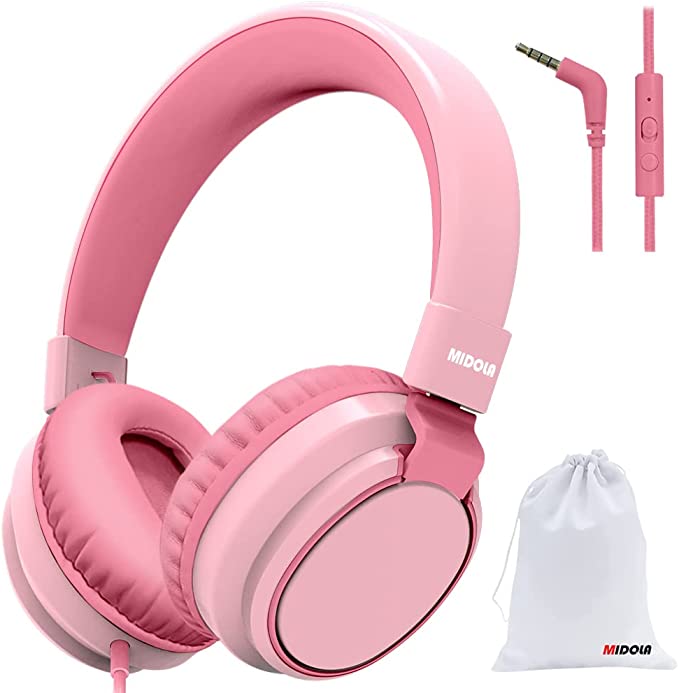
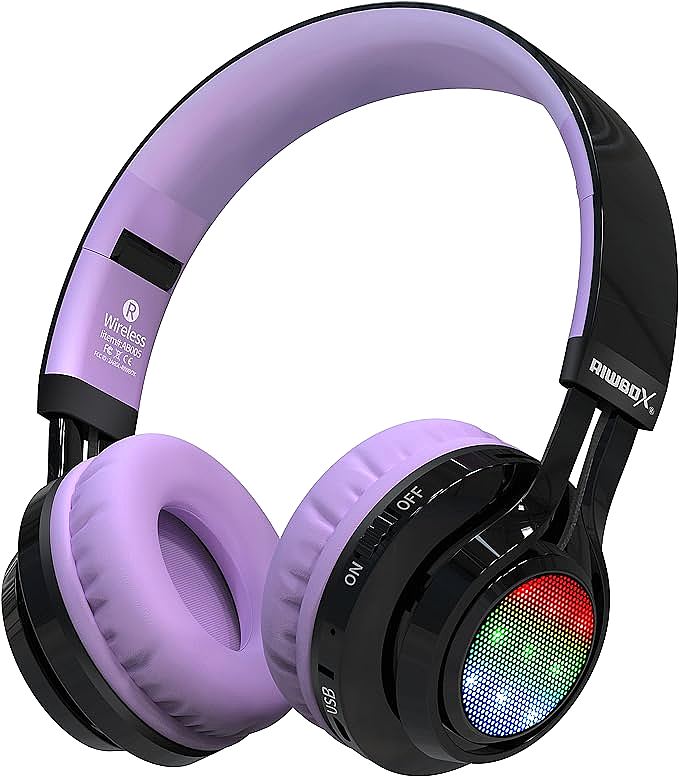
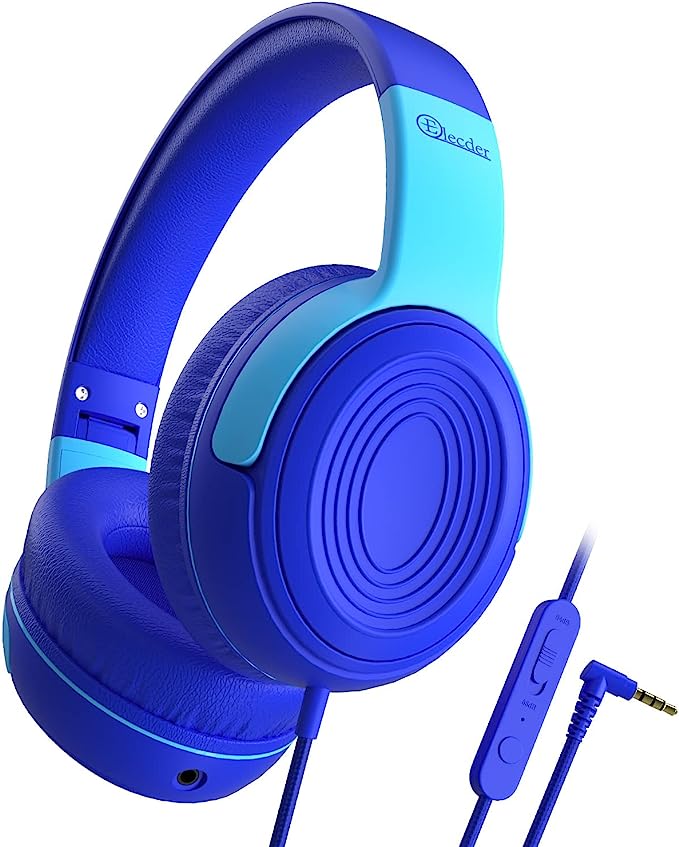
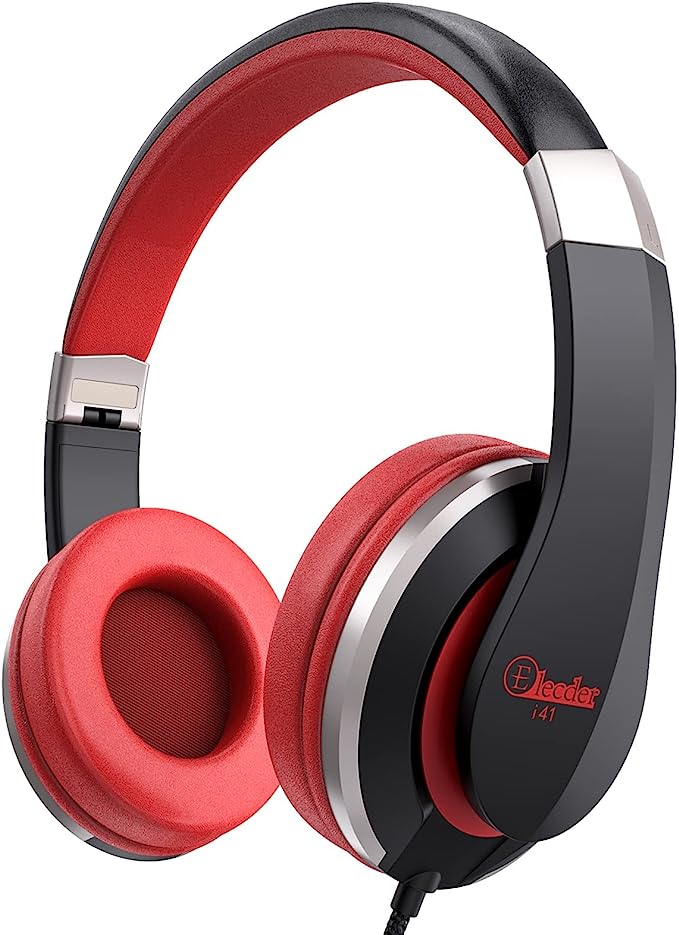
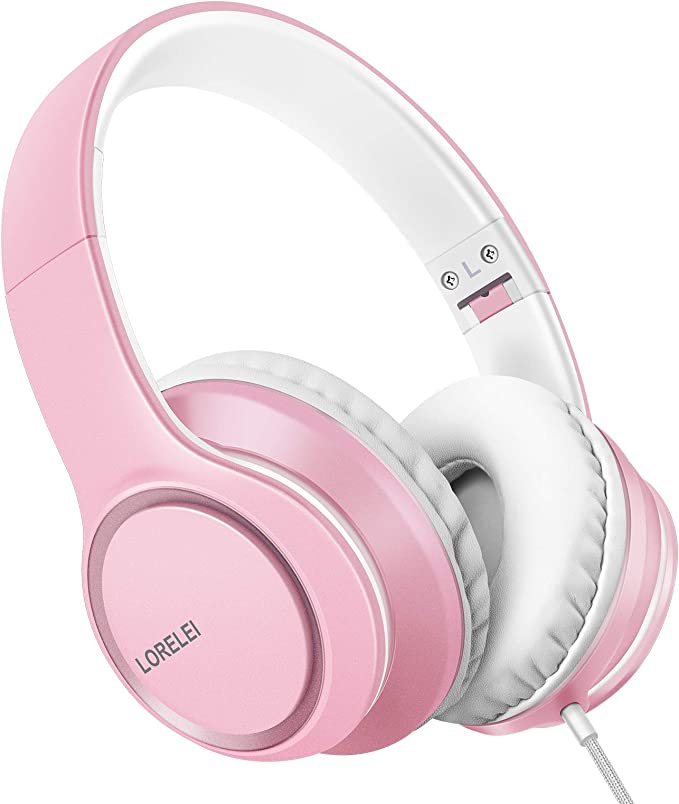
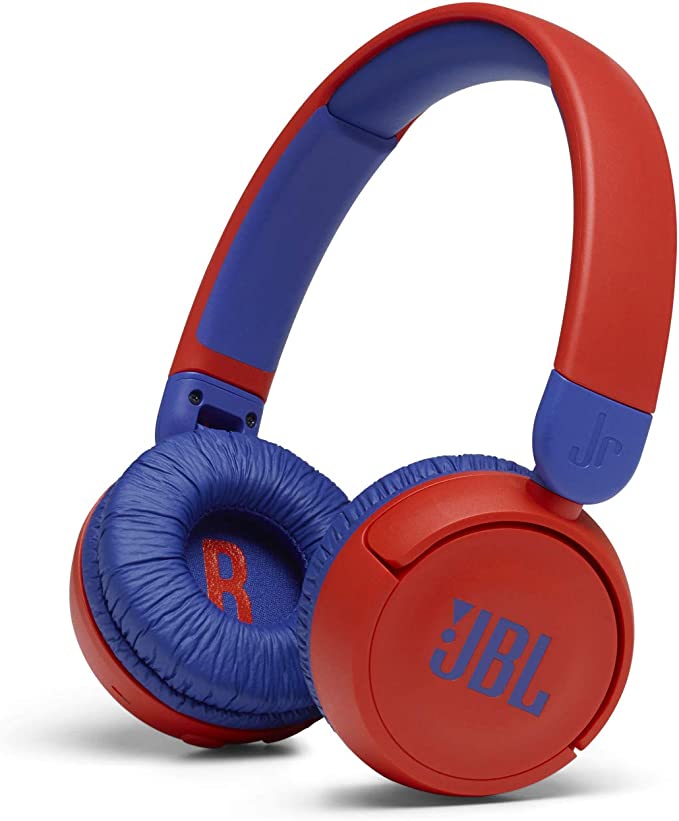
Kids Wired Headphones: Why Simplicity Still Wins for Young Listeners
Update on March 8, 2026, 9:43 p.m.
For parents navigating the children’s audio market, the choices can feel overwhelming. Wireless or wired? On-ear or over-ear? What features actually matter for a child’s developing ears and active lifestyle? And perhaps most importantly: will they survive more than a week in a backpack?
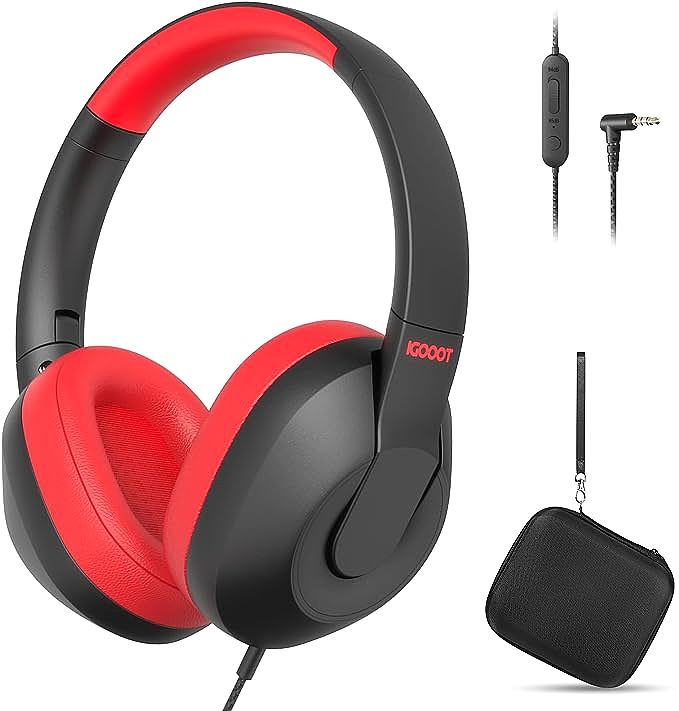
In an era where wireless technology dominates headlines, there’s something refreshingly practical about a well-designed pair of wired headphones for kids. No batteries to charge, no pairing frustrations, no unexpected shutdowns during online classes or long car rides. Just plug in and listen.
This guide explores why wired connectivity remains a smart choice for young listeners, what ergonomic features truly matter for children’s comfort, and how thoughtful design elements like foldable hinges and tangle-resistant cords extend product life. Understanding these fundamentals helps parents make informed decisions based on engineering principles rather than marketing claims.
The Wired Advantage: Why 3.5mm Connection Still Matters for Children
When shopping for children’s headphones, the wired vs. wireless debate often centers on convenience. For adults, wireless freedom makes sense during commutes or workouts. For children, however, wired connectivity offers distinct advantages that align with their developmental needs and daily routines.
The Reliability of Direct Connection
A wired headphone uses a physical cable to transmit audio signals directly from the source device to the drivers. This direct connection eliminates several failure points that plague wireless models:
No Battery Dependency:
Wireless headphones require regular charging—typically every 15-30 hours of use. For children managing multiple devices (tablets for school, phones for contact, laptops for assignments), remembering to charge yet another gadget creates unnecessary cognitive burden. Wired headphones draw power directly from the audio signal itself, meaning they work as long as the connected device has power.
Zero Latency:
The audio signal travels through a copper wire at approximately 95% the speed of light. This near-instantaneous transmission ensures perfect synchronization between video and audio—critical for educational content, language learning apps, or gaming where timing matters. Bluetooth audio, by comparison, introduces 100-300 milliseconds of latency due to encoding, transmission, and decoding processes.
Universal Compatibility:
The 3.5mm audio jack, introduced in the 1950s and standardized over subsequent decades, remains one of technology’s most enduring connectors. Despite the rise of USB-C and Lightning ports, the 3.5mm jack persists in:
- School computers and Chromebooks
- Educational tablets and learning devices
- Airplane entertainment systems
- Gaming controllers (Xbox, Nintendo Switch)
- Family laptops and desktop computers
This ubiquity means a child can plug their headphones into virtually any device without needing adapters or dongles—fostering independence and reducing frustration.
Understanding the 3.5mm TRS Connector
The standard 3.5mm plug found on most kids’ headphones uses a TRS (Tip-Ring-Sleeve) configuration:
Tip    → Left Channel Audio
Ring   → Right Channel Audio
Sleeve → Ground Connection
This analog connection carries stereo audio as electrical variations that the headphone drivers convert back into sound waves. The simplicity is elegant: no digital handshakes, no codec negotiations, no firmware updates required. The physics of electromagnetic transduction, discovered in the 19th century, works exactly the same today as it did 70 years ago.
Tangle-Resistant Cables: Material Science Meets Daily Reality
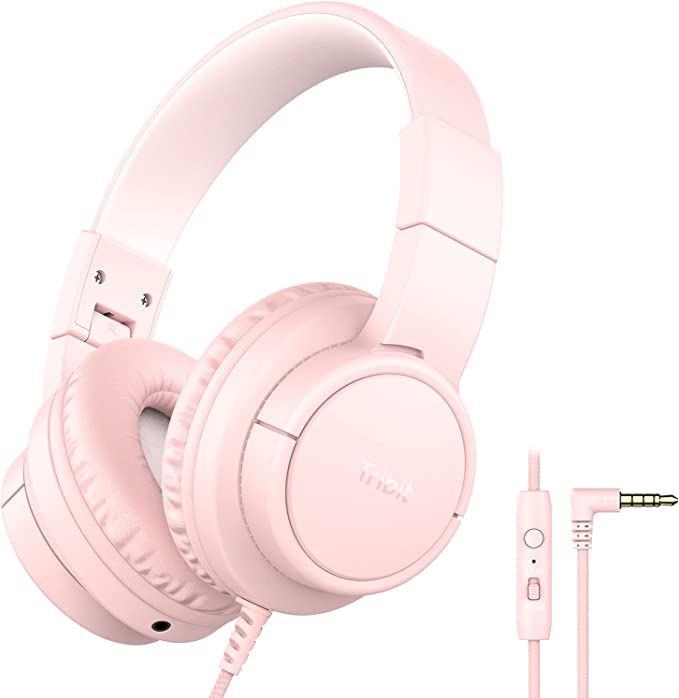
Anyone who has untangled knotted headphone cords understands the frustration. Children, with their hurried packing habits, amplify this challenge. Tangle-resistant cables address this through several engineering approaches:
Surface Smoothness:
Cables with smoother outer jackets (often thermoplastic elastomer or TPE) have lower coefficients of friction. When two smooth surfaces slide past each other, they’re less likely to catch and form knots. This is the same principle that makes ice slippery—reduced friction prevents entanglement.
Cable Geometry:
Flat cables, or those with textured surfaces, resist twisting motions that lead to knots. A flat cable must rotate 360 degrees to create a tangle, whereas a round cable can knot with minimal rotation. Some premium designs use braided nylon exteriors that add structural rigidity, preventing the tight curls that initiate tangles.
Strain Relief Design:
The junction where cable meets headphone housing is a common failure point. Quality designs incorporate strain relief—flexible rubber or silicone sections that absorb bending stress. This prevents the internal copper wires from experiencing repeated flex cycles that eventually cause breakage.
Ergonomics for Developing Bodies: Why Children Need Different Headphones
Children are not miniature adults. Their anatomical proportions, developing skeletal structures, and different usage patterns require specific ergonomic considerations that adult headphones simply cannot provide.
Head Circumference and Growth Accommodation
The average adult head measures 55-60 centimeters in circumference. For children ages 3-12, this ranges from approximately 48cm to 54cm—a significant difference that affects fit and comfort.
Adjustable Headbands:
Quality children’s headphones incorporate adjustable headbands that accommodate this growth range. The mechanism typically uses one of two approaches:
| Mechanism | How It Works | Durability |
|---|---|---|
| Sliding rails | Metal or plastic rails with detent notches | High - distributes pressure evenly |
| Extension arms | Telescoping arms that extend from housing | Medium - depends on grip strength |
| Stretch suspension | Elastic band that auto-adjusts | Medium - may loosen over time |
The adjustment range should span at least 6-8 centimeters to provide room for growth spurts. A properly adjusted headband distributes clamping force across the top of the head rather than creating pressure points on the ears or temples.
The Physics of Lightweight Design
Weight matters more for children than adults. An adult wearing 250-gram headphones for one hour experiences the same neck strain as a child wearing those same headphones for approximately 20 minutes—proportional to their respective body masses and neck muscle development.
Target Weight for Children’s Headphones:
- Ages 3-5: Under 100 grams
- Ages 6-9: Under 120 grams
- Ages 10+: Under 150 grams
Lightweight construction is achieved through material selection:
- ABS plastic housings: Durable yet light (density ~1.05 g/cm³)
- Thin-film diaphragms: Mylar or PET drivers weigh grams instead of ounces
- Minimalist metal: Aluminum used only where structural integrity requires it
The cumulative effect: a child can wear lightweight headphones for a full school day without experiencing the neck fatigue that leads to poor posture and discomfort.
On-Ear vs. Over-Ear: Understanding Form Factor Trade-offs
Headphone form factor affects comfort, sound isolation, and situational awareness—each important for children’s use cases.
On-Ear (Supra-aural) Design:
Ear cups rest on the outer ear (pinna) rather than surrounding it completely. This approach offers:
| Advantage | Why It Matters for Kids |
|---|---|
| Smaller size | Fits in smaller backpacks, pockets |
| Lighter weight | Less neck strain during extended wear |
| Ambient awareness | Can hear teachers, parents, traffic |
| Better heat dissipation | Ears don’t get as warm |
Over-Ear (Circumaural) Design:
Ear cups fully enclose the ear, providing:
- Better passive noise isolation
- Potentially larger drivers (better bass)
- More comfortable for very long sessions
- Heavier and bulkier
For most children’s use cases—school, travel, supervised screen time—the on-ear form factor strikes the right balance between audio quality and practical considerations. The ability to hear a teacher calling or a parent’s instruction without removing headphones is a genuine safety feature, not merely a convenience.
Passive Noise Isolation vs. Active Noise Cancellation
Children’s headphones typically rely on passive noise isolation—the physical blocking of sound waves by the ear cup materials. This differs fundamentally from active noise cancellation (ANC), which uses microphones and inverse wave generation.
Passive Isolation (On-Ear Headphones):
- Reduces ambient noise by 10-20 decibels
- No batteries or electronics required
- Allows some environmental awareness
- Effectiveness depends on seal quality
Active Noise Cancellation:
- Reduces consistent low-frequency noise by 20-30 decibels
- Requires battery power
- Can create “pressure” sensation some find uncomfortable
- Completely blocks environmental sounds
For children, passive isolation represents the safer choice. Complete noise isolation can prevent a child from hearing important environmental cues—classroom instructions, crossing signals, parental warnings. The moderate isolation provided by well-designed on-ear headphones helps focus attention on audio content while maintaining situational awareness.
Audio Quality Fundamentals: What “Stereo Sound” Means for Young Ears
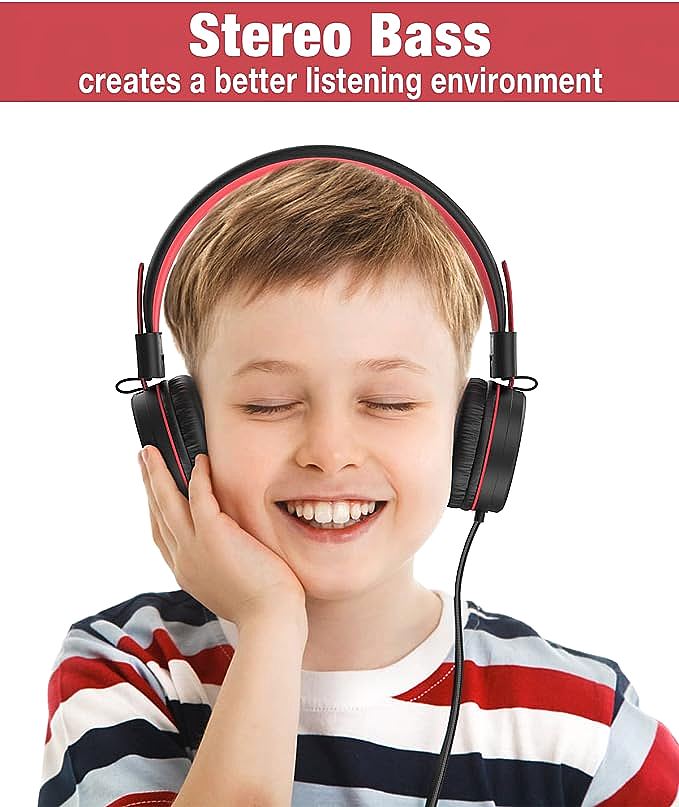
Marketing terms like “stereo bass” abound in children’s audio products. Understanding what these phrases actually describe helps separate meaningful specifications from empty claims.
Stereo Sound: Two Channels Create Space
Stereo (from Greek “stereos” meaning solid) refers to audio reproduction using two independent channels—left and right. This creates a sense of spatial positioning that mono (single channel) audio cannot achieve.
How Stereo Works:
Left Channel → Different audio content → Left Ear
Right Channel → Different audio content → Right Ear
                    ↓
          Brain processes differences
                    ↓
          Perceives direction, width, depth
When a recording engineer places a violin slightly left of center in a mix, the left channel carries that violin at a slightly higher volume than the right channel. The brain detects this interaural level difference (ILD) and perceives the violin as coming from the left side of the “soundstage.”
For children consuming educational content, stereo sound provides:
- Language learning: Clearer separation of voices and background audio
- Music education: Understanding instrument placement and arrangement
- Gaming: Directional audio cues (footsteps from left, explosion from right)
- Video content: Immersive storytelling experience
Bass Response in Children’s Headphones
The term “bass headphones” in children’s products often raises questions about volume limiting and hearing safety. Reputable designs emphasize bass quality—not maximum volume.
Frequency Response Context:
- Human hearing range: 20 Hz to 20,000 Hz
- Bass frequencies: 20 Hz to 250 Hz
- Children’s hearing sensitivity: Highest in mid-range (500 Hz - 4,000 Hz)
A well-tuned children’s headphone provides balanced bass response without excessive emphasis. The goal is engaging, full sound—not ear-drum-pounding low end. Quality tuning ensures:
- Educational content voices remain clear and intelligible
- Music sounds natural, not artificially boosted
- Volume limiting (if present) doesn’t distort bass frequencies
Volume Limiting: A Safety Feature to Understand
Many children’s headphones incorporate volume limiting circuitry, typically capping output at 85 decibels—the threshold recommended by the World Health Organization for extended listening by children.
How Volume Limiting Works:
A small resistor or integrated circuit in the headphone cable or driver housing restricts the maximum electrical signal reaching the drivers. This physically prevents the headphones from producing sound above the designed threshold, regardless of the source device’s output level.
Important Considerations:
- Not all “kids headphones” include volume limiting—verify specifications
- Some limiting circuits can introduce distortion at maximum volume
- Parental controls on devices provide additional protection layers
- Teaching children safe listening habits remains essential regardless of technical limits
Durability Through Design: How Foldable Construction Extends Product Life
Children’s headphones face unique durability challenges. Drops, twists, haphazard backpack stuffing, and enthusiastic handling test every component. Foldable design addresses several of these challenges through intelligent mechanical engineering.
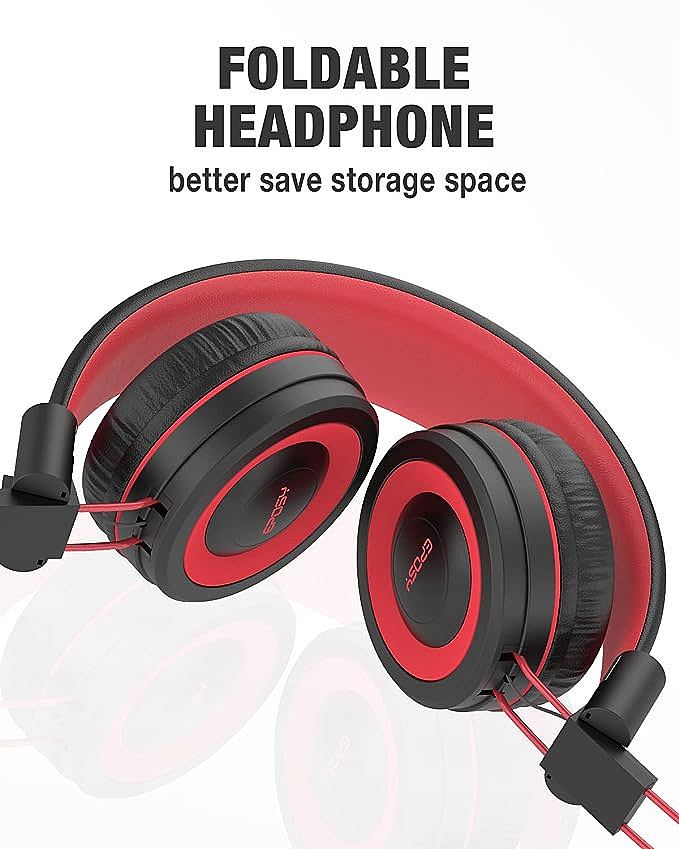
The Mechanics of Foldable Hinges
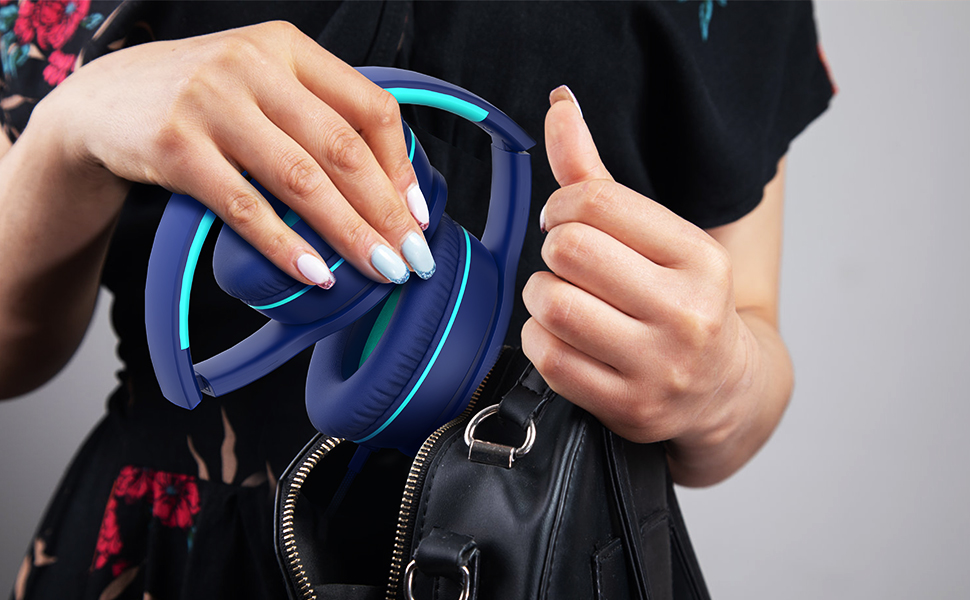
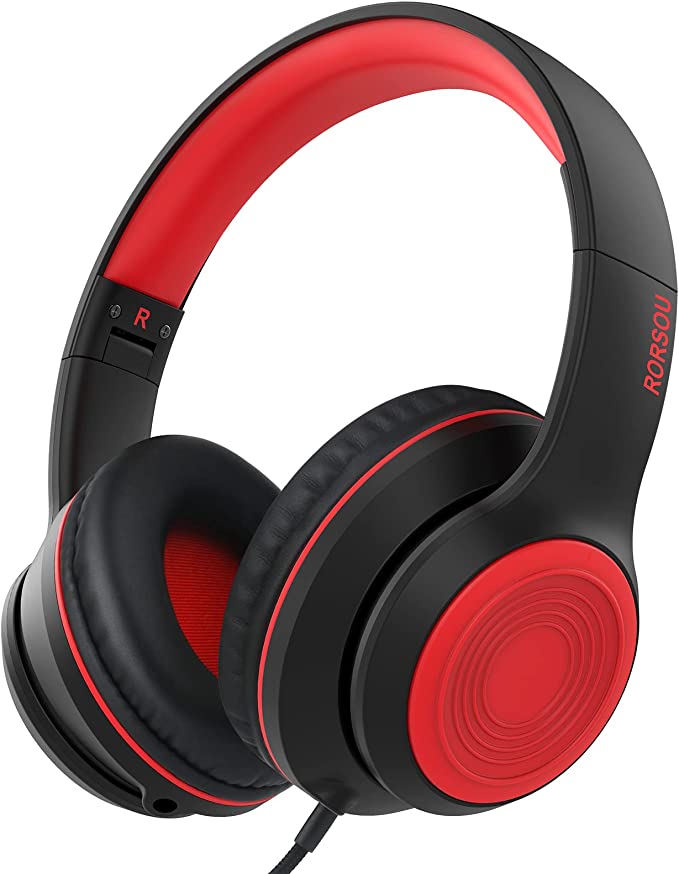
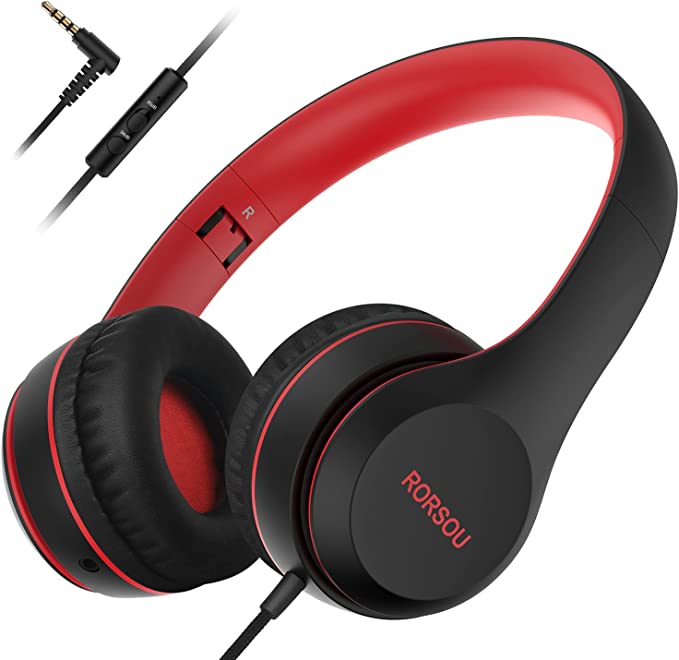
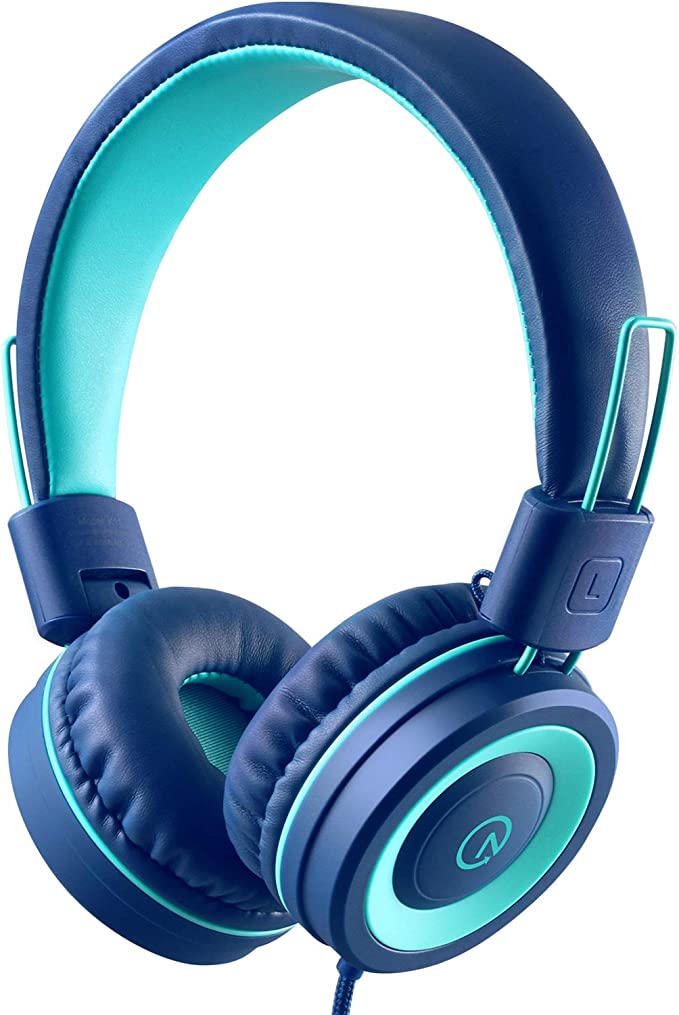
A foldable headphone incorporates hinges at the junction between the headband and ear cups. These hinges allow the ear cups to rotate inward, reducing the overall footprint by approximately 40-50%.
Hinge Types:
| Type | Construction | Durability | Smoothness |
|---|---|---|---|
| Metal pin | Steel pin through aligned holes | Excellent | Smooth, consistent |
| Plastic ball | Spherical joint in socket | Good | May loosen over time |
| Friction plate | Layered plates with friction material | Good | Adjustable tension |
A quality hinge should withstand 5,000+ fold cycles without significant looseness. For a child folding headphones twice daily, this translates to approximately 7 years of use—well beyond the typical replacement cycle.
Storage Protection: The Hidden Durability Benefit
Foldable design encourages proper storage—a critical factor often overlooked.
Non-Foldable Headphones:
- Require larger storage space
- Often hung loosely on backpack exterior
- Ear cups exposed to impacts and crushing
- Cable prone to snagging
Foldable Headphones:
- Fit in included pouch or small compartment
- Can be stored inside backpack (protected)
- Ear cups protected when folded
- Cable can be wrapped around folded unit
This storage behavior difference significantly affects longevity. Headphones stored loosely in backpacks experience:
- Crushing forces from books and devices
- Impact damage from drops
- Cable strain from snagging on zipper pulls
- Dust and moisture exposure
A foldable design that fits neatly in a protective pouch can easily double or triple the functional lifespan compared to non-folding equivalents.
Tangle-Free Cable Management
Many foldable children’s headphones incorporate cable management features:
Common Solutions:
- Cable wrap channels on folded ear cups
- Integrated cable storage compartment
- Detachable cable that stores separately
- Short, fixed cable that doesn’t require wrapping
These features, while seemingly minor, address one of the most common failure modes: cable damage from improper storage. A cable that’s neatly secured during storage experiences far less stress than one that’s stuffed haphazardly alongside textbooks and lunch boxes.
Real-World Use Cases: Matching Headphone Features to Daily Scenarios
Understanding how specific features serve actual use cases helps parents prioritize what matters for their family’s situation.
School and Remote Learning
Primary Requirements:
- Comfort for 2-4 hour sessions
- Clear microphone (if video calls required)
- Passive isolation for focus
- Durability for daily backpack transport
Why Wired Excels:
No battery anxiety before important classes. Teachers can’t hear “my headphones died” as an excuse. The 3.5mm jack works with school-issued Chromebooks without adapter complications.
Travel (Car, Plane, Train)
Primary Requirements:
- Compact storage (foldable)
- Tangle-resistant cable
- Comfort for extended wear
- Universal connectivity
Why Wired Excels:
Airplane entertainment systems universally use 3.5mm jacks. No need to pack charging cables or worry about battery life during long flights. Car screens and seat-back entertainment also standardize on wired connections.
Gaming and Entertainment at Home
Primary Requirements:
- Low latency (audio sync with video)
- Comfort for variable session lengths
- Volume appropriate for household
- Durability for enthusiastic handling
Why Wired Excels:
Zero latency ensures perfect audio-video synchronization for games and videos. No interference concerns from wireless congestion in households with multiple devices.
Independent Use by Young Children
Primary Requirements:
- Simple operation (no pairing)
- Clear audio for developing ears
- Robust construction for drops
- Easy to put on and adjust
Why Wired Excels:
A 4-year-old can independently plug in and listen. No Bluetooth pairing sequences, no button combinations to remember, no “did it connect?” uncertainty. This autonomy builds confidence and reduces parental intervention.
Making Informed Choices: What Matters When Selecting Kids’ Headphones
The children’s headphone market spans from $5 novelty products to $80 premium options. Understanding which features justify cost helps parents allocate budget effectively.
Features Worth Paying For
| Feature | Why It Matters | Typical Cost Impact |
|---|---|---|
| Adjustable headband | Growth accommodation, proper fit | +$5-10 |
| Foldable hinges | Durability through storage protection | +$5-8 |
| Tangle-resistant cable | Reduced frustration, cable longevity | +$2-5 |
| Lightweight construction | Extended comfortable wear time | +$3-7 |
| Quality strain relief | Prevents cable failure at junction | +$2-4 |
Features That Are Marketing Fluff
| Claim | Reality Check |
|---|---|
| “Hi-Res Audio Certified” | Children’s hearing and content sources don’t benefit from extended frequency response |
| “Premium Leather Ear Pads” | Synthetic materials are more durable and easier to clean |
| “Bluetooth 5.3” in kids’ headphones | Adds cost, battery dependency, and complexity without meaningful benefit |
| “7.1 Surround Sound” | Marketing term for stereo headphones; true surround requires multiple drivers or DSP |
Price Context: Understanding Value
The typical price range for quality children’s wired headphones spans $8-25. Within this range:
- $8-12: Basic features, functional design, adequate durability
- $13-18: Enhanced comfort features, better materials, foldable design
- $19-25: Premium materials, advanced volume limiting, brand reputation
The sweet spot for most families lies in the $10-15 range—sufficient investment for meaningful features without paying for adult-headphone premium branding.
The Bottom Line: Simplicity Serves Children Well
Choosing headphones for children doesn’t require navigating cutting-edge technology or comparing spec sheets. The fundamentals matter most: reliable connection, comfortable fit, age-appropriate ergonomics, and durability through thoughtful design.
Wired connectivity, far from being outdated, offers children exactly what they need: simplicity, reliability, and universal compatibility. Adjustable headbands accommodate growth spurts without requiring replacement. Foldable construction and tangle-resistant cables extend product life through the rigors of childhood handling. Lightweight on-ear designs balance audio quality with situational awareness and comfort.
These aren’t compromises—they’re intentional design choices that prioritize a child’s actual needs over marketing-driven feature lists. When a child can independently use their headphones daily without frustration, when the battery-free reliability means they’re always ready for school or travel, and when the ergonomic fit prevents discomfort during extended use, that’s when good design truly serves its purpose.
For parents seeking straightforward, reliable audio solutions for young listeners, understanding these fundamentals provides a clear framework for evaluation. The right pair of headphones becomes an invisible enabler of learning, entertainment, and independence—exactly as good children’s product design should be.