Democratizing Silence: The Physics of Active Noise Cancellation and Transducer Dynamics
Update on Jan. 11, 2026, 11:24 a.m.
For decades, silence was a luxury commodity. In the audio market, the ability to press a button and erase the roar of a jet engine or the hum of an air conditioner was reserved for the business class traveler, locked behind a paywall of several hundred dollars. However, technology has a way of trickling down. As manufacturing processes mature and algorithms become more efficient, what was once cutting-edge becomes a standard expectation.
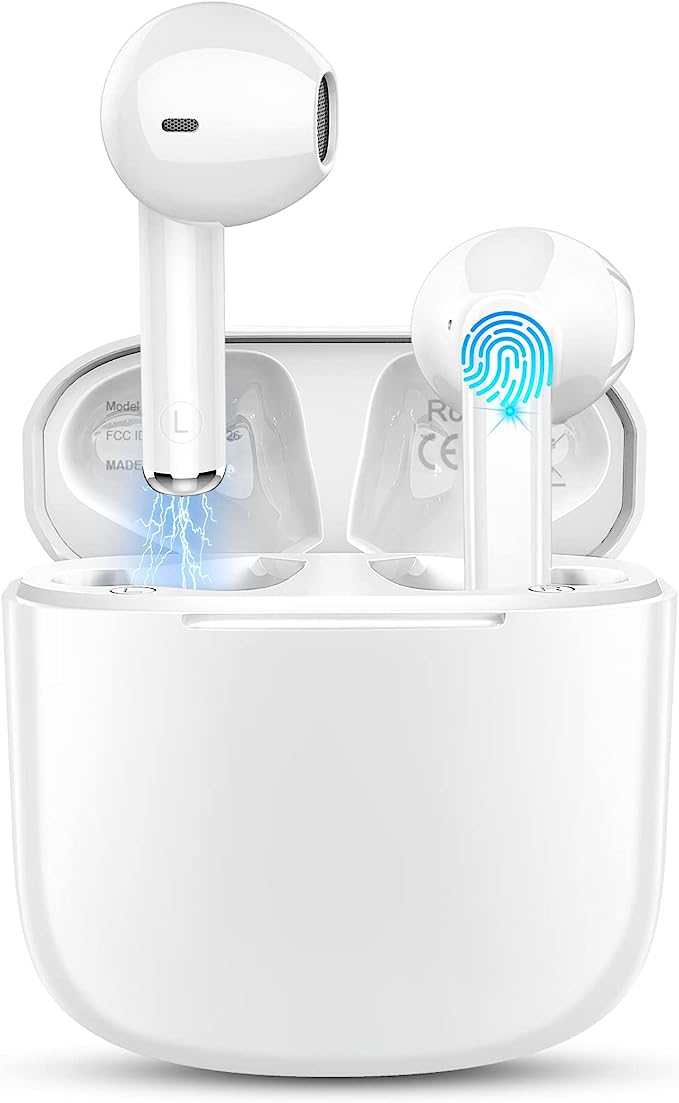
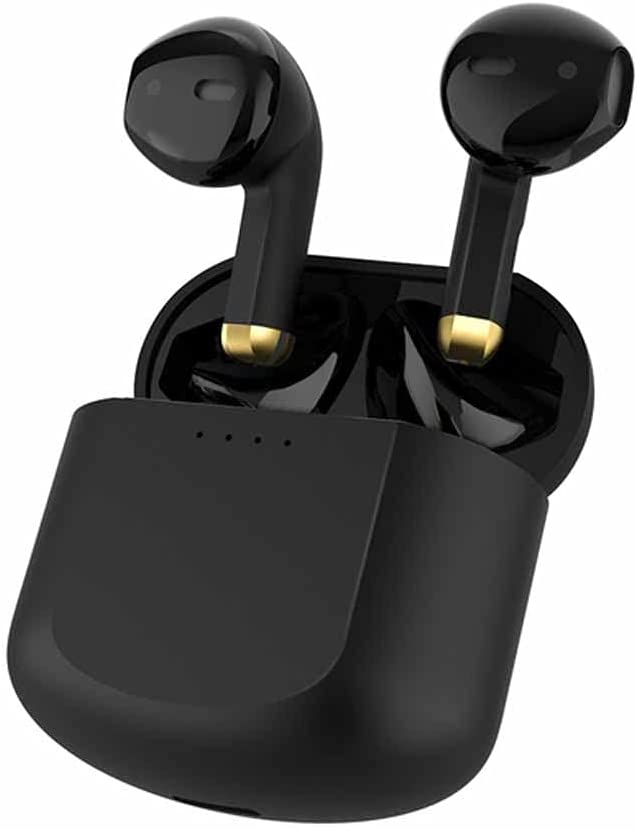
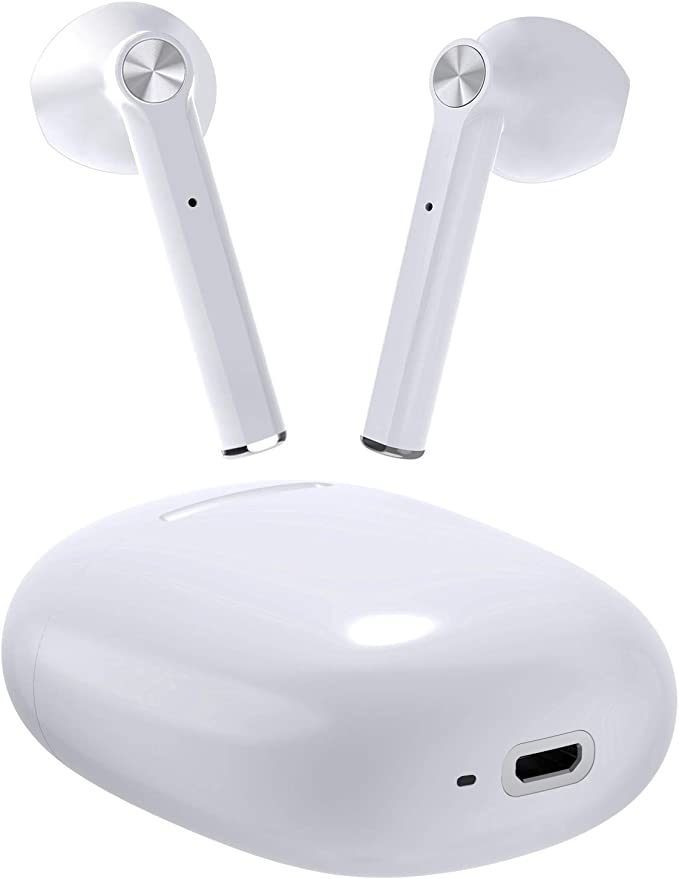
The HISOOS A90 Pro Wireless Earbuds exemplify this shift. By offering Active Noise Cancellation (ANC) and large-format drivers at an accessible entry point, they signal a new era where acoustic control is available to everyone. But how does a compact device physically cancel out the world? And does a larger driver really mean better sound? To understand the value proposition of modern audio, we must look past the price tag and into the physics of wave interference and electromechanical transduction.

The Physics of Anti-Noise: Wave Superposition Explained
Active Noise Cancellation is not soundproofing. Soundproofing involves mass and density—thick walls, heavy foam—to physically block sound waves. ANC is an act of destructive interference, a phenomenon rooted in the wave nature of sound.
Sound travels through the air as a longitudinal wave, consisting of compressions (high pressure) and rarefactions (low pressure).
1. Detection: The A90 Pro utilizes built-in microphones (likely a feed-forward system given the form factor) to sample the ambient noise field. Let’s say it detects the low-frequency drone of a bus engine.
2. Inversion: The internal Digital Signal Processor (DSP) analyzes this wave and generates a precise mirror image. Where the noise wave has a peak (compression), the processor creates a trough (rarefaction).
3. Cancellation: This “anti-noise” signal is played through the earbud’s speakers along with your music. When the anti-noise meets the actual noise in your ear canal, the high pressure of the noise is neutralized by the low pressure of the anti-noise. The net result, mathematically and physically, is zero amplitude—silence.
The Challenge of Latency
The suppression of “85% of noise” claimed by the A90 Pro highlights the effectiveness of this technology against low-frequency, steady-state sounds. High-frequency, unpredictable sounds (like a glass breaking) are harder to cancel because the wavelength is shorter and the DSP has less time to react. The fact that accessible devices can now perform this calculation with low enough latency to be effective is a testament to the advancement of silicon efficiency.
Transparency Mode: Augmented Hearing
The flip side of ANC is Transparency Mode. Instead of inverting the sound wave, the DSP passes it through, sometimes amplifying specific frequencies (like human speech). This turns the earbuds into a form of “bionic hearing,” allowing the user to maintain situational awareness without removing the physical seal of the ear tip. It bridges the gap between the isolation of immersive audio and the safety of environmental connection.

Transducer Dynamics: Why 13mm Matters
In the world of in-ear monitors (IEMs), driver size is a critical variable. The driver, or transducer, is the motor that converts electrical energy into mechanical wave energy. The A90 Pro features a 13mm dynamic driver. To put this in perspective, many true wireless earbuds utilize drivers in the 6mm to 8mm range.
The Physics of Air Displacement
Bass frequencies are long, high-energy waves. To reproduce them accurately and with authority, the driver must move a significant volume of air.
* Surface Area: A 13mm driver has roughly 2.5 to 4 times the surface area of a 6-8mm driver. This larger surface area ($A$) means that for the same excursion distance ($x$), the driver displaces more air volume ($V$).
$$V = A \times x$$
* Low-Frequency Efficiency: Because it moves more air effortlessly, a larger driver can produce deep, resonant bass (down to the claimed 18Hz) without needing to work as hard or distort. Small drivers often have to be pushed to their physical limits to produce similar bass levels, leading to “muddy” or distorted sound.
The Composite Diaphragm Solution
However, size introduces a problem: mass. A heavy driver is slow to start and slow to stop, which blurs the details in high frequencies (treble).
The A90 Pro addresses this with a “three-layer composite diaphragm.” By combining materials with different properties (e.g., a rigid center dome for bass structure and a lightweight outer ring for treble response), engineers can decouple the mass from the stiffness.
* Stiffness: Prevents the diaphragm from flexing uncontrollably (modal breakup) at high frequencies.
* Lightness: Ensures a fast transient response—the ability to snap from silence to full volume and back instantly.
This engineering allows the 13mm driver to be “agile” despite its size, delivering the “stunning treble and clear mids” alongside the deep bass. It represents a holistic approach to acoustic design where geometry and material science work in concert.
Bluetooth 5.3: The Invisible Highway
The bridge between the digital file on your phone and the analog wave in your ear is the Bluetooth protocol. The A90 Pro employs Bluetooth 5.3, the latest iteration of this standard.
While earlier versions focused on raw speed, 5.3 (and the Low Energy architecture it builds upon) focuses on Signal Integrity and Efficiency.
* Connection Robustness: Bluetooth 5.3 improves channel classification, allowing the earbuds to hop away from congested Wi-Fi frequencies more intelligently. This reduces the “dropouts” that plague wireless audio in busy areas like gyms or subways.
* Latency Reduction: For gaming and video, synchronization is key. The “low-latency listening experience” is achieved by optimizing the packet size and transmission intervals, ensuring that the explosion you see on screen is heard at the exact same moment.

Conclusion: The New Baseline of Audio
The HISOOS A90 Pro Wireless Earbuds serve as a benchmark for the modern audio landscape. Features that were once the domain of flagship products—Active Noise Cancellation, oversized hi-fi drivers, and latest-gen connectivity—are now foundational expectations.
By understanding the physics of wave cancellation and the mechanics of large-diaphragm transducers, we can appreciate that “budget-friendly” does not have to mean “low-tech.” Instead, it represents the maturity of technology, where the science of silence and the art of sound become accessible tools for the many, not just the few. Whether used for blocking out a noisy commute or diving deep into a playlist, these earbuds demonstrate that the barriers to high-fidelity immersion are crumbling, one sound wave at a time.