The Invisible Interface: Cognitive Load and the Evolution of Sport Audio
Update on Dec. 20, 2025, 9:31 a.m.
In the realm of high-performance athletics, the most critical equipment is often described not by its presence, but by its absence. The concept of “gear invisibility” posits that for a tool to be truly effective, it must vanish from the user’s conscious awareness, allowing the mind to enter a state of complete focus known as “flow.” This psychological state, documented extensively by Mihaly Csikszentmihalyi, is fragile. It requires a perfect equilibrium between skill and challenge, maintained by an unbroken stream of concentration. In this context, a pair of sport headphones is not merely an audio device; it is a psychological barrier against the chaos of the outside world.
However, the moment a runner feels an earbud slip due to sweat, or a lifter worries about a dying battery, that barrier is breached. The cognitive load shifts from the mechanics of the body to the maintenance of the device. This shift represents a fundamental friction in the human-machine interface. The evolution of sport audio, therefore, is not just a pursuit of better sound fidelity, but a relentless engineering crusade to eliminate these micro-distractions.

The Biomechanics of Security: Anchoring the Senses
The human ear is a notoriously difficult landscape for engineers to map. It is dynamic; the temporomandibular joint (TMJ), located just in front of the ear canal, moves significantly during heavy breathing, gritting teeth, or the rhythmic impact of running. This movement alters the shape of the ear canal, causing standard friction-fit earbuds to lose their seal or dislodge entirely. When an athlete is forced to continually readjust their gear, they are pulled out of their proprioceptive rhythm.
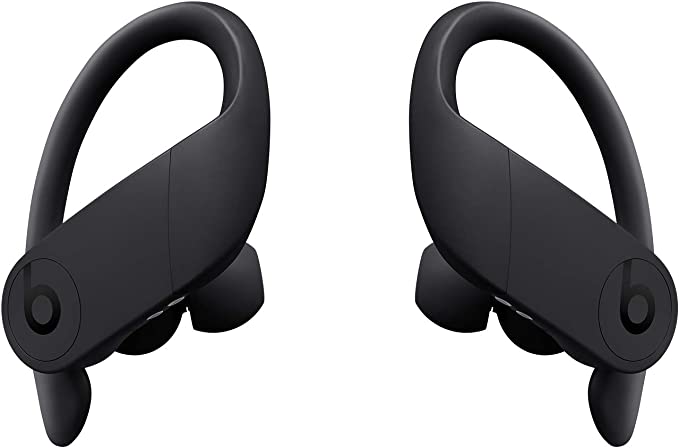
To counter this, design philosophy has bifurcated. One path attempts to increase friction within the canal, often at the cost of comfort. The other, more enduring solution, acknowledges the dynamic nature of the ear and utilizes an external anchor: the ear hook. By shifting the retention mechanism to the pinna (the outer ear), the device decouples the acoustic seal from the mechanical anchor.
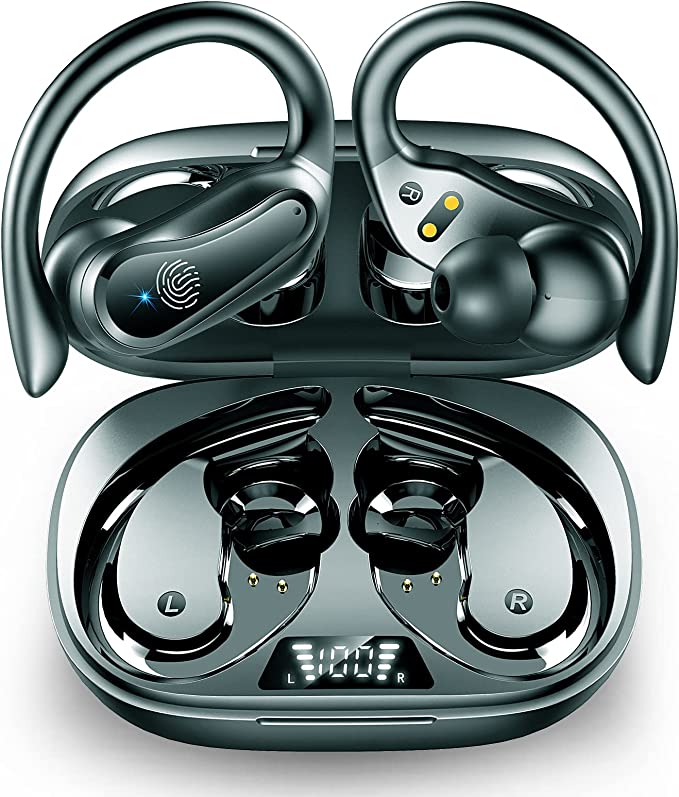
This separation of functions is crucial. It allows the audio driver to float in the canal with a perfect seal for bass response, without being the sole point of attachment. Devices that employ this over-ear architecture, such as the RUJAPIS J92, exemplify this biomechanical understanding. The ear hook acts as a suspension system, absorbing the vertical shock of a runner’s stride that would otherwise shake a standard bud loose. This design ensures that the user’s mental bandwidth is reserved exclusively for performance, rather than equipment management.

The Psychology of Reliability: Visualizing the Invisible
Beyond the physical fit, there exists a subtle layer of psychological friction: “power anxiety.” In the age of micro-electronics, we are tethered to the lifespan of lithium-ion cells. For an athlete preparing for a marathon or a long trail run, the uncertainty of a device’s charge level can induce a low-level stress response. Most true wireless stereo (TWS) systems rely on ambiguous LED color codes or smartphone widget checks, adding steps to the user’s ritual.
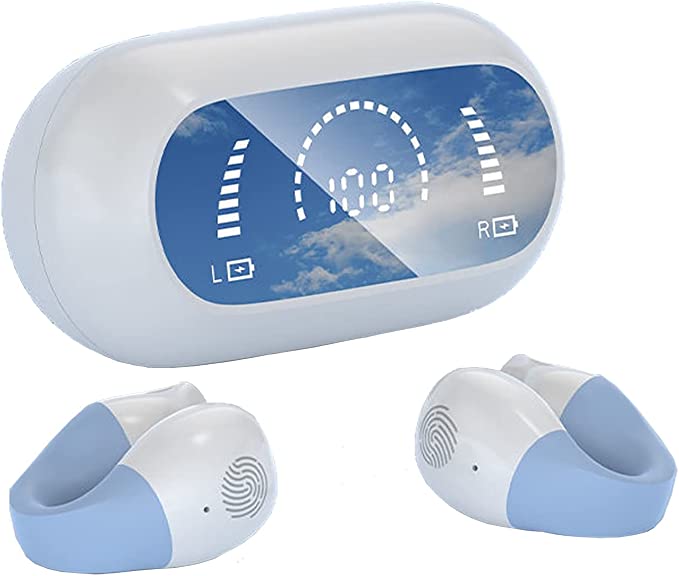
The integration of precise, numerical feedback loops directly onto the charging case represents a shift in user interface (UI) design for screenless devices. It transforms a “black box” variable into a known quantity. Seeing a digital percentage—like the dual display found on the RUJAPIS J92—provides immediate cognitive closure. The user verifies the status (e.g., “Left bud: charging, Case: 85%”) in a single glance and moves on.
This transparency is more than a convenience feature; it is a tool for resource management. It allows users to plan their usage cycles effectively, aligning their device’s readiness with their own biological readiness. By removing the variable of uncertainty, the technology fosters a sense of reliability, reinforcing the psychological contract between the athlete and their gear.

Environmental Resilience and the Material Frontier
The interface between the body and the device is also a chemical one. Sweat is a corrosive substance, rich in salts and electrolytes that act as kryptonite to delicate electronics. The longevity of sport audio depends on “ingress protection”—the engineering discipline of sealing internals against the elements.
The industry standard, IEC 60529 (IP Ratings), quantifies this resilience. A rating of IPX5, for instance, denotes protection against low-pressure water jets from any angle. Achieving this requires more than just tight seams; it often involves hydrophobic nanocoatings on internal components and the use of non-reactive materials like silicone and EVA (Ethylene Vinyl Acetate) for external surfaces. EVA, often used in protective cases, offers a tactile robustness that resists the wear and tear of gym bags and locker rooms.
This durability is essential for the product’s “evergreen” utility. Audio gear that degrades after a few months of intense training becomes a consumable rather than an asset. The shift towards ruggedized materials ensures that the device remains a consistent training partner, capable of surviving the same harsh conditions as the athlete.

The Neuro-Acoustic Feedback Loop
Ultimately, the purpose of eliminating these distractions—mechanical, psychological, and environmental—is to preserve the neuro-acoustic feedback loop. Research in auditory neuroscience suggests that rhythmic auditory stimulation (RAS) can prime the motor system, improving the efficiency of movement. Deep, resonant bass frequencies, typically produced by larger drivers (such as 10mm dynamic units), are particularly effective at this. They provide a visceral, tactile metronome that the body can latch onto.
When the seal is secure, the battery is known to be ample, and the device is impervious to sweat, the audio track becomes a direct extension of the athlete’s will. The technology recedes, leaving only the rhythm and the road. This is the pinnacle of sport audio design: complex engineering that results in simple, unencumbered motion.