Wireless Earbuds: How Premium Technology Became Universally Accessible
Update on March 8, 2026, 9:10 p.m.
Remember when experiencing truly great sound required bulky headphones and tangled wires—or perhaps a significant financial investment? The world of personal audio has undergone a remarkable transformation in just two decades, driven by innovations that pack sophisticated technology into ever-smaller, more affordable packages.
This transformation isn’t just about miniaturization. It’s about understanding how technologies once reserved for premium products have become accessible to everyday listeners through manufacturing scale, chip integration, and material innovation. Let’s explore the engineering principles that make this possible.

The Invisible Highway: Bluetooth 5.3 and the Evolution of Wireless Audio
At the heart of any truly wireless earbud lies its connection technology. Modern devices increasingly rely on Bluetooth 5.3—the latest iteration of the global wireless standard managed by the Bluetooth Special Interest Group (SIG).
To understand why this matters, imagine Bluetooth as a highway system for data. The original Bluetooth 1.0 specification, released in 1999, offered approximately 1 Mbps of bandwidth—functional, but prone to congestion and audio quality compromises. Bluetooth 2.0 introduced EDR (Enhanced Data Rate) in 2004, tripling throughput. But the real transformation came with Bluetooth 5.0 in 2016, which quadrupled range and doubled speed compared to 4.2.
Bluetooth 5.3, finalized in 2021, is like a multi-lane expressway with intelligent traffic management compared to those early single-lane country roads.
What Bluetooth 5.3 Actually Does
This latest version brings three critical advancements that affect every wireless audio device:
1. Enhanced Stability Through Packet Optimization
The audio stream between your device and earbuds isn’t continuous—it’s thousands of tiny data packets sent every second. Bluetooth 5.3 introduces Connection Subrating, which allows devices to negotiate optimal transmission intervals based on content type.
For audio, this means:
- Music playback uses longer intervals (power efficient)
- Voice calls use shorter intervals (low latency)
- Gaming mode uses shortest intervals (minimal lag)
The protocol also employs Adaptive Frequency Hopping, which automatically routes data around congested frequencies. If your neighbor’s Bluetooth headphones occupy channel 24, and your Wi-Fi router broadcasts on channel 6, the earbuds will hop to clear channels without interruption.
2. Extended Range Through Coding Schemes
Modern wireless earbuds using Bluetooth 5.3 can achieve transmission distances up to 15 meters (approximately 49 feet) in open space. This isn’t achieved through brute force power increases, but through two encoding innovations:
- LE Coded PHY (Physical Layer): Adds forward error correction, allowing receivers to reconstruct data even when signal strength drops
- Improved receiver sensitivity: Modern chips can detect signals at -97 dBm, compared to -70 dBm for older devices
The practical result: leave your phone in one room and walk to another without losing connection—not because the signal is louder, but because the receiver is smarter.
3. Superior Energy Efficiency
Perhaps most importantly for battery-powered devices, Bluetooth 5.3 optimizes power consumption through Connection Interval Adjustment. The earbuds and phone negotiate how frequently they need to communicate:
Idle (no audio): Communicate every 100-500ms → ultra-low power
Music playback: Communicate every 10-20ms → balanced
Voice call: Communicate every 5-10ms → low latency
Gaming mode: Communicate every 3-5ms → minimal lag
Think of it as a smart hybrid car that knows precisely when to coast and when to accelerate. Between audio packets, the radio enters deep sleep states drawing microamps of current. This intelligent power management, combined with more efficient transmission, extends battery life by approximately 15-20% compared to Bluetooth 5.0.

From Digital to Audible: The Physics of Sound Reproduction
What transforms electrical signals into the rich textures of a symphony or the punch of a drum beat? The answer lies in the intersection of acoustics, materials science, and precision engineering that has remained fundamentally unchanged for 150 years.
The term Hi-Fi (High Fidelity) originated in the 1950s, when audio enthusiasts sought to reproduce recordings with minimal distortion and maximum accuracy. While “Hi-Fi” has become diluted in modern marketing, it originally described equipment capable of:
- Frequency response from 20 Hz to 20,000 Hz (full human hearing range)
- Total Harmonic Distortion (THD) below 1%
- Signal-to-Noise Ratio above 60 dB
Modern wireless earbuds, despite their miniature size, can achieve specifications that would have impressed audiophiles in the 1970s.
The Driver: Electromagnetic Induction in Miniature
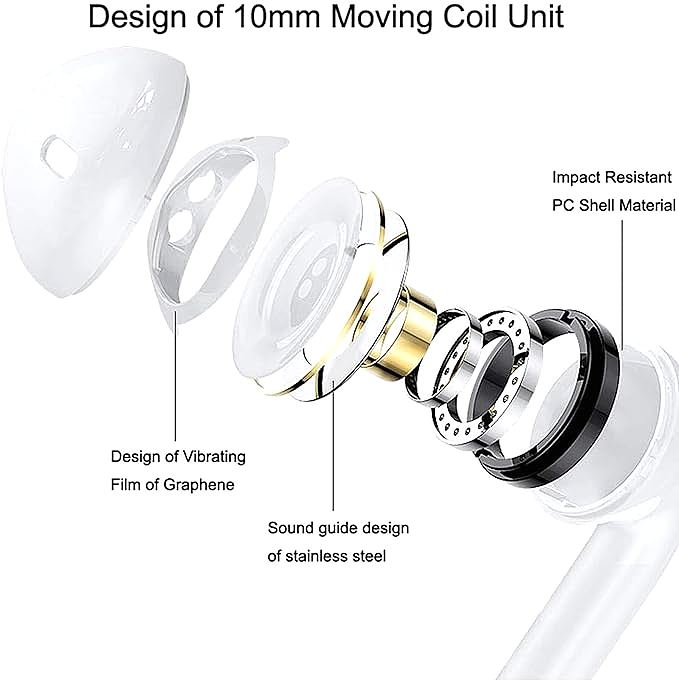
Inside each earbud sits a transducer (commonly called a “driver”)—the component that converts electrical energy into sound waves. The fundamental principle, discovered by Michael Faraday in 1831, remains unchanged:
- Electrical signal arrives from your device via Bluetooth
- Voice coil receives the signal and creates a magnetic field proportional to the voltage
- Magnetic field interacts with a permanent magnet fixed to the earbud housing
- Diaphragm vibrates in response to these magnetic interactions
- Air molecules compress and expand, creating sound waves
- Your eardrum detects these waves and your brain interprets them as sound
The quality of each component shapes the final output:
- Coil purity: Oxygen-free copper reduces resistance and heat
- Magnet strength: Neodymium magnets (discovered 1982) provide stronger fields than ferrite
- Diaphragm rigidity: Beryllium, graphene, or bio-cellulose resist breakup modes
Wireless earbuds face unique challenges. A typical 6mm driver must move air efficiently despite its tiny surface area. Engineers compensate through:
- Rear chamber tuning: Using the earbud housing as an acoustic resonator
- Port design: Controlled air leakage extends bass response
- Damping materials: Acoustic mesh smooths frequency peaks
The result: modern earbuds can produce frequency responses from 20 Hz to 20 kHz with distortion below 0.5%—specifications that rival headphones from the 1980s costing ten times more.
Active Noise Cancellation: Destructive Interference in Practice
Active Noise Cancellation (ANC) represents one of the most elegant applications of wave physics in consumer technology. The concept was patented by Paul Lueg in 1934, but required digital signal processing chips (not available until the 1990s) to implement practically.
ANC operates on the principle of destructive interference—when two waves meet 180° out of phase, they cancel each other out.
Incoming noise: ~~~/¯¯¯\/¯¯¯\~~~/¯¯¯\
Anti-noise wave: ¯¯¯\~~~~/~~~~\¯¯~/~~~~/
Result: _________________ (silence)
The implementation requires three components working in concert:
1. External Microphones
Tiny microphones embedded in the earbud housing detect incoming ambient noise before it reaches your ear. These sample at 20,000+ times per second, capturing noise patterns in real-time.
2. Digital Signal Processor
A dedicated chip analyzes the noise pattern and calculates the exact inverse wave required for cancellation. This computation must complete in under 20 microseconds—faster than the speed of sound traveling one centimeter.
3. Anti-Noise Generation
The earbud’s driver simultaneously plays both your audio content and the calculated anti-noise wave. When external noise and anti-noise meet inside your ear canal, they undergo destructive interference.
What ANC Can and Cannot Do:
| Noise Type | Frequency | ANC Effectiveness |
|---|---|---|
| Airplane engine hum | 50-200 Hz | ✅ Excellent (20-30 dB reduction) |
| Office HVAC | 100-500 Hz | ✅ Very good (15-25 dB reduction) |
| Human speech | 500-4000 Hz | ⚠️ Partial (5-10 dB reduction) |
| Sudden sharp sounds | 4000+ Hz | ❌ Minimal (physics limitation) |
The limitation isn’t technology—it’s physics. High-frequency sounds have wavelengths shorter than the distance between microphone and ear, making real-time cancellation impossible. Low-frequency sounds, with wavelengths measured in meters, are far easier to cancel.

The Endurance Equation: Understanding Portable Power Systems
One of the most liberating aspects of modern wireless earbuds is extended battery life. When manufacturers promise 48 hours of total playtime, this figure represents sophisticated power management engineering, not marketing exaggeration.
The Mathematics of Battery Life
To understand endurance claims, we must distinguish between two battery capacities:
Earbud Battery (65mAh each):
- Provides power for drivers, Bluetooth radio, and ANC processor
- Typical consumption: 10-15mA during music playback
- Single charge duration: 5-6 hours (65mAh ÷ 12mA ≈ 5.4 hours)
Charging Case Battery (650mAh):
- Acts as portable power bank for earbuds
- Provides approximately 7-8 full recharge cycles
- Does NOT directly power audio playback
Total System Endurance:
Earbud single charge: 5-6 hours
Case recharge cycles: 7-8 times
Total: 5.5 × 7.5 ≈ 41 hours
The “48 hours” figure represents ideal conditions: moderate volume (50-60%), ANC off, and efficient codec usage. Real-world usage typically delivers 40-44 hours—still remarkable for a system that fits in a pocket.
Lithium-Ion Chemistry: The Foundation of Portability
Lithium-ion batteries dominate portable electronics for fundamental chemical reasons. The technology emerged from Exxon’s research in the 1970s, commercialized by Sony in 1991, and has improved incrementally ever since.
| Advantage | Chemical Basis | Practical Benefit |
|---|---|---|
| High energy density | Lithium ions carry single positive charge | More power in less space |
| Low self-discharge | Stable electrolyte chemistry | Holds charge when not in use |
| No memory effect | Intercalation-based storage | Can recharge at any level |
| Hundreds of cycles | Reversible ion movement | Years of daily use |
The 65mAh batteries in each earbud are engineering compromises. Larger batteries would extend runtime but increase weight (affecting comfort). Smaller batteries would reduce weight but require more frequent charging. The industry has converged on 50-80mAh as the optimal range for earbud-sized devices.
Charging efficiency has also improved. Modern devices support:
- Fast charging: 10 minutes in case = 1-2 hours playback
- USB-C Power Delivery: Negotiates optimal charging voltage
- Wireless charging: Qi standard compatibility (emerging feature)
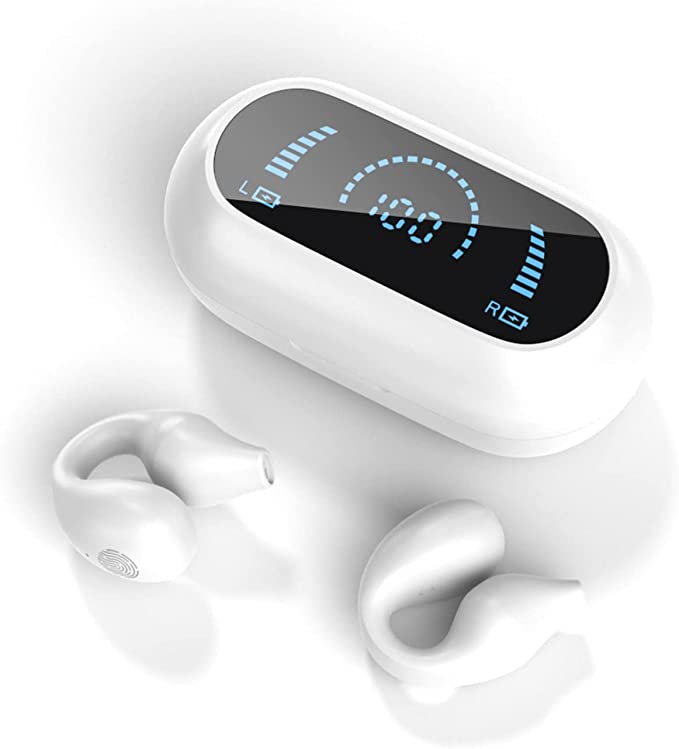
LED Display: Information Design
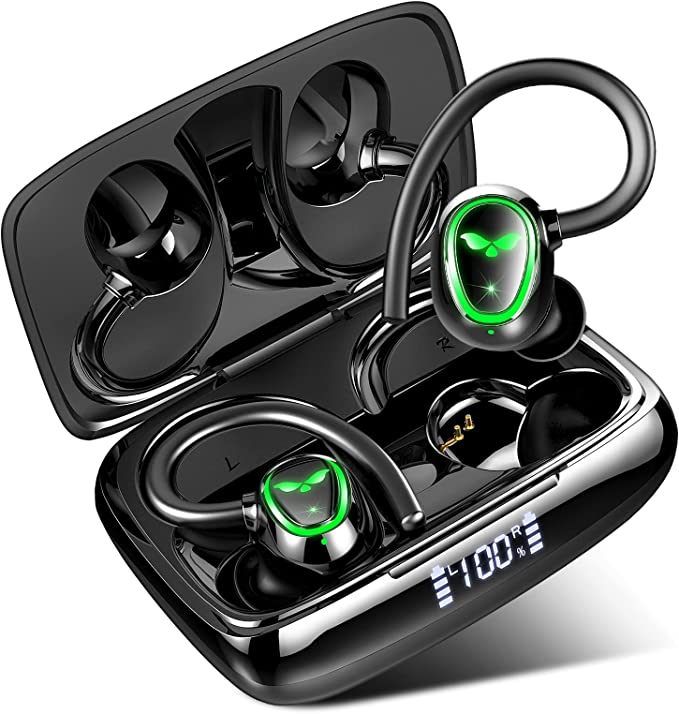
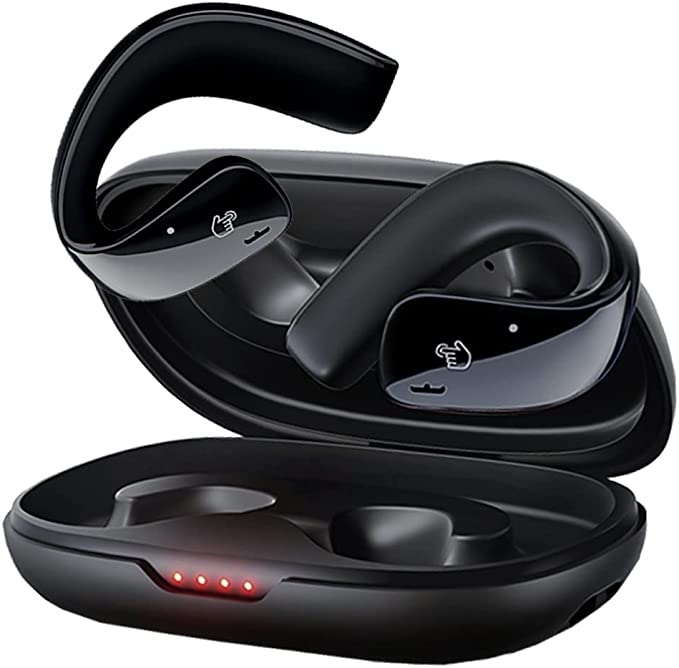
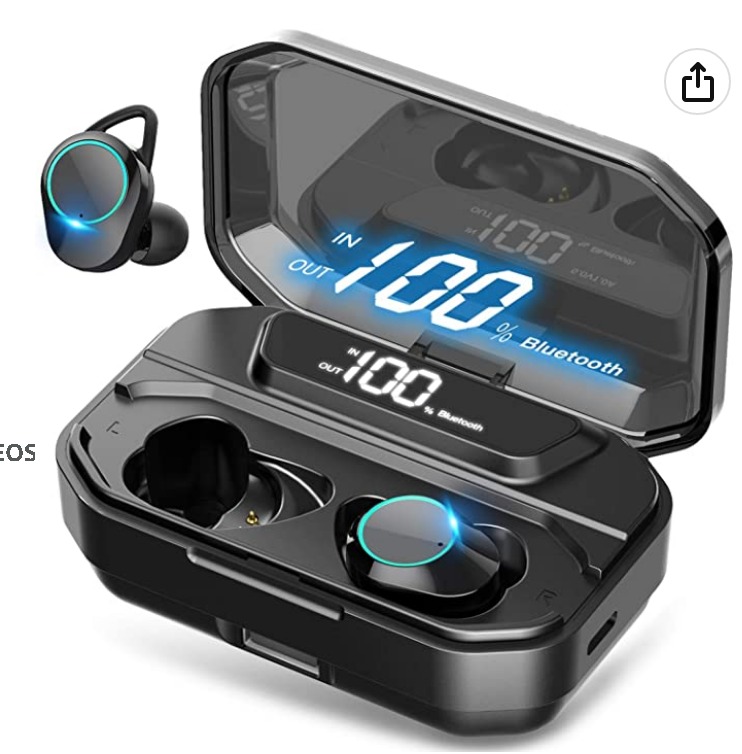
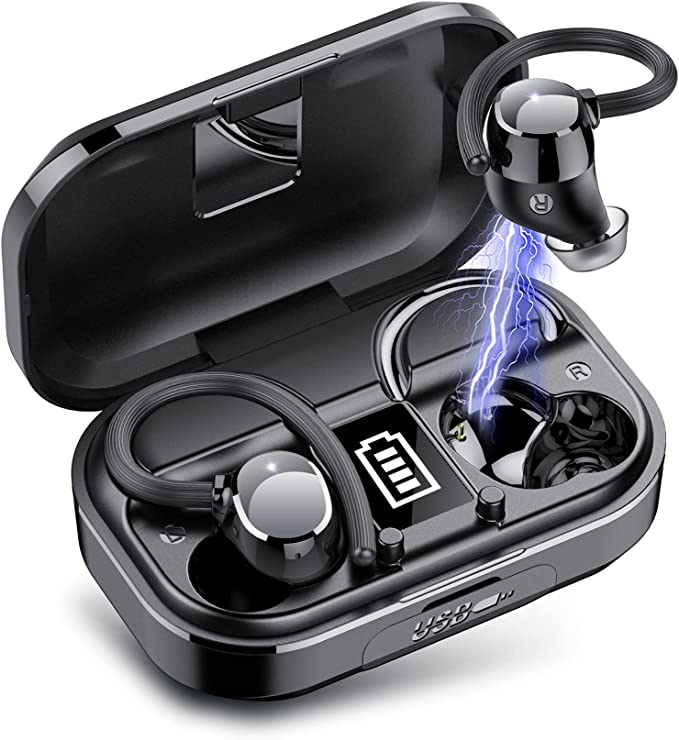
The charging case LED display represents a small but meaningful user experience improvement. Early wireless earbuds used simple LED indicators: solid for charged, blinking for low battery. Modern LED displays show exact percentage for both earbuds and case.
This transparency enables better planning:
- Knowing you have 73% remaining vs. “battery light is on”
- Understanding case has 2 full charges left, not just “some power”
- Identifying which earbud is draining faster (potential defect indicator)
The display itself consumes minimal power—typically 0.5mA when active, zero when off. Some designs use always-on displays powered by efficient OLED technology; others activate only when the case opens.

Engineering Resilience: Understanding IP Ratings
For those whose lives extend beyond climate-controlled spaces, durability matters. The IPX7 waterproof rating carried by many modern earbuds represents rigorous testing against international standards, not marketing language.
The IP Code System
The IP Code (Ingress Protection Marking) is defined by IEC Standard 60529, first published in 1976 and updated multiple times since. The International Electrotechnical Commission (IEC), founded in 1906, develops global standards for electrical and electronic technologies.
The format “IPX7” breaks down as:
IP X 7
│ │ └─ Liquid protection level (0-9)
│ └──── Solid particle protection (0-6, or X for untested)
└─────── "Ingress Protection" prefix
Solid Particle Ratings (First Digit):
- IP0X: No protection
- IP5X: Dust protected (limited ingress, no harmful deposits)
- IP6X: Dust tight (no ingress of dust)
Liquid Protection Ratings (Second Digit):
- IPX0: No protection
- IPX4: Splash resistant (water from any direction)
- IPX5: Water jet resistant (6.3mm nozzle, 12.5 L/min, 3m distance)
- IPX6: Powerful water jet resistant (12.5mm nozzle, 100 L/min)
- IPX7: Temporary immersion (1m depth, 30 minutes)
- IPX8: Continuous immersion (depth specified by manufacturer)
IPX7 certification requires testing in accredited laboratories. Devices are submerged in 1 meter of fresh water at 15-35°C for 30 minutes. After removal, they must function normally and show no water ingress upon inspection.
Real-World IPX7 Capabilities
| Scenario | Water Exposure | IPX7 Status |
|---|---|---|
| Heavy sweat during workout | Continuous moisture | ✅ Fully protected |
| Sudden rainstorm during run | Moderate rainfall | ✅ Fully protected |
| Accidental drop in puddle | 30 min @ 1m depth | ✅ Protected |
| Shower use | Steam + direct spray | ⚠️ Not recommended |
| Swimming | Prolonged submersion + pressure | ⚠️ Not recommended |
Important limitations:
Water resistance degrades over time. The seals and gaskets that protect internal components experience:
- Material fatigue: Rubber hardens after hundreds of compression cycles
- Temperature stress: Extreme heat/cold accelerates degradation
- Chemical exposure: Chlorine, salt water, and sunscreen damage seals
An earbud rated IPX7 when new may only achieve IPX4 after 12 months of daily gym use. Manufacturers rarely publish degradation timelines, so caution is warranted.
How IPX7 Is Achieved
Reaching IPX7 requires meticulous engineering across multiple disciplines:
Mechanical Sealing:
- Ultrasonic welding fuses housing halves at molecular level
- Compression gaskets around buttons and charging contacts
- Precision tolerances (±0.05mm) prevent water pathways
Chemical Protection:
- Hydrophobic nano-coatings on circuit boards
- Conformal coating prevents corrosion from humidity
- Potting compound fills voids around sensitive components
Design Considerations:
- Elimination of unnecessary openings
- Internal drainage channels redirect any ingress
- Pressure equalization membranes (Gore-Tex) prevent seal stress
This level of protection ensures durability for real-world scenarios: intense gym sessions, unexpected weather, and the occasional accidental encounter with water.

Human-Centered Design: Ergonomics and Interface
Beyond internal technologies, how an earbud feels and responds shapes the daily experience. The evolution toward lighter weight, better fit, and intuitive controls reflects decades of human factors research.
Ergonomics at Miniature Scale
Each wireless earbud in the modern category weighs approximately 3.5 grams—about the weight of a sheet of paper. This isn’t merely about lightness; it’s about reducing listener fatigue during extended wear.
The human ear canal presents unique challenges:
- Variable geometry: Ear canals range from 5-10mm in diameter
- Cartilage sensitivity: Pressure points cause discomfort after 30+ minutes
- Movement dynamics: Jaw motion (talking, chewing) affects fit
Successful ergonomic design addresses these through:
Multi-Point Contact:
Rather than relying on a single insertion point, modern earbuds distribute pressure across:
- Concha bowl (outer ear curve)
- Antihelix (inner ear ridge)
- Ear canal entrance (primary seal)
This distribution reduces pressure at any single point from potentially uncomfortable levels to barely perceptible.
Material Selection:
- Medical-grade silicone: Hypoallergenic, easy to clean, maintains grip
- Memory foam: Conforms to ear shape, improves isolation
- Hard plastics: Structural integrity, precise driver positioning
Size Accommodation:
Most devices include 3-4 ear tip sizes (XS, S, M, L), covering approximately 90% of the population. The remaining 10% may require aftermarket tips or custom molds.
Touch Controls: Haptic Interface Design
The touch-sensitive surface on each earbud transforms simple gestures into commands. This interface paradigm emerged from smartphone touchscreens and has evolved into sophisticated interaction systems.
Common Gesture Mapping:
| Gesture | Typical Function | Rationale |
|---|---|---|
| Single tap | Play/Pause or Answer call | Most intuitive for primary action |
| Double tap | Next track | Distinct from single tap, frequent action |
| Triple tap | Previous track | Less frequent, requires deliberate input |
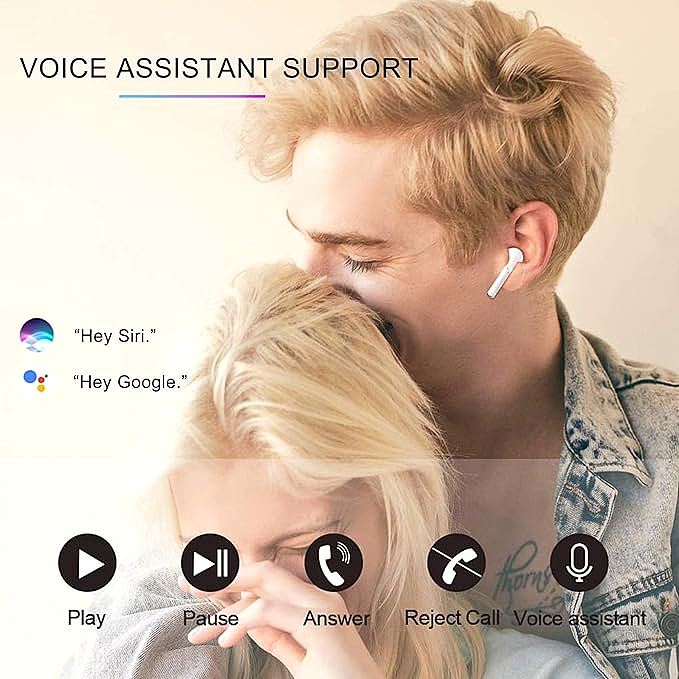
| Long press (2s) | Voice assistant or ANC toggle | Prevents accidental activation |
| Single tap (call) | End call | Mirrors answer gesture |
Implementation Considerations:
Touch sensors use capacitive detection—the same technology as smartphone screens. A conductive layer beneath the earbud surface detects the electrical properties of your finger, distinguishing intentional taps from incidental contact.
Challenges include:
- False positives: Hair, clothing, or adjustments triggering commands
- Feedback absence: No physical “click” makes confirmation difficult
- Learning curve: Gesture memory requires practice
Some implementations address these through:
- Haptic feedback (tiny vibration motors)
- Voice prompts confirming actions
- Customizable gesture mapping via companion apps
The goal: maintaining focus without breaking flow. When navigating a busy street, deep in work, or mid-stride on a run, fumbling for a phone creates friction. Direct earbud control eliminates this interruption.
The Democratization of Audio Technology
What makes modern wireless earbuds remarkable isn’t any single feature—it’s the convergence of advanced technologies at accessible price points. Features that defined $300+ products in 2018 now appear in devices costing one-tenth as much.
How Premium Became Accessible
Three converging factors enabled this transformation:
1. Manufacturing Scale and Automation
In 2016, wireless earbud assembly required skilled technicians positioning components under microscopes. By 2023, automated pick-and-place machines achieved 0.01mm precision at 10x the speed.
The learning curve effect is well-documented in manufacturing economics: each doubling of cumulative production volume reduces unit cost by 15-25%. The wireless earbud market grew from 18 million units (2016) to over 300 million units (2023)—a nearly 17x increase that drove dramatic cost reductions.
2. System-on-Chip Integration
Early wireless earbuds used discrete components: separate chips for Bluetooth, audio processing, power management, and charging. Each chip required its own supporting circuitry, consuming board space and power.
Modern SoC (System-on-Chip) designs integrate all functions into single packages:
- Bluetooth 5.3 radio
- Digital signal processor (for ANC and EQ)
- Battery management system
- Touch sensor controller
- Charging controller
This integration reduces component count from 50+ to under 20, cuts assembly time by 60%, and improves power efficiency through optimized communication between subsystems.
3. Material Commoditization
Advanced materials that commanded premium prices in 2018 have become commodity items:
- Neodymium magnets: Production scaled for electric vehicles, benefiting all applications
- Lithium-ion batteries: Smartphone and laptop demand drove 90% cost reduction (2010-2023)
- Touch sensors: Smartphone industry created abundant, inexpensive supply
The result: component costs that would have supported $200+ retail prices in 2018 now enable sub-$50 pricing with similar margins.
What This Means for Consumers
The democratization of audio technology creates a fundamentally different market landscape:
Then (2018):
- Bluetooth 5.0: Premium feature ($150+)
- ANC: Flagship exclusive ($250+)
- IPX7: Professional accessories only ($100+)
- 24+ hour battery: High-end differentiator ($180+)
Now (2026):
- Bluetooth 5.3: Standard across all price points
- ANC: Available from $40
- IPX7: Common in sports-oriented models
- 40+ hour battery: Typical for category
This doesn’t mean all earbuds are equal. Premium products still differentiate through:
- Tuning quality: Driver matching, custom EQ curves
- Build materials: Aluminum vs. plastic, premium finishes
- Ancillary features: Spatial audio, multipoint connection, app ecosystems
- Brand support: Warranty service, firmware updates, replacement parts
But for core functionality—reliable wireless audio with noise cancellation and extended battery—the gap between “premium” and “accessible” has narrowed dramatically.
The Reality of Budget Electronics
Honest assessment requires acknowledging trade-offs. Lower prices don’t mean compromised core performance, but they may affect:
| Aspect | Budget Approach | Premium Approach |
|---|---|---|
| Quality control | Sample testing (AQL 2.5) | 100% unit testing |
| Component tolerance | ±10% variation | ±5% matching |
| Firmware updates | Rare or never | Regular improvements |
| Warranty | 12 months, limited | 24 months, comprehensive |
| Customer support | Email only | Phone, chat, service centers |
The functional gap has narrowed; the support gap remains. For users prioritizing performance over prestige, the current market offers unprecedented value. For those wanting guaranteed support and update commitment, premium brands still command their premiums.
The Accessible Future of Personal Audio
The widespread availability of advanced audio technology represents a quiet revolution in how we experience sound. What once required careful consideration and significant investment now simply works—reliably, conveniently, and accessibly.
This accessibility shift matters beyond individual purchases. It reflects broader patterns in technology adoption:
- Innovation starts premium, becomes universal: From GPS to smartphones to wireless audio
- Standards enable competition: Bluetooth SIG, IEC ratings create level playing fields
- Scale drives affordability: Manufacturing volume transforms luxury into commodity
For listeners today, this means something profound: the best technology becomes invisible. When connectivity is reliable, battery lasts all day, and sound quality satisfies, the product disappears into the experience. You stop thinking about specifications and simply enjoy the music.
That absence—the ability to forget the technology exists—is the ultimate indicator of maturity. Personal audio has arrived not when it became expensive, but when it became effortlessly accessible to anyone who wants to press play.