Silencing the Urban Frequency: Acoustic Architecture in Modern Micro-Wearables
Update on March 5, 2026, 7:58 p.m.
The modern human condition is defined by an inescapable acoustic density. From the low-frequency rumble of jet turbines to the high-frequency chatter of open-plan offices, our auditory systems are subjected to a relentless barrage of atmospheric pressure waves. Historically, isolating the human ear from this environmental chaos required massive, heavily padded circumaural earmuffs that physically clamped against the skull. Today, the same level of acoustic isolation and high-fidelity reproduction is achieved by devices weighing mere grams, resting almost invisibly within the concha of the ear.
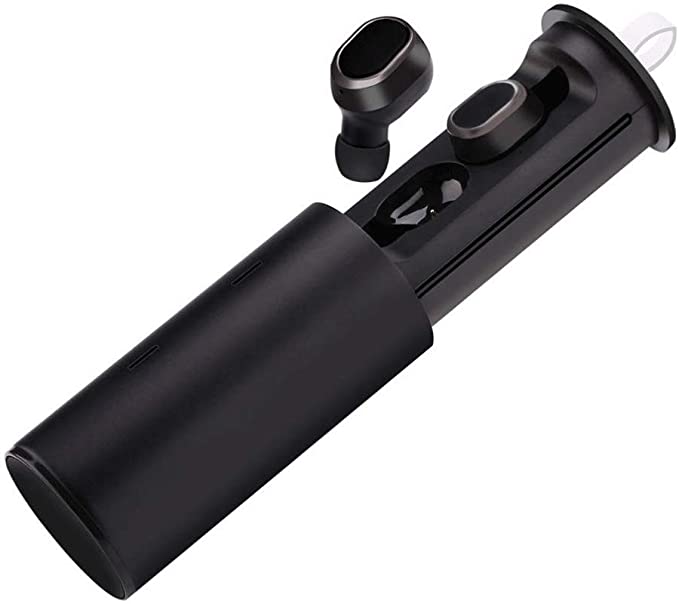
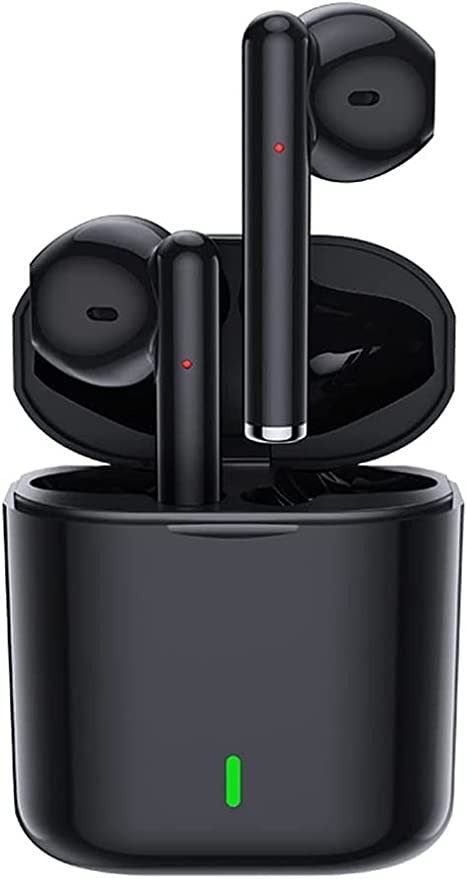
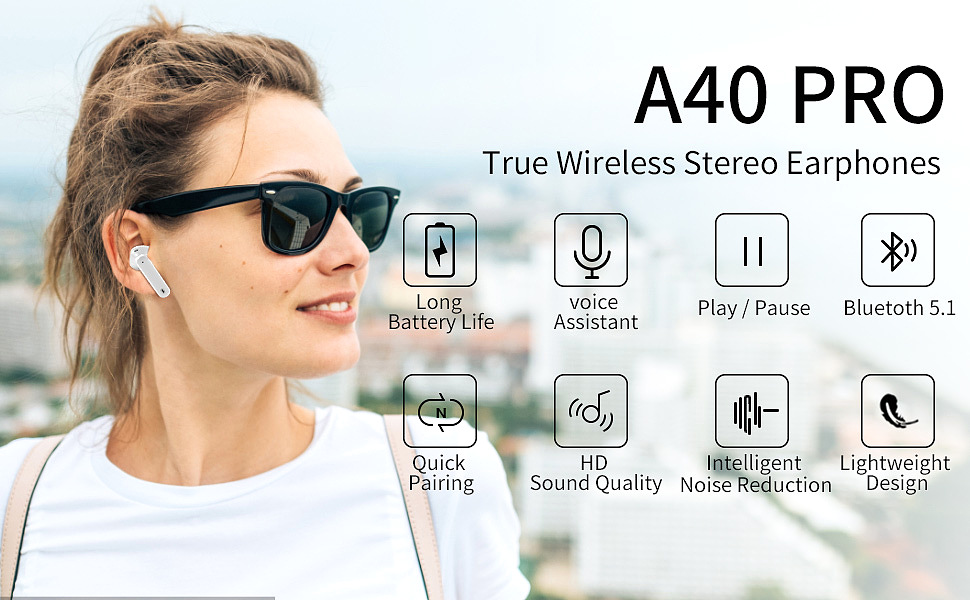
To understand how this radical compression of technology was achieved, we must strip away the marketing terminology and examine the raw physics operating within these microscopic chassis. By utilizing the architectural framework of contemporary devices—such as the HISOOS A40 Pro, which integrates 35dB active phase cancellation, 13mm dynamic drivers, and IPX7 environmental shielding—we can deconstruct the physical laws, thermodynamic constraints, and biological interfaces that define modern personal audio. This is not an evaluation of consumer electronics; it is a deep exploration into the applied sciences of electromagnetism, fluid dynamics, and psychoacoustics.
Why Does a Jet Engine Disappear Inside Your Ear Canal?
Imagine sitting adjacent to the wing of a commercial airliner traveling at 500 miles per hour. The ambient noise level inside the cabin routinely hovers around 80 to 85 decibels (dB), dominated by a continuous, low-frequency drone. If you insert a modern micro-wearable into your ear, that mechanical roar seemingly vanishes into thin air. This is not the result of a physical wall blocking the sound; it is the execution of a mathematical assassination known as Active Noise Cancellation (ANC).
The foundational principle of ANC relies on the physics of wave interference. Sound propagates through the atmosphere as longitudinal waves consisting of alternating zones of compression (high pressure) and rarefaction (low pressure). When two sound waves occupy the same physical space at the exact same time, their amplitudes sum together. This is known as the principle of superposition.
If the two waves are perfectly in phase—meaning their compressions and rarefactions align—they create constructive interference, resulting in a louder sound. However, if a microprocessor can generate a second sound wave that is precisely 180 degrees out of phase with the original noise—meaning the peak of the new wave aligns perfectly with the trough of the intrusive wave—the two waves engage in destructive interference. The positive pressure of the noise is mathematically canceled by the negative pressure of the “anti-noise,” leaving the resulting atmospheric pressure essentially flat. To the human eardrum, this flat pressure translates to absolute silence.
To execute this in real-time, architectures like the HISOOS A40 Pro deploy a highly synchronized chain of hardware. An external feedforward microphone continuously samples the ambient acoustic environment. This analog voltage is digitized and sent to a dedicated Digital Signal Processor (DSP). The DSP analyzes the waveform and calculates the precise inverse phase required to neutralize it. This calculation must occur in fractions of a millisecond; if the anti-noise wave is delayed by even a microsecond, the phases will not align perfectly, and the system might accidentally amplify the noise rather than cancel it.
When a specification cites a noise reduction of “up to 35dB,” it is describing a massive alteration in acoustic power. The decibel scale is logarithmic. A reduction of 10dB is generally perceived by the human brain as a halving of the volume. Therefore, a 30dB to 35dB reduction essentially reduces the perceived roar of an engine to a fraction of a whisper, stripping away over 99% of the acoustic energy before it can strike the tympanic membrane.
However, the physics of ANC harbor a specific failure mode. Destructive interference is highly effective against continuous, predictable, low-frequency waves with long wavelengths (like engines or HVAC units). The DSP has ample time to sample the wave and generate the inverse phase. Conversely, sudden, erratic, high-frequency transients—such as a baby crying, a dog barking, or glass shattering—possess very short wavelengths and unpredictable attack envelopes. The DSP often cannot calculate and project the anti-noise fast enough to catch the peak of the transient, which is why ANC systems frequently fail to block sudden, sharp noises, allowing them to bleed through the digital silence.

The 13mm Bellows Pumping Invisible Oceans
Once the ambient environment has been mathematically silenced, the device must reconstruct the desired acoustic signal. The primary engine for this task is the electro-acoustic transducer, commonly referred to as the dynamic driver. Within the extreme spatial constraints of an earbud, driver diameter is the ultimate currency of acoustic capability.
The implementation of a 13mm dynamic speaker within a compact chassis represents a deliberate prioritization of fluid displacement over volumetric shrinkage. To understand why 13 millimeters is considered massive in this context, we must examine the physics of low-frequency sound generation.
A dynamic driver operates on the Lorentz force. A microscopic voice coil, wound from ultra-fine copper wire, is suspended within the magnetic gap of a permanent neodymium magnet. When the alternating current of the audio file passes through the coil, it generates an oscillating electromagnetic field that interacts with the permanent magnet, driving the attached polymer diaphragm forward and backward like a piston.
High-frequency sounds (treble) have very short wavelengths and require rapid, microscopic vibrations. Low-frequency sounds (bass), however, require moving a massive volume of air to generate the necessary atmospheric pressure changes. The relationship between acoustic power, frequency, and air velocity dictates that as frequency drops, the volume of air displaced must increase exponentially to maintain the same perceived loudness.
If a driver is too small (e.g., 6mm), it lacks the surface area to move a large volume of air. To compensate, it must dramatically increase its linear excursion—the distance the diaphragm travels back and forth. Pushing a small diaphragm to extreme excursion limits introduces severe mechanical stress, causing the polymer to warp and buckle, which manifests to the listener as harsh harmonic distortion and “flabby” bass.
By utilizing a 13mm diaphragm, devices like the HISOOS A40 Pro vastly increase the surface area of the acoustic piston. This larger surface area can displace the required volume of air for a heavy sub-bass note with significantly less forward-and-backward travel. Because the diaphragm remains well within its linear operating range, the resulting acoustic wave is tight, controlled, and free of distortion. It functions as a powerful, efficient bellows, capable of recreating the profound, booming bass of a cinematic explosion or a kick drum without sacrificing the rigidity required to accurately render the crystal-clear highs of a violin string.

When a Sudden Downpour Hits at Mile Thirteen
The fragility of consumer electronics is inextricably linked to their relationship with fluid dynamics. Pure, distilled water is a relatively poor conductor of electricity. However, the fluids that consumer wearables encounter in the real world—specifically human perspiration and urban rainwater—are highly contaminated.
Sweat is a hypertonic saline solution, rich in sodium, potassium, and chloride ions. When a device is exposed to sweat during a marathon or a gym session, these ions transform the moisture into a highly efficient electrolyte. If this electrolytic fluid bridges the microscopic gap between two active electrical traces on a printed circuit board (PCB), it initiates galvanic corrosion. The less noble metal on the board acts as an anode and rapidly dissolves into the fluid, while the more noble metal acts as a cathode. Within hours, vital copper traces can be entirely eaten away, resulting in catastrophic hardware failure.
To survive this biomechanical assault, modern architectures target rigorous ingress protection standards, specifically the IPX7 rating defined by the International Electrotechnical Commission (IEC). The ‘7’ designates that the enclosure can withstand absolute submersion in one meter of water for 30 minutes.
At a depth of one meter, water exerts a hydrostatic pressure of roughly 9.8 kilopascals (kPa). To prevent this crushing force from forcing liquid into the chassis, the device cannot rely on standard plastic clips or adhesive glues. The shell must be fused using ultrasonic welding, a process where high-frequency acoustic vibrations melt the thermoplastic halves of the earbud together at a molecular level, creating a seamless, impenetrable exterior.
However, sound must exit the earbud, and air must enter the microphones. To protect these acoustic ports, engineers deploy woven mesh screens treated with advanced fluoropolymer nano-coatings. These coatings radically lower the surface energy of the mesh. Due to the high surface tension of water, the liquid molecules prefer to cohere to themselves rather than adhere to the fluoropolymer. The water beads up into spheres that are physically too large to penetrate the microscopic pores of the mesh, while air molecules pass through seamlessly. This allows the 13mm driver to “breathe” atmospheric air while violently repelling the corrosive ingress of sweat and rain.
Leaving the Ear Half-Open Actually Improves the Soundstage
The interface between rigid plastic hardware and soft human tissue is fraught with ergonomic paradoxes. For decades, the prevailing logic in in-ear monitor (IEM) design was to drive a dense silicone or memory foam plug as deeply into the external auditory meatus (ear canal) as possible to achieve maximum passive acoustic isolation.
While a deep, airtight seal excels at blocking external noise, it triggers a highly uncomfortable biological phenomenon known as the occlusion effect. The human skull is highly conductive to low-frequency vibrations generated by the body itself—such as the impact of a footstep during a run, the grinding of teeth, or the resonance of one’s own voice. Normally, these low-frequency vibrations exit the body through the open ear canal.
When the ear canal is hermetically sealed by a tight silicone plug, these low-frequency bone-conducted vibrations become trapped in the space between the earbud and the tympanic membrane. The acoustic energy bounces off the silicone plug and strikes the eardrum, amplifying the perceived volume of chewing, swallowing, and footsteps by up to 20 decibels. For an active user, this turns a simple jog into a deafening, rhythmic thudding inside their own head.
To circumvent the occlusion effect, engineers developed the “half in-ear” architecture, characterized by specific geometric angles—such as the 108-degree contour utilized in the HISOOS A40 Pro. This design rests securely in the concha bowl and the opening of the ear canal without acting as a pressurized cork.
By maintaining a slight, calculated gap between the device and the walls of the ear canal, the design allows the internal air pressure to equalize with the external atmospheric pressure. The low-frequency bone-conducted vibrations of the user’s own body are allowed to vent safely into the outside world, completely eliminating the thudding occlusion effect. Furthermore, this vented design drastically widens the perceived soundstage. Because the acoustic waves are interacting with the natural geometry of the outer ear (the pinna) rather than being injected directly into a sealed tube, the brain interprets the music as originating from a wide, three-dimensional space around the listener, rather than originating from a point dead-center inside the skull.

Algorithmic Telephony vs. Raw Acoustic Capture
Delivering high-fidelity audio to a listener is only half of the equation in modern personal electronics. Capturing the user’s voice and transmitting it flawlessly across a cellular network while navigating a noisy urban environment is an entirely different discipline of signal processing.
In traditional telephony, capturing a clear voice required placing the microphone directly in front of the speaker’s mouth to maximize the signal-to-noise ratio. In a wireless earbud, the microphone is located by the tragus of the ear, centimeters away from the mouth, capturing the user’s voice almost identically to how it captures the roar of passing traffic or the wind sheer against the plastic chassis.
If the device transmitted this raw, broadband acoustic capture, the party on the receiving end of the call would experience an unintelligible wall of noise. To solve this, devices must uncouple raw acoustic capture from digital transmission, utilizing technologies like Environmental Noise Cancellation (ENC) or specific algorithmic models to isolate the voice.
This processing relies heavily on the mathematics of the Fast Fourier Transform (FFT). When the built-in microphones capture the chaotic soundscape of a busy street, the onboard processor instantly digitizes the waveform and slices it into hundreds of specific frequency bins. The algorithm is trained on the highly specific harmonic fingerprint of human speech.
Human vowels and consonants possess distinct frequency ranges and rhythmic temporal patterns. The algorithm acts as an acoustic excavator. It continuously analyzes the audio stream; when it identifies the steady, non-harmonic, low-frequency rumble of a car engine or an air conditioner, it applies massive negative gain to those specific frequencies, effectively muting them. Simultaneously, it isolates the transient harmonic spikes that match the human vocal tract and applies positive gain. The algorithm ruthlessly deletes the physical reality of the user’s environment in real-time, mathematically extracting the pure vocal signal from the surrounding rubble before it is ever transmitted to the Bluetooth radio.
From Backpack Batteries to 30-Hour Microcells
The ultimate constraint upon all untethered technology is not computational power; it is thermodynamic capacity. The ability to execute active noise cancellation, stream Bluetooth audio, and run complex Fast Fourier Transforms requires continuous electrical energy. Historically, powering this level of computational logic required massive, heavy lead-acid or nickel-cadmium batteries that relegated mobile communication to vehicle-mounted units or heavy backpacks.
The miniaturization of the modern earbud relies entirely on the commercial maturation of lithium-ion (Li-ion) electrochemistry. Inside a device like the A40 Pro, a microscopic coin cell or pouch cell operates by shuttling lithium ions back and forth between a graphite anode and a metal-oxide cathode. The energy density of these cells allows a battery weighing only a few grams to provide the 6 to 8 hours of continuous current required to drive the 13mm speaker and the Bluetooth System-on-a-Chip (SoC).
However, achieving a cumulative “30+ hours” of playtime requires an architectural shift from a single power source to a distributed energy grid. The earbuds themselves contain only the bare minimum chemical volume required for a single physiological session. The external charging case acts as the master thermodynamic reservoir.
When the earbuds are placed in the case, a sophisticated Power Management Integrated Circuit (PMIC) initiates a highly regulated chemical transfer. The PMIC utilizes a Constant Current / Constant Voltage (CC/CV) charging curve. It initially pumps high current into the depleted earbud cells to rapidly restore capacity, generating significant waste heat in the process. As the cell approaches 80% capacity, the PMIC smoothly transitions to a constant voltage phase, drastically slowing the current to gently top off the remaining capacity. This precise regulation prevents the highly reactive lithium ions from plating onto the anode as metallic lithium—a failure mode that permanently destroys battery capacity and can lead to catastrophic thermal runaway.

Ultimately, the creation of modern personal audio is an exercise in microscopic compromise and multidisciplinary mastery. By dissecting the specifications of devices operating in this space, we move past the commoditization of consumer electronics and arrive at a profound appreciation for the underlying physics. From the deliberate phase cancellation of urban noise, to the precise fluid dynamics of IPX7 ultrasonic welding, to the biomechanical elegance of the 108-degree semi-open fit, these devices represent a continuous, invisible war against the constraints of the physical universe, engineered to deliver absolute acoustic fidelity into the human mind.