Overcoming Aquatic Attenuation: The Physics of Submerged Audio
Update on March 7, 2026, 8:44 a.m.
The pursuit of delivering high-fidelity acoustic experiences into harsh, fluid environments represents a fascinating collision of multiple scientific disciplines. To successfully transplant delicate microelectronics from the relatively forgiving atmosphere of a living room into the high-pressure, highly conductive reality of a swimming pool, engineers must navigate a labyrinth of physical limitations. The challenges are not merely mechanical; they are rooted in the fundamental quantum behaviors of water molecules, the thermodynamic properties of sealed enclosures, and the biological limits of the human auditory cortex.
When observing modern aquatic hardware, it becomes evident that the solutions are rarely brute-force applications of power. Instead, they are elegant workarounds to the immutable laws of nature. By examining the structural and algorithmic architecture of these devices, we uncover a masterclass in cross-disciplinary engineering.

Why Does Water Annihilate Your Wireless Signal?
Anyone who has ever attempted to carry a wireless streaming device into a swimming pool has encountered a sudden, catastrophic failure of connectivity the moment the hardware slips beneath the surface. This is not a manufacturer defect, nor is it a software glitch. It is a direct consequence of the molecular structure of water interacting with the electromagnetic spectrum.
The global standard for short-range wireless data transmission, including the protocols used to stream high-bitrate audio, operates within the 2.4 GHz Industrial, Scientific, and Medical (ISM) radio band. In a vacuum or in dry air, these electromagnetic waves propagate with remarkable efficiency, bouncing off walls and passing through non-conductive materials to maintain a continuous data link between a transmitter and a receiver.
However, water ($H_2O$) is a highly polar molecule. Because of the unequal sharing of electrons between the oxygen atom and the two hydrogen atoms, one side of the molecule carries a slight negative charge, while the other carries a slight positive charge. When a 2.4 GHz electromagnetic wave enters a body of water, its rapidly oscillating electrical field interacts aggressively with these polar molecules.
As the electromagnetic field alternates billions of times per second, it forces the water molecules to rapidly rotate back and forth, attempting to align their structural dipoles with the shifting field. This violent, continuous molecular rotation generates immense microscopic friction. The kinetic energy of the radio wave is rapidly absorbed and converted directly into thermal energy—heat. This phenomenon, known as dielectric heating, is the exact physical mechanism utilized by household microwave ovens.
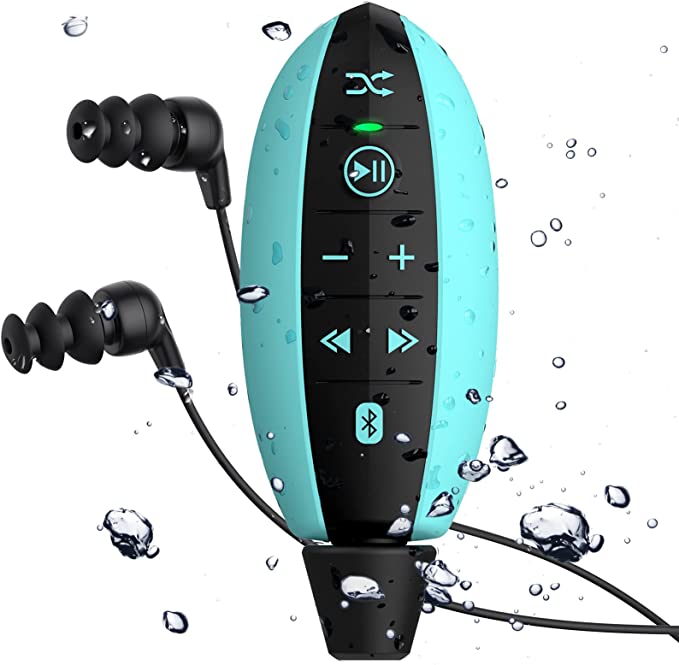
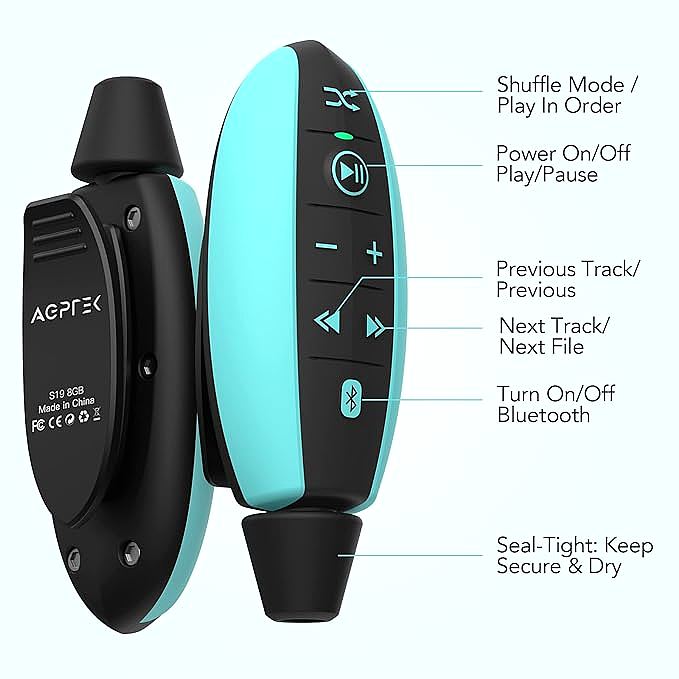
Because the water molecules absorb the 2.4 GHz energy with such extreme efficiency, the signal undergoes severe electromagnetic attenuation. Within merely two to three inches of liquid penetration, the signal strength degrades to the point of complete data loss. Consequently, devices engineered for aquatic use, such as the AGPTEK S19 waterproof MP3 player, explicitly state that their internal wireless protocols will not function during submersion. Bypassing this physical absolute requires abandoning the streaming paradigm entirely while in the water, necessitating localized, physical data storage that resides on the safe side of the aquatic barrier.
From Spinning Magnetics to Solid-State Independence
The realization that continuous wireless transmission is impossible underwater forces a reliance on local memory architecture. However, the history of portable audio storage reveals that not all memory is suitable for the abyss.
In the late 20th century, portable audio relied entirely on kinetic, mechanical storage mediums. Cassette tapes required complex arrays of rubber pinch rollers, capstans, and magnetic read heads. Compact Discs relied on spinning polycarbonate platters and perfectly calibrated optical tracking lasers. If a manufacturer attempted to build a waterproof enclosure for these kinetic systems, they faced an insurmountable thermodynamic and mechanical hurdle.
When a sealed device is submerged, the hydrostatic pressure of the surrounding water pushes inward against the chassis walls. If the chassis flexes even a fraction of a millimeter under this pressure, it can easily misalign a delicate optical laser or jam a spinning motor. Furthermore, mechanical motors generate significant heat, which struggles to dissipate efficiently through thick, watertight plastic housing.
The modern aquatic audio experience was unlocked entirely by the commercialization of NAND flash memory. Solid-state architecture eliminates all moving parts. It stores binary data by trapping electrons inside floating-gate metal-oxide-semiconductor field-effect transistors (MOSFETs). When a high voltage is applied across the control gate, electrons undergo Fowler-Nordheim tunneling, passing through an insulating oxide layer and becoming permanently trapped in the floating gate. The presence or absence of these trapped electrons alters the threshold voltage of the transistor, representing a binary 1 or 0.
Because these microscopic transistors are etched directly into a silicon wafer, they are utterly immune to the hydrostatic pressure variations experienced during a deep dive. They generate negligible heat, require microscopic amounts of physical volume, and consume fractions of a milliwatt to read. The integration of 8 gigabytes of solid-state storage within a micro-wearable allows thousands of audio tracks to be physically carried into the fluid environment, resolving the electromagnetic attenuation problem by making the device entirely self-sufficient.

Airtight Enclosures Actually Destroy Sound Quality
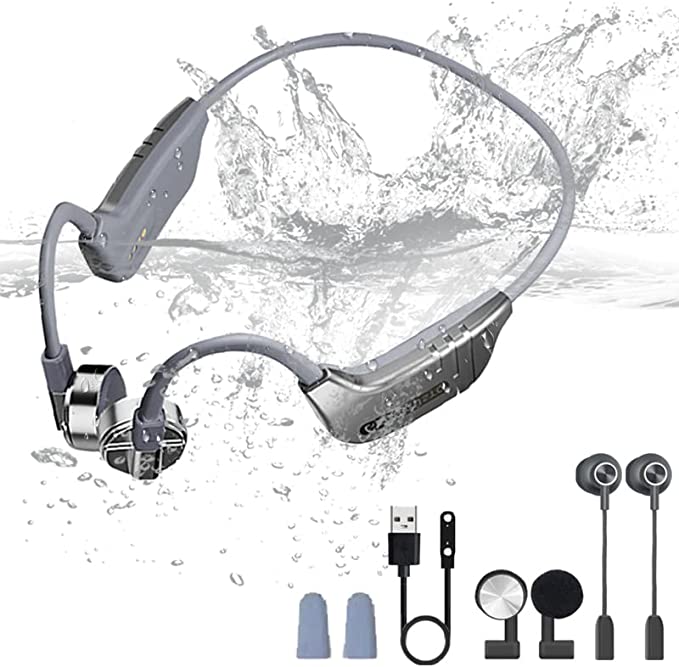
Protecting that delicate silicon architecture from liquid ingress requires severe mechanical sealing. The International Electrotechnical Commission (IEC) defines the Ingress Protection (IP) standards. An IPX8 rating signifies that a device has been engineered to withstand continuous immersion in water beyond a depth of one meter. Achieving this requires ultrasonic plastic welding, thick rubber O-rings, and hydrophobic nano-coatings over any exposed metal contacts.
However, in the realm of acoustic engineering, an absolutely perfect, hermetic seal is a destructive paradox.
Sound is a mechanical wave. To generate audio, a dynamic driver inside the earphone must rapidly push and pull a lightweight diaphragm, displacing air to create pressure waves. In a standard, non-waterproof headphone, the rear of the acoustic chamber contains microscopic vents. These vents allow the air mass behind the driver to escape, allowing the diaphragm to move freely.
When you encapsulate a dynamic driver inside a perfectly sealed IPX8 waterproof housing, you trap a fixed volume of air behind the diaphragm. According to Boyle’s Law ($P_1V_1 = P_2V_2$), at a constant temperature, the pressure of a gas is inversely proportional to its volume. When the electrical signal commands the driver to move backward to reproduce a heavy bass note, it compresses that trapped air. Because the air cannot escape, it acts as a stiff pneumatic spring, violently resisting the movement of the diaphragm.
This severe acoustic damping crushes the dynamic range of the transducer. The low-frequency bass response is severely curtailed, and the resulting audio sounds thin, tinny, and hollow.
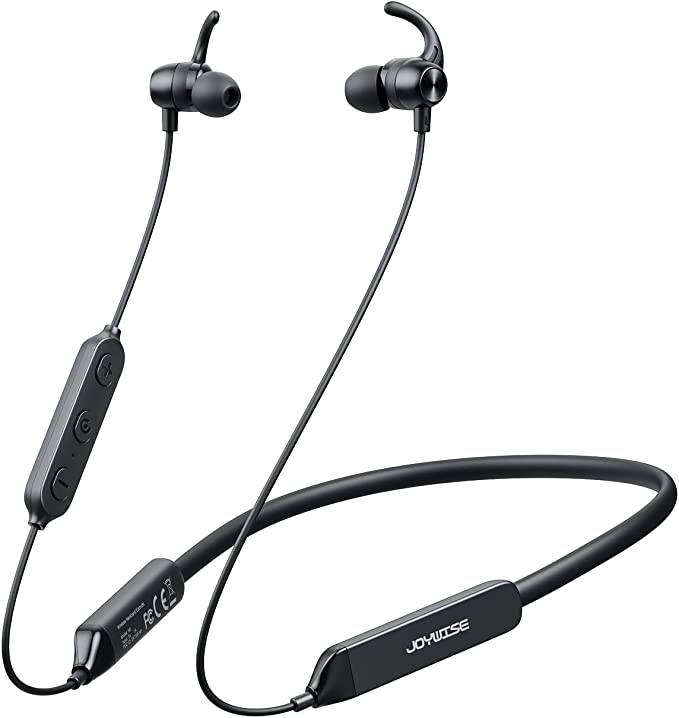
To overcome this pneumatic resistance without compromising the watertight integrity, engineers must manipulate the fluid dynamics of the interface between the hardware and the human body. This is why specialized, highly specific elastomeric eartips are utilized. When a short-cord aquatic earphone is inserted into the ear canal, the silicone flanges must create a flawless, high-friction boundary layer against the epithelial tissue.
By perfectly sealing the ear canal, the volume of air trapped in front of the driver essentially becomes an extension of the acoustic chamber. The ear canal acts as a localized Helmholtz resonator. The stiffness of the trapped air column couples directly with the tympanic membrane (the eardrum), allowing the restricted movements of the damp-constrained driver to still transfer maximum acoustic energy directly into the biological hearing apparatus. If this silicone seal breaks—allowing even a micro-droplet of pool water into the canal—the resonance breaks instantly, and the audio vanishes into a muffled distortion.

The Mathematical Origami of Audio Codecs
With the physical storage capacity limited to what can be housed on a single NAND flash chip (often capped at 8GB in highly miniaturized formats), the efficient management of digital real estate becomes a critical computational science. Raw, uncompressed analog-to-digital audio conversion generates massive files. A single minute of uncompressed stereo pulse-code modulation (PCM) audio consumes over 10 megabytes of space.
To maximize the utility of limited local storage, the hardware relies on complex mathematical algorithms known as codecs (coder-decoders). The most ubiquitous format, MP3, achieves its dramatic file size reduction not through mere data zipping, but through the application of psychoacoustics—the scientific study of how the human brain perceives sound.
The MP3 encoding algorithm utilizes a Fast Fourier Transform (FFT) to analyze the audio waveform, breaking it down into distinct frequency bands. It then applies a psychoacoustic model to identify data that the human ear is biologically incapable of hearing. For example, the algorithm exploits “simultaneous masking.” If a very loud sound (like a snare drum hit) occurs at the exact same moment as a quiet sound (like a subtle bass guitar pluck) at a similar frequency, the human auditory cortex will only register the loud sound. The MP3 encoder identifies the masked sound and permanently deletes that data from the file. This lossy compression allows thousands of tracks to fit into a tiny memory footprint, but it irrevocably destroys the original acoustic nuance.
Conversely, advanced aquatic hardware often integrates decoding support for formats like FLAC (Free Lossless Audio Codec) and APE. These represent an entirely different algorithmic philosophy: lossless compression.
Think of lossless compression like an origami master folding a large sheet of paper. The paper becomes much smaller and easier to carry, but when unfolded, it is exactly the same size and shape as it was originally. FLAC achieves this through linear prediction. The algorithm analyzes the audio waveform and attempts to mathematical predict the next data point based on the previous ones. It then only stores the “residual”—the tiny mathematical difference between its prediction and the actual audio wave.
When the local processor plays back a FLAC file, it reverses the mathematical operation, perfectly reconstructing the original, uncompressed PCM wave. This requires significantly more processing power from the onboard digital signal processor (DSP) and consumes more of the 8GB local storage, but it guarantees that the listener experiences the exact studio mastering, free from the destructive algorithms of psychoacoustic culling.
Surviving the Saltwater Corrosive Assault
The ultimate test of microelectronic engineering does not occur in the controlled environment of a chlorinated pool, but rather during exposure to the raw ocean. Marine environments introduce a highly aggressive chemical threat that actively seeks to dismantle hardware at a molecular level: galvanic corrosion.
Ocean water contains approximately 35 grams of dissolved salts per liter, predominantly sodium chloride ($NaCl$). When dissolved, these salts disassociate into positively charged sodium ions ($Na^+$) and negatively charged chloride ions ($Cl^-$). This creates a highly potent, highly conductive electrolyte solution.
Almost all portable devices require external metal contacts to transfer power to their internal lithium-polymer batteries. When an athlete emerges from the ocean, trace amounts of this saltwater electrolyte coat the exterior of the device. If this electrolyte film bridges the microscopic gap between two dissimilar metals on the hardware—such as a gold-plated charging pin and a steel housing screw, or the positive and negative terminals of a charging port—a galvanic cell is instantly formed.
The dissimilar metals possess different anodic indexes (different electron potentials). The more active metal acts as an anode, and the less active metal acts as a cathode. Driven by the electrolyte, electrons begin to flow rapidly from the anode to the cathode. As the anode loses electrons, its metal atoms ionize and dissolve into the saltwater. The metal literally eats itself away. Within a matter of hours, a pristine copper or brass charging pin can be reduced to a useless pile of green or black oxide scale.
Once this oxide scale forms, it acts as a powerful electrical insulator. Even if the internal battery is perfectly healthy, the 5-volt direct current from the charging cable will encounter infinite electrical resistance at the corroded terminal, rendering the device incapable of accepting a charge.
Defeating galvanic corrosion requires strict operational discipline and barrier engineering. Manufacturers implement physical defenses, such as tightly fitting silicone caps designed to violently displace water from the terminal cavities. However, the ultimate defense is chemical dilution. Rinsing the hardware thoroughly with fresh, deionized tap water immediately after ocean exposure forces the conductive sodium and chloride ions out of the microscopic crevices before the redox reactions can accelerate.
Furthermore, the internal thermodynamics of the battery itself are heavily influenced by the aquatic environment. Lithium-polymer chemistry relies on the fluid mobility of lithium ions shuttling between the anode and cathode. Water is a massive thermal sink; it strips heat away from an object 24 times faster than air. During a long open-water swim in cold temperatures, the core temperature of the device drops rapidly. As the internal temperature falls, the liquid electrolyte inside the battery cell becomes increasingly viscous.
This increased viscosity creates internal resistance, slowing down the ion transfer rate. The nominal 10-hour battery life calculated at room temperature can experience severe voltage sag in a cold ocean, artificially triggering the low-battery protection circuits prematurely. Thus, the engineering of aquatic hardware is a continuous negotiation with thermodynamics, electrochemistry, and fluid dynamics, ensuring that the music continues to play even when surrounded by an environment actively attempting to destroy the source.