The Engineering of Access: Deconstructing Budget Wireless Audio
Update on Dec. 31, 2025, 9:54 p.m.
In the grand narrative of technology, there is a recurring theme: democratization. Innovations that begin as exclusive luxuries eventually permeate the market, becoming accessible to all. Wireless audio is a prime example. A decade ago, a pair of Bluetooth headphones with 50-hour battery life and stable connectivity would have cost a premium. Today, devices like the RORSOU B10 deliver these specifications at a price point accessible to almost anyone.
This article is not just a review of a budget headphone; it is an exploration of the engineering maturity that makes such a product possible. We will delve into the physics of 40mm dynamic drivers, the efficiency of Bluetooth 5.3 protocols, and the energy economics of modern lithium-ion batteries.
The Physics of Scale: 40mm Dynamic Drivers
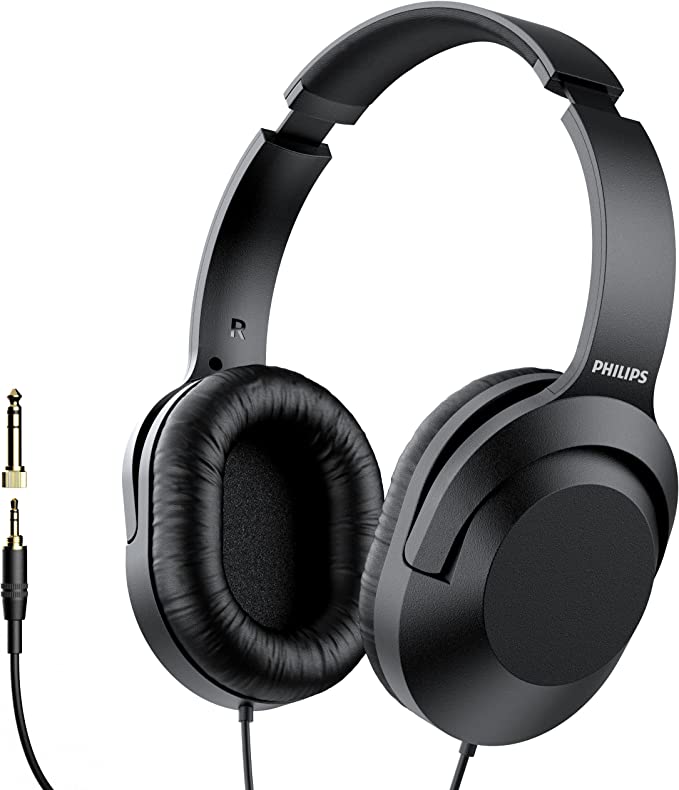
The heart of any headphone is the driver. The RORSOU B10 utilizes 40mm dynamic drivers. In the world of audio, size matters, particularly for low-frequency reproduction.
* Volume Displacement ($V_d$): Sound is created by moving air. To produce deep bass frequencies (long wavelengths), a driver must move a significant volume of air.
$$V_d = Area \times Excursion$$
A 40mm driver has a surface area roughly 16 times larger than a typical 10mm earbud driver. This geometric advantage allows it to move a massive amount of air with relatively little linear excursion.
* Efficiency: Because the large diaphragm couples more effectively with the air, it is more efficient at converting electrical energy into acoustic energy, especially in the bass region. This explains the “rich bass” characteristic often associated with over-ear headphones compared to in-ears.
* Distortion: Less excursion means the voice coil stays within the uniform magnetic field for longer, reducing non-linear distortion at high volumes. While budget drivers may lack the exotic materials of high-end models (like beryllium or biocellulose), the sheer physics of size gives them a head start in delivering a “full dynamic range.”
The Protocol of Stability: Bluetooth 5.3
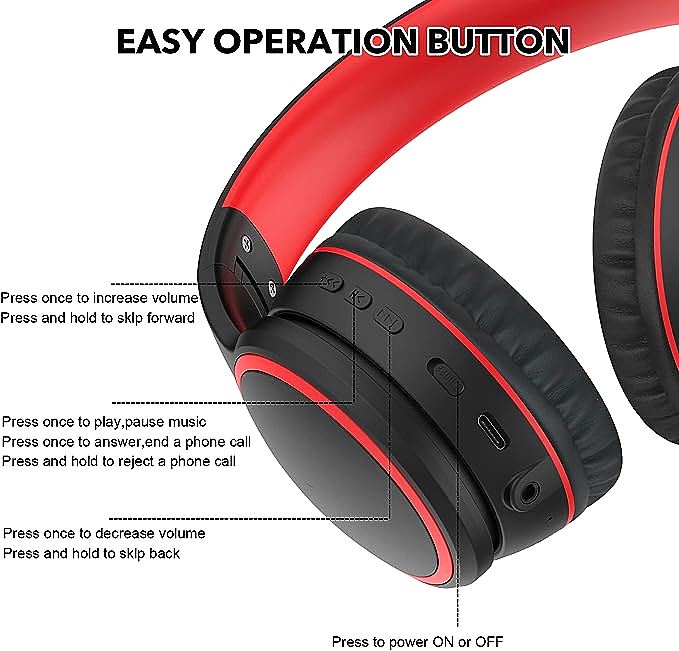
The B10 features Bluetooth 5.3. It is a common misconception that newer Bluetooth versions mainly improve audio quality (which is largely determined by codecs). In reality, the primary benefits of 5.3 for a budget device are efficiency and stability. * Connection Robustness: The 2.4GHz band is crowded. Bluetooth 5.3 improves Channel Classification, allowing the headphones to more quickly identify and hop to clear channels. This “3 second connection” and stability reduces the dropouts that plagued early budget Bluetooth headphones. * Duty Cycle Optimization: Bluetooth 5.3 allows for more granular control over the radio’s “wake” and “sleep” cycles. The radio can spend more time in a low-power state between data packets. This efficiency is a key contributor to the impressive battery life, ensuring that energy is spent on driving the speakers, not just maintaining the link. * Latency: Improved handshake protocols reduce the latency between the source and the receiver, making video watching (“lip-sync”) viable even without specialized low-latency codecs like aptX LL.
Energy Economics: The 50-Hour Equation
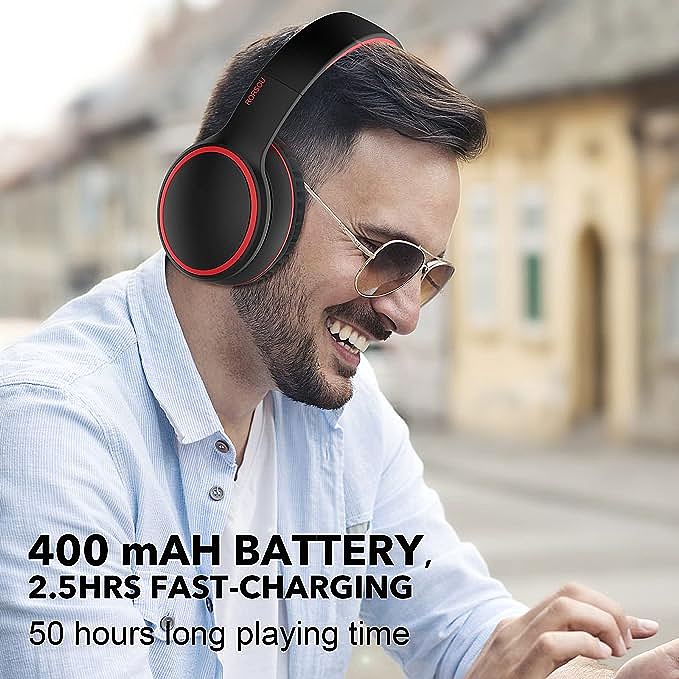
The claim of 50 hours of playtime is substantial. In energy terms, this represents a triumph of system integration. * Battery Capacity: The B10 houses a 400mAh battery. * Power Consumption: To achieve 50 hours, the average power consumption must be around 8mA. This is incredibly low. It implies a highly efficient Class-D amplifier stage and a Bluetooth SoC (System on Chip) that operates in the micro-watt range. * The Charging Cycle: The device supports fast charging (“10-minute charge gives 4 hours”). This relies on the battery’s ability to accept high C-rates (current relative to capacity) without overheating. Modern lithium-ion chemistry allows for this rapid ion intercalation, transforming the user experience from “waiting to charge” to “charge and go.”
Conclusion: The Maturity of Tech
The RORSOU B10 is evidence that the technology stack for wireless audio has matured. The components—40mm drivers, Bluetooth 5.3 chips, high-density batteries—have become standardized commodities.
This standardization allows manufacturers to deliver a baseline of performance—stable connection, all-day battery, decent sound—that was unimaginable at this price point a decade ago. It is a victory for the consumer, democratizing access to the wireless lifestyle.