Pulse in the Pinna: When Audio Hardware Becomes Biological Infrastructure
Update on March 7, 2026, 6:36 p.m.
For over a decade, the consumer technology industry has treated the human wrist as the undisputed frontier for biometric data collection. From early pedometers to sophisticated smartwatches capable of generating electrocardiograms, we have been conditioned to look down at our arms to understand the internal state of our bodies. However, from a purely physiological and engineering perspective, the wrist is a fundamentally flawed location for continuous, high-fidelity biological monitoring.
A quiet but profound architectural shift is currently underway in the wearable electronics sector. Engineers are abandoning the wrist and looking slightly higher, targeting a location that offers superior vascular density, enhanced thermal stability, and dramatically reduced mechanical turbulence: the ear. The evolution of “hearables”—true wireless earphones equipped with biometric sensors—represents the transition of audio equipment from passive entertainment devices into active, bidirectional biological interfaces.
By integrating optical sensing hardware directly into the acoustic chamber of a headphone, manufacturers are attempting to close the feedback loop between the human body and digital telemetry. This transition is fraught with extreme engineering challenges, requiring a delicate synthesis of optical physics, fluid dynamics, microbiology, and radio frequency management. To understand how a device that plays music can simultaneously read the rhythmic pumping of a human heart, we must deconstruct the science of light, blood, and motion.
Why Does the Wrist Fail the Marathon Runner?
To appreciate the necessity of ear-based biometrics, one must first understand the catastrophic failure modes of wrist-based optical sensors during intense physical exertion. The human arm is essentially a multi-jointed pendulum. When an individual engages in running, rowing, or high-intensity interval training, the arms swing violently to maintain biomechanical balance.
This violent, repetitive motion introduces massive physical turbulence to any device strapped to the wrist. In the realm of biometric signal processing, this turbulence is known as a “Motion Artifact” (MA). When a smartwatch shifts even a millimeter across the skin, the optical sensor’s line of sight to the underlying capillaries is broken. The ambient light from the sun or streetlamps leaks into the sensor array, completely drowning out the microscopic fluctuations in blood volume that the device is trying to measure.
Furthermore, the wrist is an anatomically hostile environment for optical reading. It is a highly complex intersection of dense bones (the carpals), thick ligaments, and shifting tendons. The actual capillary beds available for scanning are relatively sparse compared to other regions of the body. When a runner grips a water bottle or clenches their fist, the muscle contraction alters the blood perfusion in the wrist, causing immediate, false anomalies in the data stream.
The human head, by stark contrast, acts as a natural biological gimbal. Through the complex stabilization matrix of the inner ear, the neck muscles, and visual focal tracking, the head remains remarkably stable even while the rest of the body is subjected to intense kinetic shock. Furthermore, the external ear—specifically the concha, the tragus, and the antitragus—is fed by the highly pressurized external carotid artery system. The capillary beds here are incredibly dense and situated immediately beneath a very thin layer of epithelial tissue. The ear does not flex like a wrist joint, it does not clench, and it remains thermally stable. It is, mathematically and anatomically, the perfect docking station for an optical sensor.
The Subcutaneous Lighthouse
The technology responsible for translating the mechanical pumping of the heart into a digital data stream is known as Photoplethysmography (PPG). While the term is complex, the underlying optical physics relies on a highly elegant application of the Beer-Lambert Law, which relates the attenuation of light to the properties of the material through which the light is traveling.
A PPG system integrated into a modern wearable consists of two primary micro-components: a Light Emitting Diode (LED) and a photodetector (photodiode). The LED acts as a microscopic lighthouse, firing highly concentrated photons directly into the epidermis.
In most fitness applications, engineers utilize green LEDs operating at a wavelength of approximately 500 to 550 nanometers. The selection of green light is not arbitrary; it is dictated by the absorption spectrum of human blood. Hemoglobin, the iron-containing protein responsible for transporting oxygen in red blood cells, exhibits a high absorption coefficient for green light.
When the left ventricle of the heart contracts (systole), a pressure wave forces a surge of oxygenated blood through the capillary beds in the ear. Because there is suddenly a higher volume of hemoglobin present in the tissue, more of the green light emitted by the LED is absorbed. Conversely, when the heart relaxes (diastole), the blood volume in the capillaries momentarily decreases, and less green light is absorbed.
The photodiode, positioned adjacent to the LED, is tasked with capturing the light that reflects back out of the skin. It continuously measures the intensity of this backscattered light. As the heart beats, the photodiode registers a rhythmic dip in reflected light intensity corresponding to the systolic surge of blood. By calculating the time interval between these cyclical dips, the device’s internal microprocessor can determine the user’s heart rate in beats per minute (BPM).
This is an incredibly delicate operation. The difference in light reflection between a full capillary and an empty capillary is microscopic. The signal-to-noise ratio is razor-thin, making the physical isolation of the sensor absolutely critical.

From Hospital Clips to Wearable Silicon
The concept of measuring vascular volume through optical attenuation is not a recent Silicon Valley invention. The foundational principles were established in the 1930s, but it was the pioneering work of Japanese bioengineer Takuo Aoyagi in the early 1970s that led to the development of the modern pulse oximeter.
Aoyagi’s initial iterations, and indeed the devices still prevalent in clinical settings today, utilized a “transmissive” PPG architecture. In a transmissive setup, the light emitter and the photodetector are placed on opposite sides of a translucent tissue bed—most commonly the fingertip or the earlobe. The light shines entirely through the tissue, and the absorption is measured on the other side. While highly accurate, this architecture requires a physical clip, making it completely unsuitable for athletic activity.
The transition to consumer wearables required the perfection of “reflective” PPG. In this architecture, both the emitter and the detector sit on the exact same plane, measuring the light that scatters backward. Reflective PPG is inherently noisier and vastly more difficult to process mathematically than transmissive PPG. It required decades of advancement in micro-optics and digital signal processing (DSP) to become viable.
The miniaturization of these components is a triumph of modern semiconductor fabrication. To fit an entire reflective PPG array—alongside a dynamic audio driver, a lithium-ion battery, a Bluetooth radio, and an amplifier—into an acoustic chamber that weighs less than ten grams requires packing silicon with microscopic density. The transition from the bulky, tethered fingertip clips of the 20th-century hospital ward to the invisible, autonomous silicon integrated into modern earbuds represents one of the most aggressive miniaturization curves in medical hardware history.
Sweating Through a 10K at 160 BPM
Theoretical optical physics often crumbles upon contact with biological reality. The precise measurement of reflected green light assumes a perfect, unyielding seal between the sensor array and the human skin. If an earbud shifts outward by even a fraction of a millimeter during a marathon, ambient sunlight floods the photodiode, completely obliterating the delicate biological signal.
Therefore, integrating PPG into an audio device fundamentally alters the mechanical engineering requirements of the hardware. The earbud can no longer rely on simple friction within the ear canal to stay in place. It requires structural anchoring.
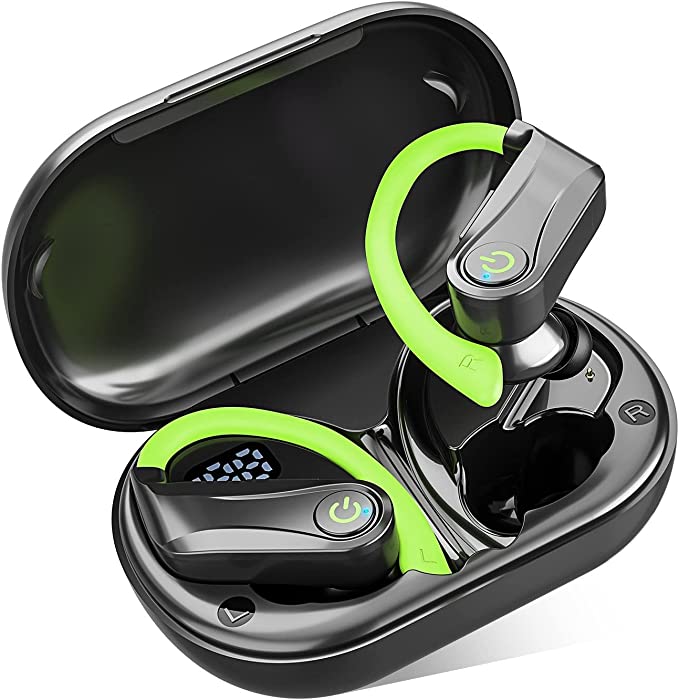
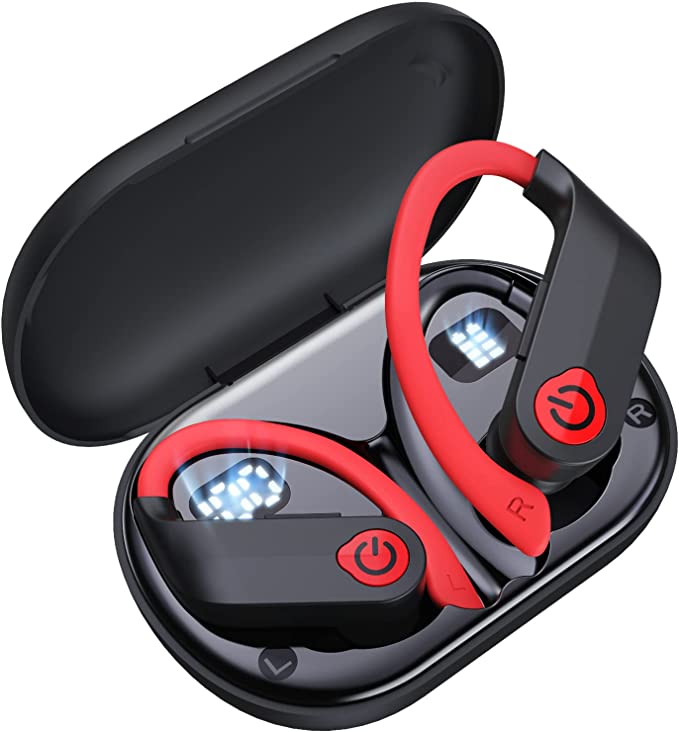
We can observe this architectural necessity in hardware like the Philips A7306. To ensure the embedded PPG sensor maintains absolute, continuous contact with the highly vascularized tissue of the ear, the device employs physical cantilevers—specifically, detachable ear hooks and flexible wing tips. These are not merely ergonomic accessories designed for comfort; they are structural load-bearing components. By hooking over the pinna (the outer ear) or wedging into the cymba conchae, these mechanisms distribute the downward kinetic force generated by the runner’s footstrike across the rigid cartilage of the ear. This prevents the acoustic chamber from vibrating, ensuring the optical sensor remains perfectly flush against the skin regardless of the user’s vertical oscillation.
Beyond mechanical shock, the sensor must survive extreme chemical warfare. During intense cardiovascular output at 160 BPM, the human body secretes copious amounts of sweat to regulate core temperature. Sweat is a highly corrosive, electrically conductive fluid packed with sodium chloride and urea. If this fluid bridges the electrical contacts of the PPG sensor or breaches the acoustic chamber, it triggers immediate galvanic corrosion, destroying the circuit board.
Consequently, biometric hearables must achieve stringent Ingress Protection ratings, such as IP57. This requires coating the internal printed circuit boards with hydrophobic conformal coatings and sealing the external seams with specialized acoustic meshes that allow pressure waves to escape while blocking liquid intrusion. The device must be entirely hermetically sealed, effectively becoming a microscopic submarine capable of bouncing light off capillaries while submerged in a continuous bath of corrosive saltwater.
To Hear Better, We Must Look at the Blood
The integration of biometric sensors into audio hardware creates a fascinating juxtaposition of data streams. For the first time, a single device is tasked with simultaneously executing high-fidelity sensory output (playing complex, multi-layered digital music) and highly sensitive biological input (recording microscopic fluctuations in capillary blood volume).
This dual-directional data flow creates a profound psychological feedback loop for the user. In traditional athletic training, an individual must continuously break their visual focus, looking down at a smartwatch to verify if they are maintaining their target cardiovascular output (e.g., remaining within the aerobic Zone 2 or pushing into the anaerobic Zone 4). This visual interruption degrades running form, disrupts mental flow, and creates cognitive friction.
When the PPG sensor is located in the exact same hardware responsible for delivering audio, this friction is eliminated. The telemetry is translated directly into the user’s acoustic environment. Advanced implementations leverage internal DSP algorithms to lower the volume of the music momentarily and inject synthetic voice telemetry directly into the auditory cortex—“Heart rate: 165 BPM.” The user is fed critical biological data without ever averting their gaze or shifting their posture.
This represents the pinnacle of “Awareness Mode” engineering. It is not merely about allowing ambient traffic noise into the ear canal via passthrough microphones; it is about allowing the user’s own internal biological state to bypass visual processing and enter their consciousness directly through sound. The hardware stops acting as a passive speaker and begins acting as a neurological interface, translating the silent language of the cardiovascular system into an actionable acoustic format.
Latency vs. Battery Life in IoT Health
Despite the elegant theory, the actual deployment of biometric audio devices reveals severe infrastructural bottlenecks, primarily centered around wireless telemetry and power constraints. User feedback across early-generation hearables frequently cites frustrating connectivity drops, unresponsive companion applications, and erratic data synchronization. These are not mere manufacturing defects; they are the symptoms of a device being pushed to the absolute limits of the Bluetooth protocol.
Bluetooth was fundamentally designed as a low-power, short-range radio protocol for transmitting relatively simple data streams. When a user streams a high-bitrate audio file (such as FLAC or heavily layered AAC), the Bluetooth Advanced Audio Distribution Profile (A2DP) monopolizes a massive portion of the available 2.4 GHz bandwidth to ensure the music plays without skipping.
However, when a PPG sensor is activated, the device must suddenly open a second, parallel data pipeline using the Generic Attribute Profile (GATT) to stream continuous, real-time heart rate telemetry back to the host smartphone’s fitness application. Multiplexing a high-bandwidth, latency-sensitive audio stream alongside a continuous stream of biometric data packets causes immense strain on the earbud’s internal System on a Chip (SoC). If the smartphone’s processor stutters, or if there is heavy RF interference in the environment (such as running in a dense urban center surrounded by Wi-Fi routers), the Bluetooth connection bottlenecks. The system must arbitrarily decide which packets to drop: do you pause the music, or do you lose the heart rate data?
Compounding this data traffic jam is the brutal reality of power management. The lithium-ion cell inside a standard wireless earbud is typically no larger than a small pill, hovering around 50 to 60 milliampere-hours (mAh). Driving the electromagnetic coils of the speaker driver consumes significant power. Actively powering an array of green LEDs and continuously sampling a photodiode at 100 Hertz drains the battery at an aggressive rate.
Engineers are forced into a bitter trade-off. To extend battery life, they must reduce the sampling rate of the PPG sensor, perhaps only flashing the LED once every few seconds rather than continuously. But reducing the sampling rate destroys the accuracy of the heart rate reading, leading to smoothed, delayed data that is useless for an athlete performing rapid interval sprints. The physical constraints of battery chemistry currently represent the hardest ceiling on the advancement of biometric audio.
Sanitizing the Biological Interface
As audio wearables transition from being casual accessories to being tightly fitting biological sensors, they introduce an entirely new vector for medical complications. To achieve the perfect acoustic seal necessary for deep bass reproduction, and the perfect skin-contact patch required for accurate PPG readings, the earbud must be wedged deeply into the external auditory canal.
The human ear canal is a dark, warm, and highly humid environment—conditions that are biologically optimal for the rampant proliferation of bacteria and fungi. When a user engages in an intense, sweat-inducing workout, the silicone tip of the earbud becomes coated in biological detritus: dead skin cells, cerumen (earwax), and perspiration. If the user removes the earbuds, throws them into a dark gym bag, and reinserts them the next day, they are actively inoculating their ear canal with concentrated bacterial colonies, primarily Staphylococcus aureus and Pseudomonas aeruginosa. This frequently leads to Otitis externa, commonly known as swimmer’s ear, a painful inflammation of the ear canal.
Recognizing this critical flaw, advanced hardware designs must incorporate aggressive sanitation protocols directly into the charging infrastructure. The integration of Ultraviolet-C (UV-C) light sterilization within the charging case, as seen in the architectural approach of the Philips A7306, is a mandatory evolution for health-focused wearables.
UV-C radiation, operating at wavelengths between 200 and 280 nanometers, is highly germicidal. When the soiled earbud is placed into the closed charging case, microscopic UV LEDs blast the silicone tips with high-energy photons. This specific wavelength of light penetrates the cellular walls of bacteria and fungi, striking their DNA and RNA. The UV-C photons cause adjacent thymine bases within the DNA structure to bond covalently, creating thymine dimers. These dimers severely distort the DNA helix, effectively paralyzing the microbe’s ability to replicate or perform vital cellular functions, resulting in rapid cellular death. By automating this photochemical warfare every time the device is docked for charging, the hardware ensures that the biological interface remains sanitary, protecting the user from the very device tasked with monitoring their health.
Mapping the Next Decade of Hearables
The successful integration of basic PPG heart rate monitoring into audio wearables is merely the prologue to a much broader biometric revolution. The ear represents an incredibly rich, untapped vein of physiological data, and the hardware ecosystem is rapidly scaling to capture it.
The immediate next phase of engineering involves utilizing multiple wavelengths of light simultaneously. By pulsing both red and infrared LEDs alongside the green LEDs, future devices will mathematically calculate the ratio of oxygenated to deoxygenated hemoglobin, providing continuous blood oxygen saturation (SpO2) readings.
Beyond optical sensors, the anatomical location of the ear provides proximity to the tympanic membrane (the eardrum), which shares a direct blood supply with the hypothalamus—the brain’s thermoregulatory center. By integrating micro-thermistors into the acoustic nozzle, the next generation of hearables will provide clinical-grade, continuous core body temperature readings, capable of warning an athlete of impending heatstroke or detecting the onset of a viral fever before the user feels the first chill.
Looking further ahead, the integration of dry electrodes into the conductive silicone of the ear hooks will allow these devices to capture Electroencephalography (EEG) signals. By measuring the electrical activity of the brain directly through the skin around the ear, these audio devices will be capable of tracking cognitive fatigue, focus states, and sleep architecture in real-time.
We are witnessing the death of the traditional headphone. The devices currently occupying our ears are rapidly evolving into sophisticated, autonomous medical laboratories. By mastering the hostile physics of the human body in motion, audio engineering is unlocking a pathway directly to the core of human physiology, ensuring that the soundtrack of our future is perfectly synchronized with the rhythm of our biology.