From Concert Halls to Commuter Trains: How JBL Brought Professional Sound to the Masses


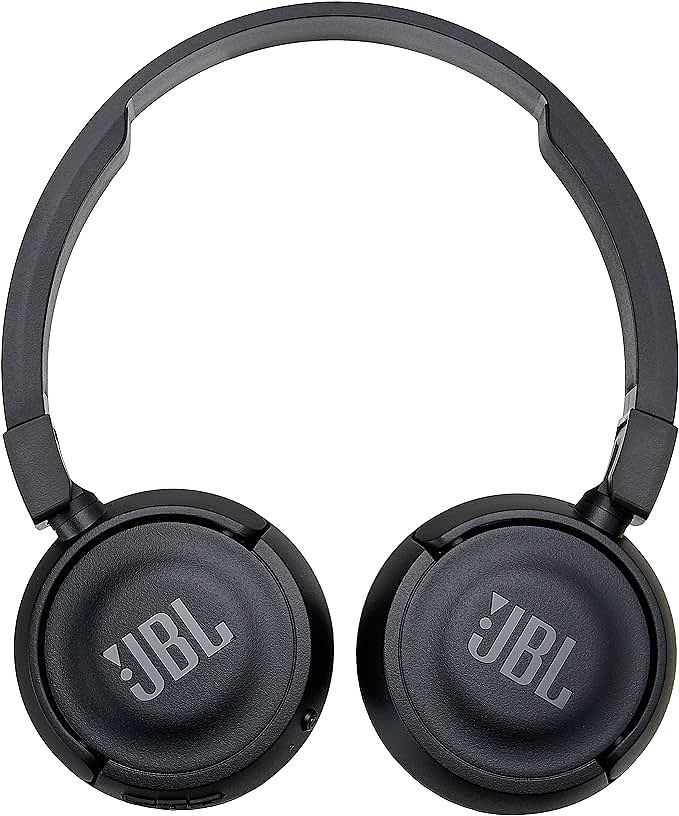
JBL T450BT Wireless On-Ear Headphones
Picture a rock concert in 1969. Fifty thousand people, packed into a field, all hearing the same thunderous bass, the same crystalline vocals from the back row. The secret weapon? A pair of speakers designed by an engineer named James Bullough Lansing, whose name would become synonymous with professional audio power.
Now picture a commuter on a 2026 subway train, wearing a pair of black wireless headphones that cost less than a tank of gas. The bass hits with similar authority. The soundstage feels surprisingly wide. How did we get from stadium-filling sound systems to a foldable pair of headphones in every backpack?
This is the story of audio democratization—and the JBL T450BT serves as our case study in how professional-grade technology trickles down from concert venues to consumer pockets.
The Professional Pedigree: JBL's Six-Decade Journey
James Bullough Lansing didn't set out to make headphones for commuters. He wanted to solve a problem: how do you fill a large space with sound that remains clear, powerful, and faithful to the source?
His company—founded in 1946—became the invisible backbone of modern music. JBL speakers powered Woodstock. They sat behind mixing consoles at Abbey Road Studios. They filled cinema auditoriums with Dolby surround sound. By the 1980s, if you heard live music, you heard JBL.
But professional audio equipment costs thousands of dollars. It requires amplifiers, expertise, and dedicated space. The challenge JBL faced entering the consumer market: how do you distill sixty years of acoustic engineering into a product that fits in a backpack and costs less than a dinner out?
The answer lies in strategic compromises—knowing what to keep from the professional legacy, and what to sacrifice for accessibility.
The First Compromise: Driver Size vs. Sonic Signature
Professional speakers use multiple drivers—woofers for bass, midrange drivers for vocals, tweeters for highs. Each handles a specific frequency band with precision. A concert speaker might have a 15-inch woofer alone.
The T450BT has a single 32mm dynamic driver per ear. By comparison, premium over-ear headphones often use 40mm or 50mm drivers. Smaller drivers mean less air displacement, which should mean weaker bass.
Here's where JBL's professional tuning enters the equation. The "Pure Bass Sound" signature isn't about raw driver size—it's about calibration. The diaphragm material is tuned for extended excursion (how far it can move). The earcup enclosure acts as a miniature speaker cabinet, designed to reinforce low frequencies through acoustic loading. The frequency response emphasizes the 60-150 Hz range where bass "punch" lives.
The compromise: you don't get the physical impact of a 15-inch woofer moving cubic feet of air. But you get a sonic signature that feels powerful because it emphasizes the right frequencies. This is audio psychology as much as engineering—giving your brain the cues it associates with "big sound."
The Second Compromise: On-Ear Design and the Comfort Trade-Off
Professional monitoring headphones are typically over-ear (circumaural), fully enclosing the ear for maximum isolation and comfort during eight-hour studio sessions. They're also bulky, heavy, and impractical for commuting.
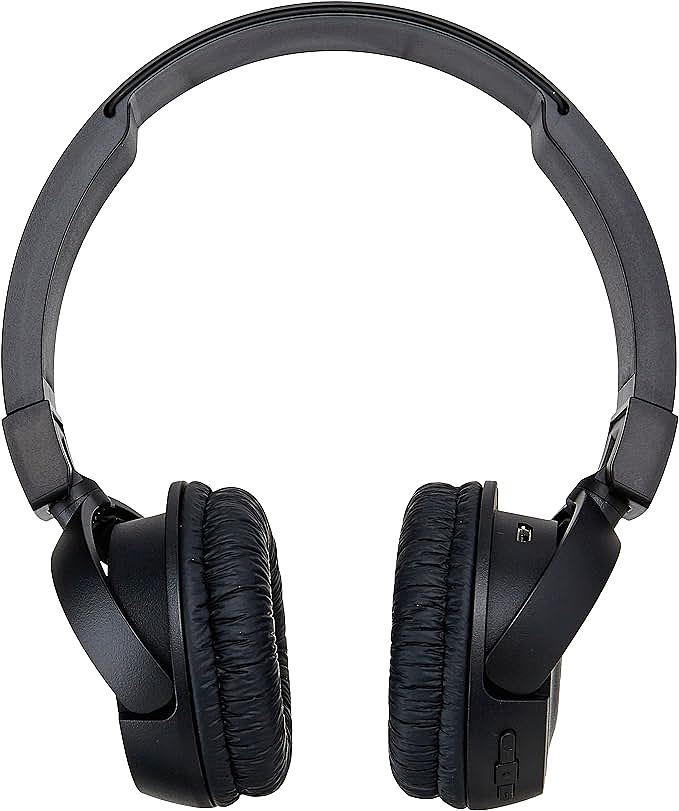
The T450BT's on-ear (supra-aural) design places earcups directly on the outer ear rather than around it. This choice serves the democratization goal:
| Factor | Over-Ear | On-Ear (T450BT) |
|---|---|---|
| Portability | Bulky, requires case | Flat-folding, bag-friendly |
| Weight | 250-350g typical | 320g (comparable) |
| Isolation | Superior | Moderate (ambient awareness) |
| Extended Comfort | Better (no ear pressure) | Limitation: pressure after 1+ hour |
| Cost | Higher (more material) | Lower (less material) |
The trade-off is honest: on-ear design sacrifices some extended-wear comfort for portability and accessibility. Some users report pressure on the ears after an hour or more of continuous use. This isn't a defect—it's the consequence of prioritizing "fits in your pocket" over "disappears on your head."
For the target user—the commuter, the student, the casual listener—this compromise makes sense. Four hours of daily use, folded flat in a bag, beats a bulky over-ear design left at home.
The Third Compromise: Bluetooth 4.0 and "Good Enough" Wireless
Professional audio uses wired connections exclusively. Latency matters. Every millisecond of delay between signal and sound is unacceptable when recording or performing live.
Consumer wireless headphones operate under different constraints. The T450BT employs Bluetooth 4.0—a standard from 2011, superseded by versions 5.0, 5.2, and 5.3.
Why use older technology? Because "good enough" serves democratization better than "cutting edge."
Bluetooth 4.0 delivers:
- Stable stereo audio via SBC codec (universal compatibility)
- Power efficiency through Bluetooth Low Energy principles
- Adequate range (~10 meters / 33 feet)
What it doesn't deliver:
- High-fidelity codecs (aptX, LDAC)
- Multi-device pairing
- Extended range of Bluetooth 5.x
For the commuter listening to Spotify on a train? Bluetooth 4.0 is indistinguishable from 5.0 in blind listening. The compromise saves cost without sacrificing the core experience. This is engineering discipline: knowing which specifications actually matter to the user.
The Fourth Compromise: Battery Life That Matches Real Rhythms
Professional equipment runs on wall power. Consumer gear lives or dies by battery life—and the T450BT specifies up to 11 hours on a single charge.
But specifications lie. Or rather, they oversimplify. Eleven hours at 50% volume with no bass boost is different from eleven hours at 80% volume with maximum bass.
The real achievement isn't the number—it's the lithium-ion battery management that enables a full day of use without anxiety. Consider a realistic usage pattern:
- Morning commute: 45 minutes
- Work/study session: 2 hours
- Gym/workout: 45 minutes
- Evening relaxation: 1 hour
Total: ~4.5 hours—less than half the rated battery life. For most users, the T450BT requires charging once every two to three days, not nightly. This reduces "battery anxiety" and extends the battery's lifespan (fewer charge cycles).
The compromise: no fast charging, no wireless charging. Just reliable, predictable battery life that matches human routines rather than spec sheet one-upmanship.
The Fifth Compromise: Controls That Disappear
Professional audio gear has dedicated controls—knobs, faders, switches. Each has tactile feedback and visual confirmation. You know your settings at a glance.
The T450BT uses on-earcup button controls—a single cluster for play/pause, track skip, volume, and calls. It's not as precise as a dedicated volume wheel. It requires muscle memory to locate buttons without looking.
But it serves the democratization goal: simplicity over precision. The target user isn't mixing tracks—they're answering calls mid-commute and adjusting volume without pulling out their phone. The controls disappear into the background, which is exactly what consumer convenience demands.

The Price Equation: What "Accessible" Actually Means
Here's the culmination of all these compromises: the T450BT typically retails around $64. Compare this to:
- Professional monitoring headphones: $300-600
- Premium consumer wireless: $200-400
- Budget wireless competitors: $30-50
The T450BT occupies a specific position: professional heritage at a consumer price. You're not paying for:
- Premium materials (genuine leather, metal hinges)
- Cutting-edge wireless technology
- Audiophile-grade driver components
You are paying for:
- Six decades of acoustic tuning expertise
- Quality control from an established manufacturer
- A bass signature that feels more expensive than it is
This is democratization in practice: not "cheapest possible," but "minimum cost for maximum heritage." The question isn't whether $30 headphones exist. The question is whether the JBL signature is worth the premium—and for bass-loving listeners, the answer is often yes.
The Uncomfortable Truth: Why Compromises Matter
Every compromise has consequences. User reviews reveal patterns:
- Comfort: "Pressure on ears after an hour" (on-ear trade-off)
- Durability: Some units develop static/popping after extended use (cost-reduced components)
- Fit: "Runs small/tight" (one-size-fits-all limitation)
These aren't defects to hide—they're the natural consequences of prioritizing accessibility over premium positioning. A $64 headphone cannot use the same materials as a $300 headphone. The question for buyers: which compromises align with your usage?
If you listen for 30-60 minutes at a time, commute daily, and value bass presence over analytical precision, the T450BT's compromises serve you. If you wear headphones for eight-hour work sessions, need multi-device pairing, or prioritize neutral tonal balance, the compromises work against you.
This is the honesty that democratization requires: not every product is for every user.
The Legacy in Your Pocket
Return to the commuter on the subway. The bass hits. The vocals sit forward in the mix. The soundstage feels wider than the earcups should allow.
What you're hearing isn't magic. It's sixty years of concert halls, recording studios, and cinema auditoriums—distilled into a foldable pair of headphones that fits in your pocket. The compromises are real, but they're deliberate. Every specification represents a choice: portability over premium materials, bass presence over analytical neutrality, accessibility over cutting-edge features.
Professional audio's journey from Woodstock to your commute is a story of engineering discipline—knowing what to keep, what to sacrifice, and what "good enough" actually means for real human ears in real human contexts.
The JBL T450BT isn't the best headphone at any one thing. It's something rarer: a thoughtful negotiation between professional legacy and everyday reality. And for the commuter who just wants their music to sound right without thinking about why, that's exactly the point.
