The Aesthetics of Clarity: Why Transparent Tech Design Endures
Update on Dec. 19, 2025, 9:45 p.m.
In the sleek, often impenetrable world of modern consumer electronics, there exists a design philosophy that refuses to hide. It is a style that invites the user to look closer, to peer beneath the surface, and to witness the intricate dance of engineering that powers our digital lives. Transparent technology—the deliberate choice to use clear or semi-translucent casings for hardware—is more than just a stylistic preference. It is a recurring cultural phenomenon, a statement of industrial honesty, and a bridge between the human user and the machine’s inner reality.
From the expo halls of the early 20th century to the cyberpunk visions of today, the desire to “see the machine” has cycled through history, each time carrying a slightly different meaning. Sometimes it represents educational curiosity; other times, a rebellious break from minimalism. Today, as we see devices like the IOTTICKER YX06 Wireless Earbuds embracing this exposed aesthetic, we are witnessing the latest chapter in a century-long story of visual disclosure. This article explores the enduring appeal of transparent design, the psychology behind our fascination with internal mechanisms, and why, in an age of black boxes, we still crave a window into the soul of our technology.

The Historical Cycles of “The Visible Machine”
To understand the modern resurgence of transparent audio devices, we must first look back at the lineage of “clear tech.” The concept did not originate with the gaming consoles of the 1990s, though that is often the most referenced era. Its roots go much deeper, intertwined with the very introduction of mass-market electricity and mechanics.
The Era of Demonstration (1939–1960s)
In the early mid-20th century, transparency was primarily a tool for education and marketing. At the 1939 New York World’s Fair, Pontiac debuted the “Ghost Car,” a vehicle with a completely transparent plexiglass body. The purpose was not aesthetic style for the street, but to reveal the structural integrity and complex engineering of the chassis that was usually hidden by steel. This established a precedent: transparency equals proof. It showed that the manufacturer had nothing to hide and that the internal quality was as high as the external finish.
The Y2K Aesthetic and “Atomic” Optimism (1990s–2000s)
The most culturally significant explosion of transparent tech occurred in the late 1990s. This era, often referred to retrospectively as the “Y2K Aesthetic,” was defined by a sense of digital optimism. Computers, landline phones, and handheld gaming devices shed their beige and black skins for “Atomic Purple,” “Glacier Blue,” and crystal-clear plastics.
This shift was a rebellion against the drab, corporate uniformity of the 1980s. It coincided with the rise of the internet, symbolizing a new era of openness and connectivity. The visible circuit boards and spinning discs were a celebration of the Information Age. Devices were no longer just appliances; they were portals to a digital future, and their design reflected this dynamic energy.
The Cyberpunk Revival (2020s–Present)
After a decade of “monolithic minimalism”—characterized by seamless aluminum and matte white plastic—the pendulum has swung back. The current revival, exemplified by the IOTTICKER YX06, differs from the playful Y2K era. It draws more heavily from “Cyberpunk” influences: a grittier, more industrial appreciation for the raw components. Modern transparent design is less about candy-colored whimsy and more about technical appreciation. It highlights the battery capacitors, the copper coils, and the precision of micro-soldering. It creates a visual narrative that emphasizes performance and raw functionality over mere decoration.
The Psychology of “Nothing to Hide”
Why do consumers find transparent electronics attractive? The appeal goes beyond simple nostalgia. Psychologists and industrial designers point to several cognitive factors that make see-through casings inherently satisfying to the human mind.
De-Blackboxing the Technology
In the philosophy of technology, a “black box” is a system where the inputs and outputs are known, but the internal process is opaque. As our devices have become more advanced—moving from mechanical gears to microscopic transistors—they have effectively become black boxes to the average user. We touch a glass screen, and a movie plays, but we have no physical intuition of how.
Transparent design acts as a form of “de-blackboxing.” Even if the user does not understand what a specific chip does, seeing it grounds the digital experience in physical reality. It reminds us that our cloud-connected lives are still supported by material objects, by metals and silicon. This visual connection bridges the gap between the ethereal digital world and the tangible physical world.
Trust and Honest Design
Dieter Rams, the legendary industrial designer, famously stated that “Good design is honest.” While he often advocated for simplicity, transparency is perhaps the most literal interpretation of honest design. A transparent device cannot use cheap fillers or sloppy internal assembly. Every cable management decision, every glue point, and every solder joint is on display.
When a product like the IOTTICKER YX06 utilizes a transparent headset design, it signals confidence. It implies that the manufacturer has paid attention to the internal layout, treating the inside with the same aesthetic care as the outside. This builds a subconscious trust with the user. The device is not hiding behind a facade; it is presenting itself raw and unfiltered.
Functional Aesthetics: When Components Become Art
In traditional industrial design, the internal components are engineered purely for function, while the external shell is engineered for form. Transparent design forces a convergence of these two disciplines. The internal components become the form.
The Battery as a Centerpiece
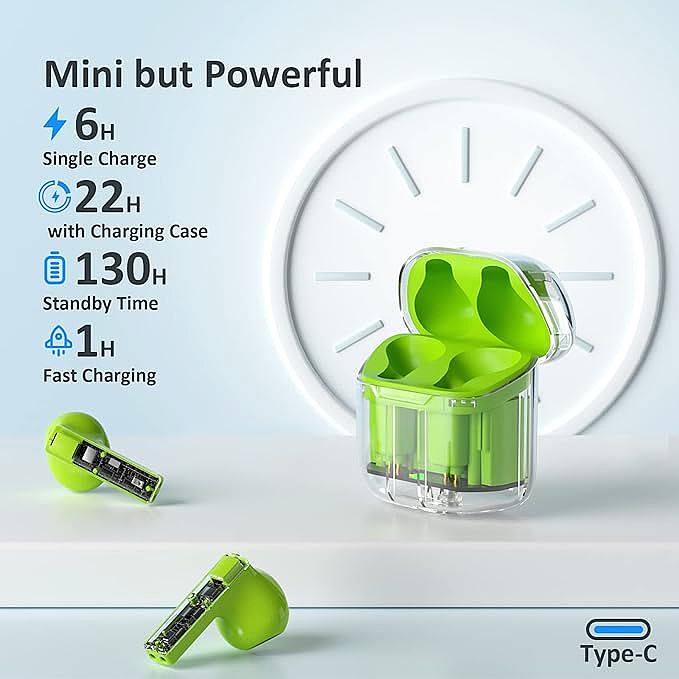
In wireless audio, the battery is the lifeline. In opaque earbuds, it is buried deep within. In transparent designs, the battery often becomes a central visual element. Designers might wrap it in specific foil or position it to balance the visual weight of the device. The IOTTICKER YX06, with its 22-hour playtime capability, likely houses a battery cell that is substantial enough to be a visual feature, turning the power source into a symbol of endurance.
The Driver Architecture
The audio driver is the heart of any headphone. It is a marvel of magnetism and vibration. Transparent casings allow users to glimpse the magnet assembly or the diaphragm housing. This visual access reinforces the device’s primary purpose: creating sound. Seeing the physical mechanism that generates the HiFi Stereo sound creates a multisensory appreciation—you hear the music, and you see the engine that drives it.
The Circuitry Landscape
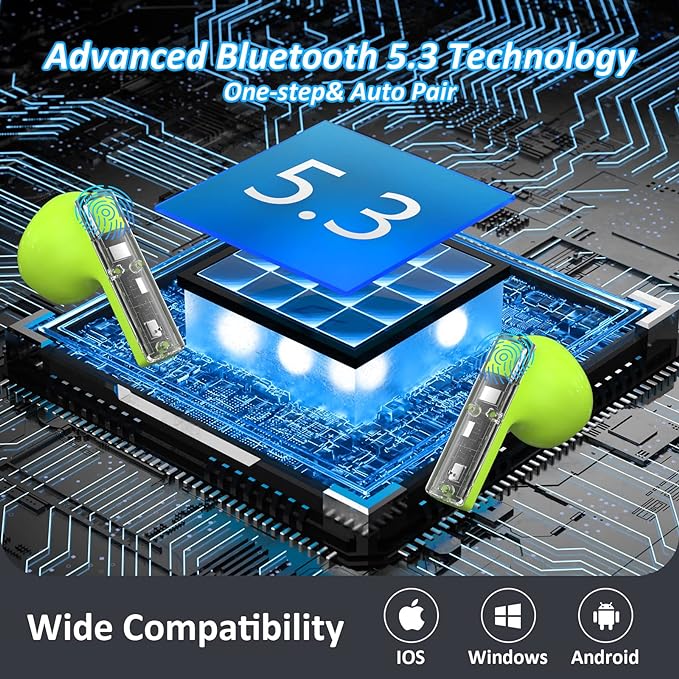
Modern printed circuit boards (PCBs) are works of art in their own right. The intricate pathways of gold and copper, the dense clusters of resistors, and the black squares of silicon chips create a “technological city” landscape. Transparent designs frame this landscape. The layout of the Bluetooth 5.3 antenna, for instance, is not just a functional necessity for stable connection; in a clear case, it becomes a distinct geometric pattern, adding to the visual complexity and richness of the object.
The Intersection of Light and Material
Transparency is not just about seeing through; it is about how light interacts with material. The choice of plastic—polycarbonate, acrylic, or resin—drastically affects the device’s character.
Refraction and Depth
Unlike an opaque surface which reflects light, a transparent surface refracts it. Light enters the material, bends, hits the internal components, and bounces back. This creates a sense of depth and dimensionality that flat colors cannot achieve. When you hold a transparent device, the visual experience changes as you rotate it. Shadows move across the internal components, and highlights catch the edges of the clear casing. This dynamic interaction makes the object feel more alive and precious, akin to a gemstone or a piece of complex jewelry.
The Role of Color
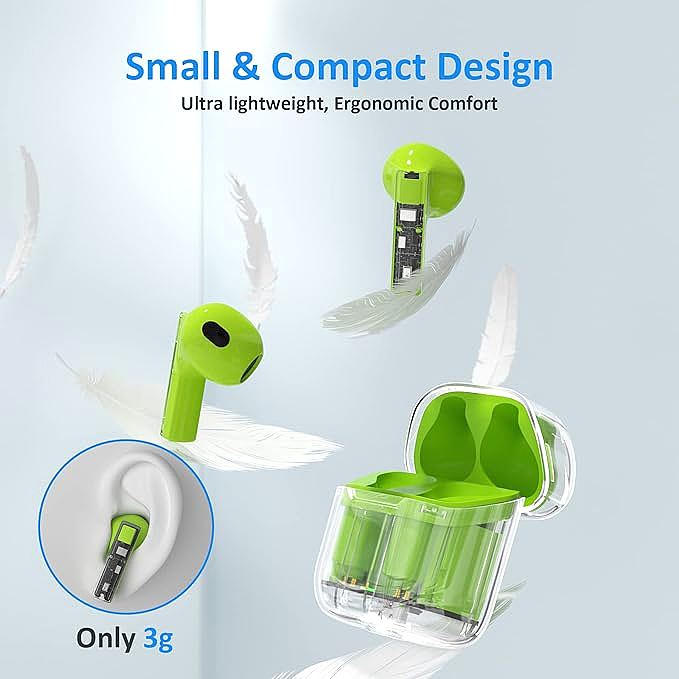
Modern transparent tech rarely uses perfectly clear “window glass” transparency. Instead, it often employs tinted translucency—smoked greys, neon greens, or deep ambers. The Green colorway of the IOTTICKER YX06 is a prime example. A tint adds a layer of mystery; it reveals the internals but obscures the fine blemishes, unifying the complex internal shapes under a single chromatic theme. This technique softens the harsh “industrial” look of raw electronics, blending it with a sense of fashion and style.

Conclusion: The Future of Visible Engineering
The resurgence of transparent design in personal electronics is more than a fleeting trend. It is a recurring correction in the trajectory of industrial design. As our technology becomes increasingly intangible—defined by software, cloud services, and AI—our physical hardware is responding by becoming more grounded.
We crave devices that admit they are machines. We find beauty in the logic of a circuit board and the density of a battery pack. Products like the IOTTICKER YX06 demonstrate that high-tech features like 4-Mic ENC and Bluetooth 5.3 connectivity do not need to be hidden behind sterile white plastic. They can be celebrated, exposed, and integrated into the visual identity of the product.
As we move forward, we can expect this “New Transparency” to evolve. We may see materials that shift from opaque to clear, or designs that use transparency to highlight sustainability by showing off recycled internal materials. But the core desire will remain: the human need to understand, to see, and to connect with the tools that shape our world.