The Engineering of Accessible High-Fidelity: Deconstructing Modern Wireless Audio
Update on Feb. 10, 2026, 6:48 p.m.
For decades, the realm of high-fidelity audio was a gated community. Entrance required massive amplifiers, intricate cable management, and headphones that cost as much as a used car. The prevailing wisdom was that “good sound” was inherently expensive, a luxury reserved for those who could afford to chase the diminishing returns of analog perfection. But a quiet revolution has occurred in the last few years. Advances in materials science and semiconductor efficiency have democratized the concert hall experience, allowing reasonably priced devices to deliver performance that was once the exclusive domain of audiophiles.
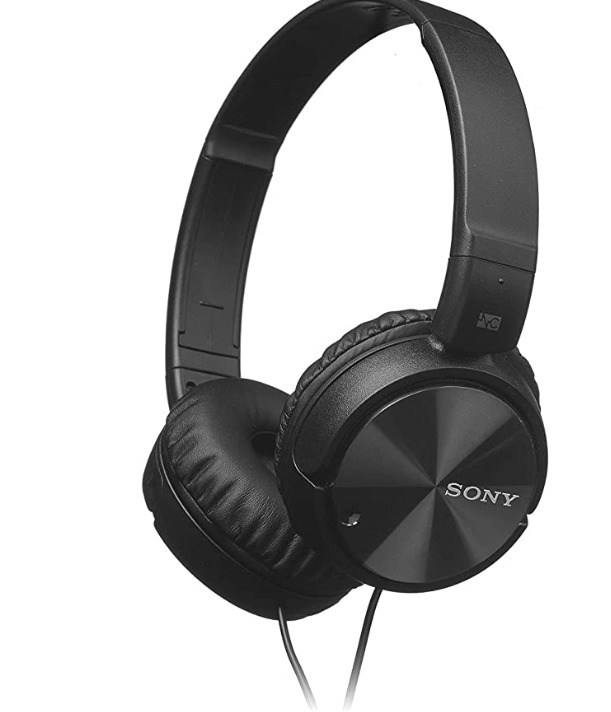
The modern over ear wireless headphone is no longer just a consumer accessory; it is a marvel of integrated engineering. It combines acoustics, radio frequency communication, and digital signal processing into a wearable form factor. To understand this shift, we must look past the branding and examine the physics that make it possible.

The Physics of the Moving Coil
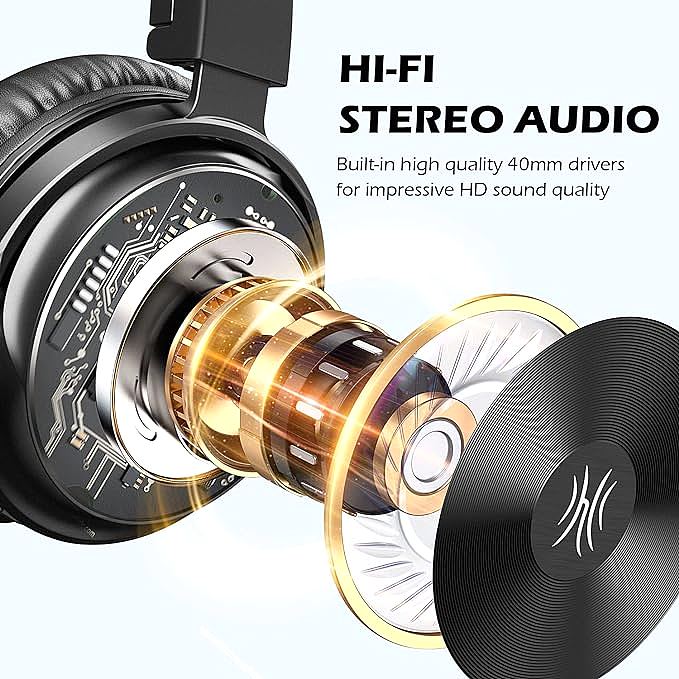
At the heart of almost every headphone lies the dynamic driver, a transducer that converts electrical energy into mechanical wave energy. The principle is electromagnetism, discovered in the 19th century but refined continually since. A coil of copper wire (the voice coil) is suspended within the magnetic field of a permanent magnet. When an audio signal passes through the coil, it creates a fluctuating magnetic field that interacts with the permanent magnet, pushing the coil back and forth. This coil is attached to a diaphragm, which pushes air to create sound.
In the engineering of over-ear headphones, the 40mm driver has become a gold standard. This diameter offers a specific acoustic advantage: it is large enough to move significant volumes of air, which is necessary for reproducing low-frequency wavelengths (bass), yet small and light enough to oscillate rapidly for high-frequency transient response.
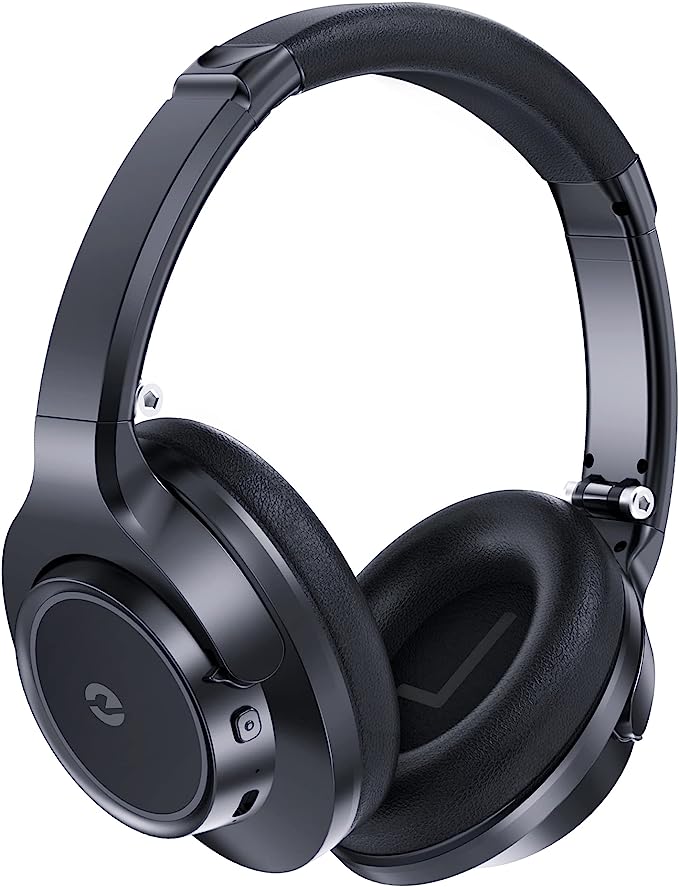
The OneOdio A11 utilizes this configuration with what they term “bionic moving coil drivers.” In technical terms, this likely refers to a diaphragm material engineered for high rigidity and low mass. A stiffer diaphragm resists deformation (modal breakup) at high frequencies, ensuring that the treble remains crisp rather than harsh. Meanwhile, the sheer surface area of a 40mm driver allows it to reproduce frequencies as low as 20Hz—the bottom limit of human hearing—without requiring excessive excursion (movement), which keeps distortion low.
The Invisible Umbilical: Efficiency in Transmission
The transition from wired to wireless audio was initially plagued by bandwidth limitations and battery drain. Early Bluetooth protocols compressed audio heavily, discarding data to maintain a connection. However, the introduction of Bluetooth 5.2 marked a turning point in wireless architecture.
Bluetooth 5.2 introduces enhanced power control and isochronous channels. This architecture allows the radio to “sleep” for microseconds between data packets, drastically reducing power consumption without dropping the connection. This efficiency is what enables modern headsets to achieve marathon battery lives. For instance, the OneOdio A11 is rated for 32 hours of playtime on a single charge. This longevity is not just about having a bigger battery; it is about the chipset wasting less energy during transmission.
Furthermore, Bluetooth 5.2 improves the stability of the signal in crowded radio environments (like busy offices or public transit) by hopping frequencies more intelligently. It supports advanced codecs like AAC (Advanced Audio Coding), which uses psychoacoustic models to compress audio data in a way that preserves the frequencies most perceptible to the human ear, delivering a higher perceived fidelity than the older SBC standard.

Sculpting Sound in Silicon
While the driver creates the sound, the Digital Signal Processor (DSP) sculpts it. In the analog days, changing the sound signature required physical equalizer sliders. Today, a tiny chip inside the headphone analyzes the digital stream and applies mathematical filters in real-time.
This capability allows for features like “Bass Boost” or “Super EQ” modes. By boosting the amplitude of frequencies in the 60Hz to 200Hz range, the DSP can simulate the “slam” of a subwoofer. This is particularly effective because of the Fletcher-Munson curves, which demonstrate that the human ear is naturally less sensitive to bass at lower volumes. A DSP-driven bass boost compensates for this biological quirk, making the music feel fuller and more energetic without needing to crank the volume to unsafe levels.
The Algorithm of Clarity
DSP is also the brain behind modern communication clarity. Technologies like CVC 8.0 (Clear Voice Capture) operate on the microphone input. Unlike Active Noise Cancellation (ANC), which cancels noise for the listener, CVC cancels noise for the speaker. It uses algorithms like spectral subtraction and packet loss concealment to identify the steady-state noise profile of a room (like a fan or road noise) and mathematically subtract it from the voice signal. This ensures that even in a budget-friendly device like the A11, the person on the other end of the call hears the voice, not the environment.
The Material Science of Isolation
The final component of the high-fidelity equation is often overlooked: the seal. If headphones do not seal against the head properly, low-frequency energy leaks out, destroying the bass response. This is where material science comes into play.
Modern earpads often use viscoelastic polyurethane foam, commonly known as memory foam. This material is temperature-sensitive; as it warms up from body heat, it softens and flows to conform to the irregular topology of the jaw and temple. This creates an airtight acoustic seal, which is critical for passive noise isolation.