The Silence Economy: How Advanced ANC Technology Became a Modern Essential
Update on Jan. 1, 2026, 10:43 a.m.
In the chaotic symphony of the 21st century, silence has become one of the most coveted commodities. From the relentless hum of open-plan offices to the subterranean roar of subway commutes, modern life assaults our auditory senses with a constant barrage of decibels. Historically, the ability to curate one’s auditory environment—to press a “mute” button on the world—was a luxury reserved for first-class travelers and aviation professionals. The early iterations of Active Noise Cancellation (ANC) were bulky, prohibitively expensive, and strictly utilitarian. However, we are currently witnessing a seismic shift in the audio landscape. This is the era of the democratization of silence, where sophisticated acoustic engineering is no longer the exclusive domain of luxury brands but a fundamental expectation for every listener.
The transformation of ANC from a niche aerospace technology to a ubiquitous consumer feature is a masterclass in technological evolution and manufacturing efficiency. It represents a broader trend in consumer electronics where high-end features rapidly trickle down to become industry standards. Today, users do not just buy headphones for music; they buy them for sanity, for focus, and for the creation of a personal sanctuary in a noisy world. This shift has opened the door for innovative challengers who leverage mature supply chains to offer premium specifications without the premium “brand tax.” By understanding the physics behind the silence and the economics driving its accessibility, we can better appreciate devices like the Phonicgrid SE7 Wireless Headphones, which stand as a testament to this new era of accessible high-fidelity audio. This article will dissect the science of sound control, the market forces reshaping the industry, and the technical realities of modern personal audio.
The Physics of Anti-Noise: Decoding the Science of Silence
To truly appreciate the marvel of modern headphones, one must first understand the fundamental physics of sound and the ingenious method used to control it. Sound, at its core, is a pressure wave traveling through a medium, typically air. These waves consist of compressions (peaks) and rarefactions (troughs). When we perceive “noise,” our eardrums are vibrating in response to these erratic pressure changes. Active Noise Cancellation is not merely “blocking” sound like a heavy door; it is actively erasing it through a phenomenon known as destructive interference.
The Principle of Destructive Interference
Destructive interference is a concept borrowed from wave mechanics. It dictates that if you take two waves of identical frequency and amplitude but align them so that the peak of one coincides with the trough of the other (essentially shifting the phase by 180 degrees), they will cancel each other out. The result is a flat line—zero amplitude. In audio terms, this means silence.
Implementing this in a pair of headphones requires a complex interplay of hardware and algorithms:
1. Detection: Microphones built into the headphones (often referred to as feedforward or feedback microphones) act as “ears” for the system, constantly sampling the ambient noise environment.
2. Inversion: An internal Digital Signal Processor (DSP) analyzes the incoming noise wave. In a fraction of a millisecond, it calculates and generates an “anti-noise” wave—an exact mirror image of the unwanted sound.
3. Cancellation: This anti-noise signal is played through the headphone drivers along with your music. When the anti-noise wave meets the actual noise wave in your ear canal, they physically interfere with and neutralize each other.
The Evolution of ANC Architectures: Hybrid is the New Standard
Early ANC implementations relied on a single microphone placement, usually on the outside of the earcup. This is known as Feedforward ANC. While effective at canceling mid-frequency noise, it struggled with low-frequency rumble and wind noise, and couldn’t correct for errors inside the ear cup. Conversely, Feedback ANC placed microphones inside the earcup, listening to what the user actually hears. This offered better accuracy but was prone to high-frequency feedback loops (that painful screeching sound).
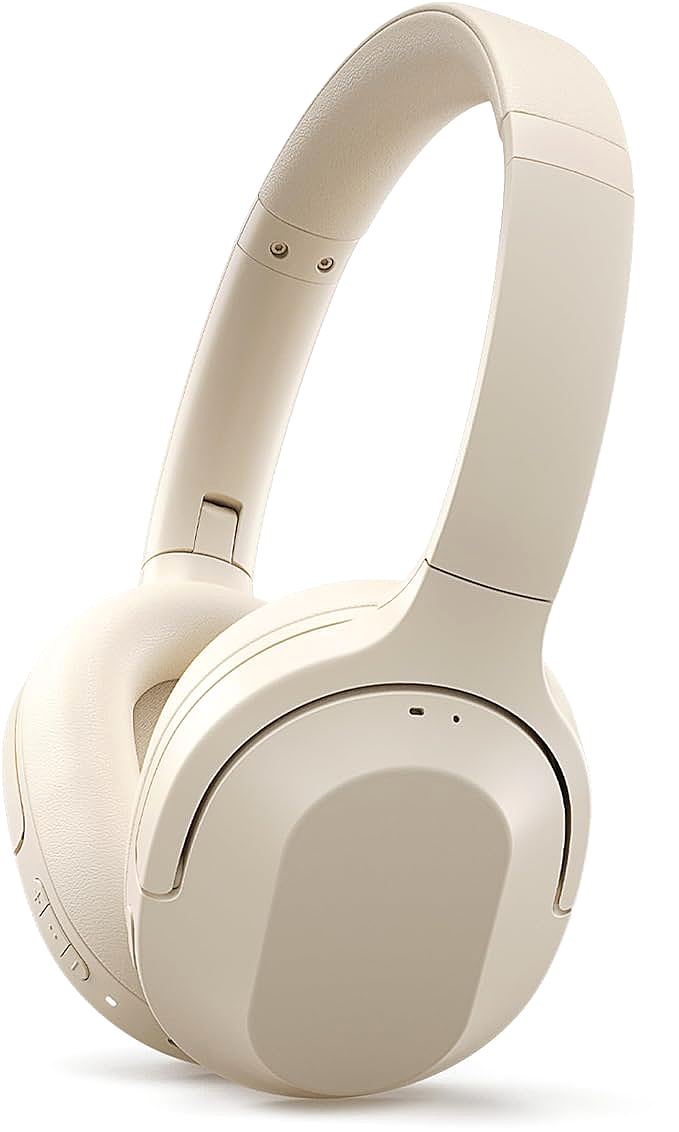
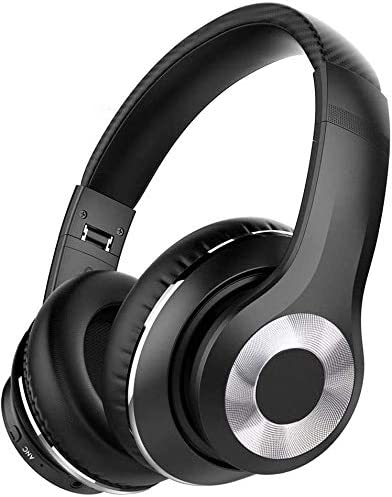
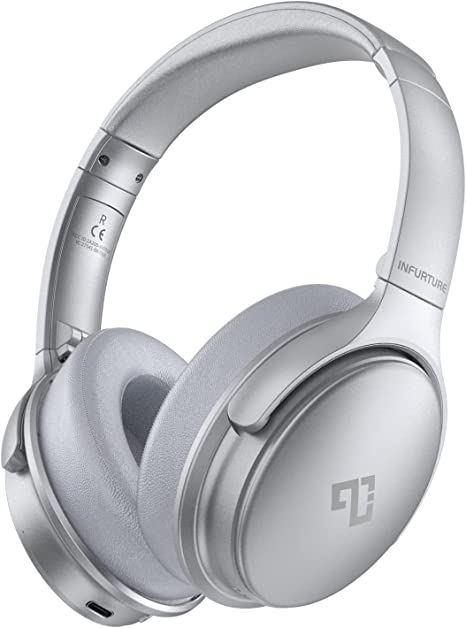
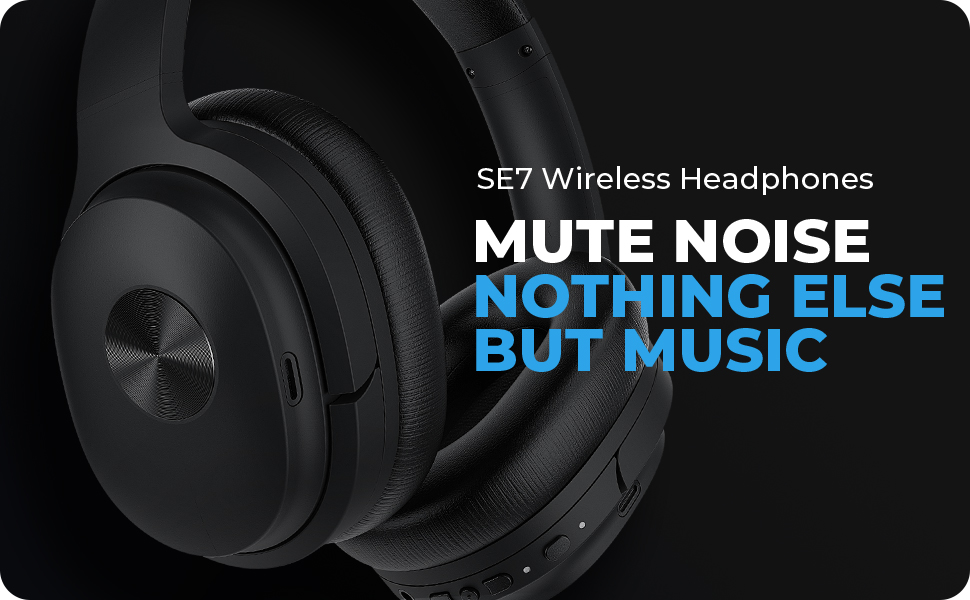
The modern standard, exemplified by devices like the Phonicgrid SE7 Wireless Headphones, is Hybrid ANC. This architecture combines both feedforward and feedback systems. External microphones catch noise early to initiate cancellation, while internal microphones monitor the residual noise that slips through, allowing the system to double-check and refine the anti-noise signal. This dual-microphone approach allows for a much broader bandwidth of noise reduction—Phonicgrid claims up to 95% reduction in low-frequency noises—creating a “coffin-quiet” background even in dynamic environments.
The Challenge of High Frequencies and Passive Isolation
It is important to note that ANC is most effective against low-frequency, repetitive sounds—the drone of an airplane engine, the hum of an air conditioner, or the rumble of traffic. High-frequency, erratic sounds like human speech or breaking glass are much harder to predict and cancel in real-time due to the extremely short wavelength of high-pitched sounds.
This is where the physical design of the headphone becomes critical. Passive Noise Isolation—the physical blocking of sound—works in tandem with ANC. Materials like the “super imitation protein leather” used in the SE7’s earcups play a vital role here. By creating a tight yet comfortable seal around the ear, they physically block high-frequency waves that the ANC processor might miss. The marriage of active electronic cancellation and passive physical isolation is what creates the total “immersive” experience.
The Democratization of Audio Tech: An Economic Perspective
For decades, effective Active Noise Cancellation was the “crown jewel” of the audio industry, guarded by high patent walls and high manufacturing costs. A pair of decent ANC headphones could easily cost upwards of $300 or $400. However, the last five years have seen a dramatic collapse in this price barrier, leading to the democratization of silence.
Moore’s Law and the Chipset Revolution
The primary driver of this shift is the rapid advancement of Bluetooth SoCs (System on Chips). Companies like Qualcomm, Realtek, and BES have developed highly integrated audio chips that combine Bluetooth connectivity, high-quality DACs (Digital-to-Analog Converters), and powerful ANC processing into a single, affordable silicon die.
In the past, manufacturers needed separate, expensive components for each of these functions. Today, a unified chip—often supporting the latest standards like Bluetooth 5.2—can handle the heavy lifting of Hybrid ANC processing with remarkable power efficiency. This integration has slashed the Bill of Materials (BOM) for headphone manufacturers. The Bluetooth 5.2 standard itself contributes to this by offering more stable connections and better power management, which in turn allows for smaller, cheaper batteries to achieve the same battery life (such as the 30 hours seen in the SE7).
The Rise of the “Value Flagship”
This technological trickle-down has created a new market segment: the “Value Flagship.” These are products that offer 90% of the performance of top-tier brands at 20-30% of the price. The gap between a $50 headphone and a $350 headphone, which used to be a chasm, has narrowed to a crack.
Consumers are becoming increasingly educated. They no longer rely solely on brand heritage; they look for specific technical benchmarks: * Driver Size: Larger drivers, like 40mm Large Aperture Drivers, are physically capable of moving more air, which is essential for reproducing the deep bass frequencies that modern listeners crave. * Battery Endurance: With integrated chips being more efficient, expectations have shifted. A 30-hour playtime is now the baseline for acceptable performance, liberating users from “range anxiety.” * Connectivity Options: The inclusion of a wired 3.5mm option alongside wireless is a nod to versatility—acknowledging that sometimes batteries die, or users want zero-latency audio for gaming.
This market shift forces us to re-evaluate what “premium” means. Is it the logo on the earcup, or is it the measurable reduction of decibels and the fidelity of the audio reproduction?
Beyond Music: The Ergonomics of Long-Term Wear
As headphones transition from “occasional listening devices” to “all-day wearable technology” for remote work and commuting, ergonomics have ascended in importance. A headphone can sound like a concert hall, but if it creates “hot spots” on the crown of the head or clamps the jaw too tightly, it fails its primary mission as a productivity tool.
The Material Science of Comfort
The contact points between the human body and the device are where engineering meets biology. The human ear is cartilage, sensitive to pressure and prone to heating up. The industry solution has largely settled on protein leather (also known as protein skin or pleather). This synthetic material is engineered to mimic the microscopic structure of natural leather, offering breathability and softness, but with greater durability and consistency.
In the case of the Phonicgrid SE7, the use of “super imitation protein leather” is a strategic choice. It allows the earcups to mold to the user’s head shape, creating that essential acoustic seal mentioned earlier without exerting excessive pressure. Combined with a lightweight chassis design, this material science enables “all-day listening”—a critical requirement for knowledge workers who might wear headphones for 4-6 hours continuously during Zoom marathons or deep work sessions.
Environmental Noise Cancellation (ENC) for Communication
While ANC protects the listener from the world, ENC (Environmental Noise Cancellation) protects the world from the listener’s environment. In our interconnected era, call quality is paramount. ENC uses a separate set of algorithms and microphone arrays to beamform on the user’s voice.
Imagine you are taking a call in a windy park. A standard microphone would transmit the wind noise just as loudly as your voice, rendering the call unintelligible. ENC technology analyzes the input, identifies the stationary or rhythmic noise of the wind, and subtracts it, passing only the vocal frequencies through to the other caller. This feature, present in the SE7, transforms a budget headphone into a viable business communication tool, further blurring the lines between consumer audio and professional office gear.
Case Study: The Phonicgrid SE7 Paradigm
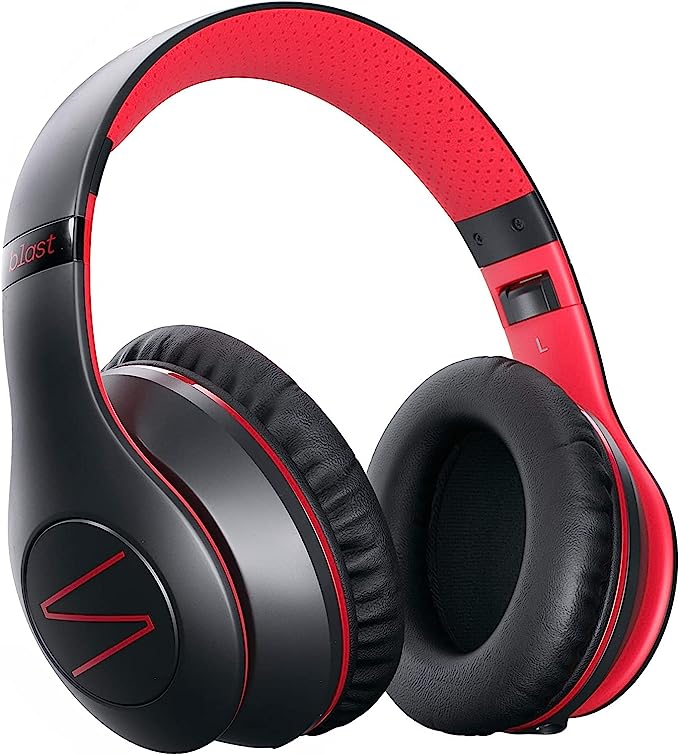
The abstract concepts of destructive interference, chipset integration, and material science converge in tangible products. The Phonicgrid SE7 Wireless Headphones serve as a prime case study of this modern audio paradigm.
Analyzing the Value Proposition
The SE7 does not attempt to reinvent the wheel; rather, it democratizes it. By packing Hybrid Active Noise Cancellation that claims to reduce low-frequency noise by 95%, it brings the “sanctuary effect” to a price point accessible to students, commuters, and budget-conscious professionals.
- Acoustic Implementation: The choice of 40mm drivers indicates a tuning preference for “Deep Bass” and dynamic range, aligning with popular consumer preferences for pop, hip-hop, and immersive movie watching.
- Connectivity & Longevity: Leveraging Bluetooth 5.2 ensures that the connection remains stable even in signal-congested environments like airports or subway stations. The 30-hour battery life addresses the modern “charging fatigue,” ensuring the device can survive a trans-continental flight or a week of commuting on a single charge.
- Versatility: The inclusion of a wired mode (via 3.5mm aux cable) acknowledges that wireless isn’t always the answer—especially for latency-sensitive gaming or legacy devices.

The existence of products like the SE7 challenges the notion that high-fidelity silence is a luxury. It proves that when the underlying technology matures, the benefits can be distributed widely, allowing a broader demographic to experience the cognitive and recreational benefits of controlled audio environments.
Conclusion: The Future of Personal Audio Spaces
As we look to the future, the trend lines are clear. The “Silence Economy” will continue to grow. Noise pollution is unlikely to decrease, making the personal refuge provided by ANC headphones increasingly vital. We are moving towards a future where our auditory reality is fully customizable—where we can tune out the city but tune in a conversation, where our headphones monitor our hearing health, and where high-quality audio is a universal standard, not a premium upgrade.
The democratization of technology, exemplified by the accessibility of robust ANC and high-fidelity drivers in affordable packages, is a win for consumers. It empowers individuals to reclaim their focus and enjoy their music as the artist intended, regardless of their budget. In this brave new world of audio, silence is indeed golden, but it no longer requires a pot of gold to acquire.