The Engineering of Utility: Deconstructing the Modern Budget Earbud
Update on Feb. 10, 2026, 6:55 p.m.
In the hierarchy of consumer electronics, the budget earbud is often dismissed as a commodity—a disposable accessory defined only by what it lacks compared to its flagship counterparts. It lacks active noise cancellation; it lacks spatial audio head-tracking; it lacks a famous logo. But this dismissal ignores a fascinating reality: designing a functional, reliable piece of technology under strict cost constraints requires a unique form of engineering brilliance.
The GNMN M1FA serves as a compelling case study in this philosophy of “essentialism.” By stripping away the computationally expensive features found in high-end models, engineers can focus resources on the fundamentals: power density, connection stability, and mechanical reliability. Understanding these devices requires us to look past the marketing and examine the physics of how they deliver sound and stamina.

The Physics of Open Air: 10mm Drivers and Acoustic Leakage
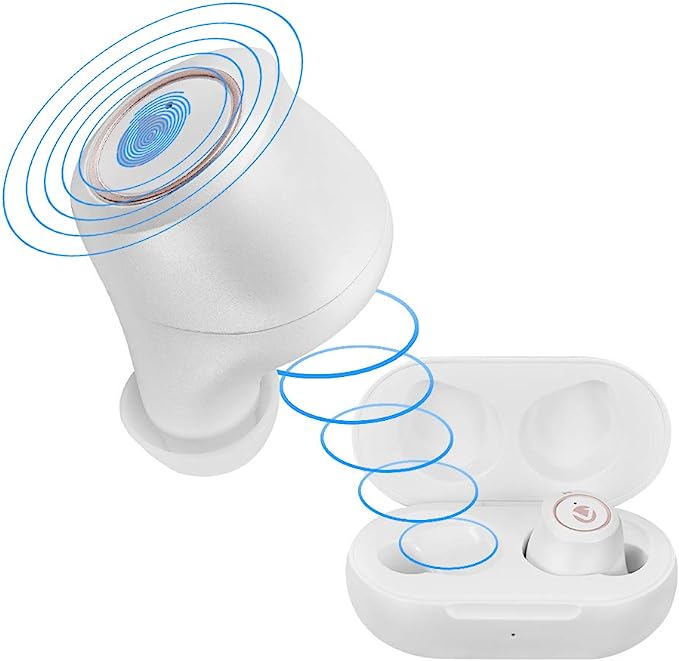
The most defining characteristic of the M1FA is its half-in-ear design. Unlike in-ear monitors (IEMs) that seal the ear canal with silicone tips, this design rests in the concha, leaving the canal partially open. From an acoustic engineering perspective, this creates a complex challenge.
Sealed earbuds rely on “pressure chamber” acoustics, where the trapped air acts as a spring, allowing even small drivers to generate powerful bass. An open design, however, suffers from acoustic leakage. Low-frequency waves (bass) are long and omnidirectional; without a seal, they easily escape into the surrounding air before pressurizing the eardrum.
To compensate for this, the M1FA employs a 10mm dynamic driver. This is significantly larger than the 6-8mm drivers often found in sealed earbuds. The larger surface area of the diaphragm allows it to displace a greater volume of air, physically pushing more sound pressure to counteract the leakage. This is why the bass is described as “mellow” rather than “earth-shattering”—it is a result of physics balancing driver size against acoustic openness. The benefit of this trade-off is spatial awareness. By not occluding the ear canal, the design allows high-frequency environmental sounds (like traffic or voices) to pass through, creating a safer listening experience for runners and cyclists.

The Electron Economy: Bluetooth 5.0 and Power Density
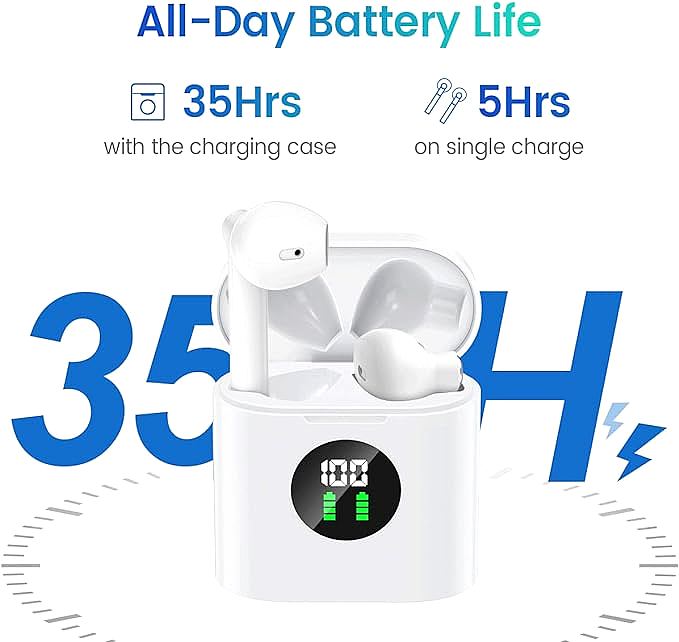
Battery life in micro-electronics is a battle against volume. There is only so much chemical energy you can store in a device weighing 3.5 grams. The M1FA achieves its 5-hour continuous playtime (and 35 hours total) not just through battery chemistry, but through data efficiency.
The device utilizes Bluetooth 5.0, a standard that introduced significant improvements in Bluetooth Low Energy (BLE) protocols. Compared to older versions, Bluetooth 5.0 can transmit data in larger packets with less overhead. This means the radio spends less time “awake” and transmitting, and more time in a micro-sleep state.
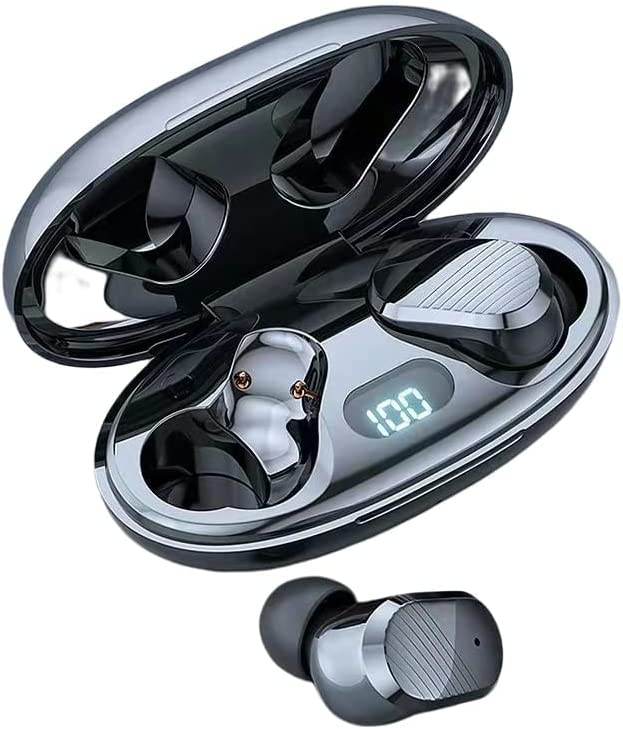
Furthermore, the charging case acts as a localized power grid. By offloading the bulk of the energy storage to the case, the earbuds themselves can remain lightweight. The inclusion of an LED power display adds a layer of cognitive ergonomics—removing the “range anxiety” associated with wireless devices by providing precise, quantitative feedback on the remaining charge.
Interface Engineering: The Case for Mechanical Buttons
In an era where touchscreens are ubiquitous, the M1FA’s choice of a physical button might seem archaic. However, in the context of sports and active use, it is a superior interface solution.
Capacitive touch sensors (used in most premium earbuds) work by detecting the electrical charge of the human finger. Unfortunately, sweat, rain, and hair also conduct electricity, leading to “ghost touches” or unresponsiveness during a workout. A mechanical switch, by contrast, relies on physical actuation force. It is binary: it is either pressed or it is not.
This creates a deterministic user interface. When you are running at a 6-minute mile pace, you do not have the cognitive bandwidth to wonder if your double-tap registered. The tactile “click” of a physical button provides immediate sensory confirmation, closing the feedback loop instantly. This reliability is a prime example of form following function.
Conclusion: The Value of Focused Design
The narrative of technology often equates “better” with “more”—more features, more sensors, more processing power. Devices like the GNMN M1FA challenge this by demonstrating the value of “focused” design. By prioritizing fundamental physics (larger drivers) and reliable interfaces (physical buttons) over fragile novelties, they offer a tool that is arguably better suited for the rigors of daily exercise than products costing ten times as much.
Innovation is not always about breaking new ground; sometimes, it is about optimizing the ground we stand on. The M1FA reminds us that a well-executed compromise is, in itself, a feat of engineering.