Acoustic Endurance: The Engineering Behind the Jabra Elite 45h
Update on Feb. 11, 2026, 4:17 p.m.
In the domain of portable audio, a persistent engineering dichotomy exists: the trade-off between performance and longevity. High-fidelity sound requires power, and extended playtime typically demands bulk. However, advancements in material science and power management have begun to dissolve these barriers.
The Jabra Elite 45h wireless headphones represent a case study in this technological convergence. By integrating substantial acoustic drivers with high-efficiency energy systems, they challenge the traditional constraints of the on-ear form factor. This analysis deconstructs the mechanisms—from the physics of the diaphragm to the chemistry of the battery—that allow this device to claim a “best-in-class” status.
The Physics of Air Displacement: 40mm Drivers
At the heart of any transducer lies a simple physical principle: sound is the compression and rarefaction of air. To produce low-frequency sounds (bass), a driver must move a significant volume of air. This is governed by the formula for volume displacement ($V_d = S_d \times X_{max}$), where $S_d$ is the surface area of the diaphragm and $X_{max}$ is the maximum linear excursion.
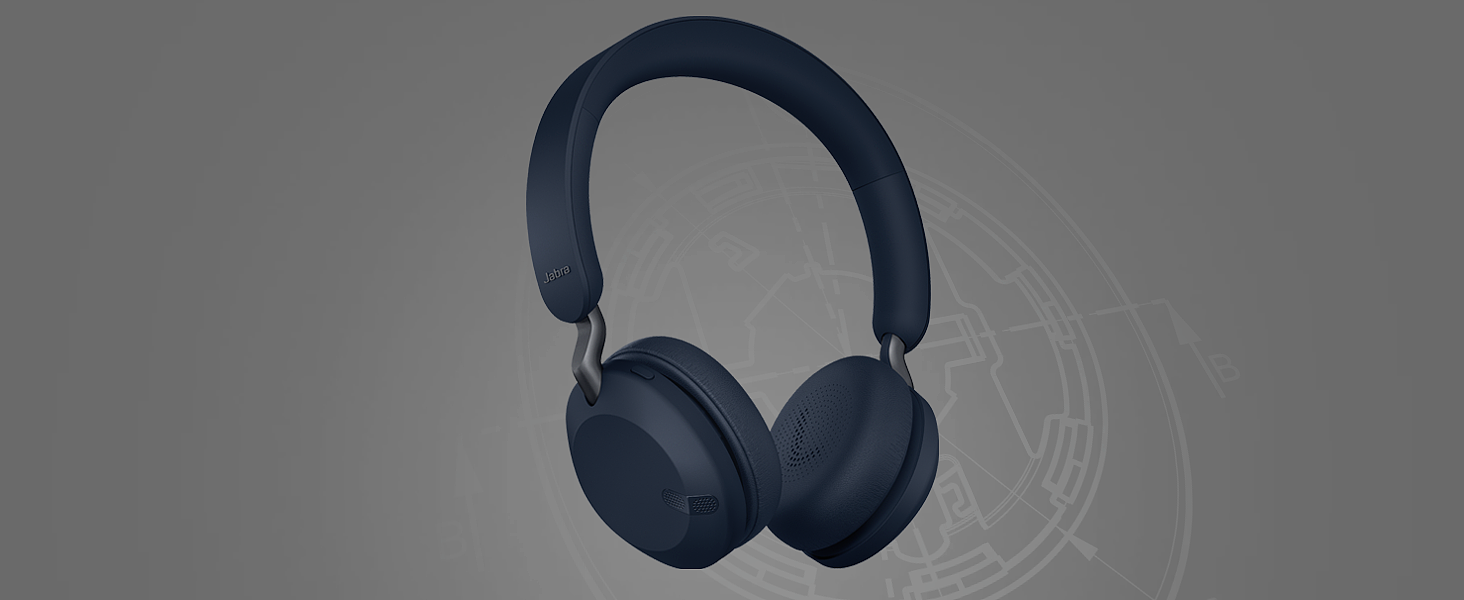
The Elite 45h utilizes 40mm drivers, a diameter significantly larger than the standard 30mm often found in compact on-ear models. This 33% increase in diameter results in a roughly 77% increase in surface area. * Bass Response: The larger surface area allows the driver to reproduce lower frequencies with less excursion, reducing distortion. * Efficiency: Larger drivers can often produce the same sound pressure level (SPL) with less electrical power, contributing to overall system efficiency.
By prioritizing driver size, the acoustic design ensures that the “exceptional sound” is not merely a product of digital boosting, but a result of fundamental physical capabilities.

Energy Density and the 50-Hour Threshold
Perhaps the most notable specification of the Elite 45h is its 50-hour battery life. Achieving this endurance in a lightweight chassis (160g) requires rigorous optimization of the power budget.
Lithium-Ion Chemistry and Management
Modern Lithium-ion (Li-ion) cells offer high specific energy (energy per unit mass). However, the cell is only part of the equation. The stamina of the Elite 45h is likely driven by an advanced Battery Management System (BMS) and highly efficient Bluetooth chipsets. * Low-Power States: The device aggressively manages power states, entering ultra-low power modes when audio is paused or the connection is idle. * Fast Charging Thermodynamics: The system supports a “fast charge” capability—10 hours of use from 15 minutes of charging. This requires precise thermal monitoring to prevent lithium plating on the anode, a common issue when charging currents are high relative to the battery’s capacity (C-rate).
This synergy between chemistry and software ensures that the device remains operational for days, not hours, fundamentally changing the user’s relationship with charging infrastructure.
Viscoelasticity and the On-Ear Interface
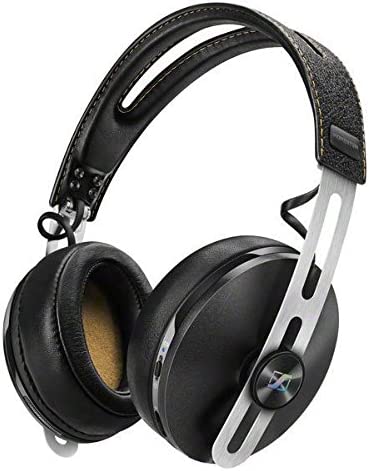
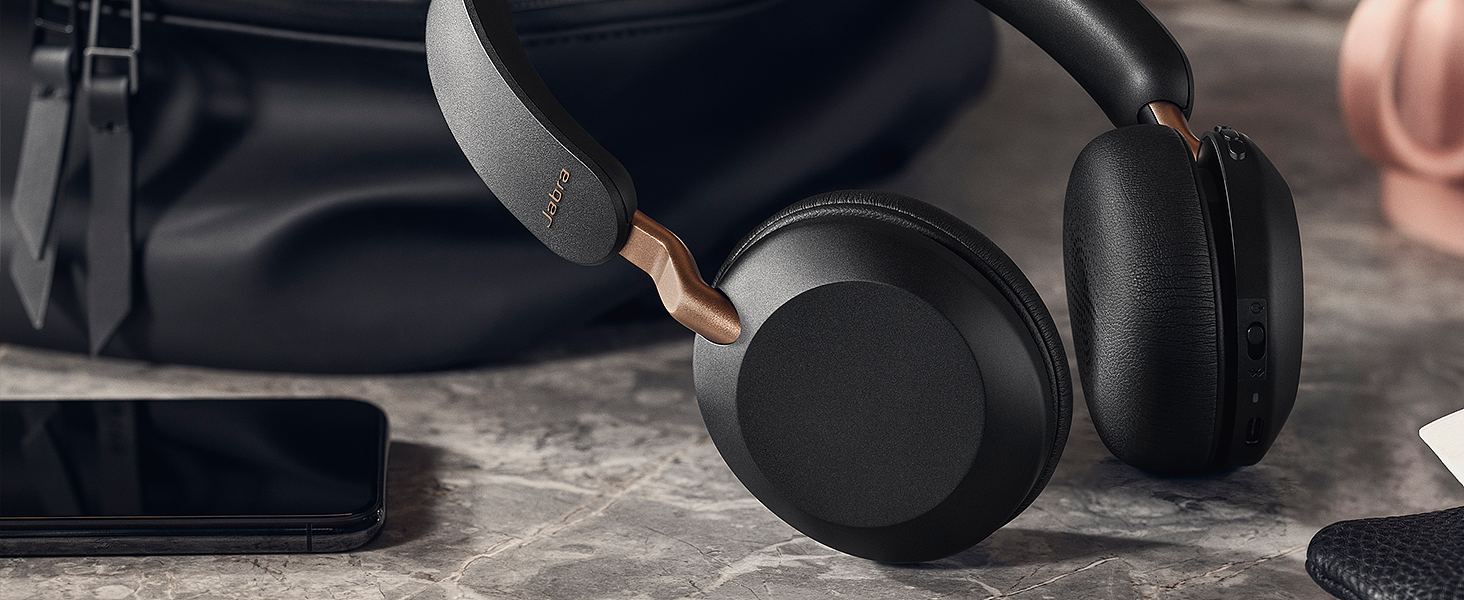
User comfort in headphones is determined by clamping force and the properties of the ear cushions. The Elite 45h employs memory foam, a viscoelastic polyurethane material.
Viscoelastic materials exhibit both viscous (fluid-like) and elastic (spring-like) characteristics.
1. Hysteresis: When compressed, the foam dissipates energy, reducing the pressure points against the uneven cartilage of the ear (pinna).
2. Thermal Sensitivity: Memory foam softens with body heat, allowing the cushion to mold to the unique topography of the user’s ear over time.
This material science application is critical for an on-ear (supra-aural) design, which rests directly on the ear rather than encircling it. It creates a better acoustic seal for passive noise isolation, physically blocking high-frequency ambient noise without the need for active electronic cancellation.

Psychoacoustics: The MySound Calibration
Every human ear is unique, not just in shape, but in frequency sensitivity. Factors like age and noise exposure can degrade sensitivity to high frequencies. A “flat” frequency response from a headphone does not guarantee a “flat” perception by the brain.
Jabra addresses this through MySound technology. This system acts as a digital audiologist. By conducting a hearing test via the Jabra Sound+ App, the software maps the user’s audiogram. The Digital Signal Processor (DSP) then applies a compensatory equalization curve. If a user has a slight dip in sensitivity at 4kHz, the DSP boosts that frequency band specifically. This ensures that the listening experience is calibrated to the user’s biological reality, rather than a generic average.

Connectivity and the Multipoint Protocol
In a multi-device ecosystem, the ability to switch sources seamlessly is paramount. The Elite 45h supports Bluetooth Multipoint, a protocol feature that allows the headset to maintain active connections with two source devices simultaneously.
Technically, this involves complex time-division multiplexing. The Bluetooth radio monitors paging messages from both devices. When a call comes in on a phone, the headset can instantly interrupt the audio stream from a laptop to route the call audio. This requires robust firmware to handle the handover logic without inducing latency or connection drops, a challenge Jabra has addressed through years of developing enterprise-grade communication headsets.

Synthesis of Form and Function
The Jabra Elite 45h stands as a testament to balanced engineering. It does not rely on a single gimmick but rather on the solid execution of fundamental principles: the physics of large drivers for sound, the chemistry of high-density batteries for endurance, and the material science of memory foam for comfort. By integrating these physical attributes with sophisticated DSP and psychoacoustic calibration, it offers a listening solution that is both scientifically sound and practically indispensable.