The Anatomy of Audio: Physics of Dynamic Drivers and Passive Isolation
Update on Feb. 10, 2026, 6:14 p.m.
In the digital age, we often view audio as a stream of data—bits and bytes flowing invisibly through the air. However, the final mile of this journey, where data becomes sound, remains a purely physical phenomenon. It is the realm of electromagnetism, mechanics, and acoustics.
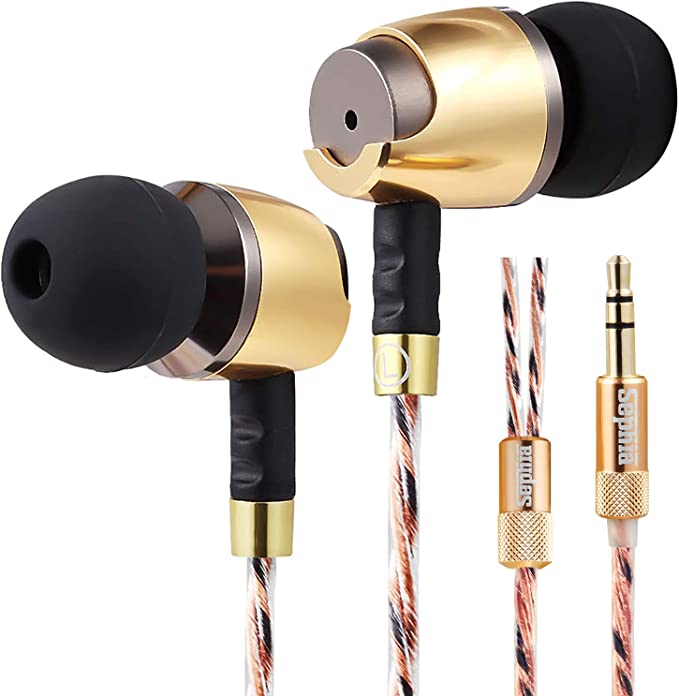
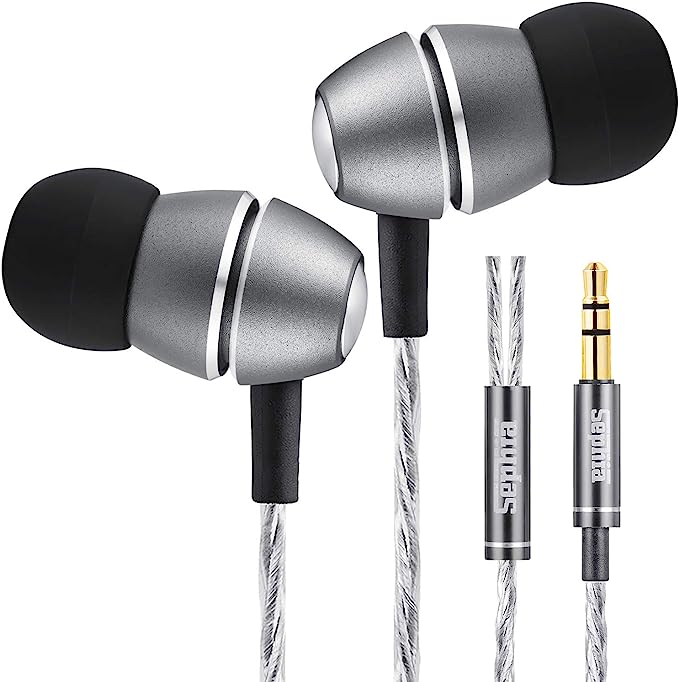
The Sephia SP3060 Wired Earbuds represent a classic study in this physical translation. Devoid of batteries, Bluetooth chips, or digital signal processors, they rely entirely on fundamental engineering principles to convert electrical signals into the pressure waves we perceive as music. By dissecting components like the neodymium driver and the aluminum housing, we can understand the science that powers analog audio in a wireless world.

The Electromechanical Transducer: The Dynamic Driver
At the heart of the SP3060 lies a 10mm dynamic driver. A driver is a transducer—a device that converts energy from one form (electrical) to another (mechanical).
The Lorentz Force
The mechanism begins with a voice coil suspended in a magnetic field. When an electrical signal (your music) flows through this coil, it creates a variable magnetic field. According to the Lorentz force law, this field interacts with the stationary permanent magnet, generating a force that moves the coil back and forth.
The SP3060 uses a Neodymium magnet, an alloy of neodymium, iron, and boron ($Nd_2Fe_{14}B$). Neodymium is the strongest type of permanent magnet commercially available. Its high magnetic flux density allows for a stronger interaction with the voice coil without increasing the weight of the assembly. This high “motor strength” allows the driver to start and stop the diaphragm with greater precision (transient response), resulting in sharper percussion and clearer details.
The Diaphragm and Frequency Response
Attached to the voice coil is a diaphragm. As the coil moves, it pushes and pulls the diaphragm, compressing and rarefying the air to create sound waves. A 10mm diameter is a strategic choice for earbuds. It is large enough to displace sufficient air for bass frequencies (which require high volume displacement) but small enough to remain rigid for high frequencies (which require rapid vibration without flexing).

Acoustics: The Physics of Isolation
In an era dominated by Active Noise Cancellation (ANC), the SP3060 relies on Passive Noise Isolation. While ANC uses destructive interference to cancel sound waves electronically, passive isolation uses mass and seals to block them physically.
Acoustic Impedance Mismatch
Sound travels easily through air but struggles to pass through denser materials. When airborne sound waves hit the solid body of the earbud and the silicone or memory foam tip, they encounter a massive change in acoustic impedance. Most of the sound energy is reflected rather than transmitted.
The effectiveness of this isolation depends entirely on the seal. A gap as small as a fraction of a millimeter can act as a waveguide, allowing high-frequency noise to leak in and, critically, allowing low-frequency bass pressure to leak out. The inclusion of memory foam tips leverages viscoelastic properties—the foam expands to fill the unique topography of the ear canal, maximizing the contact area and the acoustic seal.

Material Science: Resonance and Damping
Every object has a natural frequency at which it vibrates. If an earbud housing resonates at a frequency within the audible range (20Hz–20kHz), it will add unwanted “coloration” to the sound.
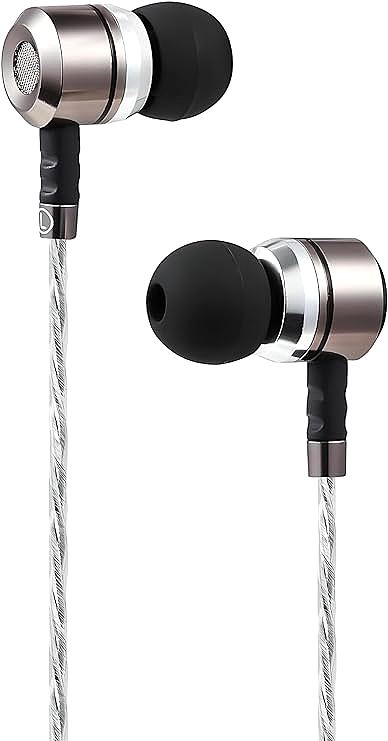
The SP3060 utilizes aluminum for its housing. Aluminum is chosen for its high stiffness-to-mass ratio. * Rigidity: A rigid housing resists deformation from the internal pressure changes caused by the driver. * Resonance Control: Aluminum’s natural resonant frequency is typically higher than that of plastic. By pushing the resonance point up and out of the critical midrange frequencies, the housing remains acoustically “inert,” ensuring that the sound you hear comes from the driver, not the vibration of the casing.
Signal Integrity: The Conductor’s Path
Finally, the signal must reach the drivers without degradation. The gold-plated 3.5mm jack is a standard in high-fidelity audio not for gold’s conductivity (copper is actually better), but for its chemical stability.
Gold is a noble metal; it does not react with oxygen to form oxides. Copper or nickel connectors can oxidize over time, creating a resistive layer that introduces static or intermittent signal loss. The gold plating ensures that the contact surface remains clean and conductive for the lifespan of the product, preserving the integrity of the low-voltage analog signal.
Conclusion: The Endurance of Analog Physics
The Sephia SP3060 demonstrates that high-quality audio does not strictly require digital processing or battery power. By optimizing the physical parameters of the driver magnet, the acoustic seal of the ear tips, and the resonant properties of the housing, it achieves a listening experience grounded in the immutable laws of physics. It is a reminder that in audio engineering, the most critical technology is often the mechanical design itself.