The Unsealed Ear: Physics of the Open-Air Audio Paradigm
Update on Nov. 24, 2025, 8:03 a.m.
For decades, the trajectory of personal audio has been singular: isolation. From the foam pads of the Walkman to the silicone tips of modern in-ears, the goal was to seal the ear canal, creating a pressurized chamber where only the music existed. This “hermetic seal” approach maximized bass response but severed the user from their environment.
Recently, however, a divergence has occurred. A new category of device has emerged that challenges the necessity of isolation. Known as Open Ear or Air Conduction headphones, these devices prioritize Acoustic Transparency—the ability to layer digital audio over the physical world without obstructing it.
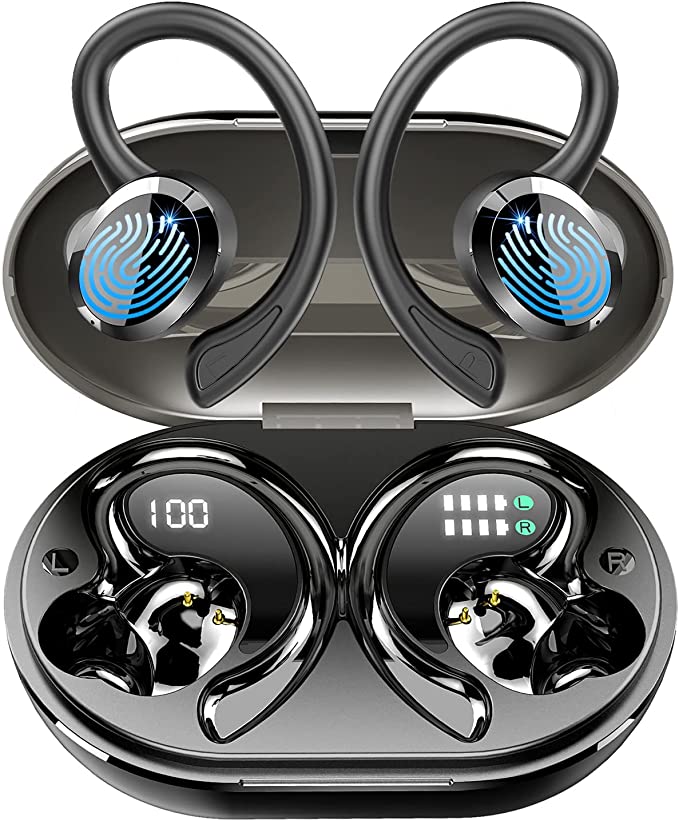
The BUGANI B01 represents this shift. It is not a bone conduction device, nor is it a traditional headphone. It is a localized speaker system for the ears. To understand its utility, we must understand the physics of “open baffle” acoustics and why unsealing the ear is a complex engineering challenge.

Air Conduction vs. Bone Conduction: A Crucial Distinction
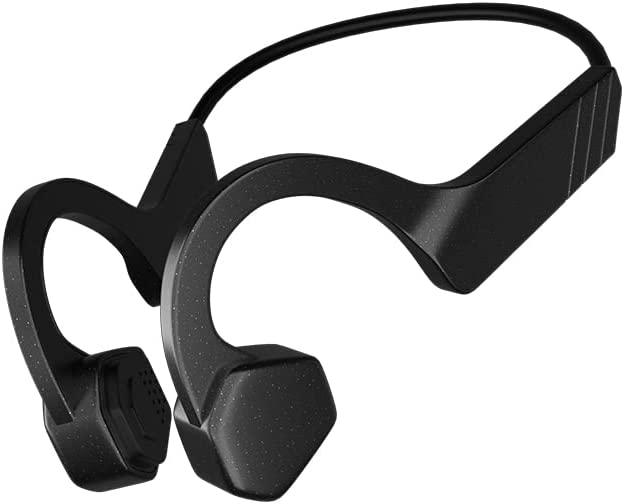
Many users conflate “open ear” with “bone conduction,” but the physics are fundamentally different. * Bone Conduction: Transmits vibration through the zygomatic arch (cheekbone) directly to the cochlea. While great for swimming or extreme noise, it often suffers from a limited frequency response, particularly lacking in bass and clarity. * Air Conduction (BUGANI B01): Uses a speaker driver to push air waves toward the ear canal. This utilizes the Outer Ear (Pinna) to funnel sound naturally.
By using the ear’s natural anatomy rather than bypassing it, air conduction devices like the B01 can reproduce a much wider frequency range, delivering richer vocals and deeper bass than their vibrating counterparts, all without touching the ear canal.
The Physics of the Open Baffle: 16.2mm Drivers
In a sealed earbud, a tiny 6mm driver can produce powerful bass because it pressurizes the small volume of air inside the ear canal. In an open design, that pressure escapes. To compensate for this Low-Frequency Dissipation, the driver must move significantly more air.
The B01 employs massive 16.22mm dynamic drivers. * Surface Area: These drivers have roughly 4-7 times the surface area of a typical in-ear driver. This allows them to generate the necessary Sound Pressure Level (SPL) to be heard clearly over ambient noise (wind, traffic) without distortion. * Directionality: The engineering challenge is not just loudness, but focus. The speakers are angled to direct sound waves precisely into the ear canal, minimizing “leakage” to the people around you. This creates a personal sound bubble, a localized acoustic field that travels with you.

Situational Awareness: The Binaural Advantage
The primary argument for open-ear audio is safety, specifically Situational Awareness. But it goes deeper than just “hearing a car.” * Binaural Unmasking: Our brains use the time delay and intensity difference between ears to localize sound. Occluding the ear canal disrupts these cues, collapsing the 3D soundstage of the real world. * Acoustic Transparency: By leaving the canal open, the B01 allows the brain to process environmental sounds naturally. You don’t just hear a car; you instantly know it’s behind you and to the left. This is critical for cyclists and runners who rely on spatial audio cues for survival.
This creates an “Augmented Reality” for audio—your podcast is superimposed onto the soundscape of the city, rather than replacing it.

The Wireless Link: Bluetooth 5.3 Stability
Open-ear headphones typically sit further from the head’s center mass, which can introduce signal shadowing issues. The B01 utilizes Bluetooth 5.3 to mitigate this. * Channel Classification: This protocol constantly maps the RF environment, hopping to clear frequencies to avoid interference from Wi-Fi or other bodies. * Energy Efficiency: It maintains a robust connection with lower power consumption, contributing to the 8-hour battery life essential for long-distance training.
Conclusion: A Permeable Barrier
The BUGANI B01 is not designed for the subway commute or the library; it is designed for the active world. It acknowledges that sometimes, the most important sound is the one you didn’t stream. By combining the fidelity of large-format air conduction drivers with the safety of an open canal, it offers a compromise that isn’t a compromise at all—it’s a new way of being present.