YASEZ in-Ear Headsets and the Secret History of Moving Iron Technology


YASEZ in-Ear Headsets
It begins, as so many modern quests do, with a scroll through the endless digital marketplace. You come across a product listing with a curious claim: "Full Frequency HIFI Moving Iron." The phrase sounds cryptic, almost steampunk. Below, in the space reserved for the wisdom of the crowd, there is only silence. Zero reviews.
It's a peculiar artifact of our time. A product speaking a technical language with no social proof to vouch for its existence. It's easy to dismiss and scroll on. But what if we didn't? What if we treated this listing not as an advertisement, but as a map to a hidden story? A story about how a piece of medical technology, designed to help people hear the world, was hijacked for rock and roll, and eventually found its way into your pocket. This isn't a review. It's an excavation of the secrets behind the marketing language.
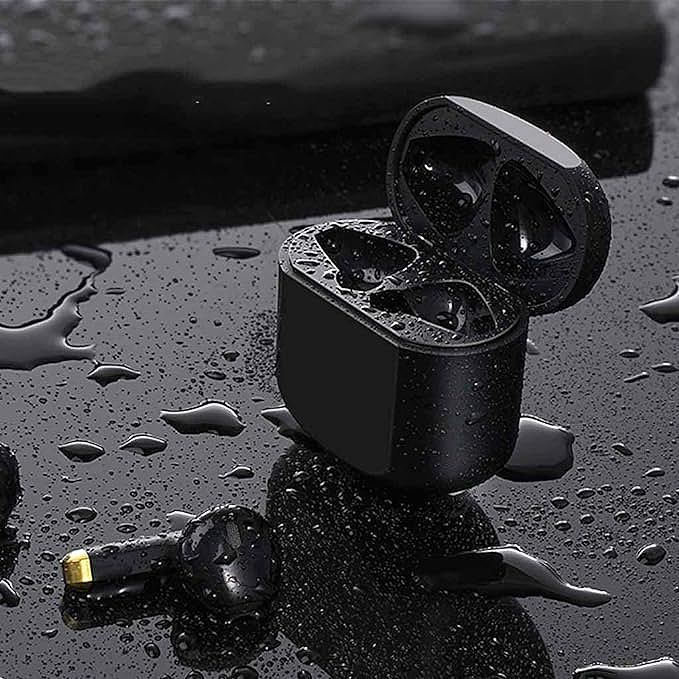
What Exactly Is a "Moving Iron" Driver?
The phrase sounds archaic, almost steampunk. "Moving iron." What could it possibly mean in the context of modern wireless earbuds?
To understand it, we need to distinguish between the two dominant technologies that convert electrical signals into sound: dynamic drivers and balanced armature drivers (the technical term for "moving iron").
The Dynamic Driver: A Piston Pushing Air
Dynamic drivers work on the same principle as a traditional loudspeaker. A relatively large, cone-shaped diaphragm is attached to a voice coil suspended in a magnetic field. When an electrical audio signal passes through the coil, it creates a varying magnetic field that interacts with the permanent magnet, causing the coil—and the attached diaphragm—to move back and forth. This motion pushes air, creating sound waves.
| Characteristic | Dynamic Driver Behavior |
|---|---|
| Air Movement | Large volume, piston-like |
| Bass Response | Natural, powerful, resonant |
| Size | Typically 6mm to 50mm+ |
| Power Need | Moderate to high |
| Sound Character | Warm, full-bodied, "painterly" |
Think of a dynamic driver as a painter with a broad brush. It moves a lot of air, creating rich, emotional strokes of sound. The bass is naturally extended because the diaphragm physically displaces air. The soundstage feels wide and immersive. But precision? That's not its primary strength.
The Balanced Armature Driver: A Lever Carving Sound
Balanced armature drivers operate on an entirely different principle—one borrowed from precision instrumentation, not loudspeaker design.
Inside a BA driver, there's no large diaphragm directly driven by a coil. Instead, there's a tiny, reed-like armature (a slender metal strip) that is "balanced" within a magnetic field. The armature is pivoted at one end, like a diving board. When an audio signal passes through a surrounding coil, the armature tilts back and forth with extreme precision.
This motion is transferred to a small driver rod, which in turn vibrates a lightweight diaphragm. The diaphragm doesn't push much air directly—it's more like a sculptor's chisel, carving sound waves with surgical accuracy.
| Characteristic | Balanced Armature Behavior |
|---|---|
| Air Movement | Minimal, precision-focused |
| Bass Response | Limited without acoustic tuning |
| Size | Extremely small (3-6mm) |
| Power Need | Very low (efficient) |
| Sound Character | Detailed, fast, "sculpted" |
The advantages are significant:
- Speed: The armature is nearly weightless, so it can start and stop almost instantly. This means exceptional transient response—the crisp snap of a snare drum, the delicate decay of a cymbal.
- Efficiency: BA drivers require very little power to operate, making them ideal for battery-powered devices.
- Miniaturization: They can be made extremely small, allowing multiple drivers to fit in a single earbud.
- Isolation: The sealed design naturally blocks external noise.
But there's a trade-off. Balanced armature drivers, on their own, struggle with deep bass. They don't move enough air. This is why high-end IEMs often use hybrid configurations: a dynamic driver handles the bass, while multiple BA drivers tackle the mids and highs.
Born in the Lab: The Hearing Aid Revolution (1950s)
Our story doesn't start in a booming concert hall or a audiophile's listening room. It begins in a quiet laboratory in the 1950s, with a deeply human problem: hearing loss.
After World War II, millions of veterans returned home with noise-induced hearing damage. The existing hearing aids were bulky, inefficient, and sounded terrible. They used conventional dynamic drivers, which required significant power and couldn't fit discreetly in the ear.
The challenge was clear: create a device small enough to fit in the ear, efficient enough to run on a tiny battery for days, and precise enough to reproduce the complex nuances of human speech.
Knowles and the Balanced Armature Breakthrough
Enter Knowles, a company that would become synonymous with balanced armature technology. In 1954, Knowles Electronics began developing miniature acoustic components specifically for hearing aids. Their innovation wasn't inventing the balanced armature principle—it had existed in telephone receivers and measurement instruments for decades—but miniaturizing it for medical use.
The balanced armature design was revolutionary for hearing aids:
| Requirement | Dynamic Driver | Balanced Armature |
|---|---|---|
| Size | Too large | Perfect fit |
| Power | High drain | Minimal consumption |
| Precision | Good for music | Exceptional for speech |
| Cost | Moderate | High (justified for medical) |
By the late 1950s, Knowles had established itself as the dominant supplier of balanced armature receivers for the hearing aid industry. The technology was refined to an extraordinary degree: armatures measured in millimeters, tolerances in microns.
It was, in essence, a whisper machine. Its purpose wasn't power, but fidelity and intimacy. It was a medical instrument designed to restore a fundamental sense, a testament to the idea that the most profound technologies are often the quietest.
The Technical Legacy
The decades of hearing aid research produced innovations that would later prove invaluable for consumer audio:
- Multi-driver configurations: Audiologists discovered that different BA drivers could handle different frequency ranges, improving clarity.
- Acoustic damping: Fine-tuning the internal air chambers to smooth frequency response.
- Crossover networks: Passive components that split audio signals between drivers.
- Custom molding: Individual ear impressions for perfect fit and isolation.
None of this was developed for music. It was all about helping people hear conversations, television, and daily life. But the engineering knowledge was there, waiting to be repurposed.

Hijacked for Rock and Roll: The IEM Revolution
For three decades, balanced armature technology lived almost exclusively in the beige world of audiology. Then, in the 1980s and early 90s, it was discovered by a group of people with the exact opposite problem: the world was too loud.
Imagine being a musician on a stadium stage. You're surrounded by a deafening wall of sound—thundering drums, screaming guitars, and the roar of fifty thousand fans. In this sonic chaos, how do you hear your own voice, your own instrument?
The Crisis of Stage Monitoring
Before in-ear monitors, musicians relied on wedge monitors—speaker cabinets placed on the stage floor, angled upward. These would blast sound back at the performers so they could hear themselves. But this approach had serious problems:
- Stage volume wars: Each musician needed their wedge louder than the others, creating a cacophony.
- Hearing damage: Prolonged exposure to 110+ dB stage volumes caused permanent hearing loss.
- Inconsistent mix: Moving around the stage changed what you heard.
- Feedback risk: Microphones picking up monitor sound created squealing feedback loops.
Something better was needed.
Jerry Harvey and the Ultimate Ears Breakthrough
The pivotal moment came through Jerry Harvey, a sound engineer touring with Van Halen in the mid-1990s. Drummer Alex Van Halen was suffering from hearing damage and couldn't hear his own playing over the band's stadium-filling roar.
Harvey, experimenting with custom-molded hearing aid shells and balanced armature drivers, created a prototype in-ear monitor. The results were transformative:
"Suddenly, I could hear everything perfectly. The vocals, the guitars, my own drums—all crystal clear, at a safe volume, with no stage noise interfering."
The first commercial custom IEM, the Ultimate Ears UE-5, launched in 1995. It used dual balanced armature drivers—one for bass, one for treble—housed in a custom-molded shell that provided both comfort and exceptional noise isolation.
The Professional Adoption Wave
Once word spread, adoption was rapid. By the late 1990s and early 2000s, custom IEMs had become standard equipment for:
| Artist/Band | Adoption Year | Reported Benefit |
|---|---|---|
| Van Halen | 1995 | Hearing protection + clarity |
| Pearl Jam | 1998 | Consistent mix nightly |
| Metallica | 2000 | Reduced stage volume |
| Studio engineers | 2000s | Detailed monitoring |
Balanced armature technology had been hijacked for rock and roll. The whisper machine had learned to sing.

The Sculptor vs. the Painter: Understanding Driver Trade-offs
By now, you're likely wondering: what makes balanced armature drivers so special for music? To understand, let's return to our metaphor.
The Painter: Dynamic Drivers
Imagine an artist standing before a large canvas, wielding a broad brush loaded with paint. Each stroke covers significant territory, blending colors, creating atmosphere. The result is immersive, emotional, grand in scale.
This is the dynamic driver:
- Strengths: Natural bass extension, wide soundstage, emotional impact
- Weaknesses: Less detail retrieval, slower transient response, requires more power
- Best for: Genres relying on atmosphere—ambient, orchestral, classic rock
Dynamic drivers excel at creating a holistic sonic picture. The bass has weight and resonance. The soundstage feels spacious. But fine details—the breath between lyrics, the finger sliding on a guitar string—can get lost in the broad strokes.
The Sculptor: Balanced Armature Drivers
Now imagine a sculptor working with marble, chisel in hand. Every strike is precise, deliberate. The resulting form has sharp edges, intricate details, lifelike texture.
This is the balanced armature driver:
- Strengths: Exceptional detail, fast transients, high efficiency, small size
- Weaknesses: Limited bass extension (single driver), narrower soundstage, can sound "clinical"
- Best for: Genres requiring precision—jazz, classical, vocal-centric, electronic
Balanced armatures excel at resolving complexity. When a song has layered instrumentation, rapid passages, or subtle production details, BA drivers reveal them with clarity. The trade-off is that they can sound lean or analytical compared to the warmth of a dynamic driver.
The Hybrid Solution
Recognizing that neither approach is universally "better," high-end audio manufacturers began combining both. A hybrid configuration might include:
┌─────────────────────────────────────┐
│   Crossover Network (splits signal) │
├──────────────┬──────────────┬───────┤
│ Dynamic      │ BA (Mid)     │ BA    │
│ Driver       │ Driver       │ (High)│
│ (Bass)       │              │       │
└──────────────┴──────────────┴───────┘
The dynamic driver handles low frequencies, where air movement matters most. Balanced armatures tackle mids and highs, where precision dominates. The result aims to capture the painter's emotion and the sculptor's detail in a single device.
This is the lineage that consumer products invoking "HIFI Moving Iron" are drawing upon—whether they've implemented it well is a separate question.
From the Stage to the Street: Technology Democratization
Like so many professional technologies—from a chef's knife to a race car's engine—what was once the exclusive domain of experts eventually trickles down to the rest of us.
The Consumer IEM Wave (2010s)
In the early 2010s, companies like Shure, Etymotic, and Westone began offering universal-fit (non-custom) IEMs with balanced armature drivers. The technology was no longer restricted to musicians with custom molds.
Key developments enabling this democratization:
| Innovation | Impact |
|---|---|
| Mass production of BA drivers | Cost reduction, wider availability |
| Improved crossover design | Smoother frequency response without custom tuning |
| Multi-driver arrays | Multiple BA drivers per earbud at accessible prices |
| Bluetooth integration | Wireless convenience without sacrificing driver quality |
By the mid-2010s, balanced armature earbuds became accessible to a much broader audience. The technology had completed its journey from medical device to professional tool to consumer feature.
The Bluetooth Evolution
As balanced armature technology became accessible, another revolution was underway: the severing of the final cord.
Early Bluetooth audio (versions 2.1-4.0) was plagued by latency, dropout, and compression artifacts. Audiophiles dismissed it as a gimmick. But with Bluetooth 5.0 (2016) and 5.1 (2019), the landscape changed:
| Feature | Bluetooth 4.2 | Bluetooth 5.1 |
|---|---|---|
| Max Range | ~10 meters | ~40 meters (line of sight) |
| Connection Stability | Good | Enhanced channel classification |
| Latency | 100-200ms | 40-80ms (with aptX Low Latency) |
| Power Efficiency | Moderate | Improved |
Bluetooth 5.1 introduced direction finding and improved frequency hopping, making connections faster to establish and more stable in crowded RF environments. For wireless earbuds, this meant faster pairing, fewer dropouts in busy areas, and better synchronization between left and right earbuds.
The specification you encounter mentions Bluetooth 5.1 specifically—a protocol focused on connection reliability, essential for seamless wireless listening.
The Marketing Claim vs. Engineering Reality
This brings us back to that mysterious product page. The phrase "Full Frequency HIFI Moving Iron" is no longer a mystery. It's a direct claim to a legacy—a legacy of medical precision and rock-and-roll clarity. The technology it references is not a gimmick; it's a genuinely brilliant piece of engineering with a rich, fascinating history.
What the Claim Implies
When a product invokes "moving iron" or "balanced armature," it's signaling:
- Precision: BA drivers excel at detail retrieval
- Efficiency: Low power consumption, good for battery life
- Isolation: Sealed design blocks ambient noise
- Heritage: Connection to professional IEM technology
The Unanswered Questions
But understanding the script doesn't tell you the quality of the actor. The science and history tell us what a balanced armature driver can do. They cannot tell us how well the one inside has been implemented.
Critical questions that specifications alone cannot answer:
| Question | Why It Matters |
|---|---|
| How many BA drivers? | Single full-range BA vs. multi-driver array makes enormous difference |
| What crossover design? | Poor crossovers create frequency gaps or peaks |
| Acoustic tuning? | Internal chambers and damping affect sound significantly |
| Driver quality grade? | Not all BA drivers are created equal |
| Hybrid or BA-only? | BA-only may lack bass depth without careful tuning |
These are the details that separate audio specialists from generic electronics manufacturers. They're also the details that can't be discerned from a product listing, no matter how carefully parsed.
The technology itself—the balanced armature driver—is genuine. Its heritage spans from 1950s medical laboratories through 1990s concert stages to today's consumer market. But the gap between component capability and final product quality depends entirely on implementation: driver selection, acoustic chamber design, crossover tuning, quality control.
These are the questions that specifications alone cannot answer.
Decoding the Claim
The phrase "Full Frequency HIFI Moving Iron" is now decoded:
- Full Frequency: Claim to cover the entire audible spectrum (20Hz-20kHz)
- HIFI: High fidelity—accurate reproduction, low distortion
- Moving Iron: Balanced armature driver technology
It's a direct claim to a lineage that stretches from 1950s hearing aid laboratories through 1990s rock stages to today's consumer audio market. The technology is legitimate. The engineering principles are sound.
But understanding the technology doesn't guarantee the implementation. Any manufacturer can source balanced armature drivers. The difference between a great product and a disappointing one lies in driver selection, acoustic design, crossover implementation, and quality control.
These are the details that can't be discerned from a product listing. They require actual listening.
The Final Judgment
We have unearthed a story most listeners never hear:
- A medical technology born to help people hear
- Musicians who repurposed it to protect their hearing while performing
- An engineering journey from laboratory to stage to everyday ears
This knowledge transforms us from passive consumers into informed listeners. We can now see past marketing language and ask the right questions.
But the final act of discovery—the judgment of sound itself—cannot be delegated to specifications or history. That journey, as it always has been, is reserved for your own ears.
The technology is real. The heritage is genuine. The question remains: has this particular implementation honored that legacy, or merely invoked it?
That answer requires more than research. It requires listening.
YASEZ in-Ear Headsets
Related Essays

Balanced Armature or Dynamic Driver: 2026 IEM Truths

Sony XBA-Z5: Three Drivers, One Mission in High-Resolution Audio

Why Your 8-Driver IEM Might Sound Worse Than a 2-Driver...

Balanced Armature Drivers Explained: How Quad-Driver IEMs Separate Frequencies

Why That Tiny Hole on Your Earbuds Is Acoustic Engineering, Not a Defect

Hybrid Driver Technology: Why Multiple Drivers Create the Crossover Challenge

Why Dual Drivers Split Your Music Before It Reaches Your Ears
Sculpting Acoustic Waves: Aerodynamics and Electromagnetism in Modern Transducers

The Architecture of Sound: Deconstructing the 9-Driver Hybrid IEM (Case Study: Dragonfly 81T)

