The Unit-02 Sound Signature: Deconstructing Final's Acoustic Architecture
Update on Dec. 6, 2025, 6:28 p.m.
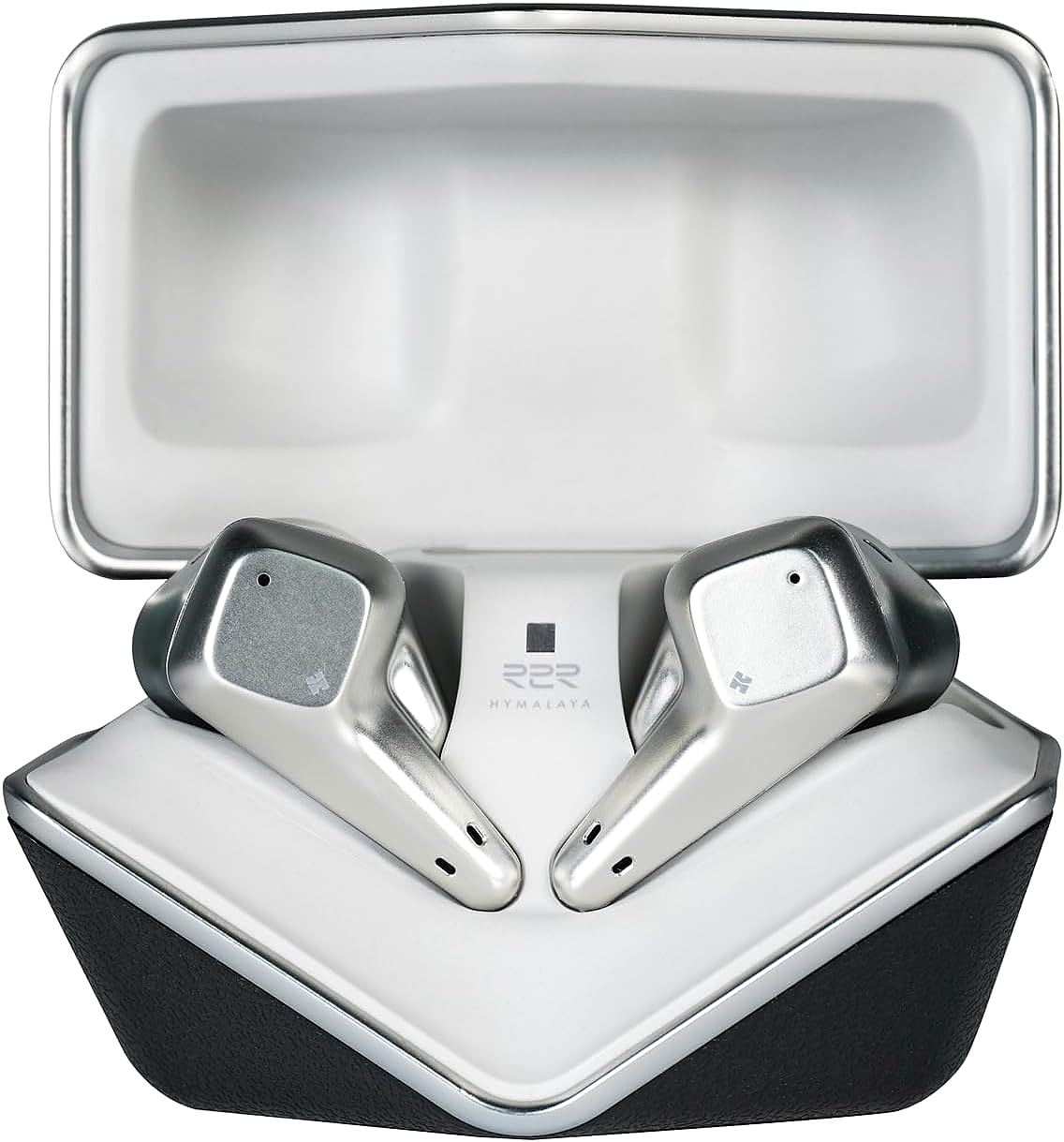
In the commoditized world of True Wireless Stereo (TWS) audio, the trend is often “more is better”: bigger drivers, multiple armatures, and aggressive Active Noise Cancellation (ANC). The Final EVATW(02), however, represents a contrarian engineering philosophy. Instead of brute-forcing audio quality with complex arrays and digital processing, Final Audio—a brand revered by audiophiles for its purist approach—relies on the precision physics of a single, small-diameter dynamic driver. This article dissects the acoustic architecture of the EVATW(02) to understand how it achieves high-resolution audio performance without the crutch of heavy DSP (Digital Signal Processing).

The Physics of Small-Diameter Dynamic Drivers
The spec sheet highlights a “small diameter dynamic driver unit.” To the uninitiated, “small” might imply “weak,” particularly regarding bass response. However, in electro-acoustics, diameter is a double-edged sword. Large diaphragms are prone to cone breakup—a phenomenon where the diaphragm surface does not move in unison at high frequencies, introducing distortion.
By utilizing a smaller diameter diaphragm, Final minimizes the mass and increases the relative rigidity of the moving assembly. This results in superior transient response (Thesis). When a snare drum hits or a synth plucks in the Evangelion soundtrack, the driver can start and stop its motion almost instantaneously (Physics). This capability is what creates the “clear vocals” and “high-resolution” sound advertised. Instead of a muddy wall of sound, the listener perceives distinct separation between instruments. The trade-off is usually bass quantity, but Final addresses this through careful tuning of the internal acoustic chamber and the driver’s magnetic flux density, ensuring bass is punchy and fast rather than booming and sluggish (Nuance).
The Role of aptX in Signal Fidelity
The EVATW(02) operates on the Qualcomm QCC3020 chipset, enabling support for the aptX codec. While SBC (Subband Codec) is the standard fallback, it often truncates high-frequency data to save bandwidth, leading to a “veiled” sound. aptX, conversely, uses a more efficient compression algorithm designed to preserve the full frequency spectrum (Data).
For the end-user, specifically Android users, this means the wireless pipe is wide enough to carry the detailed information retrieved by the high-precision driver. It allows the intricate layering of Shiro Sagisu’s orchestral scores to resolve correctly, rather than collapsing into digital artifacts. It is important to note, however, that iOS users are limited to the AAC codec (Challenge). While AAC is highly optimized on Apple devices and performs admirably, the specific bitrate advantages of aptX are technically exclusive to the Android ecosystem in this context.
Passive Isolation vs. The ANC Trend
A glaring omission in the EVATW(02)’s feature set, by modern standards, is Active Noise Cancellation (ANC). This is a deliberate engineering choice. ANC works by generating anti-noise, which can introduce a subtle “hiss” (noise floor) and often alters the frequency response of the music, sucking out the mid-bass or coloring the vocals.
Final opts for Passive Noise Isolation (PNI) as the primary defense against ambient noise. This strategy relies entirely on the seal created by the eartip. The EVATW(02) includes Final’s proprietary Type E eartips. These tips are an engineering marvel in themselves, employing two types of silicone: a harder silicone for the core (to prevent sound tube deformation) and a softer silicone for the flange (to conform to the ear canal). When the correct size (XS-XL) is selected, this creates a hermetic seal that physically blocks external noise. This approach preserves the integrity of the original audio signal, providing a “blacker” background for the music without the electronic artifacts of ANC. However, this means the user must achieve a perfect fit; without it, both isolation and bass response will collapse immediately (FMEA).
Psychoacoustic Tuning
Final Audio is known for its research into psychoacoustics—how the brain interprets sound. The tuning of the EVATW(02) likely incorporates a slight lift in the upper-midrange frequencies. This is a technique used to enhance the perception of “clarity” and vocal presence, simulating the effect of a high-resolution recording even over a Bluetooth connection. By balancing this with a tight, controlled bass shelf, the engineers create a sound signature that feels “energetic” and “engaging,” fitting for the dynamic nature of anime soundtracks, without causing the listening fatigue associated with overly bright or bass-heavy consumer headphones.
In conclusion, the Final EVATW(02) is a testament to the idea that fundamental acoustic design trumps feature-list bloat. By perfecting the driver’s mechanics, optimizing the wireless codec pipeline, and relying on superior physical isolation, it delivers an audio experience that is arguably more “authentic” than many feature-packed competitors.