The Architecture of Wireless Fidelity: Bluetooth 5.3 and Acoustic Scaling
Update on Feb. 2, 2026, 2:45 p.m.
The transition from wired to wireless audio represents one of the most significant shifts in consumer electronics, driven by the relentless pursuit of seamless connectivity and acoustic fidelity. At the heart of this evolution lies the Bluetooth protocol, a standard that has matured from a simple data exchange method into a sophisticated audio transmission pipeline. Understanding the capabilities of modern Personal Audio Systems requires dissecting the interplay between radio frequency (RF) engineering and electro-acoustic mechanics. It is in this intersection that efficiency meets performance, creating devices that maintain robust connections while delivering powerful sound pressure levels.

The Protocol Evolution: Bluetooth 5.3
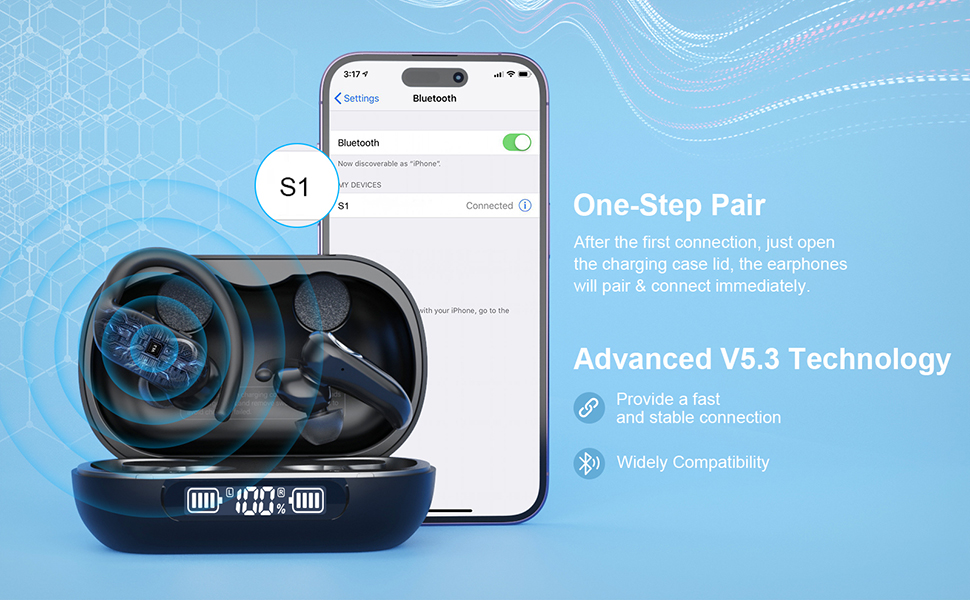
Bluetooth technology operates in the 2.4 GHz ISM band, a crowded spectrum shared with Wi-Fi and microwaves. To maintain signal integrity, the protocol employs Frequency Hopping Spread Spectrum (FHSS), rapidly switching channels to avoid interference. Bluetooth 5.3, the iteration utilized in the TIMU BTW98-Upgrades, introduces critical refinements over its predecessors, specifically in the realm of energy efficiency and connection stability.
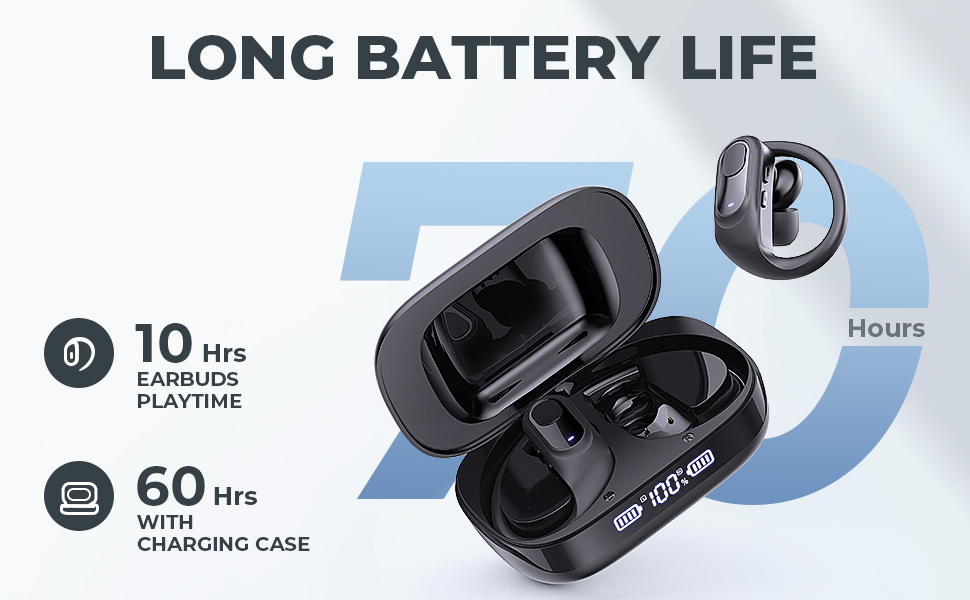
A key feature of Bluetooth 5.3 is Connection Subrating. In previous versions, transitioning between low-power monitoring states and high-performance active states required a negotiation process that introduced latency. Connection Subrating allows the device to switch between these duty cycles almost instantaneously. This means the earbuds can remain in a deep sleep state to conserve battery, yet wake up immediately to receive an audio burst without the user perceiving a lag. This architecture is fundamental to achieving extended operational times, supporting the system’s ability to manage power over long durations.
Furthermore, Bluetooth 5.3 enhances Channel Classification. The receiving device can now report its channel map—indicating which frequencies are congested—to the transmitting device. This mutual awareness allows the system to avoid interference-heavy channels more effectively than previous unidirectional methods. In complex signal environments, such as crowded transit hubs, this results in a significantly lower packet loss rate, maintaining audio continuity where older protocols might stutter or disconnect.
RF Engineering: The Role of Ceramic Antennas
The stability of the wireless link is not solely defined by software protocols; physical hardware plays a decisive role. Traditional wireless designs often use Printed Circuit Board (PCB) antennas, which are cost-effective but can be susceptible to detuning based on the proximity of human skin or other components.
Advanced implementations now frequently integrate ceramic chip antennas. Ceramic materials possess a high dielectric constant, which allows the antenna to be physically smaller while maintaining the same electrical length required to resonate at 2.4 GHz. This miniaturization allows engineers to place the antenna in an optimal position within the compact earbud chassis, away from noise-generating components like the battery or the driver magnet. The inherent stability of ceramic against temperature fluctuations and physical deformation ensures that the RF performance remains consistent, providing a reliable carrier wave for the digital audio stream.
Acoustic Mechanics: The Physics of 13.4mm Drivers
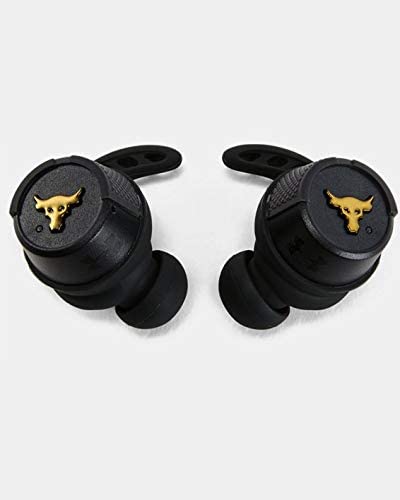
Once the digital signal is successfully received and decoded, the challenge shifts to electro-acoustics: converting electrical impulses into mechanical vibrations. The core component here is the dynamic driver. The TIMU BTW98 system incorporates a 13.4mm driver, a diameter significantly larger than the 6-8mm standard often found in compact earbuds.
The physics of sound reproduction is governed by the displacement of air. The volume of air a driver can move ($V_d$) is a function of its surface area ($S_d$) and its maximum linear excursion ($X_{max}$).
$$V_d = S_d \times X_{max}$$
A larger diameter driver exponentially increases the surface area ($S_d$). This allows the diaphragm to move a substantial volume of air with relatively little excursion. Acoustically, this translates to higher efficiency in low-frequency reproduction. Bass frequencies require large air movements to be audible. A 13.4mm driver can reproduce these wavelengths with less distortion because it does not need to be pushed to its mechanical limits to generate the necessary sound pressure level (SPL).

However, managing a large driver in a small enclosure presents engineering challenges regarding acoustic impedance. As the diaphragm moves forward, it compresses the air inside the ear canal; as it moves backward, it creates a rarefaction. If the seal is too tight, the pressure builds up, damping the driver’s motion—a phenomenon known as pneumatic damping. Engineers must carefully design the venting of the earbud housing to balance this pressure. This tuning ensures that the large diaphragm can accelerate and decelerate rapidly (transient response), preventing the sound from becoming “boomy” or uncontrolled.
Future Outlook: The Era of LE Audio
The integration of Bluetooth 5.3 paves the way for the next generation of wireless audio features, most notably LE Audio (Low Energy Audio) and the LC3 codec. While current systems prioritize efficiency and stability, future firmware updates and hardware iterations will likely leverage these protocols to enable broadcast audio (Auracast), allowing a single source to stream to unlimited receivers. The foundation laid by robust antenna design and large-format drivers ensures that hardware remains relevant as transmission standards continue to evolve toward higher efficiency and broader connectivity.