Defying Gravity: The Structural Engineering of Secure Fit in Sports Audio
Update on Jan. 1, 2026, 9:02 a.m.
The true wireless stereo (TWS) revolution liberated athletes from cables, but it introduced a new, pervasive anxiety: the fear of the drop. Every runner knows the sensation of an earbud slowly migrating outward with each footstrike, a mechanical failure driven by sweat and gravity. This is not merely a nuisance; it is a failure of engineering assumptions. The industry’s reliance on “friction fit”—jamming a silicone tip into the ear canal—ignores the complex realities of human anatomy and fluid dynamics.
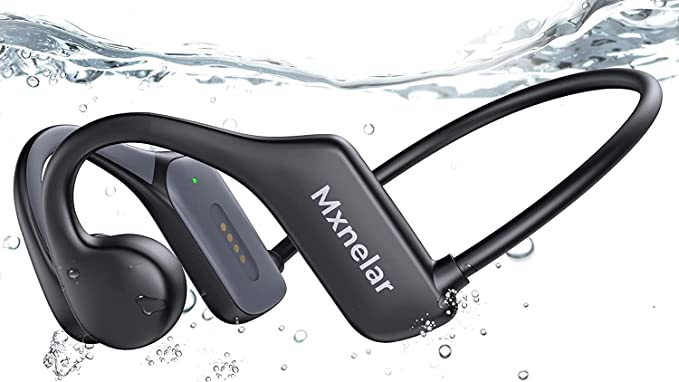
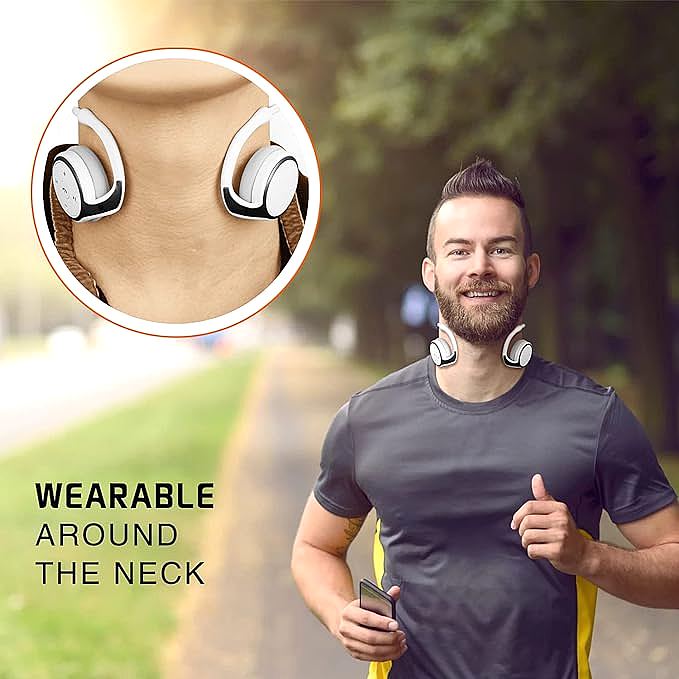
To solve this, we must look beyond the ear canal to the macro-structure of the head itself. The resurgence of the wrap-around, or “neckband,” architecture, as seen in devices like the RTUSIA Marathon Wireless Headphones, represents a shift from internal friction to external structural support. By analyzing the biomechanics of this design, we can understand why an external skeleton is often superior to an internal wedge for high-impact kinetics.
The Fallacy of Friction in Fluid Environments
The primary mechanism keeping a standard earbud in place is static friction. The silicone tip exerts an outward pressure on the skin of the ear canal, creating a frictional force that opposes gravity. However, this system is inherently unstable in a sports context. Physical exertion triggers the eccrine glands in the ear canal to produce sweat, which acts as a lubricant. As the coefficient of friction drops, the force required to dislodge the earbud decreases precipitously. Combined with the rhythmic G-forces of running, ejection becomes almost inevitable.
The RTUSIA Marathon utilizes a fundamentally different retention strategy: structural clamping and cantilever support. The wrap-around wire acts as a spring, applying a gentle, consistent clamping force against the temporal bone and the mastoid process behind the ear. This force is perpendicular to the direction of gravity. Furthermore, the ear hooks utilize the pinna (outer ear) as a structural anchor. In this system, sweat does not compromise stability because the retention is mechanical, not frictional. The device is literally hooked onto the body’s geometry, rendering the lubrication state of the skin irrelevant to the security of the fit.

The Anthropometric Dilemma: Why “One Size” Fails
Human ear canals are biologically diverse landscapes. They vary not just in diameter, but in curvature, angle, and cross-sectional shape (which is rarely a perfect circle). An earbud designed for the 50th percentile user will inevitably cause pain for the 10th percentile (too tight) and fall out for the 90th percentile (too loose). No amount of interchangeable silicone tips can fully account for the complex 3D morphology of the concha and canal.
Supra-aural designs bypass this biological variability entirely. By resting on the outside of the ear, the RTUSIA Marathon removes the canal from the fitting equation. The “landing zone” for these headphones—the flat surface of the outer ear—is far more uniform across the population than the intricate interior of the canal. This makes the design inherently more inclusive. For users with “sensitive ears” or atypical canal shapes who have historically struggled to find a comfortable fit, the shift from intrusion to superposition offers an immediate ergonomic resolution.
Material Memory and Dynamic Suspension
The effectiveness of a wrap-around headphone hinges on the properties of its connecting wire. It must be rigid enough to maintain its shape and provide clamping force, yet flexible enough to accommodate different head widths without causing “caliper pressure” headaches. This requires materials with high elastic limits, often utilizing memory polymers or spring steel cores.
When an athlete runs, their head oscillates vertically. A rigid headset would transmit these shockwaves directly to the ears, creating a thumping sensation. However, the curved design of the neckband acts as a dynamic suspension system. It absorbs micro-vibrations and allows the earpieces to “float” relative to the head’s movement. This decoupling effect ensures that the audio drivers remain aligned with the ears even during vigorous motion, maintaining consistent sound pressure levels without the need for constant readjustment.
Thermodynamics of the Open Ear
Beyond mechanics, the enclosed nature of earbuds creates a thermodynamic problem. Sealing the ear canal traps body heat and moisture, creating a “greenhouse effect.” This warm, humid environment is not only uncomfortable but can promote bacterial growth and increase the risk of otitis externa (swimmer’s ear).
The open architecture of the RTUSIA Marathon facilitates passive airflow. By allowing air to circulate between the driver housing and the ear, it maintains thermal equilibrium with the environment. Sweat is allowed to evaporate naturally rather than pooling in the canal. For endurance athletes engaging in long-duration activities, this thermal regulation is a critical component of comfort. It prevents the feeling of “hot ears” and fatigue that often accompanies prolonged use of over-ear cups or sealed buds, proving that the best engineering solutions often involve working with the body’s natural systems rather than sealing them off.
Conclusion: Engineering for the Human Variable
The design of sports audio equipment is a battle between the rigidity of hardware and the fluidity of the human body. While the market trends towards ever-smaller earbuds, the physics of retention and the biology of comfort suggest that the “old school” wrap-around form factor remains the superior engineering solution for high-intensity activity. By relying on structural geometry rather than friction, and by respecting the thermal and anatomical needs of the user, devices like the RTUSIA Marathon offer a stability that is immune to sweat and a comfort that endures for the long haul.