Silence Beneath the Surface: The Physics of Underwater Audio, RF Attenuation, and the Engineering of IPX8
Update on Jan. 1, 2026, 9 a.m.
Water is a transformative medium. When we submerge ourselves, gravity releases its hold, light refracts into dancing patterns, and the cacophony of the terrestrial world is instantly muted into a dull, rhythmic thrum. For the swimmer, this silence is both a blessing and a curse. It is meditative, yes, but mile after mile of staring at the black line on the bottom of the pool can become a sensory desert. The mind wanders; the motivation wanes.
For decades, the concept of “swimming with music” was a technological impossibility. Water is arguably the most hostile environment for consumer electronics. It shorts circuits, it corrodes metals, and—most frustratingly for the wireless age—it kills radio waves.
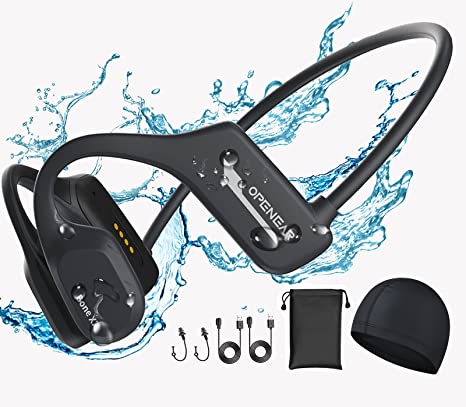
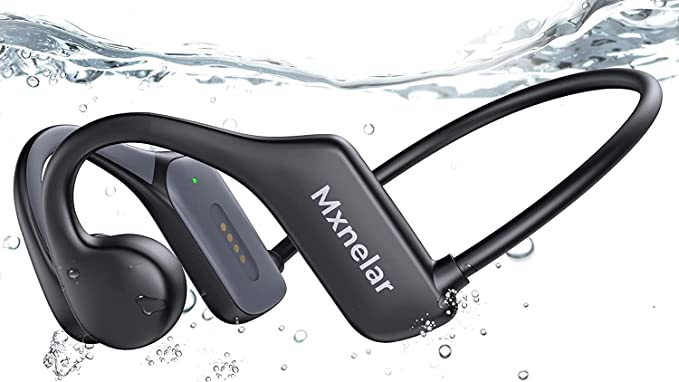
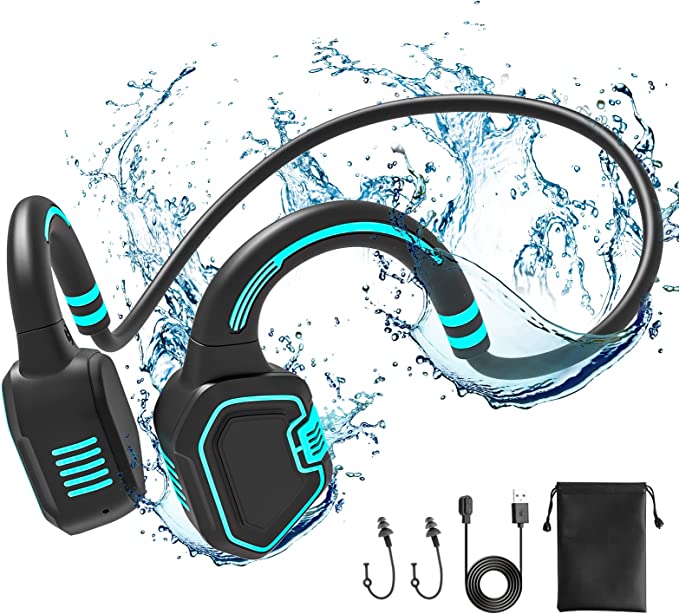
Yet, devices like the Relxhome AS19 Bone Conduction Headphones claim to conquer this domain. They promise high-fidelity audio while submerged in the deep end. But how? The solution requires a fascinating collision of disciplines: fluid dynamics, electromagnetism, and acoustic impedance matching. To understand why your Bluetooth earbuds fail in the pool and why a device like the AS19 succeeds, we must explore the physics of signal attenuation, the engineering of hermetic seals, and the surprising reason why bone conduction sounds better underwater than it does on land.

The Physics of the Dead Zone: Why Bluetooth Drowns
The most common complaint from new owners of swimming headphones is: “My Bluetooth cuts out as soon as I go underwater.” This is not a product defect; it is a fundamental law of physics.
The Microwave Resonance of Water
Bluetooth operates in the 2.4 GHz ISM band. This frequency was not chosen at random; it is an unlicensed band available globally. However, it shares a specific physical property with the water molecule ($H_2O$).
Water molecules are dipoles—they have a positive side and a negative side. When exposed to an electromagnetic field oscillating at 2.4 billion times per second (2.4 GHz), these molecules try to align themselves with the field. They rotate frantically, rubbing against each other. This friction creates heat. This is exactly how a microwave oven works: it blasts 2.4 GHz waves into your food to vibrate the water molecules and cook it.
Because water molecules are so good at absorbing this frequency to turn it into heat, they absorb the signal energy almost instantly. In technical terms, water has a very high dielectric constant and conductivity at this frequency. The signal attenuation is massive. A standard Bluetooth signal loses about half its strength every few centimeters in water. Penetrating a swimming pool is impossible. The water acts as a Faraday cage, effectively grounding the radio waves before they can reach the receiver on your head.
The Return of the MP3: Local Storage as the Solution
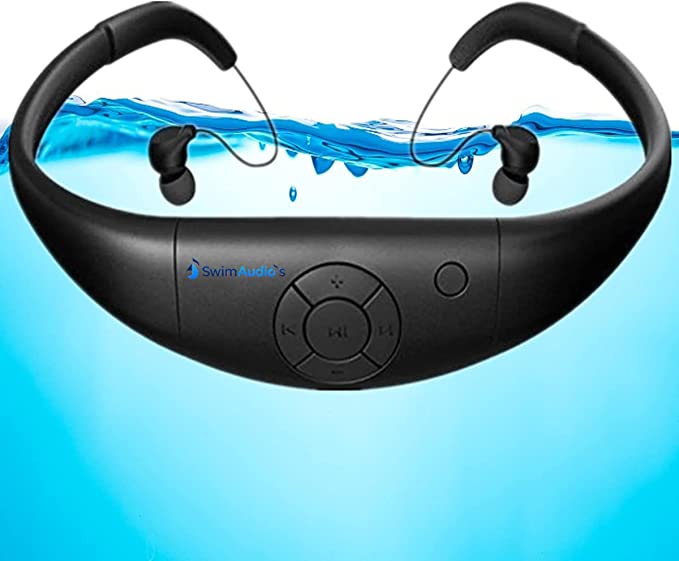
Since we cannot change the physics of water or the frequency of Bluetooth, engineers must change the source of the data. The solution is a “step back” in time to the era of the MP3 Player.
The Relxhome AS19 integrates 32GB of local flash memory directly into the headset. By storing the music files physically on the device, the need for radio transmission is eliminated. The data path becomes internal—from the memory chip to the DAC (Digital-to-Analog Converter) to the transducer—all contained within the waterproof housing.
This is why the device has two modes: Bluetooth Mode (for land) and MP3 Mode (for water). The 32GB capacity, capable of holding roughly 8,000 songs, is not just a spec; it is a necessity born of RF physics. It allows the swimmer to carry their entire library into the Faraday cage of the pool, completely untethered from the smartphone that sits uselessly on the pool deck.
Engineering for Pressure: The IPX8 Standard
Surviving the electronic death of water requires more than just local storage; it requires an impenetrable physical defense. Water is heavy. At the surface, pressure is 1 atmosphere. As you descend, the pressure increases. Even at the shallow depths of a swimming pool (1-2 meters), the hydrostatic pressure is constantly probing for weaknesses in the device’s casing.
Decoding IPX8
The IPX8 rating carried by the AS19 is the gold standard for aquatic electronics. * IP: Ingress Protection. * X: Dust rating (not specified/tested, but usually implied to be high if water-sealed). * 8: Continuous immersion in water.
Unlike IPX7, which guarantees survival at 1 meter for 30 minutes, IPX8 is a rigorous standard often meaning continuous use at depths beyond 1 meter. Relxhome specifies “submerged in water up to 2 meters deep for up to 3 hours.”
The Hermetic Seal
Achieving IPX8 requires abandoning traditional assembly methods. Screws and clips are potential leak points. Instead, manufacturers use:
1. Ultrasonic Welding: Fusing the plastic shell halves together into a single, solid unit.
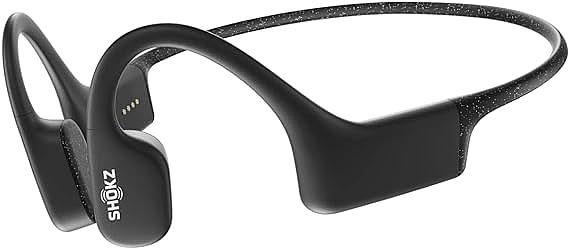
2. Magnetic Charging: You will notice the AS19 does not have a USB-C or micro-USB port. An open port is a floodgate. Instead, it uses magnetic pogo pins. These are gold-plated contacts that sit flush on the surface. There is no hole to enter. This “port-less” design is the only reliable way to maintain IPX8 integrity over thousands of charging cycles.
3. Hydrophobic Coating: Internal circuits are often coated (conformal coating) to resist corrosion even if microscopic moisture (like condensation) forms inside.
This engineering protects not just against water, but against the harsh chemistry of the pool. Chlorine is a powerful oxidizer that attacks rubber gaskets and glues. Saltwater (in oceans) is highly conductive and corrosive to metals. The gold plating on the magnetic charging contacts is essential to prevent the “green death” of copper corrosion.
The Acoustic Surprise: Why Bone Conduction Loves Water
Here is the most counter-intuitive fact about swimming headphones: Bone conduction actually sounds better underwater than it does in the air.
Impedance Matching
In the air, bone conduction headphones suffer from an efficiency problem. The transducers vibrate, but air is compressible and light. The transfer of energy from the dense vibrating pad to the light air is inefficient (Impedance Mismatch). This is why bone conduction often lacks bass in the air—the low frequencies dissipate before reaching the skull.
Water, however, is incompressible and has a density much closer to that of human bone and tissue than air does. When you submerge your head:
1. The water surrounding the transducer acts as a transmission medium, coupling the vibration more efficiently to your skull.
2. The “leakage” sound that is usually lost to the air is now trapped in the water and conducted against your skin and bone.
The “Full-Head” Subwoofer
When submerged, the water presses the transducers firmly against your cheekbones (aided by the swimming cap or goggle straps), improving mechanical coupling. Furthermore, sound travels 4.3 times faster in water than in air. The entire fluid volume of the pool becomes a conductor.
Users often report that the bass response of the Relxhome AS19 “comes alive” underwater. The thin, tinny sound sometimes experienced on land transforms into a rich, immersive experience. The water essentially acts as an amplifier and an equalizer, filling in the lower frequencies that are usually lost. This phenomenon makes bone conduction the superior choice for swimming, not just for safety, but for fidelity. In-ear buds often get water trapped between the driver and the eardrum, creating a muffled “underwater” sound. Bone conduction bypasses the water-clogged ear canal entirely, delivering clear vibration directly to the inner ear.

Conclusion: Conquering the Aquatic Frontier
The Relxhome AS19 is a testament to problem-solving in extreme environments. It addresses the radio silence of water with local storage. It fights hydrostatic pressure with port-less magnetic charging and ultrasonic sealing. And it turns the acoustic disadvantage of bone conduction on land into a high-fidelity advantage underwater.
For the swimmer, this is more than just specs. It is the difference between a grueling, silent hour of staring at tiles and a rhythmic, motivated session powered by their favorite music. It represents the conquering of the final frontier for personal audio: the aquatic realm. By understanding the physics of the deep, engineers have finally allowed the beat to go on, even when the breath is held.