The Acoustic Anatomy of Sport: Engineering Audio for Extreme Movement
Update on Jan. 1, 2026, 8:57 a.m.
In the realm of consumer electronics, “sports headphones” is a marketing category often slapped onto any device with a slightly tighter fit or a splash of neon color. However, true athletic audio equipment is defined not by marketing, but by rigorous engineering challenges that do not exist in the sedentary world.
When a human body enters a state of high-intensity activity, it becomes a hostile environment for electronics. It generates heat, produces corrosive saline (sweat), subjects attached objects to repetitive high-G impact forces, and demands that the user remains aware of their surroundings for safety. Designing a device like the Catitru BX17 to survive and perform in this chaotic biological storm requires a deep understanding of biomechanics, materials science, and acoustic physics.
This article dissects the “anatomy” of specialized sports audio gear. We will explore why standard earbuds fall out, how microscopic coatings defeat liquid ingress, and the psychoacoustic relationship between music and physical performance. This is the science of sound in motion.
Biomechanics of the Ear: The Stability Challenge
The human ear is a morphological marvel, but it was not evolved to hold electronic devices while the body is sprinting. The external ear (pinna) consists of elastic cartilage covered by skin. During running, the body experiences vertical oscillation—essentially bouncing up and down—with impact forces reaching 2-3 times body weight with every step.
For a standard “in-ear” bud (TWS) relying solely on friction fit within the ear canal, these forces are catastrophic.
1. The Pendulum Effect: As the runner lands, the earbud wants to continue moving downward due to inertia.
2. The Lubrication Factor: Sweat acts as a lubricant, reducing the coefficient of friction between the silicone tip and the skin of the ear canal.
3. The Result: The “creep,” where the bud slowly slides out, breaking the acoustic seal (loss of bass) before falling out completely.
The Earhook Solution: Leveraging Anatomy
The Catitru BX17 addresses this through the structural integration of Earhooks. From an engineering perspective, an earhook changes the retention mechanism from “friction-based” to “cantilever-based.”
The hook wraps around the helix root (the top connection of the ear to the head). This transfers the vertical load of the device from the sensitive ear canal to the much stronger cartilage structure of the outer ear. * Load Distribution: Instead of the ear canal bearing 100% of the weight and inertial force, the load is distributed. The hook acts as a suspension system. * Elastic Hysteresis: The material of the hook must possess specific elasticity. It needs to be rigid enough to hold the shape but soft enough to dampen vibrations. This prevents “bone conduction noise”—the thumping sound heard when a hard object strikes the ear during running.
The Chemistry of Sweat: The IPX7 Defense
Water is the enemy of electronics, but sweat is a specialized assassin. Human sweat is not just water; it is an electrolyte-rich solution containing sodium, chloride, potassium, and urea. It is mildly acidic (pH 4.5 - 7.0). This makes it highly conductive and corrosive.
When a device claims “Waterproof,” it refers to the Ingress Protection (IP) code. The BX17 is rated IPX7. Let’s decode the physics of this rating: * The “7”: This indicates the device can be submerged in water up to 1 meter deep for 30 minutes without harmful ingress.
Achieving IPX7 in a device with buttons, charging ports, and speaker grills requires a multi-layered defense strategy:
1. Nano-Coating (Hydrophobicity): The internal circuit boards (PCBs) are often coated with a microscopic layer of hydrophobic material (like Parylene). Even if water gets inside the shell, it beads up and rolls off the sensitive electronic components, preventing short circuits.
2. Acoustic Mesh: The speaker driver needs to move air to make sound, so it can’t be hermetically sealed. Engineers use a specialized high-density mesh. The pores are large enough for air molecules (sound) to pass through but small enough that the surface tension of water prevents liquid droplets from penetrating.
3. Gasket Sealing: Every seam in the plastic housing is sealed with rubber O-rings or ultrasonic welding to create a monolithic barrier.
The Charging Contact Vulnerability:
The most common failure point in sports earbuds is not the internal electronics, but the external gold-plated charging contacts. Sweat residue left on these contacts can cause electrolytic corrosion during charging (electrolysis). This creates a black, non-conductive oxide layer, leading to the “earbud not charging” issue. The maintenance protocol here is chemical: wiping the contacts with alcohol removes the salts before they can react with the charging current.
Acoustic Psycho-Ergonomics: The “Zone”
Why do we wear headphones while working out? It’s not just to stave off boredom. There is a verified physiological link between music and athletic performance, a phenomenon known as “ergogenic aid.”
Research suggests that synchronous music (music that matches the tempo of the movement) can: * Reduce Perceived Exertion (RPE): It distracts the brain from fatigue signals (heavy breathing, lactic acid burn), typically lowering RPE by 10-15%. * Entrainment: The motor cortex of the brain naturally wants to synchronize movement with rhythm. A steady beat acts as a metronome, helping runners maintain a consistent cadence, which improves metabolic efficiency.
The Acoustic Chamber Design
To facilitate this, the audio engineering must prioritize specific frequency responses. In a noisy gym or outdoor environment, low-frequency sounds (bass) are the first to be masked by ambient noise (the hum of treadmills, wind noise).
The BX17 utilizes 12mm drivers. In the world of earbuds, where 6mm is standard, 12mm is massive. * Physics of Displacement: A larger diaphragm can move more air with less excursion. This allows for powerful bass reproduction without distortion. * The Seal: The “In-Ear” form factor creates an acoustic isolation chamber. This passive noise isolation is critical. By physically blocking external noise, the listener can keep the volume at safer levels while still feeling the visceral impact of the bass, which is crucial for the rhythmic entrainment effect.
Safety vs. Immersion: The Environmental Awareness Trade-off
A critical debate in sports audio is the balance between immersion and situational awareness. Running outdoors with complete noise isolation can be dangerous, as it masks the sound of approaching vehicles or other hazards.
This presents a design paradox. * Total Isolation: Great for sound quality, bad for safety. * Open Ear: Great for safety, poor bass response (no pressurization).
Devices like the BX17 strike a compromise. They offer high isolation (via silicone tips) but rely on the user to manage their environment. Some advanced usage patterns involve using “Mono Mode” (one earbud in, one out)—a feature supported by the BX17’s independent connection architecture. This allows the runner to have a “data ear” (music/coaching) and a “safety ear” (traffic noise), leveraging the brain’s ability to process dual audio streams.
The Battery Endurance Equation
Sports imply duration. A marathon takes 4-5 hours. An ultra-marathon takes 24+. The anxiety of a dying battery is a real psychological stressor for athletes.
The claim of 80 hours total playtime (with case) and 15 hours per single charge for the BX17 is significant. It reflects a shift in battery density technology. * Energy Density: Moving from standard Lithium-Ion to Lithium-Polymer (LiPo) allows for batteries that can be molded into the curved shapes of earhooks, maximizing internal volume usage. * Power Management Integrated Circuits (PMIC): Modern Bluetooth chips are incredibly efficient. They enter “deep sleep” micro-states between data packets. The 15-hour standalone life suggests highly optimized power consumption, likely dropping to mere micro-amps during silence.
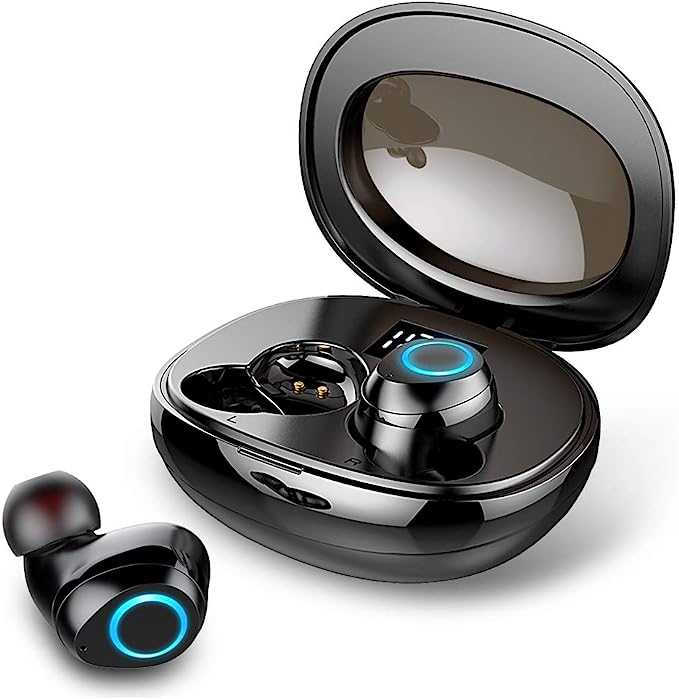
The Dual Digital Power Display on the case is an ergonomic feature designed specifically for this “range anxiety.” Just as a car has a fuel gauge, an athlete needs to know—precisely, in percentages, not just a vague blinking light—whether their gear will survive the long run.
Conclusion: Gear as a Performance Multiplier
When we analyze a product like the Catitru BX17, we are looking at more than just plastic and copper. We are looking at a solution to a set of biological and environmental problems.
It is a device designed to anchor itself to a moving human frame (Earhooks), defend itself against the body’s own corrosive byproducts (IPX7), and manipulate the brain’s processing of fatigue through acoustic entrainment (12mm Drivers).
For the modern athlete, understanding this “acoustic anatomy” changes the relationship with the gear. It is no longer a passive accessory; it is a piece of active performance equipment, engineered to extend the limits of human endurance through the power of sound.