Biothermodynamics and Hygiene Engineering: The Physiological Logic of Non-Contact Diagnosis
Update on Jan. 1, 2026, 8:51 a.m.
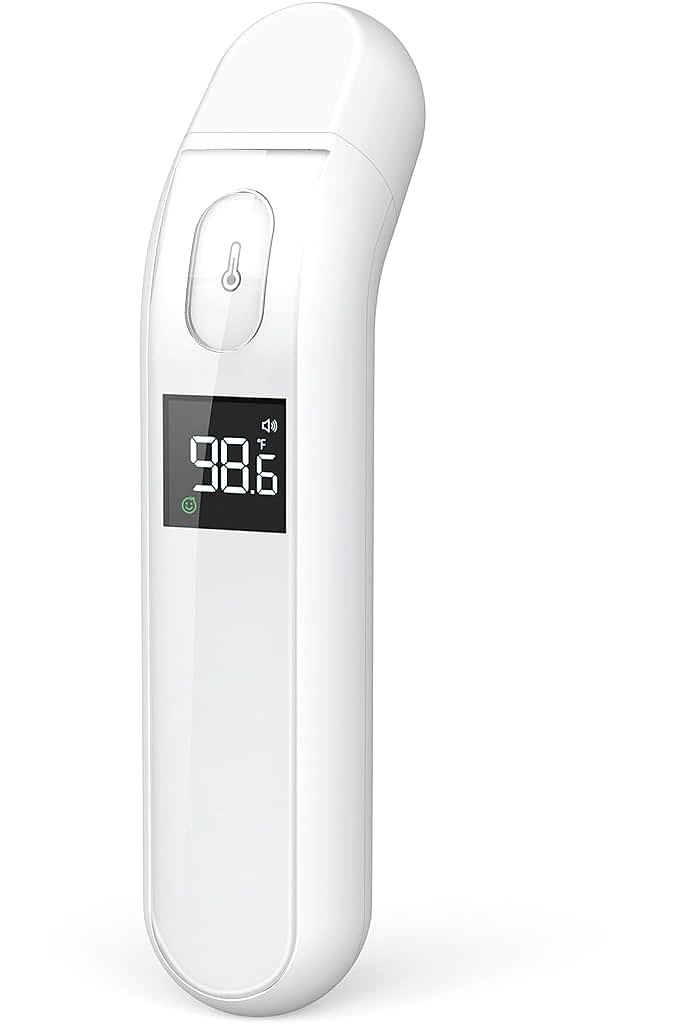
Temperature is the most fundamental vital sign. It is the metabolic speedometer of the human body. However, measuring it has historically been an invasive, slow, and potentially hazardous process involving glass, mercury, and mucous membranes. The shift to non-contact infrared thermometry, exemplified by the iHealth PT2L, is not just a convenience upgrade; it is a leap in Hygiene Engineering and Biothermodynamics.
This article explores the physiological basis for forehead measurement, the epidemiological advantages of “No-Touch” technology, and the cognitive ergonomics designed into modern medical devices to reduce human error during stressful diagnostic moments.
The Physiology of the Forehead: The Temporal Window
Why aim at the forehead? It is not an arbitrary choice. The center of the forehead is the anatomical location of the Temporal Artery. * Direct Blood Supply: The temporal artery branches off the external carotid artery, which is directly fed by the aorta. This means the blood flowing through the forehead has traveled a very short distance from the heart, retaining a temperature highly correlated with the body’s Core Temperature. * Thermal Stability: Unlike the extremities (hands and feet), which the body actively cools down (vasoconstriction) to preserve core heat, the head is prioritized for blood flow to protect the brain. This makes the forehead a thermally stable site, resistant to the fluctuations that make other skin surfaces unreliable proxies.
The Skin-to-Core Algorithm
However, skin temperature is always lower than core temperature due to evaporative cooling and ambient heat loss. The iHealth PT2L does not simply display the surface temperature (which might be 34°C). Its internal algorithm applies a Clinical Offset.
Based on thousands of clinical trials comparing forehead readings to oral or rectal reference standards, the device calculates the likely core temperature. It essentially translates the language of the skin into the language of the core, providing a reading that aligns with medical fever thresholds.

Hygiene Engineering: Breaking the Chain of Infection
In the context of infectious disease, traditional thermometers are Fomites—objects capable of carrying and transmitting pathogens. An oral thermometer creates a direct bridge between the saliva of the patient and the device. Sterilization is required after every use.
The No-Touch architecture of the PT2L breaks this chain of transmission.
* The Air Gap: By maintaining a distance of ~1 inch, the device never contacts the biological host. There is no transfer of bacteria, viruses, or fungi.
* Cross-Contamination Elimination: This feature transforms the thermometer from a personal device into a Community Screening Tool. A single device can safely screen an entire classroom, office, or family in minutes without the logistical bottleneck of sterilization or disposable covers. In a pandemic era, this capability is a critical component of public health infrastructure.
Cognitive Ergonomics: Design for Decision Making
Medical devices are often used under stress—a crying baby at 2 AM, a worried parent, a fever spike. Under these conditions, cognitive load is high, and the ability to process complex data is compromised. The design of the PT2L reflects principles of Cognitive Ergonomics.
The One-Button Interface
The device features a single button. There are no modes to confuse, no complex menus to navigate. * Hick’s Law: In design psychology, Hick’s Law states that the time it takes to make a decision increases with the number and complexity of choices. By reducing the interface to a binary action (Press = Measure), the PT2L minimizes the reaction time and error rate of the user.
Color-Coded Triage
The fever indicator doesn’t just show a number; it shows a color.
* Green: Normal.
* Orange: Elevated.
* Red: High Fever.
This leverages Pre-Attentive Processing. The human brain processes color faster than it can read and interpret numerical digits. The color code provides an instant, visceral assessment of the situation (“Safe” vs. “Danger”), allowing the caregiver to perform immediate triage before the rational brain even finishes reading the digits “102.5.”
The Silent Mode
The inclusion of a “Silent Mode” (vibration or mute) acknowledges the Circadian Biology of healing. Sleep is critical for immune function. The ability to monitor a fever without waking the patient preserves the restorative process, aligning the tool with the biological needs of the user.
Environmental Variables: The Equilibration Factor
While the device is robust, it is subject to the laws of physics. Users often report “inaccurate” readings when moving between rooms. This is usually a failure to account for Thermal Equilibrium.
The sensor (thermopile) measures the difference between the target and itself. If the thermometer is stored in a cold drawer and brought into a warm room, the sensor body temperature changes rapidly, destabilizing the reference point.
* The Protocol: For medical-grade accuracy, the device and the patient must be in the same ambient environment for at least 20-30 minutes. This allows the materials to reach a Steady State, ensuring that any temperature difference detected is purely biological, not environmental.
Conclusion: The Passive Guardian
The iHealth PT2L is a device defined by what it doesn’t do. It doesn’t touch. It doesn’t disturb. It doesn’t require complex interaction.
By stripping away the physical contact and the cognitive complexity, it leaves behind a pure, passive sensor of biological truth. It leverages the anatomy of the temporal artery and the physics of hygiene to provide a diagnostic capability that is safe, fast, and accessible. It transforms the thermometer from an invasive probe into a passive guardian, watching over the thermal vitality of the body with the speed of light.