The Micro-Physics of Grinding: Particle Size, Static, and Plasma Technology
Update on Jan. 1, 2026, 8:19 a.m.
In the pursuit of the perfect espresso, the grinder is the single most critical variable. It is the gatekeeper of flavor. While the espresso machine applies pressure and temperature, it is the grinder that determines the surface area available for extraction. It fractures the bean into thousands of microscopic particles, creating the canvas upon which the water will paint.
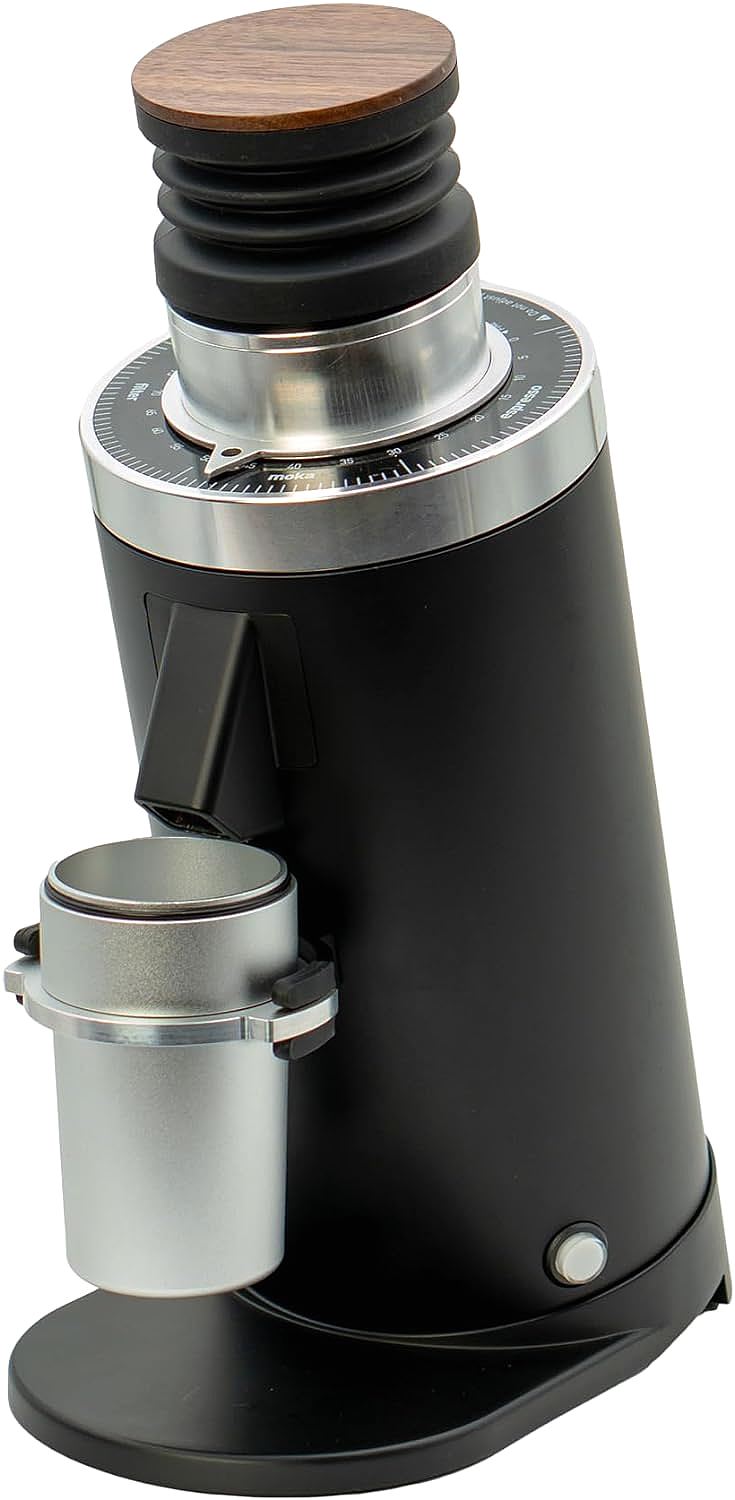
The MiiCoffee DF64 II has emerged as a disruptive force in this landscape, not merely because of its price point, but because it democratizes high-end grinding physics. It brings commercial-grade 64mm flat burrs and cutting-edge plasma technology into the home kitchen. To understand why this machine matters, we must look beyond the bean hopper and delve into the microscopic world of particle fracture mechanics, the electrostatics of friction, and the geometry of cutting. This is an exploration of the invisible forces that define what ends up in your cup.
The Geometry of Fracture: 64mm Flat Burrs vs. Conical
The heart of any grinder is its burr set. For decades, the debate has raged between Conical Burrs and Flat Burrs. The DF64 II firmly plants its flag in the Flat Burr camp, utilizing 64mm stainless steel discs.
The Mechanics of the Cut
- Conical Burrs: Work like a mortar and pestle combined with a screw. They crush and grind simultaneously. This typically produces a Bimodal Particle Distribution—two distinct peaks of particle sizes (fines and boulders). This distribution creates texture and body but can muddy specific flavor notes.
- Flat Burrs: Operate on centrifugal force. Beans fall into the center and are thrown outward by the spinning disc. As they travel through the teeth, they are shaved and sliced with increasing precision until they exit the periphery. This geometry tends to produce a Unimodal Distribution—a single, narrow peak of particle sizes.
Why 64mm Matters
The size—64mm—is a “Goldilocks” dimension in the coffee world. It is large enough to provide a long cutting path, ensuring beans are ground cool and consistent, yet small enough to fit in a compact motor housing.
Crucially, the unimodal distribution of the DF64 II’s flat burrs promotes Flavor Clarity. Because the particles are uniform, they extract at the same rate. This reduces the risk of sourness (from large, under-extracted chunks) and bitterness (from microscopic, over-extracted dust). It allows the distinct floral, fruity, or nutty notes of a single-origin bean to be perceived individually, rather than as a muddled “coffee flavor.”

The Triboelectric Effect: The Enemy of Consistency
Grinding coffee is a violent event. As beans are shattered at 1400 RPM, they experience intense friction against the metal burrs and plastic chutes. This friction generates Static Electricity, a phenomenon known as the Triboelectric Effect.
Coffee grounds are organic insulators. When they pick up a charge, they do not dissipate it easily.
1. Clumping: Charged particles attract each other, forming dense boulders of coffee. These clumps cause channeling in the espresso puck (water rushing through gaps), ruining the shot.
2. Retention: Charged particles stick to the walls of the chute like magnets. This “retained” coffee goes stale and falls into your next day’s brew, contaminating the flavor.
3. Mess: The “chaff” (silverskin) flies outward, coating the countertop in dust.
The RDT Workaround
For years, home baristas used the Ross Droplet Technique (RDT)—spraying water on beans before grinding—to mitigate this. Water increases conductivity, allowing the charge to dissipate. While effective, it adds a step to the workflow and introduces moisture into the steel burrs, posing a long-term rust risk.
Plasma Physics in the Kitchen: The Ionizer Solution
The DF64 II introduces a solution borrowed from industrial cleanrooms: a Plasma Generator (Ionizer).
Located in the exit chute, this component uses a high-voltage emitter to ionize the air molecules, creating a cloud of positive and negative ions.
* Neutralization: As the charged coffee particles pass through this plasma field, they attract ions of the opposite polarity. A positively charged coffee ground attracts a negative ion, and vice versa.
* The Result: The net charge of the particle becomes zero. The grounds lose their attraction to the chute walls and to each other.
This is not a gimmick; it is applied physics. The result is “fluffy” grounds that fall straight into the dosing cup. It virtually eliminates the need for RDT, reduces retention in the chute, and ensures that the dose you put in is the dose you get out. It transforms the grinding process from a messy struggle into a clean, precise operation.

Fluid Dynamics of the Feed: The Anti-Popcorn Disc
In a single-dosing grinder, there is no heavy hopper of beans pushing down on the burrs. This creates a problem: “Popcorning.”
As the beans hit the spinning burrs, they can bounce back up into the throat of the grinder. This erratic feeding causes two issues:
1. Inconsistent Grind: Beans that bounce around are ground at a different rate than those that are crushed immediately.
2. Variable RPM: The motor load fluctuates wildly as beans enter sporadically.
The DF64 II integrates an Anti-Popcorn Disc. This simple mechanical device acts as a one-way valve or restrictor. It allows beans to slide down into the burrs but physically blocks their trajectory if they try to bounce back up.
From a fluid dynamics perspective, this creates a Laminar Flow of beans. The feed rate becomes constant. This constant load on the motor ensures that the RPM remains stable, which is critical for consistent particle size distribution. It turns a chaotic bouncing process into a steady, controlled feed.
The Stepless Dial: Infinite Resolution
Grind adjustment is often the limiting factor in dialing in espresso. Stepped grinders (with clicks) force you to choose between “too fast” and “too slow.”
The DF64 II features a Stepless Adjustment System. By rotating the entire upper burr carrier via a worm gear or direct thread, the user can adjust the gap between the burrs by microns.
* Infinite Resolution: There are no notches. You can stop the dial anywhere.
* Precision: This allows the barista to compensate for the aging of beans day by day. As beans age, they degas and require a slightly finer grind to maintain the same flow rate. A stepless dial makes this micro-adjustment possible.
The Chrome-wrapped Dial and metal indicator on the Gen 2 provide visual references, solving a usability complaint of the previous generation. It combines the tactile satisfaction of analog control with the precision of a micrometer.
Conclusion: The Physics of Value
The MiiCoffee DF64 II is a case study in how advanced engineering principles—plasma ionization, shear force geometry, and laminar flow control—can be packaged into a consumer appliance. It proves that you don’t need to spend thousands of dollars to access the upper echelons of coffee grinding.
By understanding the physics of the flat burr and the chemistry of static elimination, the user stops seeing the grinder as a simple appliance and starts seeing it as a laboratory instrument. It is a tool that respects the complexity of the coffee bean, ensuring that the physics of fracture and flow work for the flavor, not against it.