The Computational Ear: Signal Processing and the Illusion of 3D Sound

Bose QuietComfort Ultra True Wireless Bluetooth Earbuds
The human auditory system is a marvel of biological evolution, capable of discerning the slightest rustle of leaves or pinpointing the direction of a snapping twig in a dense forest. However, in the modern era, this sensitive mechanism is often besieged by the relentless cacophony of urban environments. The transition from traditional acoustic engineering to computational audio represents a fundamental shift in how we manage this sensory input. Modern wireless earbuds have ceased to be mere passive transducers converting electrical signals into mechanical vibrations; they have evolved into sophisticated edge-computing devices. These miniature systems now perform millions of calculations per second to actively curate the sonic environment, utilizing advanced digital signal processing (DSP) to subtract unwanted noise and synthesize three-dimensional acoustic spaces.
The Physics of Phase Cancellation
At the core of auditory isolation lies the principle of destructive interference, a phenomenon rooted in wave physics. Sound propagates as a longitudinal wave, consisting of compressions and rarefactions in the air. Active Noise Cancellation (ANC) systems leverage this property by generating a secondary sound wave that is the exact inverse—or 180 degrees out of phase—of the incoming environmental noise. When these two waves collide, the peaks of the noise wave align with the troughs of the anti-noise wave, effectively canceling each other out and resulting in a significant reduction in amplitude.
Implementing this in a consumer device requires a complex architecture of hardware and algorithms. The process typically involves a hybrid microphone array. Feedforward microphones, located on the exterior of the earbud, sample the ambient noise before it reaches the ear canal. This data provides the DSP with a reference signal to generate the initial anti-noise wave. Simultaneously, feedback microphones placed inside the ear cup or nozzle monitor the actual sound reaching the eardrum, allowing the system to correct for errors and discrepancies in real-time.
The Bose QuietComfort Ultra Earbuds serve as a prominent example of this architecture. These devices incorporate a proprietary calibration technology referred to as CustomTune. Upon insertion, the earbuds emit a specialized chime to map the unique acoustic geometry of the user's ear canal. The internal DSP analyzes how this test tone is reflected and absorbed, subsequently tailoring the noise cancellation filters to the individual's anatomy. This adaptive approach ensures that the destructive interference remains effective across a broad spectrum of frequencies, addressing the variability that static filters often fail to mitigate.
Synthesizing Spatial Reality via HRTF
While ANC subtracts sound, spatial audio seeks to add dimensionality. Traditional stereo playback creates a lateral soundstage that exists on a linear plane between the ears, often resulting in an "in-head" localization effect that lacks naturalism. To replicate the way we hear in the real world, audio engineers employ Head-Related Transfer Functions (HRTFs). An HRTF is a mathematical representation of how sound waves interact with the listener's torso, head, and pinnae (outer ears) before entering the ear canal. These physical interactions cause subtle timing differences (Interaural Time Difference) and spectral colorations (Interaural Level Difference) that the brain uses to localize sound sources in three-dimensional space.
Rendering these cues on headphones requires high-speed processing to apply the correct HRTF filters to audio objects. The complexity increases exponentially when dynamic head tracking is introduced. For a virtual sound source to remain fixed in space while the listener turns their head, the system must continuously update the audio filters based on the user's orientation.

This is achieved through the integration of an Inertial Measurement Unit (IMU), a component combining accelerometers and gyroscopes. In the context of the QuietComfort Ultra, these sensors detect minute changes in head position. The onboard processor interprets this motion data and adjusts the virtual soundstage in real-time. This functionality, marketed as Bose Immersive Audio, decouples the audio from the hardware, creating the perception that the sound is emanating from fixed points in the room—such as virtual speakers placed in front of the user—rather than moving with the head.
Latency and Connectivity Standards
The illusion of synthesized reality is fragile; it depends heavily on minimizing latency. In a head-tracked system, the delay between a physical movement and the corresponding acoustic adjustment—known as motion-to-photon (or motion-to-audio) latency—must be imperceptible to the human vestibular system. High latency can cause a sensory mismatch, potentially leading to disorientation or breaking the immersion.
The transmission protocol plays a critical role in this equation. The Bose QuietComfort Ultra utilizes Bluetooth 5.3, a standard designed to improve the efficiency and stability of wireless connections. This protocol supports optimized data scheduling, which helps in maintaining the robust bandwidth required for transmitting high-fidelity audio streams alongside the telemetry data needed for control and synchronization. By managing the connection stability and power consumption effectively, modern Bluetooth standards allow for the continuous operation of power-hungry DSP and IMU functions without rapidly depleting the compact batteries inherent to the True Wireless Stereo (TWS) form factor.
The convergence of adaptive noise cancellation, HRTF-based spatial rendering, and low-latency wireless protocols defines the current state of personal audio technology. As algorithms become more refined and hardware more efficient, the boundary between physical sound and computationally generated audio continues to blur, offering users unprecedented control over their acoustic environment.
Future Outlook: The Era of Auditory Augmented Reality
As we look toward the next generation of personal audio, the trajectory suggests a move beyond mere isolation and immersion toward true Auditory Augmented Reality (AAR). Future iterations of these technologies will likely leverage neural processing units (NPUs) to perform semantic scene analysis. Instead of simply canceling all noise, devices could be trained to identify and selectively pass through specific acoustic events—such as a siren, a gate announcement, or a specific person's voice—while suppressing irrelevant background clutter. Furthermore, the integration of biometric sensors into the earbud form factor could allow the audio profile to adapt to the user's stress levels or heart rate, dynamically adjusting the noise cancellation intensity or the spectral balance of the music to promote physiological regulation. The earbud is poised to become not just a listening device, but a continuous, intelligent interface between the user's mind and the auditory world.
Bose QuietComfort Ultra True Wireless Bluetooth Earbuds
Related Essays

JBL Tour Pro 3: Hear the Future with Smart Touchscreen Control

Apple AirPods 4: A Refined Listening Experience

Beats Fit Pro True Wireless Earbuds: A Punchy and Personalized Listening Experience

Apple AirPods Max Wireless Over-Ear Headphones: A Luxurious Listening Experience
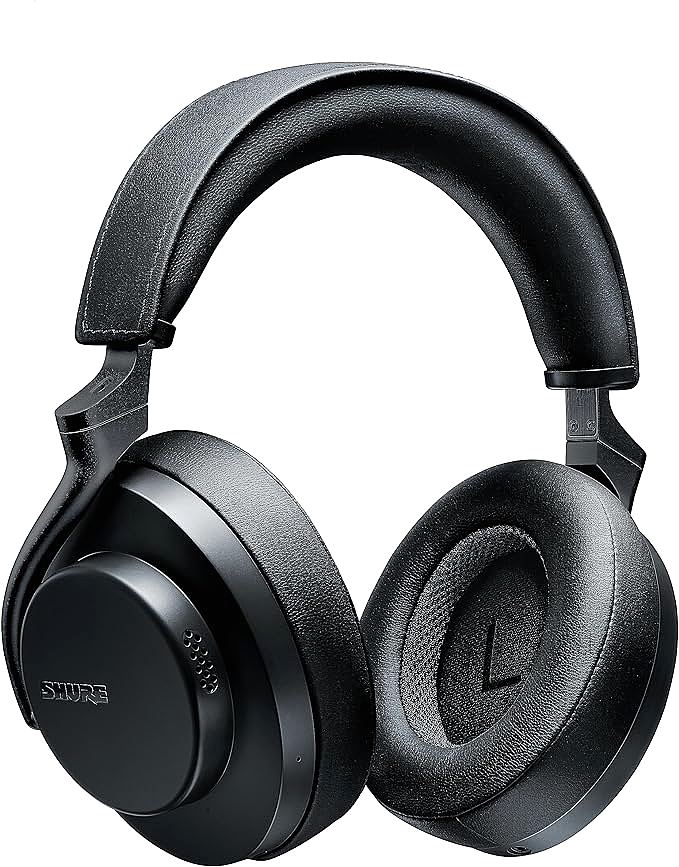
Shure AONIC 50 Gen 2: Unveiling the Science of Premium Wireless Sound, Noise Cancellation, and Spatial Audio

Bose QuietComfort Ultra Wireless Earbuds: Immerse Yourself in Sound and Silence

The Physics of Silence: How Sound Waves Cancel Each Other

The Physics of Silence: How Active Noise Cancellation Works

How Spatial Audio Technology Creates Immersive Cinematic Experiences at Home
