Wireless Audio Physics: Sound, Silence, and Signal Science


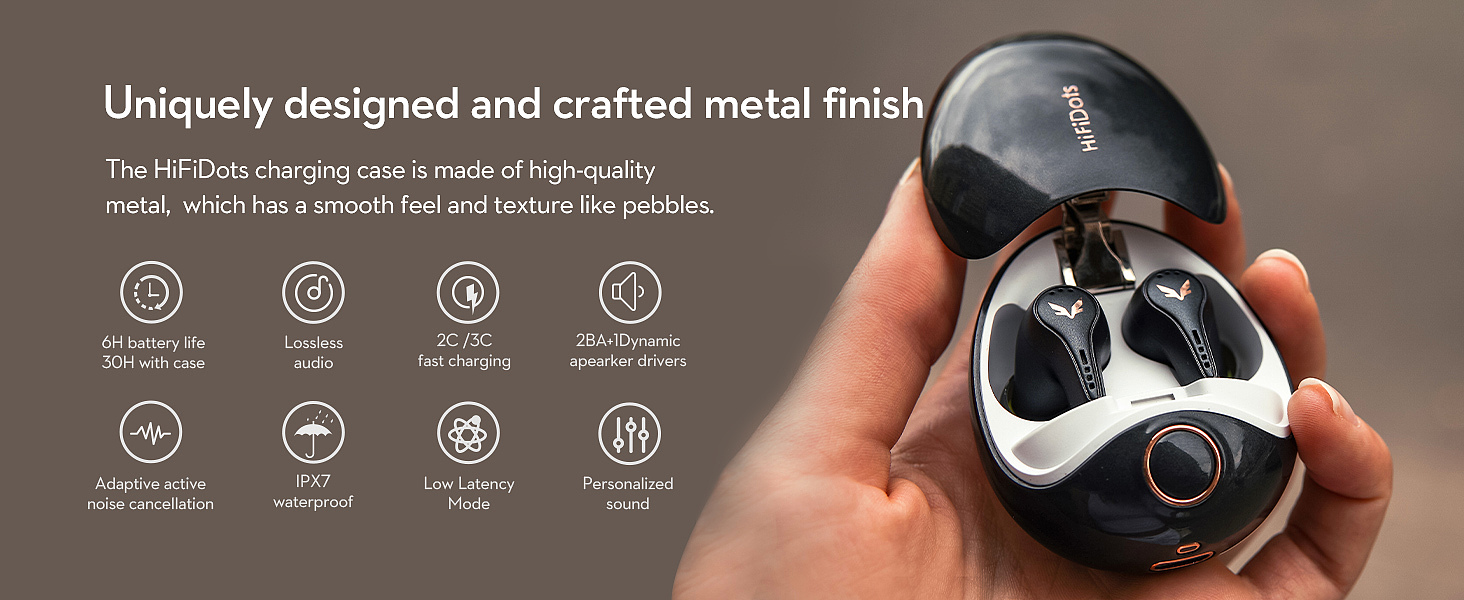
mifo FiiTii HiFiDots aptX Lossless Wirless Earbuds
In 1687, Newton published his Third Law: for every action, there is an equal and opposite reaction. Audio engineers would spend 336 years wrestling with its implications for wireless music. Every compression of air that produces sound demands an equal restoration. Every wave that reaches your ear through a wireless device has been disassembled, compressed, transmitted through electromagnetic chaos, reassembled, and delivered to your eardrum in under ten milliseconds. The fact that this works at all is less a triumph of engineering than a miracle of applied physics.
The Promise and the Problem
Picture a Tuesday morning in November. You step onto the 7:42 commuter train, the doors hiss shut, and the carriage fills with the grinding howl of steel on steel at 85 decibels. You tap your personal audio device once. The noise vanishes. A cello suite begins, each note arriving with the warmth and spatial detail of a concert hall. This everyday act, repeated billions of times daily across the world, conceals an extraordinary chain of physical processes: acoustic wave cancellation operating 50,000 times per second, a codec making bit-allocation decisions every four microseconds, and a radio link maintaining over a million bits of throughput while your head bobs and turns.
Now imagine a different scene. It is Saturday afternoon, and you are running through a park. Wind rushes past your ears at 20 miles per hour. Your legs pound the pavement at 160 steps per minute, each footfall sending a low-frequency thud through your jawbone. Yet the podcast you are listening to remains perfectly intelligible, the host's voice floating above the chaos as though narrating from a quiet studio. The wireless link between your phone and your earbuds maintains its integrity through all of this motion, adapting its transmission strategy hundreds of times per second.
The problem is deceptively simple to state: deliver pristine audio through a wireless link while simultaneously erasing environmental noise. The solution involves three distinct branches of physics converging inside a device smaller than a pistachio shell --- wave mechanics to understand sound itself, information theory to compress and transmit it, and control systems to cancel what you do not want to hear.
Miniature personal audio devices pack decades of acoustic physics research into a form factor smaller than a coin
Understanding Sound: From Air Vibration to Neural Signal
Before we can understand why compression matters or how noise cancellation works, we must grasp what sound actually is at a physical level. When a guitar string vibrates at 440 Hz, it displaces air molecules in periodic waves of compression and rarefaction. These are not metaphorical waves. They are real, physical changes in air pressure that propagate outward at approximately 343 meters per second at sea level.
Each wave carries energy proportional to the square of its amplitude, a relationship discovered in the nineteenth century and formalized in what physicists call the acoustic intensity equation: I equals p-squared divided by two rho c, where p is sound pressure, rho is air density, and c is the speed of sound. This equation tells us something crucial about digital audio: to faithfully reproduce a sound, we must capture not just its frequency but its precise amplitude at every instant.
The human cochlea performs an extraordinary mechanical Fourier transform. Sound waves enter the spiral-shaped organ and cause different regions of the basilar membrane to resonate at different frequencies. The cochlea essentially unrolls a complex sound into its component frequencies, much like a prism separating white light into a rainbow. This is why two simultaneous tones, say a violin playing A440 and a cello playing A220, are perceived as distinct sounds rather than a single muddled tone. Your ear performs frequency decomposition in real time, using 3,500 inner hair cells as transducers that convert mechanical vibration into electrical signals for your auditory nerve.
Why does this matter for wireless audio? Because any digital system must replicate this frequency separation with mathematical precision. If the codec accidentally shifts the phase of the cello's fundamental frequency by even a few degrees, the spatial relationship between the two instruments collapses, and the listener perceives a flattened, less immersive soundstage. The physics of hearing imposes unforgiving constraints on the engineering of wireless transmission.
The Compression Imperative: Why Data Must Shrink
Here is the fundamental mathematical problem: CD-quality audio requires 16 bits of data, sampled 44,100 times per second, across two stereo channels. That equals 1,411,200 bits per second, or roughly 1.4 Mbps. Bluetooth's maximum reliable throughput, by contrast, hovers around 300 to 400 kbps in typical real-world conditions. Even under ideal circumstances, the pipe is roughly one-quarter the size of the payload.
This gap between what we need to transmit and what we can transmit is where information theory, pioneered by Claude Shannon in 1948, becomes indispensable. Shannon proved that any communication channel has a theoretical capacity limit determined by its bandwidth and signal-to-noise ratio. When the data rate exceeds channel capacity, errors become inevitable. When data rate stays below capacity, error-free transmission is theoretically possible. The entire art of Bluetooth audio codec design is therefore an exercise in staying below Shannon's limit while preserving the perceptually important information.
Think of it this way: imagine trying to describe a high-resolution photograph to someone over a slow text messaging connection. You cannot send every pixel. You must identify which details matter most and describe those first. Audio codecs perform the same prioritization, but they do it by exploiting a property of human hearing called psychoacoustic masking.
When a loud sound at one frequency plays simultaneously with a quieter sound at a nearby frequency, the louder sound renders the quieter one inaudible. This is not a deficiency of hearing; it is a feature of the cochlea's mechanical design. A codec can safely discard the inaudible quieter sound without any perceptible loss of quality, freeing bandwidth for the sounds that matter. SBC, the mandatory Bluetooth codec, uses a relatively crude version of this technique. More advanced codecs apply it with greater surgical precision.
aptX Family Tree: Evolution of Bluetooth Audio
The history of Bluetooth audio codecs reads as a decades-long quest to close the gap between channel capacity and audio fidelity. The original aptX codec, developed in the late 1980s by Queen's University Belfast researchers and later commercialized, was not initially designed for Bluetooth at all. It was created for professional studio-to-transmitter links in broadcast television, where reliability mattered more than low latency.
When Bluetooth emerged as the dominant wireless standard in the 2000s, the mandatory SBC codec proved adequate for phone calls but woefully insufficient for music. aptX entered the consumer market offering a more efficient encoding algorithm that delivered better perceived quality at the same bitrate. It achieved this through a technique called Adaptive Differential Pulse-Code Modulation, or ADPCM, which instead of encoding absolute sample values, encodes the difference between each sample and a predicted value based on previous samples.
Why is encoding differences more efficient than encoding absolute values? Because most audio signals are highly correlated from one sample to the next. A 440 Hz sine wave, for instance, moves smoothly between samples. The difference between consecutive samples is typically much smaller than the absolute value, so it can be represented with fewer bits. This is the same principle that makes video compression efficient: consecutive frames of video are nearly identical, so encoding the changes between frames requires far less data than encoding each frame independently.
The evolution of wireless audio codecs reflects decades of research in psychoacoustics and signal processing
aptX HD increased the bitrate to 576 kbps and added better dynamic range handling. aptX Adaptive introduced variable bitrate scaling, adjusting quality in real time based on radio frequency conditions. And then came aptX Lossless, which posed a fundamentally different engineering challenge: instead of asking "how much can we compress?" it asked "how close can we get to zero compression while still fitting through the Bluetooth pipe?"
Inside aptX Lossless: ADPCM and Bit-for-Bit Transmission
The aptX Lossless codec achieves its near-perfect reproduction through a sophisticated combination of sub-band coding and adaptive differential quantization. At its core lies a 64-tap Quadrature Mirror Filter, or QMF, which splits the audio signal into four frequency sub-bands. Each sub-band receives a different number of bits based on its perceptual importance.
The allocation strategy reveals deep insight into human auditory perception. The lowest sub-band, spanning 0 to 5.5 kHz, receives 8 bits per sample. This frequency range contains the fundamental frequencies of most instruments and the critical formants of human speech. The second sub-band, 5.5 to 11 kHz, receives 4 bits. The two highest sub-bands, 11 to 22 kHz, receive 2 bits each. This allocation mirrors the cochlea's own sensitivity curve: humans are most sensitive to frequencies between 2 and 5 kHz, which corresponds to the range where most conversational speech and musical melody reside.
Why does a Quadrature Mirror Filter matter technically? Standard filters, like simple low-pass and high-pass designs, introduce aliasing artifacts when they split a signal. Aliasing occurs when high-frequency components fold back into lower frequencies, creating phantom tones that were never in the original signal. A QMF avoids this through mathematical elegance: its filter coefficients are designed so that the aliasing from the low-pass branch cancels the aliasing from the high-pass branch when the sub-bands are recombined. This is destructive interference applied to digital signal processing, the same physics principle that enables noise cancellation, repurposed in the frequency domain.
The bitrate in aptX Lossless scales dynamically between 140 kbps and approximately 1.1 Mbps depending on radio frequency conditions. When the Bluetooth connection is strong, the codec transmits more data per second, approaching bit-for-bit accuracy with the original PCM source. When conditions degrade, it gracefully reduces throughput rather than introducing audible artifacts. This adaptive behavior requires constant negotiation between the transmitter and receiver, with signal quality assessments happening hundreds of times per second.

The signal processing pipeline from source to eardrum involves multiple stages of encoding, transmission, and decoding
The Physics of Silence: Destructive Interference
If the codec challenge is about preserving signal, the noise cancellation challenge is about destroying it. The underlying physics is one of the oldest known wave phenomena: destructive interference. When two waves of identical frequency and amplitude meet with a phase difference of exactly 180 degrees, their peaks align with the troughs of the other, and they cancel completely. The result is silence.
This principle was first demonstrated systematically by Thomas Young in his famous double-slit experiment of 1801, although Young was working with light rather than sound. The mathematical formalism is straightforward. If the original noise wave is represented as A times sine of omega t, the anti-noise signal is A times sine of omega t plus pi, where pi represents the 180-degree phase shift. Adding them together yields zero.
In practice, achieving perfect cancellation across all frequencies simultaneously is impossible. Low-frequency sounds, with wavelengths of several meters, are relatively easy to cancel because the wave changes slowly over space and time. A one-foot error in the position of the cancellation speaker barely matters when the wavelength is ten feet. High-frequency sounds, with wavelengths of just a few centimeters, are far more demanding. A millimeter-scale positioning error at 10 kHz, where the wavelength is about 3.4 centimeters, introduces enough phase error to severely degrade cancellation performance.
This is why active noise cancellation performs brilliantly against the low rumble of an airplane cabin but struggles with the sharp crack of a dropped glass. The physics of wave propagation imposes hard limits on what electronic cancellation can achieve, regardless of how sophisticated the algorithm becomes. The wavelength constraint is as immutable as gravity.
Consider another everyday scenario: you are in an open-plan office, surrounded by the collective hum of air conditioning, keyboard clatter, and muted conversation. The ambient noise floor sits around 55 decibels. You activate noise cancellation on your device. Within milliseconds, the perceived noise drops to what feels like the quiet of a library at 35 decibels. This 20-decibel reduction represents a 100-fold decrease in acoustic power, achieved entirely through the precise inversion of sound waves arriving at your ear.
Hybrid Architectures: Feedforward, Feedback, and the Adaptive Solution
Modern noise cancellation systems employ three distinct architectures, each with different trade-offs. Understanding them requires thinking in terms of control theory, the engineering discipline that governs how systems respond to changing inputs.
Feedforward systems place a microphone on the outside of the earbud, physically separated from the speaker. This microphone captures incoming noise before it reaches the ear canal. The system then calculates the appropriate anti-noise signal and plays it through the speaker, timed to arrive at the eardrum simultaneously with the incoming noise. The advantage of feedforward is that it acts on noise before it enters the ear canal, giving the system a temporal head start. The disadvantage is that it relies on a prediction: the system must model how external noise will propagate through the earbud's physical structure, and any modeling error reduces cancellation effectiveness.
Feedback systems place a microphone inside the ear canal, behind the speaker. This microphone measures the actual sound pressure at the eardrum, including both the desired audio and any residual noise that has leaked through. The system then generates anti-noise to cancel whatever unwanted sound it detects. Feedback is inherently more accurate because it measures the actual result rather than predicting it, but it faces a fundamental stability challenge. If the feedback loop's gain is too high, the system can oscillate, producing an audible whistling sound instead of silence. This is the same principle that causes a microphone to squeal when placed too close to its speaker.

Hybrid noise cancellation architecture combines feedforward and feedback microphones for broader frequency coverage
Hybrid architectures combine both approaches. An external microphone provides predictive noise cancellation for mid and high frequencies, while an internal microphone provides corrective cancellation for low frequencies. Advanced hybrid systems adjust their behavior adaptively, sampling the acoustic environment 50,000 times per second and recalculating filter coefficients in real time. This adaptive approach borrows from a control theory concept called a Kalman filter, originally developed for the Apollo navigation system to track spacecraft trajectory despite noisy sensor readings. In noise cancellation, the same mathematics tracks the acoustic environment despite constantly changing noise conditions.
Picture a third scenario: you are on a long-haul flight, ten hours over the Pacific. The cabin noise starts at a steady 80 decibels during takeoff, drops slightly during cruise, and rises again during the approach. A fixed noise cancellation profile would be optimized for the cruise condition and perform suboptimally during takeoff and landing. An adaptive system continuously retunes itself, maintaining consistent noise reduction across all phases of flight. Premium implementations achieve up to 47 decibels of noise reduction, which represents a roughly 50,000-fold decrease in acoustic power.
When Technologies Converge: System-Level Engineering
The most challenging aspect of wireless audio design is not the codec or the noise cancellation in isolation, but their integration. Codec and ANC compete for the same scarce computational resources: processor cycles, memory bandwidth, and battery power. When both systems run simultaneously, the processor must execute millions of operations per second without introducing latency that would desynchronize the audio and noise cancellation signals.
Latency is the silent killer of audio quality. The Bluetooth transmission itself introduces latency of 50 to 200 milliseconds depending on the codec. Noise cancellation must operate with sub-millisecond latency, because any delay in generating the anti-noise signal introduces phase error that degrades cancellation. These two timing requirements pull in opposite directions: the codec benefits from larger processing buffers, which increase latency, while noise cancellation demands the smallest possible buffer size.

System-on-chip designs integrate codec processing, ANC algorithms, and Bluetooth radio on a single silicon die
The solution lies in what engineers call a pipelined architecture. Rather than processing the entire audio signal in one stage, the system divides work into discrete steps that operate in parallel. While one block of audio is being decoded from the Bluetooth stream, the previous block is being processed by the noise cancellation algorithm, and the block before that is being converted to analog and sent to the speaker. This overlapping execution allows each stage to take the time it needs without adding its latency to the total chain.
Consider a fourth scenario: you are in a coffee shop, video-calling a colleague. The shop's espresso machine fires up with a loud hiss, and someone at the next table begins a animated conversation. Your device must simultaneously maintain the Bluetooth connection for the call audio, run noise cancellation to suppress the shop noise, and process your own microphone signal so your colleague hears you clearly and not the surrounding chaos. Each of these tasks demands real-time processing, and they all share one battery. The engineering required to make this seamless is staggering.
The Listening Experience: What Science Enables
And finally, a fifth scene. It is late on a Sunday evening. Rain taps against the window. You close your eyes, and a symphony orchestra fills the space around you. The first violin section attacks with a brightness that makes you turn your head reflexively, as if the sound came from your left rather than from two small devices sitting millimeters from your eardrums. The kettle drum roll at the movement's climax resonates in your chest, even though there is no subwoofer, no room acoustics, no concert hall. Just physics, mathematics, and silicon, compressed into something you barely notice wearing.

The convergence of codec engineering and noise cancellation physics creates listening experiences once confined to dedicated acoustic spaces
What makes this possible is not any single breakthrough but the convergence of multiple scientific disciplines over centuries. Newton's mechanics gave us the equations of wave propagation. Fourier's mathematics gave us the tools to decompose complex sounds into manageable components. Shannon's information theory defined the boundaries of what can be transmitted through a noisy channel. Kalman's filtering theory gave us the framework for adaptive noise tracking. And decades of psychoacoustic research taught us which details of a sound matter to human perception and which can be safely discarded.
The quest for perfect wireless audio reveals a fundamental truth: to hear more, we must first silence more, and to transmit everything, we must first learn to let nothing go to waste. The silence created by noise cancellation is not emptiness. It is an engineered absence, a void carved out of chaos by precise application of wave physics, so that the music, the voice, the podcast can fill the space that remains. Every time you tap your device and the world goes quiet, you are witnessing three centuries of physics compressed into a single gesture.
