The Wired Renaissance: Deconstructing Hybrid Driver Acoustics in the Backwin Earbuds
Update on Nov. 24, 2025, 8:13 a.m.
In an age dominated by Bluetooth codecs and battery life anxiety, the humble wired earphone has quietly transformed from a relic into a sanctuary for high-fidelity audio. While wireless technology chases convenience, wired audio remains the guardian of bandwidth and zero-latency transmission.
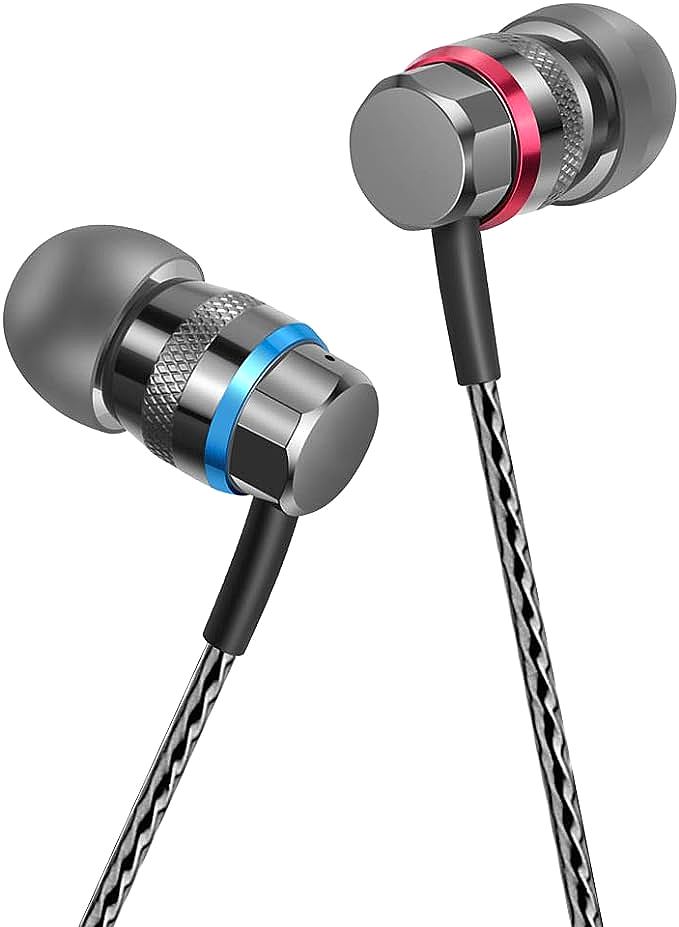
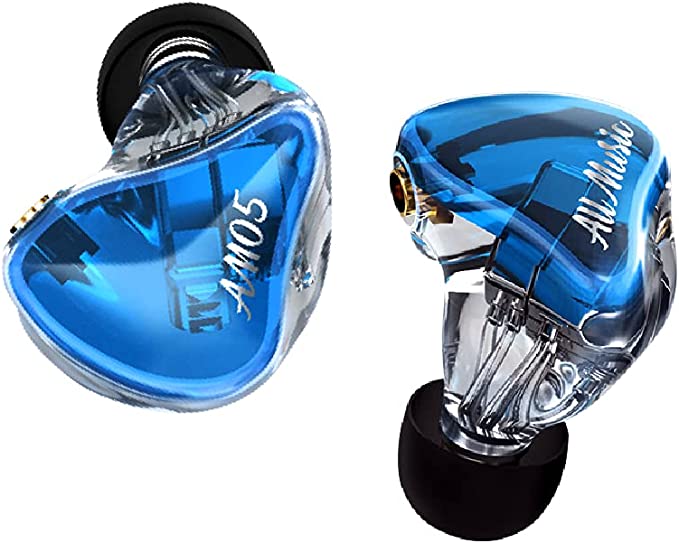
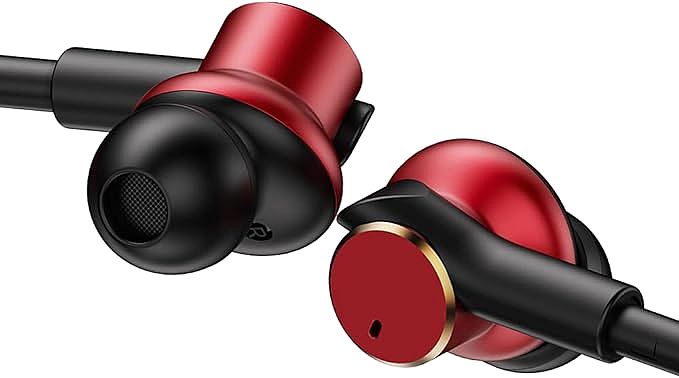
The Backwin Dual-Drive Iron Ring Earbuds represent a specific engineering philosophy known as Hybrid Driver Architecture. The term “Iron Ring” is a literal nod to its components: the “Iron” refers to a Balanced Armature driver, and the “Ring” refers to a Dynamic Driver. To understand why audiophiles often prefer this wired complexity over wireless simplicity, we must deconstruct the physics of how these two distinct technologies collaborate to move air.

The Dynamic Driver: The Engine of Bass
The foundation of the Backwin’s sound is the Moving Coil or Dynamic Driver.
Mechanically, this acts like a miniature subwoofer. * Mechanism: A coil of wire is suspended in a magnetic field and attached to a diaphragm. When current flows, the coil moves, pushing the diaphragm to displace air. * Physics of Bass: Low-frequency sounds (bass) require a large volume of air to be moved to create the necessary pressure waves. The dynamic driver’s relatively large surface area and high excursion (range of motion) make it ideal for this. It provides the visceral “thump” and warmth that anchors the music.
However, this mass has a drawback. A heavy diaphragm struggles to stop and start fast enough to reproduce high-frequency transients (like a cymbal crash) cleanly. This is where the second half of the hybrid system enters.
The Balanced Armature: The Scalpel of Treble
The “Iron” component is the Balanced Armature (BA) driver. Originally developed for hearing aids, these are microscopic feats of engineering. * Mechanism: Instead of a moving coil, a tiny metal reed (armature) is balanced between two magnets inside a coil. When energized, the armature pivots, driving a tiny diaphragm. * Transient Response: Because the moving mass is incredibly low, the BA driver has virtually no inertia. It can start and stop instantly. This makes it perfect for high frequencies (treble), allowing it to render the micro-details of a vocal breath or a violin string with surgical precision.
By delegating the “heavy lifting” of bass to the dynamic driver and the “detailed work” of treble to the balanced armature, the Backwin earbuds achieve a Frequency Separation that a single driver struggles to match.
The Crossover: The Acoustic Traffic Controller
Combining two drivers isn’t as simple as wiring them together. Without management, they would clash in the midrange frequencies, causing muddy sound and Phase Cancellation.
This is managed by a Crossover Network. In the Backwin, this electronic circuit splits the incoming audio signal.
1. Low-Pass Filter: Allows low frequencies to pass to the Dynamic Driver but blocks highs.
2. High-Pass Filter: Allows high frequencies to pass to the Balanced Armature but blocks lows.
This ensures that each driver operates only in its “efficiency zone,” resulting in a cohesive soundstage where the bass is deep but doesn’t bleed into the clear vocals.
The Analog Advantage: Bandwidth and Latency
Why choose wire? The answer lies in Information Theory. * Compression: Even the best Bluetooth codecs (LDAC, aptX) compress audio data to fit through the wireless pipe, discarding some information. A 3.5mm wired connection carries an uncompressed analog signal directly from the DAC (Digital-to-Analog Converter) to the drivers. * Latency: Wireless signals require encoding, transmission, and decoding, introducing a delay (latency). A copper wire moves electrons at near light-speed. For gamers or musicians monitoring their playing, this zero-latency response is non-negotiable.
Material Science: CNC Metal Housing
The Backwin earbuds utilize a CNC (Computer Numerical Control) machined metal housing. This isn’t just for aesthetics. * Resonance Control: Plastic shells can vibrate along with the drivers, adding unwanted coloration to the sound. Metal is denser and more rigid, effectively inert. It ensures that the only thing vibrating is the driver diaphragm, not the casing itself.
Conclusion: The Purity of Physics
The Backwin Dual-Drive Earbuds are a reminder that in audio, “new” isn’t always “better.” By leveraging the proven physics of hybrid drivers and the uncompressed purity of a wired connection, they offer a high-fidelity experience that punches far above its weight class.
For those willing to accept the tether of a cable, the reward is a sonic landscape where the warmth of the dynamic driver meets the precision of the balanced armature—an acoustic synergy that wireless tech is still chasing.