Deconstructing Audio Specs: The Science Behind ENC, 13mm Drivers, and IPX7
Update on Nov. 24, 2025, 10:06 a.m.
In the rapidly expanding universe of personal audio, the consumer is often adrift in a sea of acronyms. From “ENC” to “IPX7,” manufacturers bombard potential buyers with technical specifications that promise a superior listening experience. But what do these terms actually mean in terms of physics and engineering?
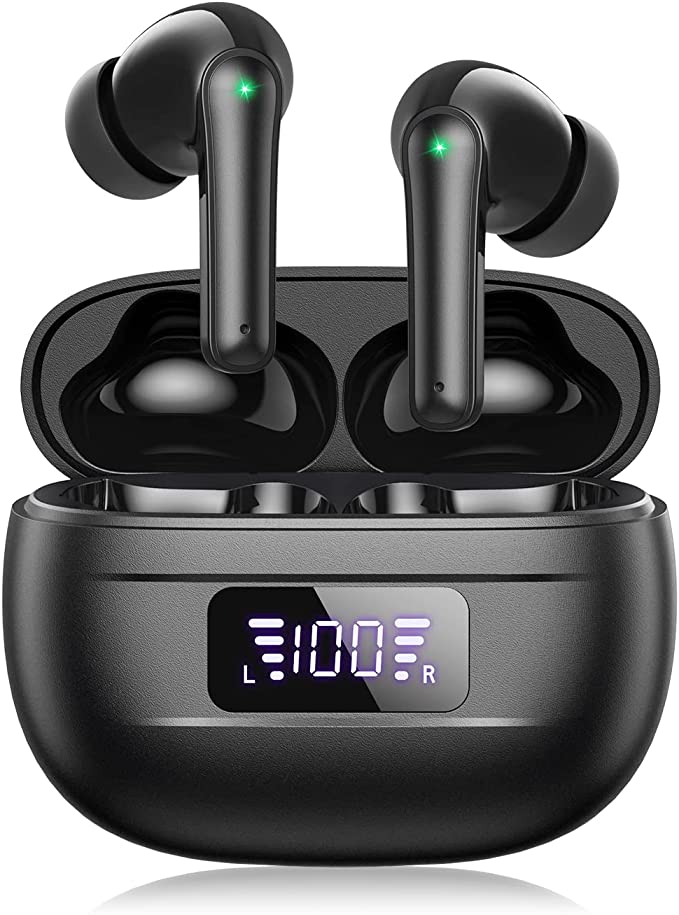
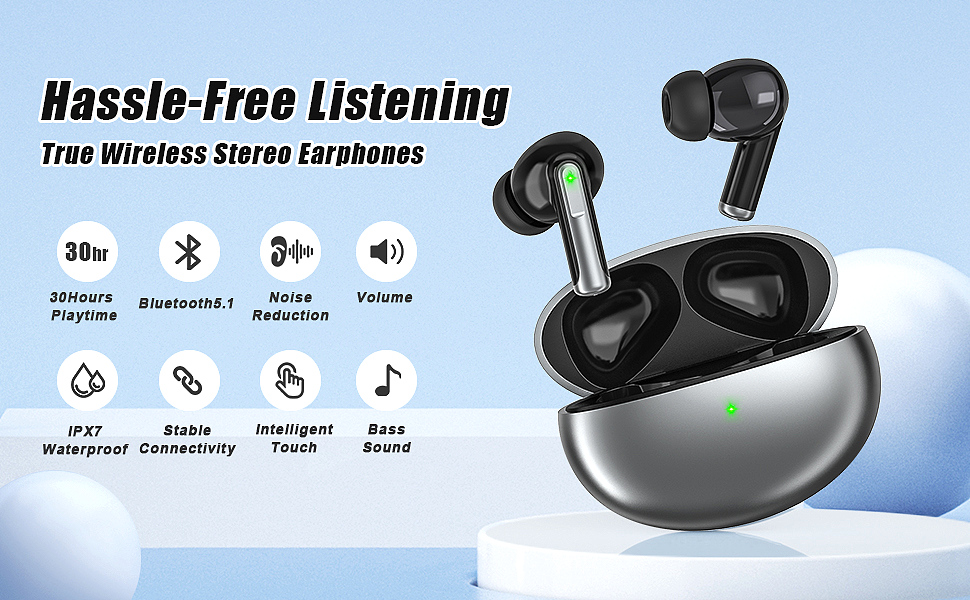
To navigate this landscape, it is essential to look past the marketing gloss and understand the underlying technology. By examining the architecture of a representative device—in this case, the EKF XY-70 Wireless Earbuds—we can deconstruct the core technologies that define modern budget-friendly audio and separate genuine utility from mere buzzwords.

The Clarity Equation: Distinguishing ENC from ANC
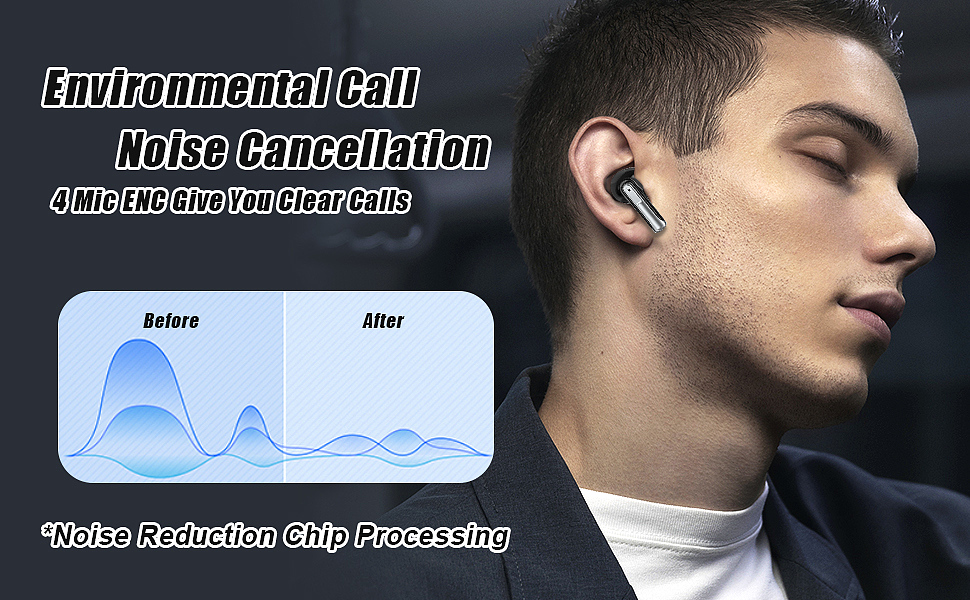
One of the most common points of confusion in the audio market is the difference between Active Noise Cancellation (ANC) and Environmental Noise Cancellation (ENC). While both technologies aim to reduce noise, they serve entirely different masters. ANC is for the listener, creating a quiet bubble for music playback. ENC, however, is for the caller.
The EKF XY-70 employs a 4-microphone array dedicated to ENC. To understand how this works, we must explore the concept of Beamforming.
The Physics of Beamforming
Imagine a flashlight beam cutting through the dark. Beamforming applies this same principle to sound. By utilizing multiple microphones (in this instance, two on each earbud) spaced a specific distance apart, the device’s internal processor can analyze the time delay of incoming sound waves.
- Signal Arrival Time: Sound originating from your mouth reaches the primary microphone slightly faster than it reaches the secondary microphone.
- Vector Analysis: The processor uses these micro-second differences to calculate the vector (direction) of the sound source.
- Phase Cancellation: Sounds identified as coming from the “wrong” direction (traffic noise, wind, background chatter) are electronically suppressed, while the sound from the “right” direction (your voice) is boosted.
[Image of microphone beamforming diagram]
This is why “4-Mic ENC” is not just a number game; it is a geometrical necessity for accurate spatial filtering. It allows clear communication even in chaotic environments, acting as a digital gatekeeper for your voice.
The Driver Dilemma: Does Size Matter?
When browsing headphone specifications, you will often see the driver size highlighted. The XY-70 features a 13mm dynamic driver, which is significantly larger than the 6mm-10mm drivers found in many compact earbuds. But what is the acoustic implication of this physical dimension?
A dynamic driver functions like a miniature piston. It pushes air to create sound waves.
1. Air Displacement: A larger surface area (13mm vs 6mm) allows the diaphragm to move a greater volume of air with less excursion (travel distance).
2. Bass Response: This increased air movement is directly correlated with the reproduction of low frequencies. Larger drivers can generally produce deeper, more resonant bass without requiring excessive power or digital equalization, which can introduce distortion.
3. Efficiency: Larger drivers can often operate more efficiently at lower frequencies, providing a “fuller” sound signature that many listeners perceive as warmer and more immersive.
However, size isn’t everything. The challenge with larger drivers is maintaining rigidity to prevent “cone breakup” at high frequencies. This is why material engineering becomes critical, ensuring that the diaphragm remains stiff enough to deliver crisp treble while being light enough to respond quickly to transients.
Decoding Ingress Protection: The Truth About IPX7
“Waterproof” is a vague marketing term. IPX7, however, is a precise engineering standard defined by the International Electrotechnical Commission (IEC). Let’s decode the rating found on devices like the XY-70.
- IP: Ingress Protection.
- X: The first digit represents dust resistance. An ‘X’ means the device has not been formally rated for dust protection (though it is likely sealed against it to some degree).
- 7: The second digit represents liquid ingress. A rating of ‘7’ certifies that the device can withstand temporary immersion in water up to 1 meter deep for 30 minutes.
Practical Application vs. Theoretical Rating:
While IPX7 implies the device can survive a drop in a puddle or a heavy downpour, it does not make it a swimming headphone. Bluetooth signals cannot propagate effectively through water (physics dictates that 2.4GHz waves are absorbed by water), and the pressure of swimming strokes can exceed the static pressure test limits. Therefore, IPX7 should be viewed as a “safety net” against accidents and sweat, rather than an invitation to underwater usage.
The Invisible Umbilical: Bluetooth 5.1 and Latency
The transition from wired to wireless audio introduced a new variable: Latency. This is the delay between the source sending the signal and the earbud playing it.
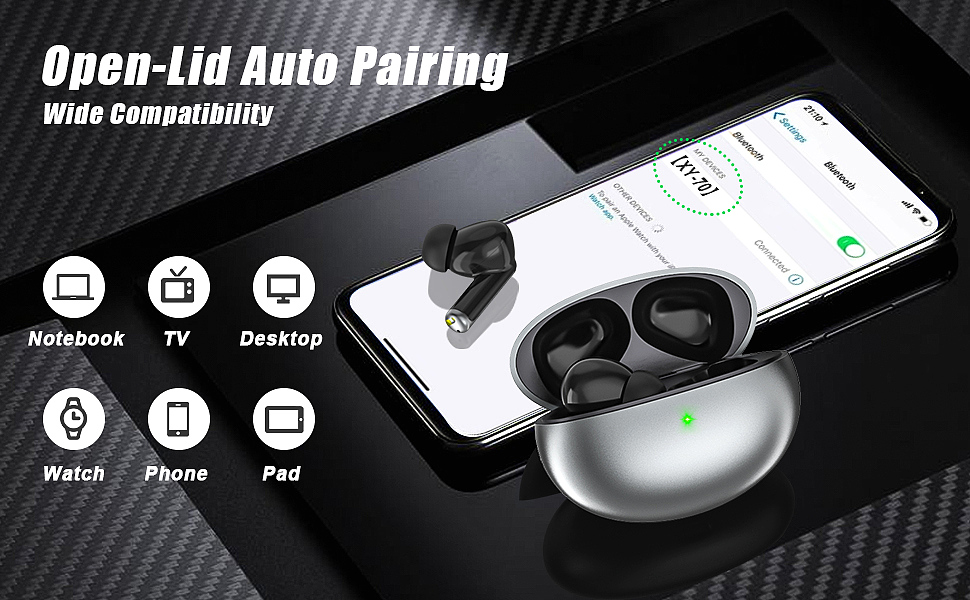
Bluetooth 5.1, utilized by the XY-70, represents a maturity in protocol efficiency. Beyond just connection stability, version 5.1 and its successors focus on optimizing the “handshake” between devices. * Power Efficiency: By reducing the “overhead” data required to maintain a connection, modern protocols extend battery life (contributing to the 30-hour total playtime often seen in this segment). * Synchronization: For gamers and video watchers, low latency is non-negotiable. Modern chipsets use intelligent buffering to ensure that the visual of a gunshot matches the auditory crack, a feat that requires precise clock synchronization between the host device and the receiver.

Interface Ergonomics: The Shift to Capacitive Touch
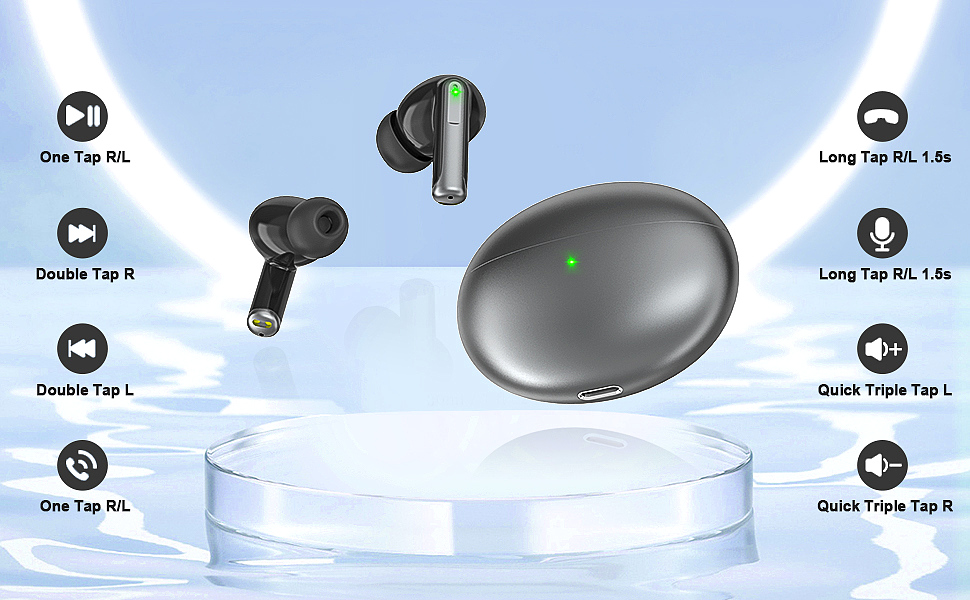
The move from physical buttons to capacitive touch sensors—as seen in the XY-70’s interface—is not just an aesthetic choice; it is an ergonomic one. Physical buttons on an in-ear device require force to actuate, which pushes the earbud deeper into the ear canal, causing discomfort and disrupting the acoustic seal.
Capacitive sensors detect the electrical charge of the human finger, requiring zero pressure. This allows for complex control schemes (taps, holds) without compromising the fit. However, it requires the user to develop “muscle memory” for the specific tap locations, a learning curve that is the trade-off for a seamless, pressure-free experience.
Conclusion: Empowered Listening
Whether you are considering the EKF XY-70 or any other wireless audio device, the key to a satisfying purchase lies in literacy. Understanding that “ENC” protects your call quality (not your peace and quiet), that a “13mm driver” prioritizes air movement and bass, and that “IPX7” is an insurance policy against water rather than a license to swim, empowers you to make decisions based on engineering reality rather than marketing hype.