The Science of Balanced Armature Drivers and Hi-Res Audio

Balanced Armature Hi-Fi Earphones
For every music lover, finding clarity in complex audio specs can be a frustrating challenge. There comes a moment of revelation. It's the first time you hear a familiar song and suddenly notice the subtle rasp in a singer's voice, the faint shimmer of a cymbal you never knew was there, or the distinct separation between a bass guitar and a kick drum. This is the moment you begin exploring into high-fidelity audio—the quest to hear music not just as a whole, but as a rich array of intricate details.
This pursuit of detail has driven a fascinating field of audio engineering, particularly in the miniature world of in-ear headphones. To understand how this clarity is achieved, we need to go beyond marketing terms and dissect the core technologies at play. Using a classic example of precision engineering like the Sony XBA-300AP, we can explore the fundamental principles behind balanced armature (BA) drivers and why they matter for audio quality.

The Fundamentals of Sound Transduction
At the heart of every headphone is a driver—a transducer that converts electrical signals into sound waves. Think of it as a tiny loudspeaker in your ear, but miniaturized to fit in a shell that sits in your ear canal. The vast majority of consumer headphones use conventional drivers. These work like miniature conventional loudspeakers, using a voice coil attached to a cone-like diaphragm to push air and create sound. However, conventional drivers face inherent physical limitations when trying to reproduce the sharpest transients and highest frequencies with precision.
Understanding Balanced Armature Drivers
Originally developed for hearing aids—where miniaturization and efficiency were paramount—balanced armature drivers offer a fundamentally different approach to sound reproduction. Instead of a large diaphragm pushing air, a BA driver uses a tiny reed (the "armature") balanced between magnets.
An electrical audio signal passes through a coil wound around the armature. This creates a changing magnetic field that causes the armature to vibrate. Because the armature is balanced between the poles of permanent magnets, even small currents can produce precise movements. This vibration is then transferred via a rigid rod to a small, stiff diaphragm, which creates the sound waves.
The key advantages of BA driver technology include exceptional transient response, high sensitivity, compact size, and precise frequency division through multiple drivers.
The Triple BA Architecture
The Sony XBA-300AP represents one of the most sophisticated implementations of BA driver technology in a consumer earphone. Rather than relying on a single driver to handle all frequencies, it employs a Triple Balanced Armature system—three dedicated drivers, each optimized for a specific frequency band.
The full-range driver handles the critical mid-range where most vocals and instruments reside. The woofer driver is dedicated to reproducing low frequencies with tightness and control. Finally, the HD Super Tweeter specializes in high and ultra-high frequencies, responsible for delivering sparkle and subtle harmonics.
This division of labor is managed by an internal crossover network. The result is a more balanced, detailed, and coherent sound across the entire frequency spectrum. The XBA-300AP also features an advanced double-layered housing with an inner Rigid Mount Housing made of magnesium alloy, providing a stable, non-resonant platform for the drivers.
BA vs Traditional Drivers: A Technical Comparison
Balanced armature drivers typically offer superior transient response and detail retrieval, higher sensitivity, better separation between instruments in complex passages, more accurate high-frequency reproduction, and design flexibility through multiple driver configurations.
traditional drivers typically excel at powerful bass reproduction, wider soundstage presentation, more forgiving amplifier matching, and lower cost-to-performance ratio.
For genres like classical music, jazz, or acoustic recordings where detail and instrument separation matter, BA-driver earphones often shine.

Hi-Res Audio and the BA Advantage
The Japan Audio Association's Hi-Res Audio certification requires headphones to reproduce frequencies up to at least 40,000 Hz. This ability to respond to these ultra-high frequencies indicates a driver system capable of extremely fast transient response. The the earphone's specification of 5 Hz – 40,000 Hz frequency response meets Hi-Res requirements, enabled by the lightweight, fast-responding design of BA drivers.
Making Informed Decisions
When evaluating earphones with BA driver technology, several specifications deserve attention. Impedance, measured in ohms, indicates how much electrical current the earphone needs from an amplifier. The earphone's 16 ohm impedance makes it relatively easy to drive from smartphones and portable players. Sensitivity, expressed in dB/mW, indicates how efficiently the earphone converts power into volume.
The Engineering Behind BA Drivers
The precision of balanced armature drivers comes from their unique magnetic circuit design. Unlike conventional drivers where the voice coil moves within a magnetic gap, BA drivers use a more elegant approach. The armature sits balanced between the poles of permanent magnets, with a coil wound around it. When electrical current flows through the coil, it creates a magnetic field that causes the armature to pivot between the magnetic poles.
This design offers several inherent advantages. First, the moving mass is extremely low—the armature and connecting rod weigh mere milligrams. Second, the magnetic circuit is highly efficient since the armature doesn't need to overcome spring force from a compliant surround. Third, the mechanical Q factor of BA drivers can be very high, enabling sharp transient response.
Modern BA drivers incorporate sophisticated materials. The diaphragm is typically made from thin, rigid materials like polyimide or even titanium, capable of moving air efficiently despite their small size. Magnetic circuits use rare-earth magnets for strong, concentrated magnetic fields that enable high sensitivity.
The manufacturing precision required for BA drivers is extraordinary. Components are measured in microns, with tolerances tighter than CNC machined parts. This precision ensures consistent performance across production batches and allows fine-tuning of the driver's frequency response.

The Crossover Network: Managing Frequency Division
In multi-driver systems, the crossover network is crucial. This network divides the audio signal into frequency bands and routes each band to the appropriate driver. The crossover uses passive components—capacitors and inductors—to filter frequencies before they reach each driver.
For a triple driver configuration, the crossover typically sends low frequencies to the woofer, mid frequencies to the full-range driver, and high frequencies to the HD Super Tweeter. Each driver's output is combined acoustically in the ear canal, creating a coherent sound.
The crossover design involves careful engineering. Phase alignment ensures all drivers produce sound that arrives at the ear simultaneously. Amplitude balancing matches sensitivity across frequency bands. Physical crossover placement affects acoustic performance, requiring optimization during prototyping.
Practical Considerations for BA Users
Owners of BA-driver earphones should understand several practical aspects. First, burn-in is real but different from conventional drivers. The suspension components in BA drivers can loosen slightly over initial use hours, potentially warming the sound. However, unlike conventional drivers where substantial suspension break-in occurs, BA driver burn-in effects are typically subtle.
Second, source matching matters. While BA drivers generally have high sensitivity, this doesn't always translate to easy amplification. Some BA designs reveal source quality immediately—poor recordings sound poor, while quality recordings reveal their full potential. This transparency is a feature, not a bug, though it means users benefit from quality upstream components.
Third, cable choice can affect performance. Detachable cable designs allow upgrades or replacements. Aftermarket cables using different materials or construction can subtly alter the sound signature, though changes are typically less dramatic than with some other earphone designs.
Understanding Audio Specifications
For consumers comparing earphones, understanding technical specifications helps make informed decisions. Frequency response graphs show how a driver reproduces different frequencies, but raw specifications tell only part of the story. The human ear perceives loudness logarithmically, so a frequency response listed as 5Hz-40,000Hz doesn't necessarily mean you'll hear the extremes—many adults cannot hear above 18,000Hz regardless of driver capability.
Sensitivity ratings (measured in dB/mW) indicate how efficiently a driver converts electrical power into sound. Higher sensitivity means you need less power to achieve the same volume. This matters for portable devices with limited power output. Impedance affects how much voltage is needed to drive a driver and interacts with source output impedance to affect sound quality.
Total Harmonic Distortion (THD) measurements show how much unwanted harmonic content a driver adds to the original signal. Lower THD indicates cleaner reproduction. However, distortion at normal listening volumes is often inaudible, and measurements at very high SPL can be misleading about real-world performance.
Soundstage—the sense of spatial presence—depends on both driver characteristics and recording quality. BA drivers typically excel at precise imaging due to their transient accuracy, though soundstage remains largely a product of the recording itself.
Understanding these specifications helps consumers cut through marketing language and focus on what matters for their listening preferences. No single specification tells the complete story; rather, specifications should be considered together with actual listening impressions when evaluating earphones.
Conclusion
Balanced armature driver technology represents a sophisticated approach to sound reproduction, offering precision and detail that conventional drivers often cannot match. Products like the Sony XBA-300AP demonstrate how this technology, when properly implemented with quality components and thoughtful engineering, can deliver compelling audio experiences.
Balanced Armature Hi-Fi Earphones
Related Essays

The 10-Driver IEM: A Guide to Crossovers, Tuning Switches, and Acoustic Vents
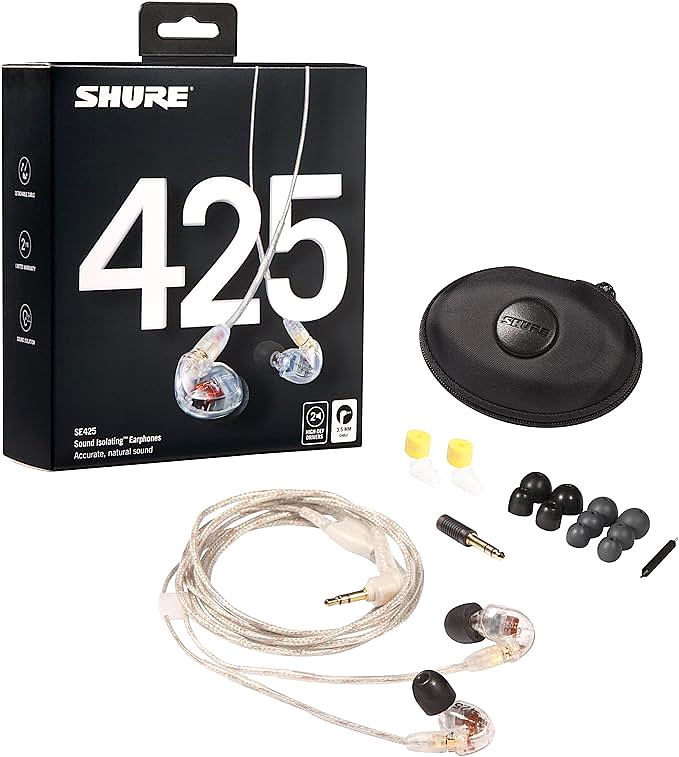
Shure SE425 PRO Earbuds: Immerse Yourself in Pristine

How Hybrid Drivers Work: The Science of Hi-Fi Sound on a Budget

Erjigo KZ Zax in-Ear Monitors – Recommended for HiFi Stereo Sound

DETHONRAY BQEYZ Summer - Ultimate Audiophile Experience

BASN MTPro IEMs: Unlocking High-Fidelity Sound with Planar Magnetic Power

Balanced Armature Drivers Explained: How Quad-Driver IEMs Separate Frequencies

ISN Audio H40 and the Engineering of Hybrid Driver Sound

The Art of the Hybrid: Deconstructing the Science of Multi-Driver In-Ear Monitors
