The Signal Chain Sovereignty: Why Your Phone Hates 16 Ohms
Update on Dec. 8, 2025, 7:14 a.m.
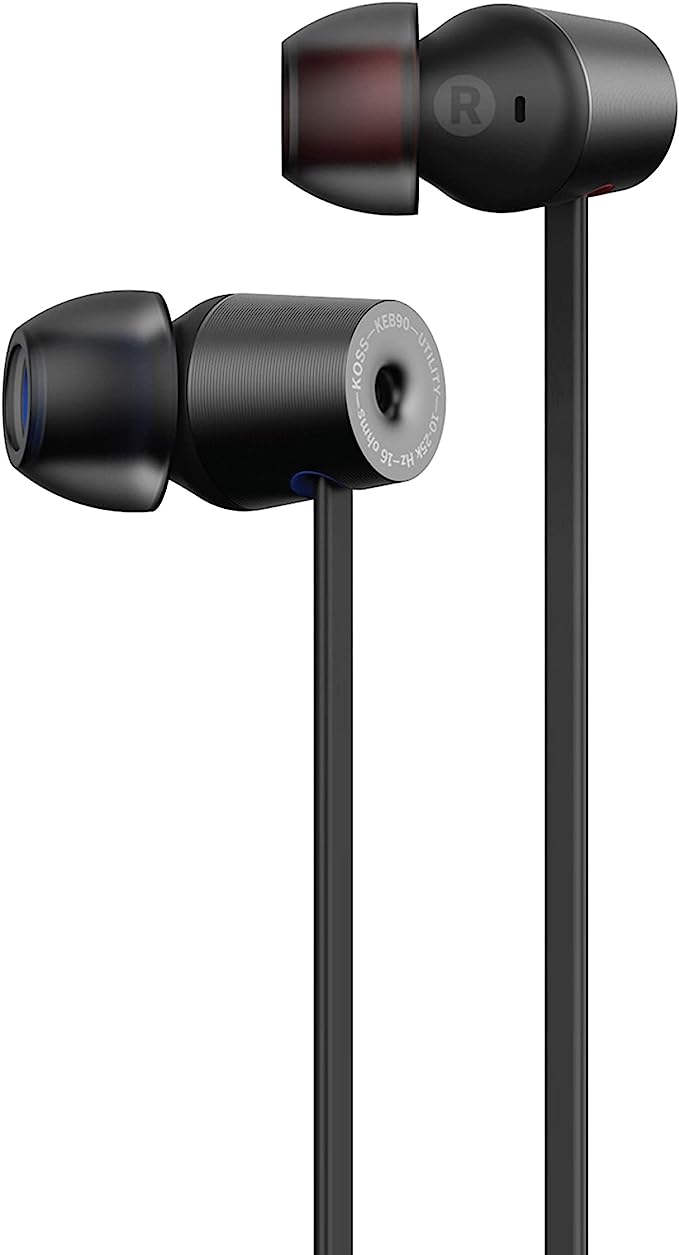
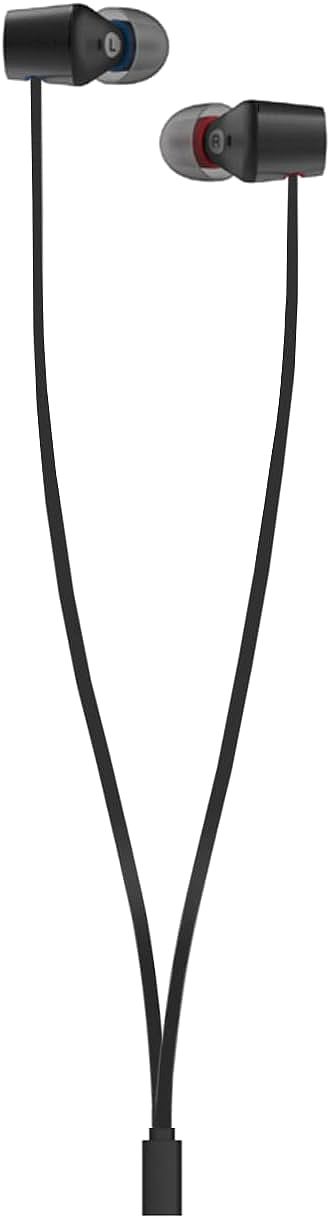
Plug a high-sensitivity earbud directly into a cheap laptop headphone jack, and you will likely hear it: a faint, persistent hiss. This is not the ghost of recordings past; it is the noise floor of a poorly shielded motherboard. In the quest for convenience, modern audio has sacrificed signal integrity. The Koss KEB90 Utility Earbuds attempt to reclaim this territory, not just by being headphones, but by completely re-engineering the signal path from your device to your ear (The Provocation).
The 16-Ohm Paradox
The KEB90 features a 16-ohm impedance. In marketing speak, this means “easy to drive.” In engineering terms, it means “unforgivingly sensitive.”
Low impedance drivers act like a microscope for your audio source. While they require very little voltage to get loud, they also require very little voltage to reproduce the electrical noise buzzing around your phone’s Wi-Fi and Bluetooth antennas (Physics). When you plug these directly into a standard 3.5mm jack on a non-audiophile device, the output impedance of the jack often interacts with the earbud’s 16-ohm load, causing a “frequency response deviation”—typically bloating the bass or rolling off the highs.
The “Utility” Solution: Externalizing the Brain
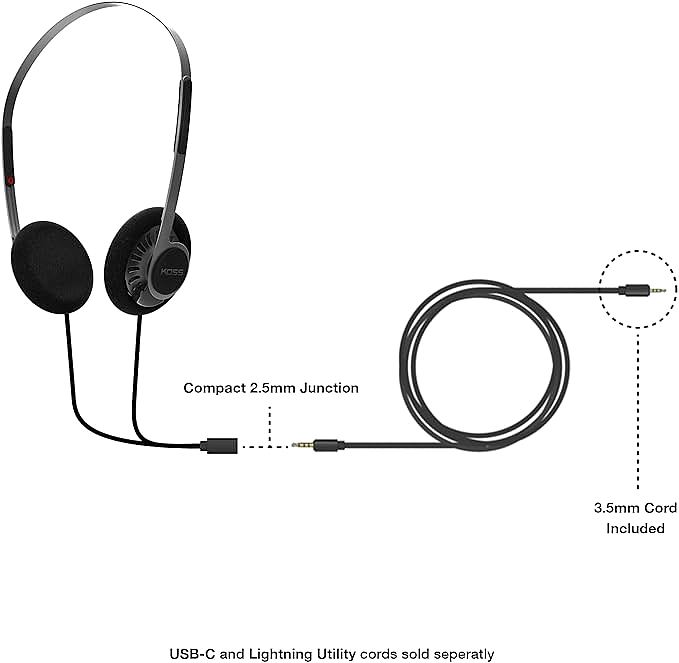
This is where the Koss Utility Series architecture becomes a critical engineering intervention. The detachable cable system uses a non-standard 2.5mm connector on the headphone side, but the magic happens at the other end.
By offering optional USB-C and Lightning Utility cords with integrated 24-bit/96kHz DACs, Koss effectively performs a “bypass surgery” on your phone’s internal audio hardware (Thesis).
Signal Isolation Physics
When you use the Utility DAC cable:
1. Digital Transport: The audio travels as digital data (0s and 1s) out of the phone’s noisy interior.
2. External Conversion: The conversion to analog electricity happens outside the device, inside the shielded connector of the cable.
3. Matched Amplification: The tiny amplifier inside the cable is impedance-matched specifically for low-ohm loads like the KEB90.
This eliminates the impedance mismatch issues and the electronic interference, delivering a “black background” (silence) that allows the KEB90’s detail retrieval to actually function (Mechanism).
The “Open-Air” Acoustic Vent
Most In-Ear Monitors (IEMs) are sealed systems. They work like a plunger in your ear canal to trap bass. The KEB90, however, utilizes an “Open-air design” with a detailed etching around the exterior air inlet.
Controlling the Backwave
In a dynamic driver, when the diaphragm moves forward to push sound into your ear, it pulls air from behind it. If the rear chamber is sealed, this air pressure acts as a spring, resisting the movement. By venting the rear chamber (Open-air), Koss reduces this resistance, allowing the driver to move more freely (Physics).
This results in two distinct characteristics:
1. Soundstage Expansion: The sound feels less “in your head” and more like open-back headphones.
2. Bass Roll-off Risk: Without a perfect seal, bass energy escapes. This explains why reviewer Christopher Casey found them “Tinny” and “Flat low-end.” If the seal isn’t airtight, the open design exacerbates bass loss.
Field Note: To fix the “Tinny” sound, discard the silicone tips immediately. Use the included Memory Foam cushions. Compress them with your fingers, insert them into your ear, and hold for 10 seconds while they expand. The foam creates the necessary seal to counteract the open-back leakage, restoring the bass impact that the 16-ohm driver is capable of producing.
The Aluminum Chassis Benefit
The KEB90 is encased in a Stealth Grey Aluminum Chassis. While this looks premium, its engineering function is mass and rigidity.
Plastic housings can resonate sympathetically with the driver, adding “coloration” or muddiness to the sound. Aluminum is rigid and acoustically inert. It ensures that the only thing vibrating is the driver diaphragm, not the shell holding it. This contributes to the “crisp highs” noted in the specs (Material Science).
TCO Analysis: * Cable Ecology: Standard IEM cables (MMCX/2-pin) break at the connector. The Utility series shifts the wear point to the 2.5mm jack, which is robust. However, you are locked into Koss’s ecosystem. * Replacement Cost: If you switch from iPhone (Lightning) to Android (USB-C), you don’t buy new headphones ($70); you just buy a new cord ($40). This modularity extends the product’s lifecycle significantly across device generations.
Verdict: A System, Not Just a Product
The Koss KEB90 Utility is a deceptive product. Used with the standard 3.5mm jack on a cheap phone, it is merely decent. But when paired with its digital umbilical cords (the Utility DACs), it transforms into a high-fidelity system that bypasses the limitations of modern consumer electronics. It rewards the user who understands that the chain is only as strong as its weakest link.