The Biology of Awareness: Why Air Conduction is the Future of Outdoor Audio
Update on Nov. 24, 2025, 10:32 a.m.
Evolution designed the human ear to be an always-on alert system. Long before we appreciated Beethoven or podcasts, our ears were survival tools, tuned to detect the snap of a twig or the rustle of a predator. Traditional headphones, by design, subvert this biological imperative by effectively blinding our auditory system.
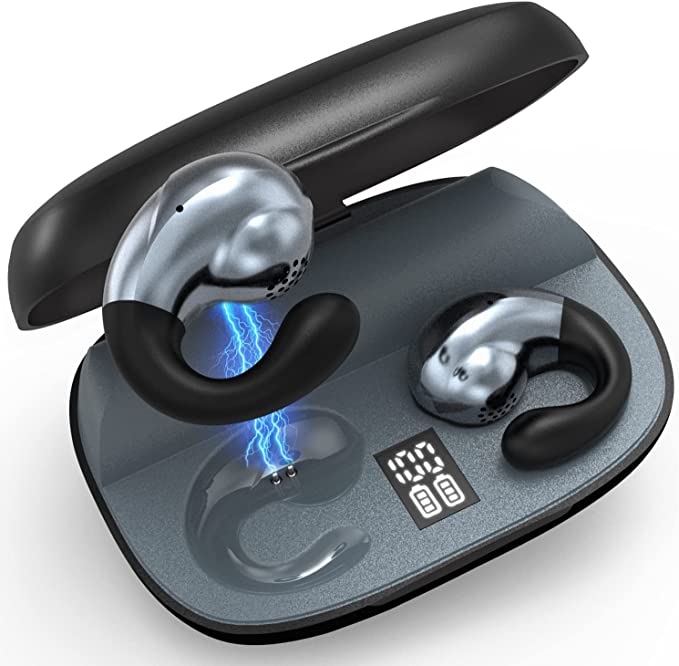
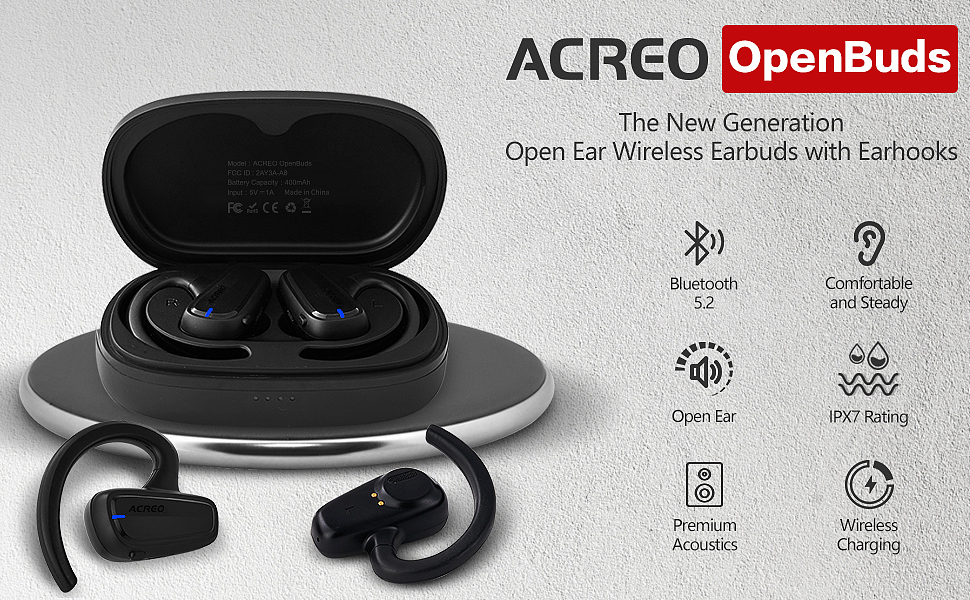
In the pursuit of safer urban commuting and athletic training, a new category of audio technology has emerged: Open-Ear Audio. While Bone Conduction was the early pioneer, a more refined technology known as Directional Air Conduction is taking center stage. Devices like the ACREO BYH-01 (OpenBuds) serve as a prime example of this shift, offering a case study in how we can layer digital sound over our physical reality without severing the connection to it.
The Physics of Transmission: Bone vs. Air
To understand the innovation behind modern open-ear headphones, we must first distinguish between the two primary methods of bypassing the eardrum occlusion.
Bone Conduction works by vibrating the cheekbones to send sound waves directly to the cochlea. While effective for underwater swimming or hearing loss, it has distinct limitations:
1. The “Tickle” Effect: Bass frequencies require strong vibrations, which can cause an uncomfortable buzzing sensation on the skin.
2. Spectral Loss: High-frequency fidelity is often lost as sound travels through dense bone and tissue.
Directional Air Conduction, utilized by the ACREO BYH-01, takes a different approach. It uses miniature, high-excursion speakers positioned just outside the ear canal. * Beamforming Audio: Imagine a microscopic spotlight of sound. These drivers project acoustic waves directly into the ear canal with laser-like precision. * Full Spectrum Sound: Because sound travels through air (its natural medium) before hitting the eardrum, the result is a more natural frequency response, retaining the rich bass and crisp highs that bone conduction often muddies.

Engineering Situational Awareness
The primary argument for open-ear architecture is Situational Awareness. In urban environments, visual cues account for only a portion of our safety data. Auditory cues—the tire noise of an electric car, the shout of a cyclist, the siren blocks away—are omnidirectional and processed faster by the brain.
By leaving the ear canal physically unobstructed, devices in this category allow ambient sound to mix naturally with digital audio. This is not “Transparency Mode” found in Active Noise Cancelling (ANC) headphones, which digitally processes and re-plays outside sound. This is organic transparency. There is no latency, no digital processing artifact, and no battery drain required to hear the world. It is the audio equivalent of augmented reality (AR), overlaying a soundtrack onto the real world rather than replacing it.

The Challenge of the “Open” Driver
Designing for open air presents a significant acoustic challenge: Leakage and Power. Without a seal to trap air pressure, bass frequencies tend to dissipate, and sound can leak out to annoy bystanders.
To combat this, engineers employ dedicated amplification and phase cancellation techniques. * Power Drive: Open drivers are less efficient than sealed ones. The ACREO model, for instance, highlights the use of independent amplifiers to drive its speakers. In engineering terms, this increased headroom allows the diaphragm to move enough air to generate perceptible bass impact even without a seal. * Acoustic Privacy: Advanced open-ear designs are tuned like directional antennas. By controlling the phase of the sound waves, they can ensure that the “sweet spot” of the audio is focused strictly at the wearer’s ear, while waves traveling in other directions are minimized. This allows for a “Private Wearable Theater” experience where the user is enveloped in sound, but the person sitting next to them hears only a whisper.
Ergonomics and the Kinetic Lifestyle
For athletes, the point of failure for most headphones is not sound quality, but stability. In-ear buds can slip out with sweat; over-ear cups can cause heat build-up.
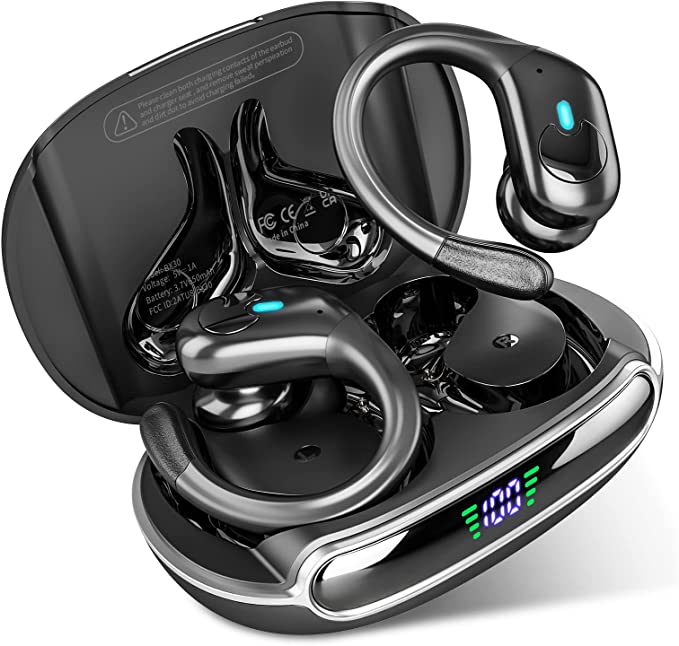
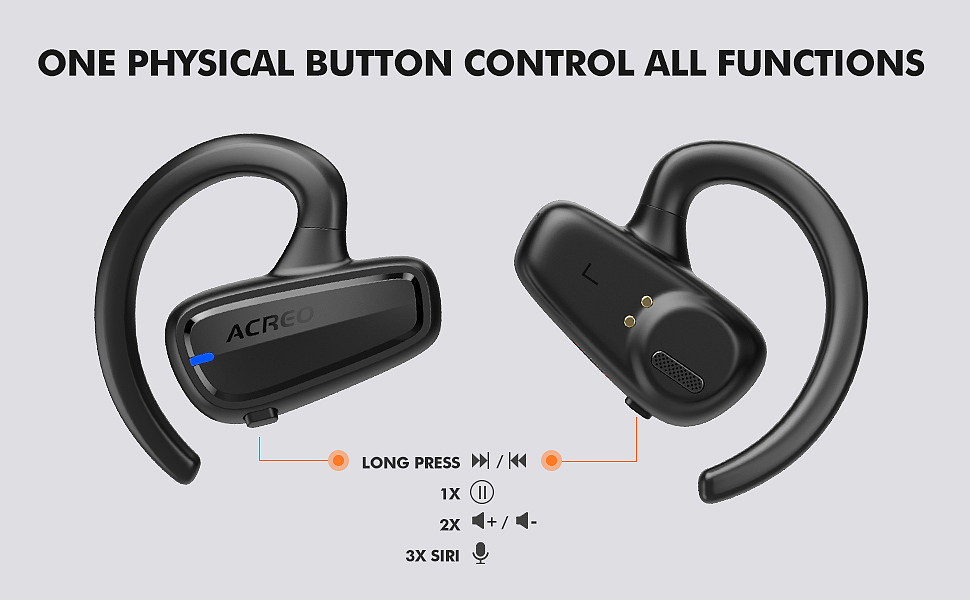
The Earhook design is a response to kinetic physics. By shifting the anchor point from the ear canal (friction fit) to the helix of the ear (gravity and tension fit), stability is decoupled from sweat. A device like the ACREO BYH-01, weighing roughly 5.5 grams per side, utilizes this multi-point suspension system to remain static relative to the head, even during high-impact activities like sprinting or burpees.
Furthermore, the hygiene aspect of “buds-free” design cannot be overstated. By eliminating the need to insert a foreign object into the ear canal, the risk of moisture entrapment and bacterial growth—common issues for long-distance runners—is virtually eliminated. Coupled with an IPX7 waterproof rating, which certifies the device can withstand temporary submersion, this form factor is purpose-built for the moisture-rich environment of intense exercise.

Conclusion: The Future of Hybrid Listening
The dichotomy between “good sound” and “safe listening” is dissolving. As technology advances, we are moving away from the era of isolation and into the era of integration.
Open-ear headphones like the ACREO BYH-01 represent a maturity in this philosophy. They acknowledge that for many users—urban runners, office workers, and outdoor enthusiasts—the ability to hear the world is just as important as the ability to hear the music. By leveraging the physics of Air Conduction, we can now achieve that delicate balance: a soundtrack for our lives that doesn’t disconnect us from living it.